- Category
- Bread and dough
- State
- Fresh
- Usual unit
- slice
What it is
Shrak, also known as markook, is a single-layer wheat flatbread characteristically made large and very thin; some examples are almost translucent. Names and preparation styles vary by place: shrak and markook can refer to closely related breads, while saj may also name the convex cooking surface used to make them. Described versions use wheat flour, water and salt, although some recipes include yeast or other ingredients. It is not the usual pocket bread: its thin sheet is suited to folding or rolling.
When to use it
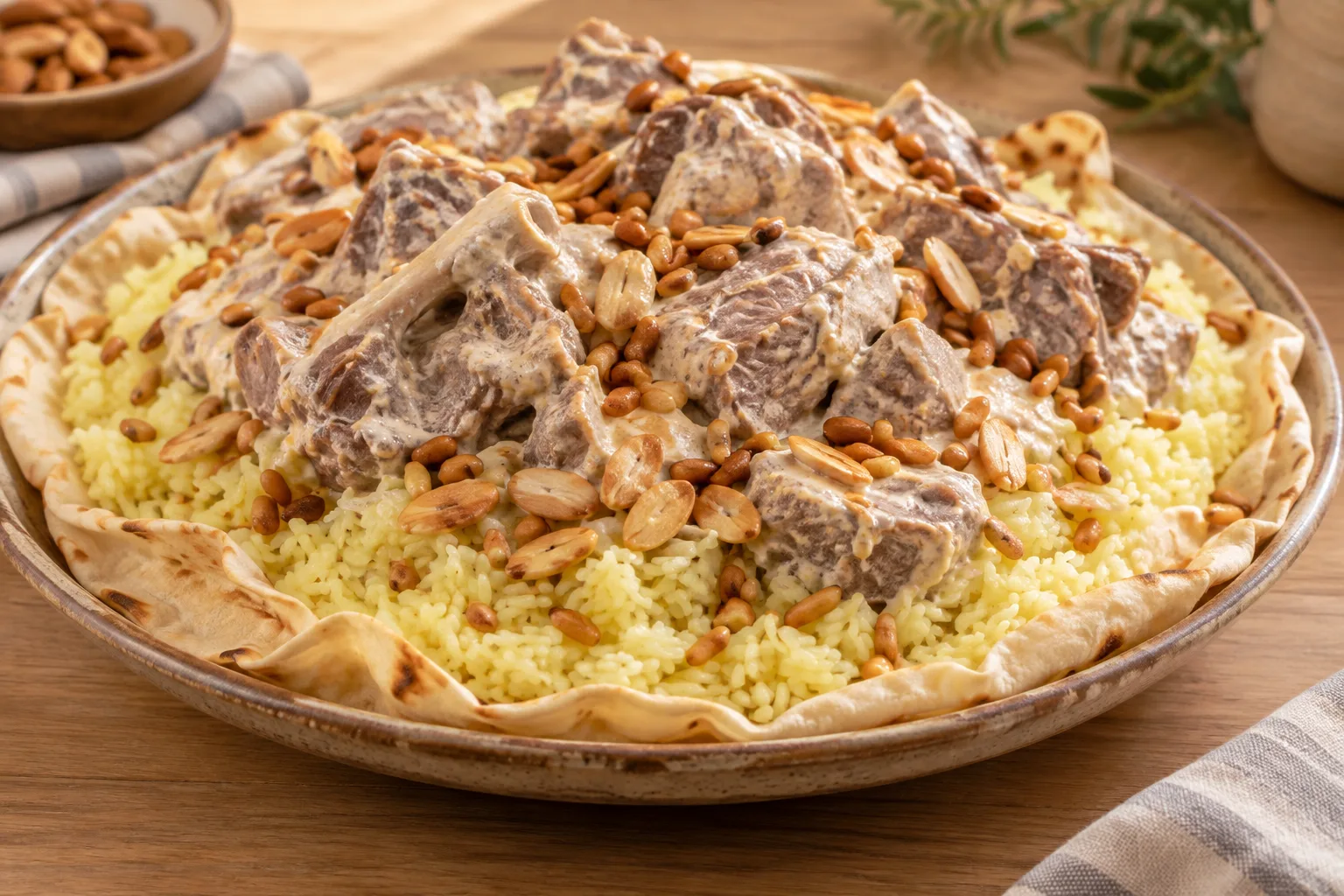
Choose shrak or markook when you want a thin bread that can wrap ingredients or accompany a meal without adding a thick crumb. It is served with dishes such as mansaf, shawarma and grilled foods, and can also be part of breakfast. Its flexible sheet is convenient for rolled fillings; for recipes that need an open pocket, this single-layer bread does not work in the same way as pita.
How to use it
Serve it alongside a meal, or place filling on the sheet and fold or roll it into a wrap. It can also accompany dishes such as mansaf, shawarma or grilled foods. When making the dough at home, stretch it very thin and cook it on a convex saj or on a flat pan, depending on the method used. Handle it gently: a very thin sheet may tear when lifted or overloaded. Do not mistake it for pocket-style pita bread.
Flavour and texture
Its most distinctive feature is its texture: this is a single-layer flatbread that is very thin and sometimes almost translucent. It is made with wheat flour, so its flavor is that of a simple wheat bread; the exact formula can differ between breads and recipes. The flexible sheet is suited to folding or rolling, unlike a thicker bread or one with a pocket.
How to choose it
Look for bread described as shrak or markook and check that it is a thin wheat sheet rather than a thick pocket pita. Names can vary regionally, and saj can also refer to the cooking surface, so consider the bread’s shape as well as its label. Check the ingredient list if you need to confirm whether it contains wheat, gluten or other ingredients.
Storage
The available evidence does not establish a shelf life or universal storage conditions for this bread. Follow the package directions when buying it packaged, and do not assume every style keeps for the same length of time. If there are no storage instructions, ask the seller or manufacturer before keeping it for an extended period.
Substitutions
Saj bread or thin yufka can be alternatives when you need a wheat sheet for folding or rolling. They are not necessarily identical to shrak or markook: thickness, size and cooking method can vary. Choose an alternative that suits the intended use, and do not expect it to replace pocket bread when a recipe relies on the space inside.
Common mistakes
Do not assume that every bread called saj, shrak or markook is identical: names and characteristics differ by region. Also, do not treat it as pocket pita; the shrak or markook described here is a single thin sheet. When wrapping, avoid overfilling it, since a very thin piece can split as it is folded.
Safety and allergens
This bread is made with wheat flour, so it is not suitable for people who need to avoid wheat or gluten. Check the label for the full ingredient list and possible traces; recipes and commercial products can vary.
Culinary uses
- Flatbread served alongside meals
- Flexible wrap for fillings
- Bread for scooping and accompanying dishes
Recommended techniques
- Stretch or roll the dough very thin
- Cook on a convex saj or a flat pan
- Fold or roll to serve
Pairs well with
- Mansaf
- Shawarma
- Grilled foods
- Breakfast fillings
Frequently asked questions
Are shrak and markook the same bread?
The names are used for closely related flatbreads, but usage and bread characteristics can vary by region.
Does markook have a pocket like pita?
No. The shrak or markook described here is a thin, single-layer sheet, not pocket bread.
How is it traditionally cooked?
It is stretched very thin and cooked on a convex griddle called a saj; some preparations use a flat pan.
Does it contain gluten?
The versions described are made with wheat flour, which contains gluten. Always check the ingredients of the specific product.
Ingredient allergens
Allergen listThere are no verified associations for these ingredients yet.
Sources and review
Automatically researched, cross-checked and validated content. Sources consulted:
- ¿Por qué la muerte es origen de miedos y tabúes? doi.org/10.64628/aao.fccyk3qj3
- Client Challenge doi.org/10.2307/jj.27939689.16
- Shrak (Markook) - Pan Plano Tradicional del Oriente Medio | 196 flavors www.196flavors.com/es/shrak-markook/?srsltid=AYCX9vIAnQeBP-QNgROja5Ad31o-DYqRSOV4rmJtJlAUY9G…
- TUBAL: PAN MARKOOK, SHRAK, KHUBZ O YUFKA tubal.blogspot.com/2021/12/markook-shrak-khubz-o-pan-yufka.html
- Pan de Markook es.gastronomiac.com/l%C3%A9xico-culinario/marcador-del-dolor/
- Los 6 tipos de pan árabe (y el marroquí): diferencias y usos saboresarabes.com/blog/el-pan-arabe-tipos-usos-y-diferencias-entre-paises/
- Conoce la historia del pan árabe | Cocinatis www.cocinatis.com/como-cocinar/consejos-trucos/pan-arabe.html
- - YouTube www.youtube.com/watch?v=8EeUoTEXb0A
- Breads from Around the World: Traditional Bread Recipes nutrimill.com/es/blogs/life-in-healthy-balance/bread-recipes-from-around-the-world-discover-…
- Shrak (Markook) - Pan Plano Tradicional del Oriente Medio | 196 flavors www.196flavors.com/es/shrak-markook/?srsltid=AYCX9vKjWSkiVZhn--WEGbkHrgWq1OlTHebD_GZL-KRyf9s…
- - YouTube www.youtube.com/watch?v=LcGIxoVT_YE