- Category
- Other
- State
- Other
- Usual unit
- Variable
What it is
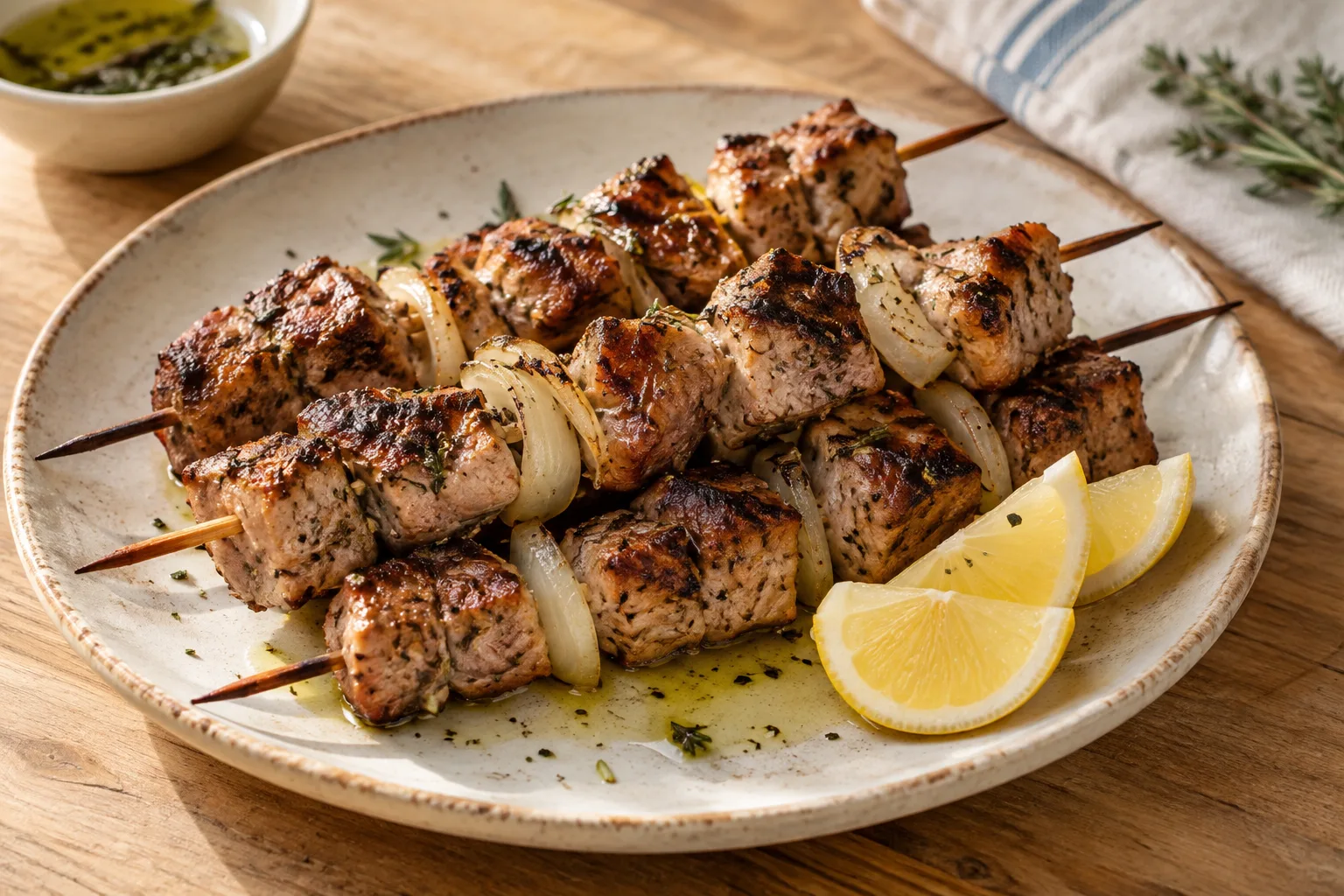
A skewer is a preparation in which pieces of food are threaded onto a stick or rod. The word can also refer to the assembled dish, which may include plant foods, meat, fish or fruit. It does not describe one specific food: flavor, texture and preparation needs depend on what is threaded. Some skewers are cooked on a grill, over coals, on a griddle or in the oven; others are served cold or as dessert. Cutting ingredients into manageable pieces makes them easier to thread and can help them cook more evenly when heat is used. The support can be metal or wood, including bamboo sticks.
When to use it
Skewers are useful when you want to serve individual portions, an appetizer, or a meal made up of several threaded ingredients. The format can suit a hot dish of meat and vegetables, a plant-based version, or a fruit dessert. Choose ingredients and a cooking method to suit the foods: cold versions should use foods that can be eaten without cooking, while grill, griddle and oven versions need ingredients suited to those methods. Skewers are also a convenient way to combine colors and flavors, provided the foods can be threaded without falling apart.
How to use it
Cut the ingredients into pieces that can be threaded, and aim for similar sizes when pieces will cook together. Alternate components to suit the dish: vegetables can accompany meat, and you can also make all-vegetable or fruit skewers. Use a method appropriate to the ingredients, such as grilling, cooking over coals, griddling or pan-cooking; fruit skewers can be served as dessert without cooking. If using wooden or bamboo sticks over coals, remember that they can burn; metal skewers are another option. For raw vegetable skewers, assemble them shortly before serving to help preserve their appearance. Check sauces and marinades carefully if you need to manage allergens.
Flavour and texture
A skewer has no flavor of its own; its ingredients, seasonings and cooking method determine the result. Grilling and cooking over coals contribute the characteristic flavor of cooking over fire, while fruit skewers offer the sweetness and juiciness of the selected fruit. Different textures can be combined, but choose foods that will stay in place when threaded. The result may be tender, juicy, firm or crisp, depending on the ingredients and preparation.
How to choose it
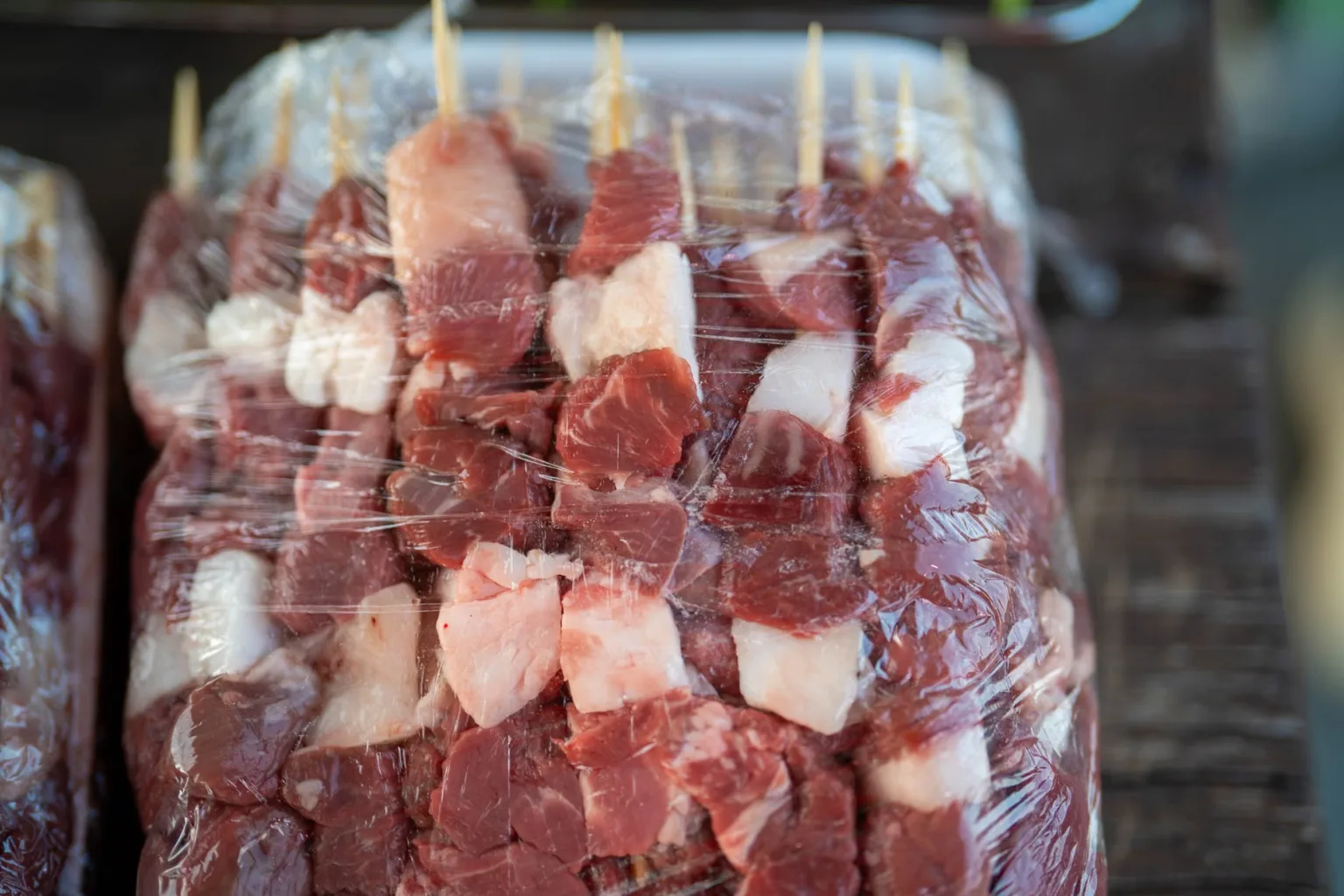
Choose the skewer support to suit the preparation: metal rods are an alternative to wooden or bamboo sticks. For wooden versions, check that the stick can hold the ingredients without breaking. Select foods that can be cut into manageable pieces and will not easily fall apart if they are to be cooked on a skewer. If buying prepared skewers, check the ingredient list and allergen information, since the composition can vary between products.
Storage
Skewers do not have one specific storage requirement: it depends on their ingredients and whether they are raw or cooked. For vegetable skewers intended to be served raw, assemble them shortly before eating to help maintain their appearance. Store meat, fish and other components according to the guidance for those foods; the stick or rod does not determine how the ingredients should be stored.
Substitutions
You can replace a wooden or bamboo stick with a metal skewer, or use a wooden stick instead of metal. The practical point when cooking over coals is that wood can burn; metal avoids that issue, although it should be handled carefully when hot. Neither option replaces the ingredients: if you need to replace a food in the skewer, the alternative depends on its role in the dish.
Common mistakes
Do not choose ingredients for color alone: they should be easy to thread and retain a pleasant texture with the chosen method. Avoid assembling raw vegetable skewers long before serving, as their appearance may deteriorate. Do not assume the type of stick makes a combination safe: allergens depend on the ingredients, marinades and sauces used.
Safety and allergens
Skewers can contain different ingredients and allergens. Check packaged-food labels and ask about ingredients when food is served unpackaged. If you have a food allergy, check sauces and marinades as well, and do not assume a skewer is safe based on its name or appearance.
Culinary uses
- Presentar alimentos ensartados como aperitivo, plato principal o postre.
- Cocinar porciones de alimentos en una brocheta y servirlas de forma individual.
Recommended techniques
- Asar a la parrilla o a la brasa.
- Cocinar a la plancha o en sartén.
- Preparar brochetas frías o de fruta sin cocción.
Pairs well with
- Verduras como calabacín, pimiento, cebolla y tomate.
- Carne combinada con verduras; también se pueden preparar versiones vegetales con tofu.
- Frutas carnosas y jugosas, solas o acompañadas de chocolate.
Frequently asked questions
What foods can go on a skewer?
You can combine vegetables, meat or fruit, and make plant-based skewers with tofu. Choose foods that can be threaded and suit the preparation method.
Do skewers always need to be cooked?
No. Some are grilled, cooked over coals, griddled or oven-cooked; others are served cold or as fruit desserts.
Can I use wooden sticks on a barbecue?
Yes, but wooden sticks can burn over coals. Metal skewers are an alternative.
Ingredient allergens
Allergen listThere are no verified associations for these ingredients yet.
Estimated nutrition
- Fat
- 3.04 g
- Saturates
- 0.43 g
- Carbohydrate
- 13.9 g
- Sugars
- 9.57 g
- Fibre
- 0 g
- Protein
- 18.3 g
- Salt
- 1.44 g
Sources and review
Automatically researched, cross-checked and validated content. Sources consulted:
- Client Challenge doi.org/10.2307/jj.27939689.16
- El patrimonio culinario peruano ante UNESCO | OpenAlex openalex.org/W187461318
- Gastronomía de México - Wikipedia, la enciclopedia libre es.wikipedia.org/wiki/Gastronom%C3%ADa_de_M%C3%A9xico
- Etiquetado de sustancias que causan alergias e intolerancias alimentarias www.aesan.gob.es/seguridad-alimentaria/informacion-alimentaria/etiquetado-sustancias
- Food Allergies | FDA www.fda.gov/food/nutrition-food-labeling-and-critical-foods/food-allergies
- Food Allergy: Labelling and exposure risks - PMC pmc.ncbi.nlm.nih.gov/articles/PMC11250542/
- Allergen guidance for food businesses - GOV.UK www.gov.uk/government/publications/allergen-guidance-for-food-businesses/allergen-guidance-f…
- Allergens Information for Food Businesses - burnley.gov.uk burnley.gov.uk/business/environmental-health/food-safety/guide-food-allergens/allergens-info…
- - YouTube www.youtube.com/watch?v=VYiYqAUJ_TY
- Seis recetas de brochetas y pinchos para el picoteo del finde y despedir agosto con alegría www.directoalpaladar.com/recetas-de-aperitivos/seis-recetas-brochetas-pinchos-para-picoteo-f…
- Brochetas de carne y verduras, una receta tan sencilla como vistosa bonviveur.com/es/recetas/brochetas-de-carne-y-verduras
- Brochetas de Carne: irresistibles - Mercado de Chamartín mercadodechamartin.es/blog/brochetas-de-carne/
- Brochetas vegetales | Consumer www.consumer.es/alimentacion/brochetas-vegetales.html
- 13 trucos para hacer las mejores brochetas - Revista Mia miarevista.okdiario.com/recetas/2626.html