- Category
- Vegetables
- State
- Fresh
- Usual unit
- cup
What it is
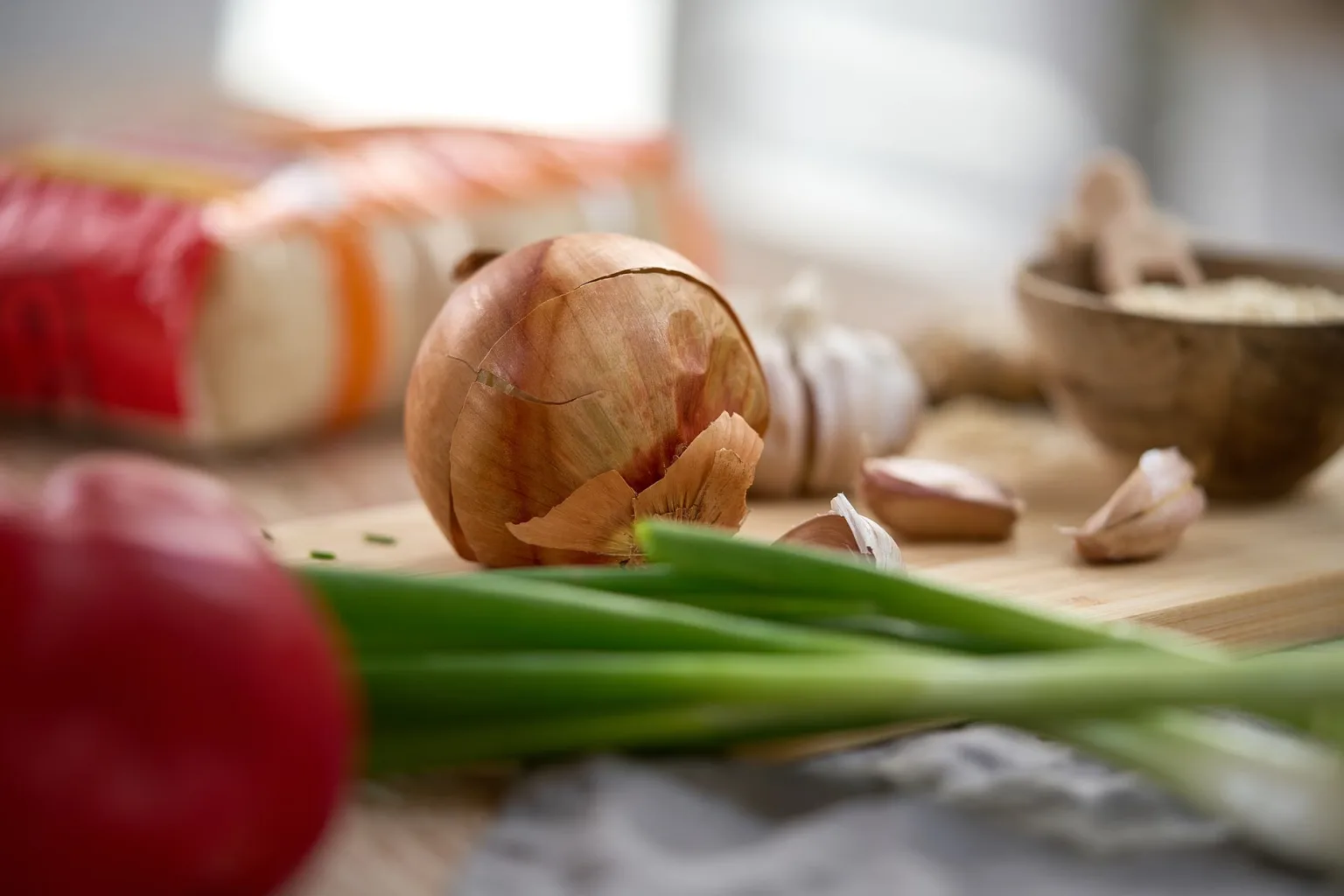
Spring onion is a fresh vegetable in the Allium genus, identified in the available evidence as Allium fistulosum. The plant does not form a true bulb; its leaf base becomes thickened. In cooking, it can provide onion flavour, and its milder profile can suit dishes where a less forceful flavour than red onion is wanted. Do not automatically treat it as the same plant as chives or every other plant sold under a name such as Chinese onion: common names can vary by place. When the exact identity matters, use the species or product description given on the package rather than relying on a common name alone.
When to use it
Choose spring onion when you want a gentler onion flavour than red onion, or when you need a vegetable that can be added to a quick-cooked dish. It can be cut into small pieces and used in brief cooking; the available culinary material also places it in quick vegetable preparations with cabbage or spinach. Select the cut to suit the dish: small pieces distribute readily, while larger pieces remain more noticeable. If the recipe depends on a strong onion taste, remember that spring onion is described as milder and adjust the amount or expectations accordingly.
How to use it
Remove any visibly damaged parts and cut the spring onion to suit the dish: slice or chop it to distribute through food, or cut it into small pieces for quick cooking. The available culinary information describes its use in brief vegetable cooking and as an ingredient that can be added to another preparation. Cabbage and spinach are examples of vegetables used alongside it in quick-cooked contexts. No specific cooking time is established for this ingredient, so do not assume one; check the texture as you cook and follow the directions for your dish. It can also take the place of red onion when a milder onion flavour is desired; adjust the amount to taste.
Flavour and texture
Its flavour is described as milder and more pleasant than red onion, making it an option for a less assertive onion note. The plant’s leaf base is thickened, but the available information does not establish one consistent texture for every piece or commercial variety. Cutting and cooking affect how it feels in a dish: small pieces blend in more readily, while larger pieces remain more distinct.
How to choose it
Choose fresh-looking produce without visible damage and with an appearance consistent with its presentation. Check the product name on the label, since common names such as Chinese onion may refer to different plants in different places. If you need a particular species, look for it to be identified on the package rather than relying on the common name alone. The available evidence does not specify an ideal size, maturity test or particular buying season.
Storage
The available information does not establish a specific storage method or shelf life for fresh spring onion. Follow any storage directions on the package and use it while it still looks fresh. Before preparation, check for damaged areas and remove them; do not use produce showing obvious spoilage. An exact storage duration cannot be given from the available information.
Substitutions
Red onion can fill a similar onion role when spring onion is unavailable, but it has a stronger flavour. Conversely, spring onion can be used in a dish that calls for red onion when you want a milder result. The exchange is not flavour-neutral: adjust the amount to taste and expect the finished dish to differ.
Common mistakes
Do not assume that every product called Chinese onion is the same plant; check the label when identification matters. Another common mismatch is expecting spring onion to taste as strong as red onion, when its flavour is described as milder. Avoid assigning it a fixed cooking time, too, because none is established in the available information.
Safety and allergens
Treat it as fresh produce and follow the package directions. Inspect it before use and do not eat portions with obvious spoilage. For pre-cut products or mixtures with other ingredients, check the allergen information for that specific product.
Culinary uses
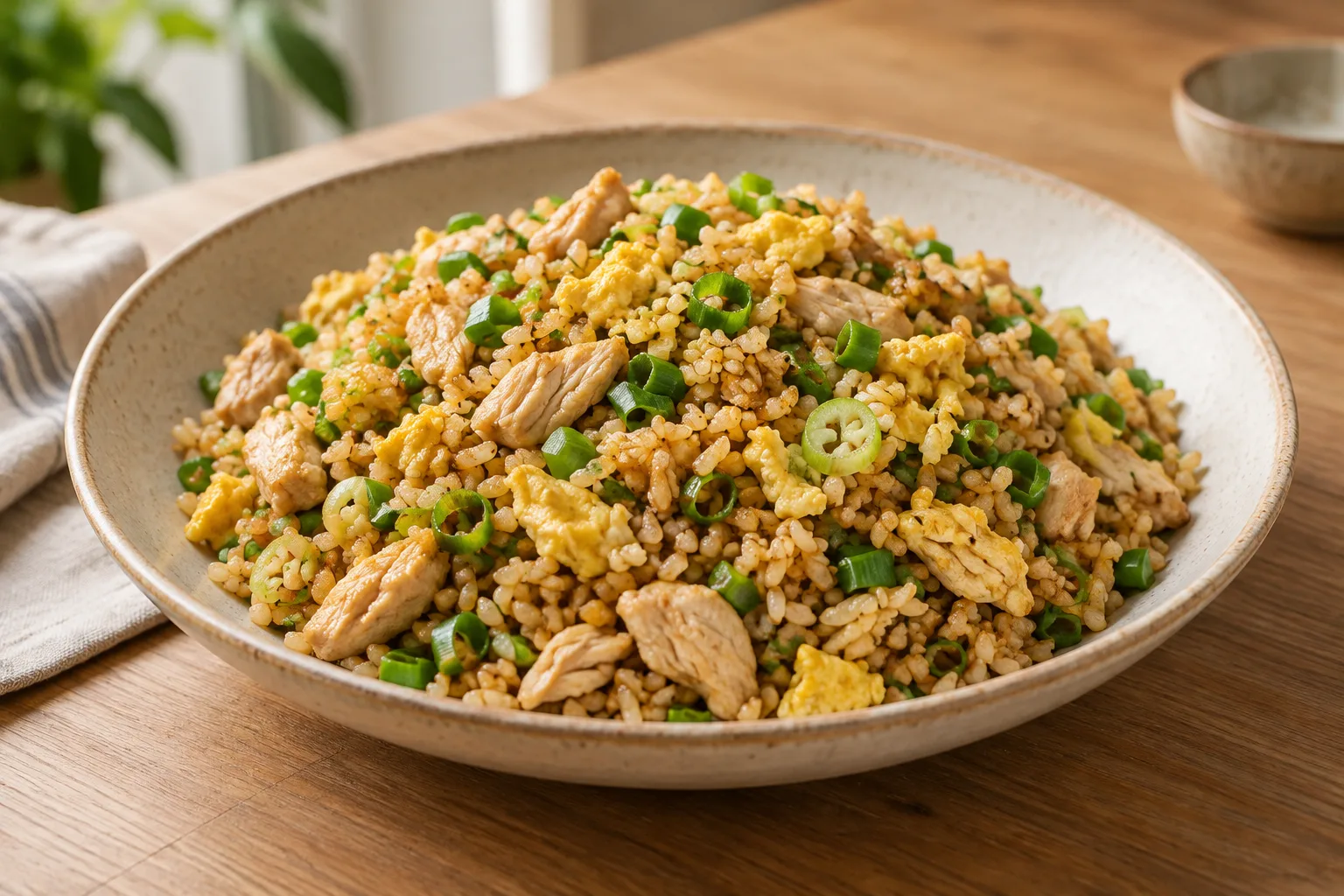
- Fresh aromatic vegetable for adding onion flavour and colour
- Vegetable ingredient in quick-cooked dishes
Recommended techniques
- Slice or chop for use raw or with very brief cooking
- Quick-boil in small pieces for serving or adding to another dish
Pairs well with
- Cabbage
- Spinach
Frequently asked questions
Is spring onion the same as chives?
Do not assume they are the same. Common names can refer to different plants; check the species or product description if the distinction matters.
What does spring onion taste like?
The available description characterizes it as milder than red onion, making it useful when a less intense onion flavour is wanted.
Can spring onion be cooked quickly?
Yes. It is described in quick vegetable preparations, but no specific cooking time is provided.
Ingredient allergens
Allergen listThere are no verified associations for these ingredients yet.
Estimated nutrition
- Fat
- 0.19 g
- Saturates
- 0.03 g
- Carbohydrate
- 7.34 g
- Sugars
- 2.33 g
- Fibre
- 2.6 g
- Protein
- 1.83 g
- Salt
- 0.04 g
Sources and review
Automatically researched, cross-checked and validated content. Sources consulted:
- Client Challenge doi.org/10.2307/jj.27939689.16
- Cebollino o cebollín, la elegante hierba aromática con un suave sabor entre el ajo y la cebolla: qué es y cómo usarlo en la cocina www.directoalpaladar.com/ingredientes-y-alimentos/cebollino-cebollin-elegante-hierba-aromati…
- Allium schoenoprasum - Wikipedia, la enciclopedia libre es.wikipedia.org/wiki/Allium_schoenoprasum
- Etiquetado de sustancias que causan alergias e intolerancias alimentarias www.aesan.gob.es/seguridad-alimentaria/informacion-alimentaria/etiquetado-sustancias
- Cebollino chino | Umami Madrid www.umami-madrid.com/2010/01/28/cebollino-chino/
- - YouTube www.youtube.com/watch?v=_qX36XGm570
- Evolución del léxico culinario desde 1932 a 1972 | OpenAlex openalex.org/W2291578502
- Wild Chives - Allium schoenoprasum ( Spanish; Castilian ) eol.org/pages/1084938/articles?locale_code=es&resource_id=607
- Allergies - Food Safety - European Commission food.ec.europa.eu/food-safety/campaign-2026/allergies_en
- Food Allergies | FDA www.fda.gov/food/nutrition-food-labeling-and-critical-foods/food-allergies
- Centre for Food Safety www.cfs.gov.hk/english/food_leg/food_leg_lgfa.html
- food hypersensitivity assets.publishing.service.gov.uk/media/69c552404a06660f085442d1/fsa-sfbb-chinese-cuisine-cro…
- Allergen labelling for food businesses | Food Standards Australia New Zealand www.foodstandards.gov.au/business/labelling/allergen-labelling
- Precautionary labelling of foods for allergen content: are we ready for a global framework? - PMC pmc.ncbi.nlm.nih.gov/articles/PMC4005619/
- En la cocina gourmet, la cebolla china suele reemplazar a la cebolla roja debido a su sabor más suave y agradable core.ac.uk/download/670492389.pdf
- Técnicas de cocina china | CocinaSinReceta.com www.cocinasinreceta.com/tecnicas/tecnicas-de-cocina-china/
- Los distintos sabores regionales de China - Restaurante Chino Gran Muralla - Albacete www.restaurante-chino-granmuralla.com/sabores-regionales-de-china/