- Category
- Sugar and sweeteners
- State
- Dry
- Usual unit
- tablespoon
What it is
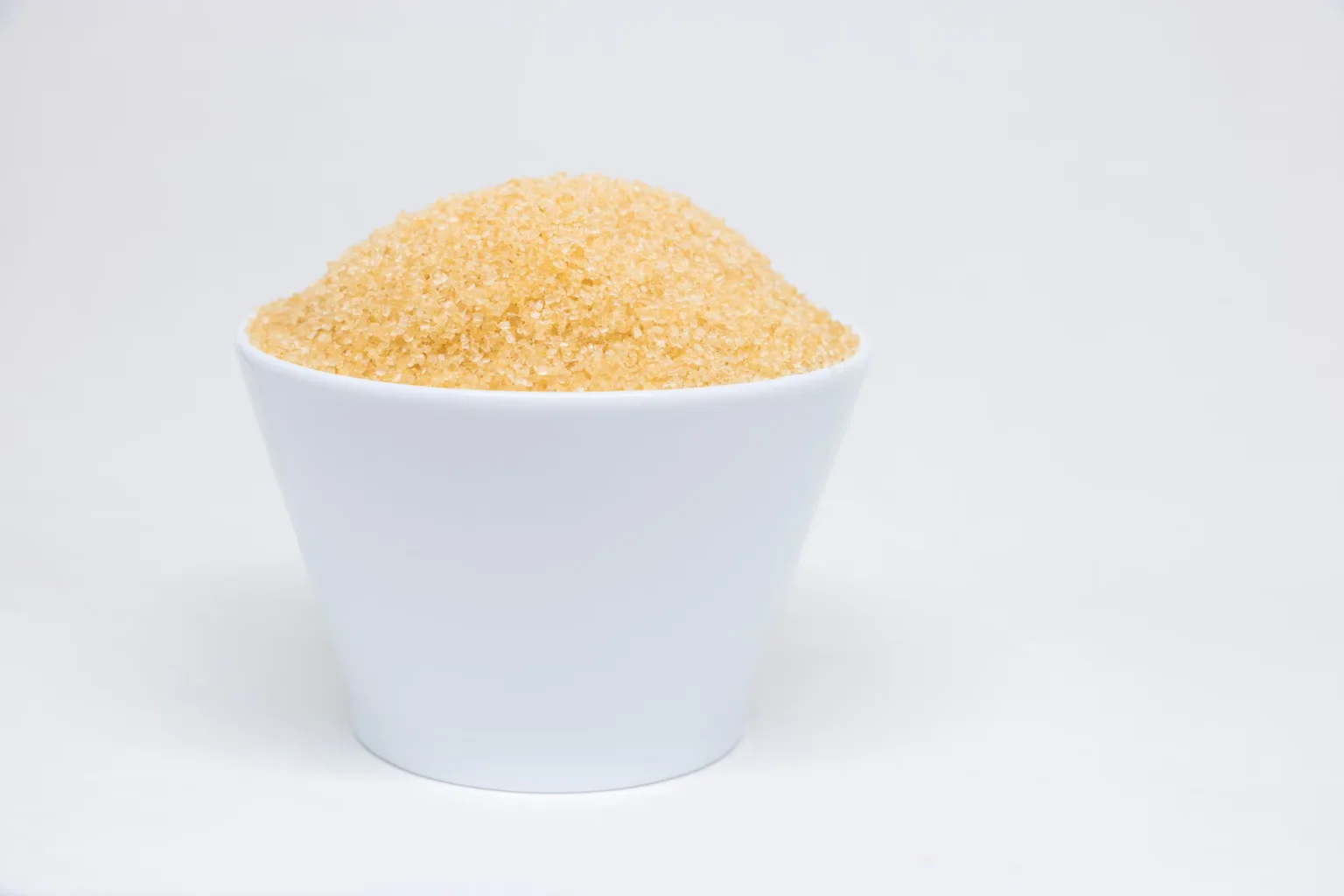
“Sugar for browning” describes a culinary function rather than one specific sugar variety. It generally means dry sugar, often granulated sugar, added to help create a browned or caramelized finish. When heated, sugar can melt and caramelize; in foods that also contain protein, other browning reactions may contribute as well. The outcome varies with the food’s composition, moisture, heat, and cooking method. The label alone therefore does not identify a particular sugar or guarantee a particular color. Follow the recipe’s specified type when given, and use the amount needed for the finish you want.
When to use it
Use it when you want a sweet, browned, or crisp finish, such as on a baked surface, or in a preparation where sugar will melt and take on color. A small amount may also help balance the acidity of a tomato sauce. Sugar is not required for every food that browns: many foods develop color through their own components and exposure to heat. If a recipe does not specify a type, ordinary granulated sugar is a useful general-purpose choice, though the final texture still depends on the preparation.
How to use it
Check the recipe to see which sugar it calls for and whether it should be mixed in, sprinkled on top, or heated separately. For a surface finish, distribute the sugar evenly rather than in piles, which can melt unevenly. When heating sugar in a pan or saucepan, use suitable cookware and watch the color continuously: melted sugar can darken quickly and taste bitter if it burns. To balance a sauce’s acidity, add a small amount, stir, and taste before adding more. Do not automatically replace dry sugar with honey or syrup; liquid sweeteners add moisture and can change browning and texture.
Flavour and texture
Sugar adds sweetness; when heated, it can develop caramel notes and form a crisp surface as it cools. The result varies with sugar type, water content, and the other ingredients. In a moist preparation, browning may take longer or be less pronounced than on a dry surface. Brown sugar can add more moisture and caramel-like notes than white sugar, while icing sugar is finely milled and may contain anti-caking ingredients. These sugars therefore do not necessarily behave alike.
How to choose it
Choose sugar for the recipe rather than relying only on the phrase “for browning.” Ordinary granulated sugar is practical for general use, and crystal size can vary between products. Brown sugar may add moisture and a more caramel-like profile. Icing sugar is finely ground, and some products contain starch or another anti-caking ingredient, so it is not always interchangeable with granulated sugar. Check the package to confirm the sugar type and product condition.
Storage
Keep dry sugar in a clean, tightly closed container in a dry place, protected from moisture. Moisture can cause clumping and make sugar less evenly distributed in a recipe. Keep the container away from strong odors and use dry utensils when serving. If lumps appear, check that the sugar is dry and in good condition before using it; dry sugar does not need refrigeration.
Substitutions
Brown sugar can replace white sugar in some preparations, but its moisture and flavor may change the finish. Honey and maple syrup are liquid sweeteners, not direct equivalents: they add moisture and can affect texture and browning. Adjust a recipe cautiously and do not expect the same result as with granulated sugar. Icing sugar is also not an automatic substitute when a crisp layer is the goal.
Common mistakes
Do not confuse browning with caramelization: sugar can caramelize, while food browning may also depend on other components. Avoid adding a large amount at once, assuming every sugar behaves alike, or leaving heated sugar unattended. Color may develop more slowly in a moist preparation; adding more sugar without checking the recipe does not guarantee a better finish.
Safety and allergens
Melted sugar and hot cookware can cause burns. Handle them carefully and do not touch or taste sugar while it is hot. Watch the heating closely and remove the preparation from the heat if the color becomes too dark.
Culinary uses
- Aporta dulzor y ayuda a equilibrar la acidez de algunas preparaciones.
- Favorece el color tostado o caramelizado en superficies calentadas.
- Contribuye a formar costras dulces y crujientes en ciertas preparaciones.
Recommended techniques
- Espolvorear sobre una superficie antes de hornear para formar una costra.
- Calentar para fundir y caramelizar, vigilando el color de cerca.
- Incorporar en pequeñas cantidades a una salsa para ajustar dulzor y acidez.
Pairs well with
- Tomate y salsas de tomate, cuando se desea suavizar la acidez.
- Café o chocolate, en preparaciones dulces.
- Frutas y masas horneadas, como acabado crujiente.
Frequently asked questions
What does “sugar for browning” mean?
It describes a use, not a specific variety. It usually means sugar added to help create a browned or caramelized finish.
Can I use any kind of sugar?
Not always. Granulated sugar works for many general uses, but brown sugar, icing sugar, and liquid sweeteners can change moisture, color, and texture.
Why does sugar get too dark?
Hot sugar can move quickly from golden to very dark. Watch it continuously and take it off the heat when it reaches the color you want.
Ingredient allergens
Allergen listThere are no verified associations for these ingredients yet.
Estimated nutrition
- Fat
- 0 g
- Saturates
- 0 g
- Carbohydrate
- 97.1 g
- Sugars
- 45.7 g
- Protein
- 0 g
- Salt
- 0.03 g
Sources and review
Automatically researched, cross-checked and validated content. Sources consulted:
- Técnicas de cocción que mejor conservan los nutrientes Nutriendo www.academianutricionydietetica.org/que-comer/tecnicas-coccion-nutrientes/
- Client Challenge doi.org/10.2307/j.ctvndv9t9.22
- Del blanco a la panela: los 19 tipos de azúcar más comunes, en qué se diferencian y cómo usarlos en cocina www.directoalpaladar.com/ingredientes-y-alimentos/blanco-a-panela-19-tipos-azucar-comunes-qu…
- Maridaje de sabores 101: cómo descubrir combinaciones perfectas - Aromatech aromatechgroup.com/es/actus-business-units/maridaje-de-sabores-101-como-descubrir-combinacio…
- Tipos y variedades de Azúcar que encontrarás en el mercado, apuntes. - Cocina y Aficiones www.cocinayaficiones.com/tipos-variedades-azucar-mercado-apuntes/
- Qué es eso llamado epistemología, para qué sirve, por qué es inexcusable para la universidad y para la paz | Reencuentro. Análisis de problemas universitarios doi.org/10.24275/uamxoc-dcsh/reencuentro/202386-14
- Recetarios manuscritos de la España moderna scholar.uc.edu/downloads/mc87pr79b?locale=es
- La guía práctica para un buen maridaje - Industrias Espadafor S.A. espadafor.es/guia-para-un-buen-maridaje/
- Azúcar: El ingrediente mágico que -con moderación- transforma tus recetas www.hola.com/cocina/noticias/20240325251421/tipos-de-azucar-usos-en-la-cocina/
- - YouTube www.youtube.com/watch?v=iuSL-LOT12o
- XTF: Search Results added philobiblon.upf.edu/xtf/servlet/org.cdlib.xtf.dynaXML.DynaXML?gobk=http%3A%2F%2Fphilobiblon.…
- Métodos de cocción IV: Dorar | CreatiVegan.net creativegan.net/archives/metodos-de-coccion-iv-dorar/
- Métodos de cocción: Dorar | Gastronomía & Cía www.gastronomiaycia.com/metodos-de-coccion-dorar/
- El azúcar: Origen, transformación y papel en la repostería | ecoledepatisserie-boutique® ecoledepatisserie-boutique.com/es/blogs/patisserie-conseil-professionnel/sucre-origine-trans…
- Técnicas de extracción de sabores y su armonía www.enciclopediadegastronomia.es/articulos/misterios-de-la-cocina/tecnicas-de-extraccion-de-…