- Category
- Vegetables
- State
- Fresh
- Usual unit
- g
What it is
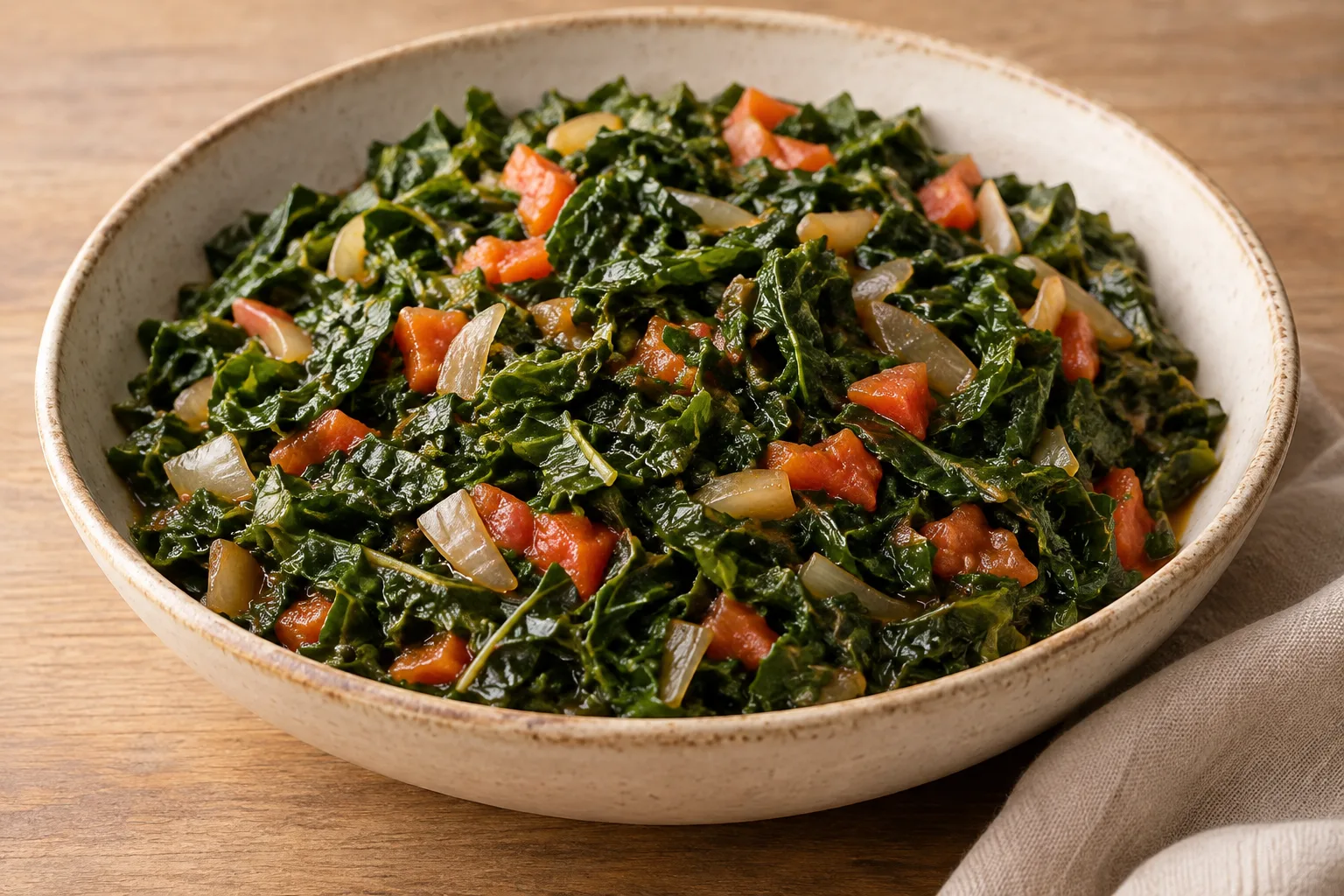
Sukuma greens are leafy greens used in a preparation known as sukuma wiki. The available culinary description associates them with wild-cabbage-like leaves, but also calls them Swiss chard; the name therefore does not establish a precise botanical identity. In cooking, the leaves are described as chopped and sautéed with tomato and onion until soft. They are also served with ugali, a firm staple made from maize flour. When buying them, check which specific greens are sold under that name rather than assuming every seller uses it for the same variety.
When to use it
Use sukuma greens when you want a cooked leafy side to serve with a meal that includes ugali. The described preparation combines the leaves with tomato and onion and cooks them until softer than they are raw. Since the name may refer to different greens, check what you have before following a recipe that calls for a particular vegetable. This preparation can provide a vegetable side for an everyday meal without assuming that the common name identifies one botanical variety everywhere.
How to use it
Remove any parts you do not want to use, inspect the leaves and chop them into manageable pieces. Cook them with tomato and onion, stirring until they soften; the described preparation aims for tender rather than crisp leaves. Adjust the cooking to the particular greens you have bought, because the name does not confirm a precise species here. Serve them as a side or with ugali. If you use another type of leafy green, its flavor, texture and cooking time may differ; no fixed substitution ratio is established.
Flavour and texture
The available culinary description characterizes the raw leaves as somewhat bitter and says cooking makes their flavor milder. Cooking them with tomato and onion produces tender leaves. The exact result depends on which vegetable is sold as sukuma and how it is cooked; the available information does not establish one flavor profile for every green sold under this name.
How to choose it
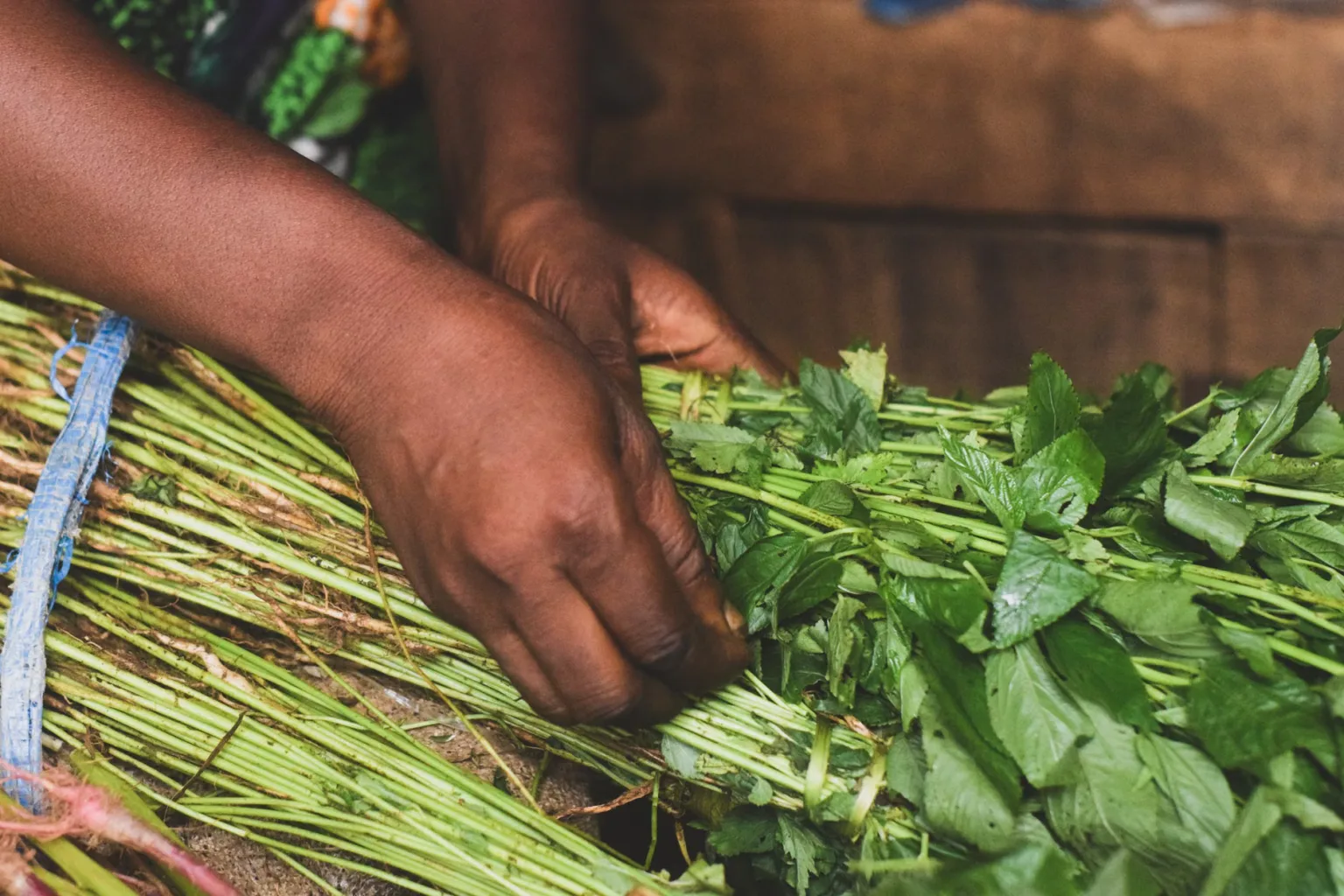
Look for fresh-looking leaves and ask which vegetable the seller means by sukuma. The available culinary description associates the name both with wild-cabbage-like leaves and with Swiss chard, so the common name alone does not verify botanical identity. If a recipe depends on a specific green, compare the leaves with the recipe’s ingredient or ask the seller before buying.
Storage
The available information does not establish a specific storage method or keeping time for sukuma greens. If you buy them fresh, handle them as leafy greens and follow any storage directions supplied with the product. Do not infer an exact shelf life or special storage technique from the vegetable’s name.
Substitutions
Wild-cabbage-like greens or Swiss chard can serve as reference options when choosing another leafy vegetable for a similar preparation, but the available description does not establish an exact substitution. Flavor, texture and time to soften may differ. No fixed equivalence or replacement ratio is established.
Common mistakes
Do not assume that sukuma always identifies one species: the available description also calls the leaves Swiss chard and associates them with wild-cabbage-like greens. Another mistake is expecting them to remain crisp after cooking; the described preparation cooks them with tomato and onion until soft. Confirm which vegetable you are buying if its identity matters to your recipe.
Safety and allergens
For packaged greens or a prepared commercial dish, check the ingredient list and allergen information on the package. The name sukuma alone does not tell you which other ingredients a prepared product may contain.
Culinary uses
- Cooked leafy vegetable
- Vegetable side dish served with a staple such as ugali
Recommended techniques
- Chop before cooking
- Sauté with tomato and onion until softened
Pairs well with
- Tomato and onion
- Ugali
Frequently asked questions
What vegetable are sukuma greens exactly?
The available description associates the name with wild-cabbage-like greens, but also calls them Swiss chard. It does not confirm one botanical identity, so check the local product.
How are they commonly cooked?
They are described as chopped and sautéed with tomato and onion until soft. The final texture may vary with the particular greens you buy.
What are sukuma greens served with?
One described pairing is ugali. They can also be served as a cooked leafy vegetable side.
Ingredient allergens
Allergen listThere are no verified associations for these ingredients yet.
Sources and review
Automatically researched, cross-checked and validated content. Sources consulted:
- ¿Por qué la muerte es origen de miedos y tabúes? doi.org/10.64628/aao.fccyk3qj3
- Maridajes de sabores – El Cuaderno elcuadernodigital.com/2024/04/03/maridajes-de-sabores/
- Agencia Española de Seguridad Alimentaria y Nutrición www.aesan.gob.es/
- Food Allergies | FDA www.fda.gov/food/nutrition-food-labeling-and-critical-foods/food-allergies
- Food allergens | Food Safety and Quality | FAO www.fao.org/food-safety/scientific-advice/food-allergens/en
- RISK ASSESSMENT OF FOOD ALLERGENS - IRIS iris.who.int/server/api/core/bitstreams/6c71a3db-88b8-4fcd-a807-f5220eb4fc34/content
- Food allergen labelling and information requirements technical guidance - GOV.UK www.gov.uk/government/publications/food-allergen-labelling-and-information-requirements-tech…
- Qué es el shiso, una planta imprescindible en la cocina asiática, y qué usos darle en cocina www.directoalpaladar.com/ingredientes-y-alimentos/que-shiso-planta-imprescindible-cocina-asi…
- Cocinar al estilo japonés: las técnicas básicas – iRASSHAi irasshai.co/es/blogs/guide-gastronomie-japonaise/cuisiner-comme-au-japon-les-techniques-esse…
- El papel de la textura en la gastronomía asiática | Kikkoman www.kikkoman.es/food-service/inspiracion/detail/embrace-texture-consistency-and-mouthfeel-in…
- Texturizantes, los nuevos ingredientes para cocinar estudiahosteleria.com/blog/cocina/texturizantes-ingredientes-para-cocinar/
- Hoja de Kombu: análisis y comparativa de las mejores opciones para preparar sushi y cocina asiática sukimotril.es/hoja-de-kombu/
- Sukuma Wiki - Receta Tradicional de Kenia | 196 flavors www.196flavors.com/es/sukuma-wiki/?srsltid=AYCX9vK-SEi5CoGlm1JyA9tRNJUlvO-rHseho8egVVF4JpeLf…