- Category
- Vegetables
- State
- Fresh
- Usual unit
- g
What it is
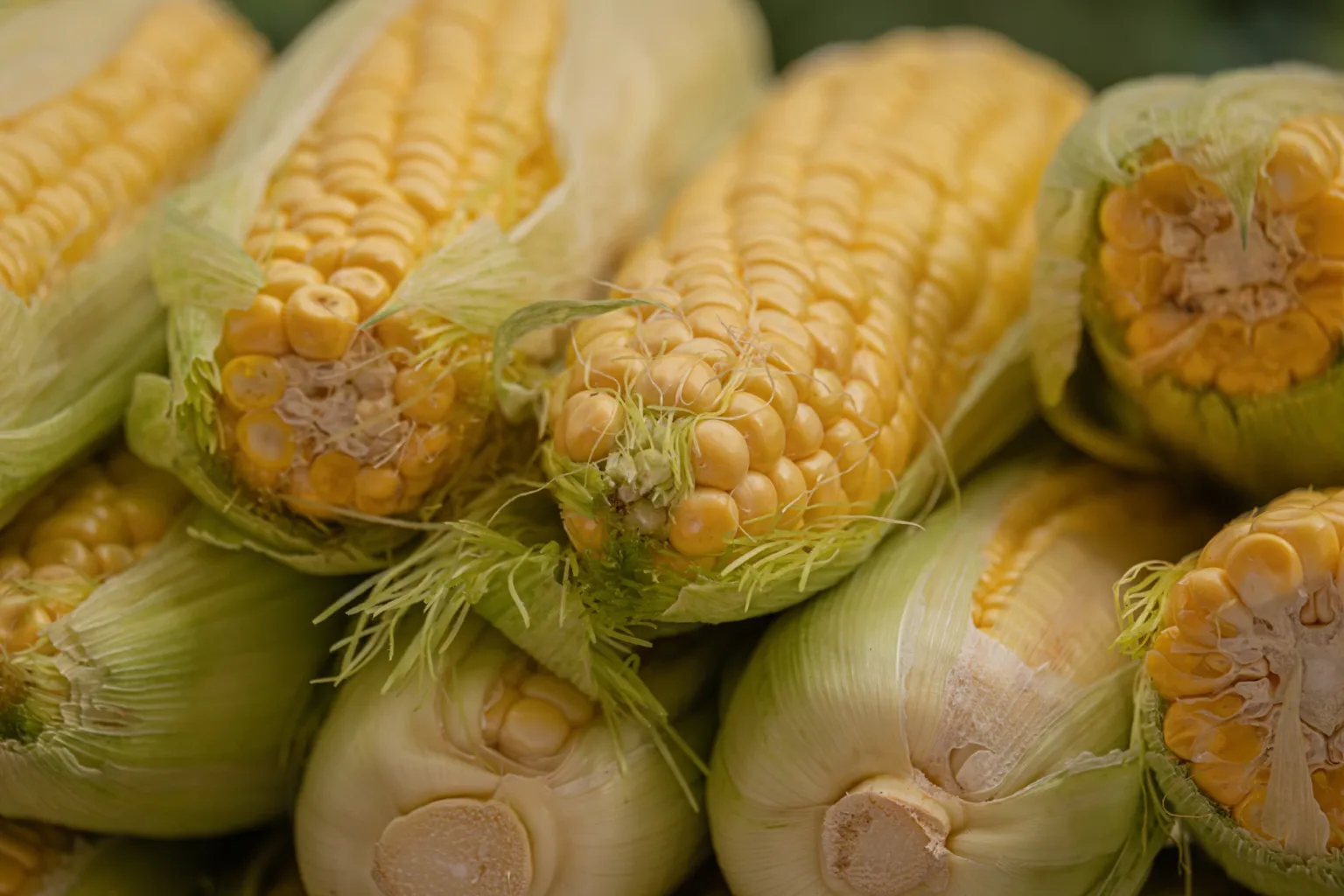
Sweet corn is a type of corn harvested for eating while its kernels are tender. The plant belongs to the grass family, and corn is botanically a cereal; in cooking, fresh sweet corn is commonly treated as a vegetable. It is sold on the cob or as loose kernels, and frozen and canned forms are also available. Sweet corn is not interchangeable in every use with varieties grown for flour, meal or popcorn, which have different culinary uses. Its sweetness and texture vary with the variety, maturity and storage or processing format.
When to use it
Choose sweet corn when you want gentle sweetness, bright color and juicy kernels in a meal. A whole ear can be served as a side, plain or with butter and spices. Kernels work well in salads, stir-fries, soups, stews, rice dishes, tortillas and fillings. You can also blend them into a sauce or purée. Fresh corn is a good choice when you want to cook whole ears or remove kernels just before serving. For convenience, canned corn is already cooked, while frozen corn is another useful option for cooked dishes.
How to use it
Remove the husk and silk from the ear and rinse it before cooking. Boil or steam it, roast it, grill it or brown it in a pan; choose a method to suit whether you want juicy corn or a more toasted flavor. If a recipe calls for kernels, stand the ear securely on a board and cut downward with care, keeping your supporting hand out of the knife’s path. Add the kernels to salads, stir-fries, soups, stews or rice dishes. Drain canned corn before using it; frozen corn generally needs cooking before serving. Taste and adjust the seasoning at the end.
Flavour and texture
Sweet corn has a naturally sweet flavor, but its intensity varies with variety, maturity and storage. Fresh, tender kernels are juicy and pleasantly firm, while more mature corn can taste less sweet and feel starchier. The format also affects the result: canned kernels may be softer, and frozen corn can have a different level of sweetness. Grilling or browning the corn brings out toasted notes that contrast with its sweetness.
How to choose it
For fresh ears, look for green, snug, fresh-looking husks, a moist stalk and soft, moist silk. Choose corn that has been kept refrigerated, shaded or on ice rather than exposed to heat. Freshness affects sweetness and texture. When buying canned kernels, check the ingredient list and choose a product suited to your recipe and taste; ingredients and texture can differ among products.
Storage
Sweet corn loses quality and sweetness over time, so cook and eat it promptly when possible. If you need to store fresh ears, keep the husks on and refrigerate them, ideally in a perforated bag in the crisper drawer. Avoid leaving them at room temperature longer than necessary. Freezing is an option for longer storage; follow a reliable procedure specifically intended for corn. Do not improvise home canning in jars: safe canning requires a tested pressure-canning method.
Substitutions
In many recipes, fresh kernels can be replaced with frozen sweet corn or well-drained canned corn; expect some difference in texture and sweetness. If you have corn on the cob but need loose kernels, cut them from the cob before adding them. These swaps work in dishes such as salads, stews and stir-fries, but they do not replace a whole ear when its presentation or cooking method is central to the dish.
Common mistakes
Do not assume every variety or format will have the same sweetness and firmness: maturity, storage and processing all affect the result. Avoid keeping fresh ears for a long time if you want their best flavor. When removing kernels, cut carefully and keep your hand clear of the knife’s path. Do not use an improvised recipe to can corn at home; jar canning requires a tested pressure-canning procedure.
Safety and allergens
Wash the ears, your hands, utensils and work surfaces before preparing the corn. If canning corn at home in jars, use a pressure canner and a tested recipe for corn; do not rely on boiling-water canning or improvised instructions. Handle the knife carefully when cutting kernels from the cob.
Culinary uses
- vegetable side dish
- ingredient for salads, soups, stews, rice dishes and fillings
Recommended techniques
- boiling or steaming
- grilling, roasting or pan-searing
- cutting kernels from the cob
Pairs well with
- tomato, avocado, cilantro and lime
- butter, herbs and spices
- chicken or vegetable broth
Frequently asked questions
Is sweet corn a grain or a vegetable?
The corn plant belongs to the grass family, and corn is a cereal. In cooking, fresh sweet corn is commonly treated and prepared as a vegetable.
Can canned sweet corn be used straight from the can?
Yes. Canned sweet corn is already cooked. Drain it and add it to salads or hot dishes as the recipe requires.
How should I store a fresh ear of corn?
Keep the husk on and refrigerate the ear, preferably in a perforated bag. For the best flavor, avoid storing it longer than necessary.
Ingredient allergens
Allergen listThere are no verified associations for these ingredients yet.
Estimated nutrition
- Fat
- 1.2 g
- Saturates
- 0 g
- Carbohydrate
- 7.2 g
- Sugars
- 5.6 g
- Fibre
- 1.6 g
- Protein
- 1.6 g
- Salt
- 0.6 g
Sources and review
Automatically researched, cross-checked and validated content. Sources consulted:
- Client Challenge doi.org/10.2307/jj.27939689.16
- The Essential Glossary of Cooking Terms for the Culinary Arts - Escoffier www.escoffier.edu/blog/culinary-arts/the-essential-glossary-of-cooking-terms-for-the-culinar…
- Agencia Española de Seguridad Alimentaria y Nutrición www.aesan.gob.es/
- Maíz: qué es, tipos y beneficios bonviveur.com/es/noticias/maiz
- The Nutritional Content of Five Southwestern ... extension.cmn.edu/wp-content/uploads/2026/03/The_Nutritional_Content_of_Five_Southwes.pdf
- Making Corn Tortillas and Salsa coloradosph.cuanschutz.edu/docs/librariesprovider151/default-document-library/inventasalsa--…
- Explorando las delicias del maíz dulce en grano friolisa.es/es/blog/explorando-las-delicias-del-maiz-dulce-en-grano.html
- Maíz dulce: propiedades, calorías, tipos y cómo utilizarlo en la cocina | Gastronomía & Cía www.gastronomiaycia.com/maiz-dulce/
- Maíz dulce, el cereal sin gluten que puedes disfrutar como una deliciosa verdura: propiedades, beneficios y cómo cocinarlo en casa www.directoalpaladar.com/ingredientes-y-alimentos/maiz-dulce-cereal-gluten-que-puedes-disfru…
- Vamos a Conservar Alimentos: Maíz dulce extension.psu.edu/vamos-a-conservar-alimentos-maiz-dulce/
- Maíz dulce (Spanish) - National Center for Home Food Preservation nchfp.uga.edu/how/can/canning-vegetables-and-vegetable-products/maiz-dulce-spanish/
- Sweet Corn - Nutrition Facts - Franklin County Center | N.C. Cooperative Extension franklin.ces.ncsu.edu/news/sweet-corn-nutrition-facts/
- Maíz dulce: historia, usos y propiedades | Huercasa www.huercasa.com/maiz-historia-usos-y-propiedades-de-un-producto-unico/