- Category
- Vegetables
- State
- Fresh
- Usual unit
- g
What it is
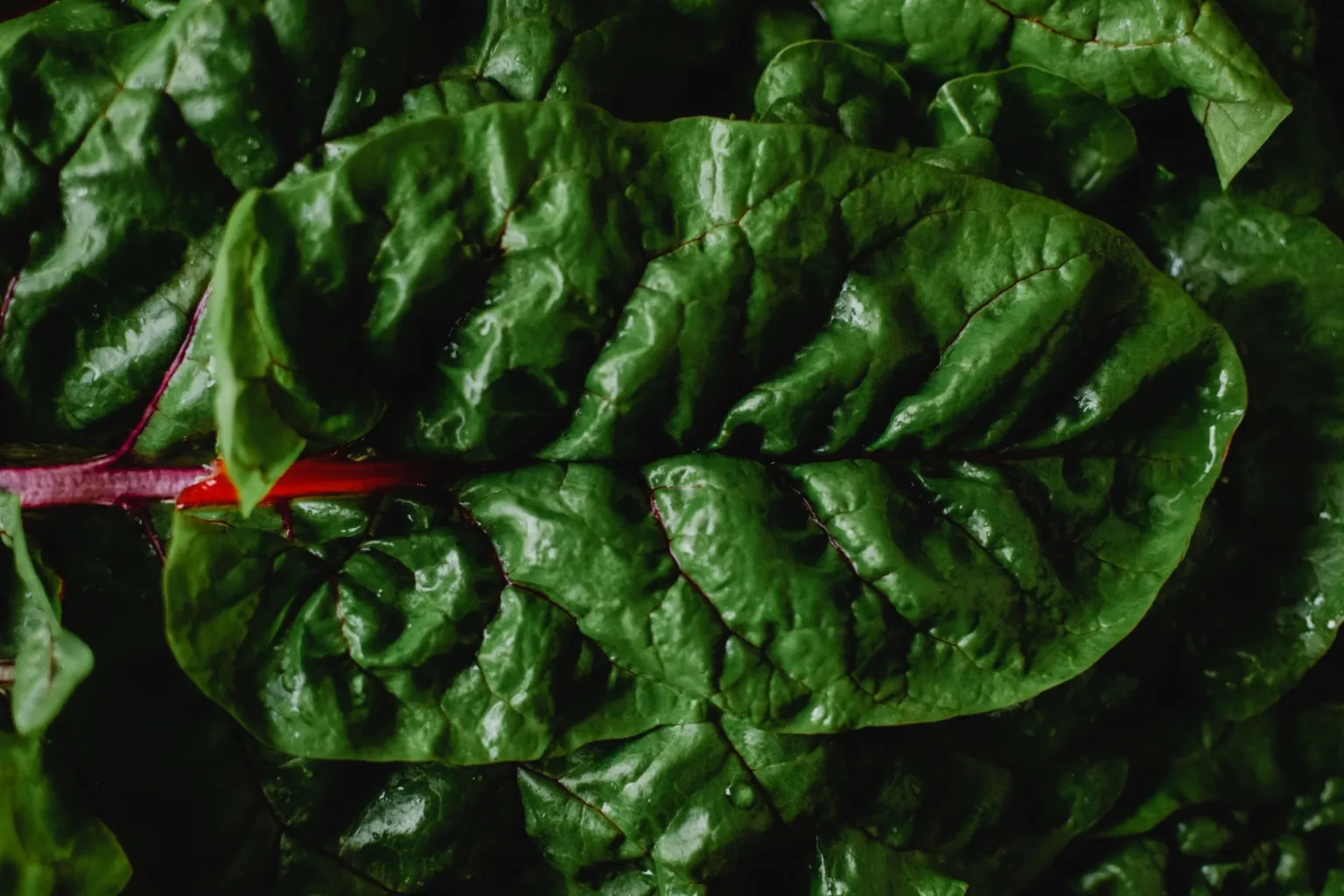
Swiss chard is a leafy vegetable in the species Beta vulgaris, grown for its broad leaves and fleshy stalks. Both parts are eaten: the leaves resemble spinach, while the stalks may be white, yellow, red or another color depending on the variety. It is usually sold fresh, in bunches with large leaves or as smaller, tender leaves. Leaf shape and stalk color vary naturally and do not, by themselves, indicate that chard is spoiled. Its flavor can be mildly earthy and slightly bitter, with differences between varieties and cooking methods. The leaves and stalks offer distinct textures, so they can be prepared together or handled separately in a recipe.
When to use it
Use Swiss chard when you want a leafy vegetable in a cooked dish or want to make use of both its leaves and stalks. It fits into soups and stews, pasta dishes and lasagna, and can be served as a steamed or sautéed side. It also works in omelets and quiches. Young, tender leaves can be used raw in salads. If a recipe includes thick stalks, remember they may need more cooking than the leaves; separating the parts makes it easier to add each at an appropriate point.
How to use it
Remove damaged parts and wash the leaves and stalks before preparing them. If the stalks are thick, separate them from the leaves, cut them into pieces and start cooking them before adding the leaves, which generally soften sooner. Boil or steam the chard, sauté it as a side dish, or add it to soups, stews, pasta and lasagna. Chard can also be mixed with eggs for an omelet or quiche. For raw use, choose small, tender leaves and add them to a salad. Adjust the cooking to the texture you want, keeping in mind that leaves soften before thick stalks.
Flavour and texture
Swiss chard tastes vegetal and mildly earthy, with a slight bitterness that can vary by variety and preparation. The leaves become tender when cooked, while the stalks are thicker, fleshy and firmer, giving the two parts different textures in one dish. Stalks may be white or brightly colored. In general, stalks need more cooking than leaves, so account for the difference when preparing them together.
How to choose it
Choose chard with fresh-looking, deep green leaves and no visible discoloration or damage. Check the stalks too: they should look firm and free of splits or deterioration. Varieties may have white, yellow or red stalks, so color alone is not a measure of freshness. Leaves that look wilted or stalks that are damaged may not retain a good texture.
Storage
Keep fresh Swiss chard unwashed in a plastic bag in the refrigerator crisper drawer. It is perishable, so plan to use it promptly; a home-storage guide gives up to three days under these conditions. Avoid leaving it at room temperature for extended periods, and check the bunch before cooking, removing any deteriorated parts.
Substitutions
Spinach can replace chard leaves in many dishes, though it does not provide the same fleshy stalks. If the recipe depends on the stalks, choose another leafy vegetable with edible stems or adapt the dish. Beet greens can also work as a leafy-green alternative when available, but the flavor and texture may differ.
Common mistakes
A common mistake is cooking thick stalks and leaves for the same length of time: the leaves may soften sooner. Separate them and, when the recipe allows, start the stalks first. Avoid bunches with discolored or damaged leaves and split stalks. Do not reject a variety simply because its stalks are colorful; Swiss chard can have white, yellow or red stalks.
Safety and allergens
Choose leaves and stalks without damage or discoloration, and remove deteriorated parts. Wash chard before cutting or eating it, and follow ordinary food-hygiene practices for fresh vegetables.
Culinary uses
- Leafy vegetable for side dishes
- Ingredient in soups, stews, pasta dishes, omelets and fillings
Recommended techniques
- Sautéing
- Steaming or boiling
- Using tender leaves raw in salads
Pairs well with
- Potatoes
- Pasta and lasagna
- Eggs
- Cream cheese and green onions
Frequently asked questions
Can you eat both the leaves and the stalks?
Yes. Both parts are used in cooking. Separate them and, if the stalks are thick, start cooking them before adding the leaves.
How should fresh Swiss chard be stored?
Keep it unwashed in a plastic bag in the refrigerator crisper drawer and aim to use it within a few days.
Can Swiss chard be eaten raw?
The most tender leaves can be added raw to salads. Stalks and larger leaves are often used cooked.
Ingredient allergens
Allergen listThere are no verified associations for these ingredients yet.
Sources and review
Automatically researched, cross-checked and validated content. Sources consulted:
- Client Challenge doi.org/10.2307/jj.27939689.16
- The Essential Glossary of Cooking Terms for the Culinary Arts - Escoffier www.escoffier.edu/blog/culinary-arts/the-essential-glossary-of-cooking-terms-for-the-culinar…
- Foods and Flavors to Savor in South America - UCEAP News and Features blog.uceap.universityofcalifornia.edu/foods-study-abroad-south-america/
- Glimpses of an 18th century Colonial Kitchen in Manila archium.ateneo.edu/cgi/viewcontent.cgi?article=1610&context=kk
- Transnational identity, food and community dr.lib.iastate.edu/bitstreams/89a09b17-bb45-4390-a97d-4319ca795535/download
- Para la ciudadanía www.aesan.gob.es/para-la-ciudadania
- Swiss Chard | UNL Food | Nebraska food.unl.edu/article/swiss-chard/
- Acelgas: qué son, qué propiedades y cómo disfrutarlas con estas recetas de temporada www.directoalpaladar.com/recetas-de-legumbres-y-verduras/acelgas-sus-propiedades-como-disfru…
- GastroWiki - Blog sobre Gastronomía gastroalianza.es/gastrowiki/articulo/las-acelgas
- Swiss Chard fonddulac.extension.wisc.edu/files/2020/07/Swiss-Chard.pdf
- Table Beets: Harvest and Storage extension.sdstate.edu/table-beets-harvest-and-storage
- Acelgas- Historia y distribución - Región de Murcia Digital www.regmurcia.com/servlet/s.Sl?r=ReP-20067-DETALLE_REPORTAJESPADRE&sit=c%2C543%2Cm%2C1216
- - YouTube www.youtube.com/watch?v=0eT9r4SHB_Q
- Acelga | Gastronomía & Cía www.gastronomiaycia.com/acelga/