- Category
- Grains, flour and pasta
- State
- Fresh
- Usual unit
- g
What it is
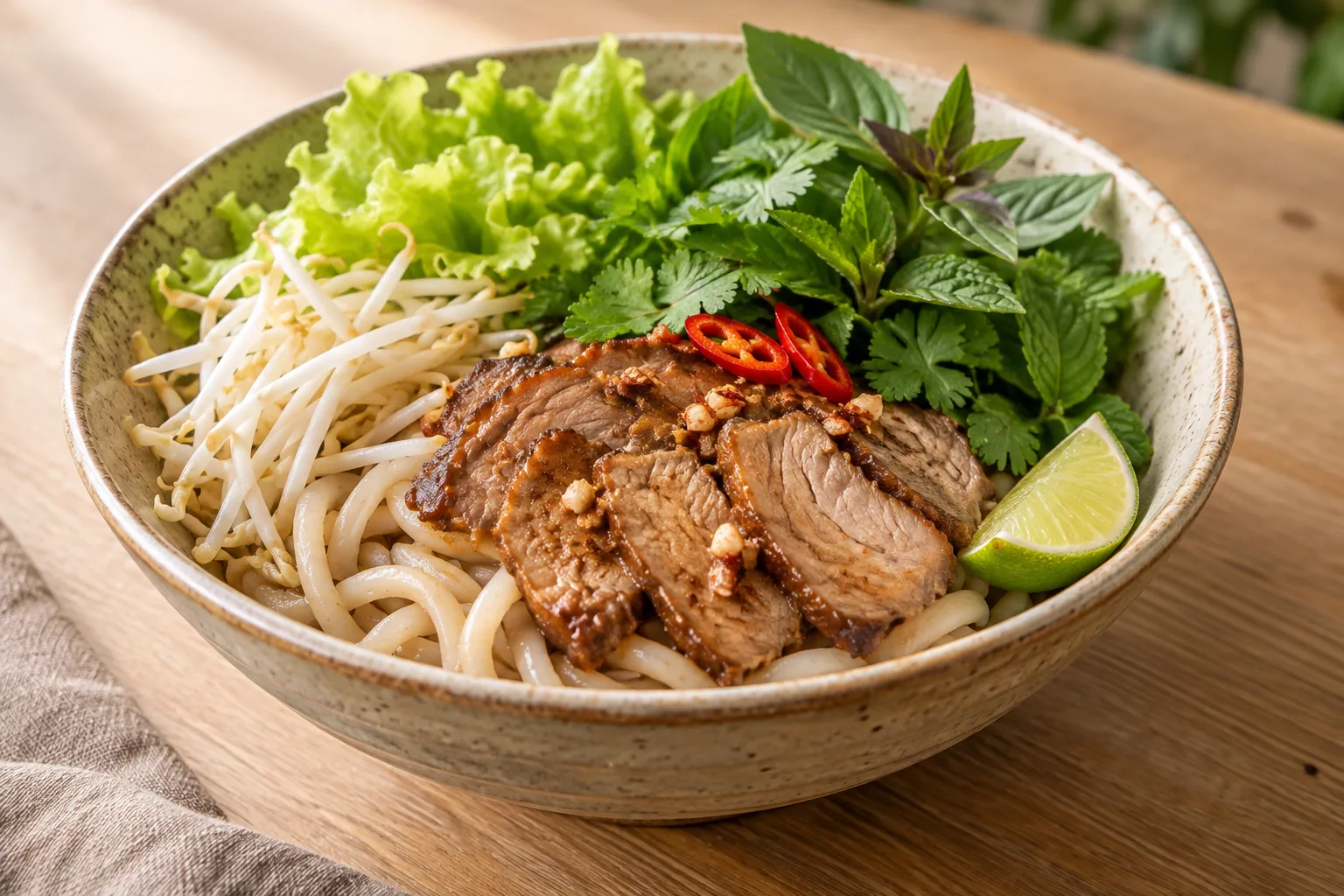
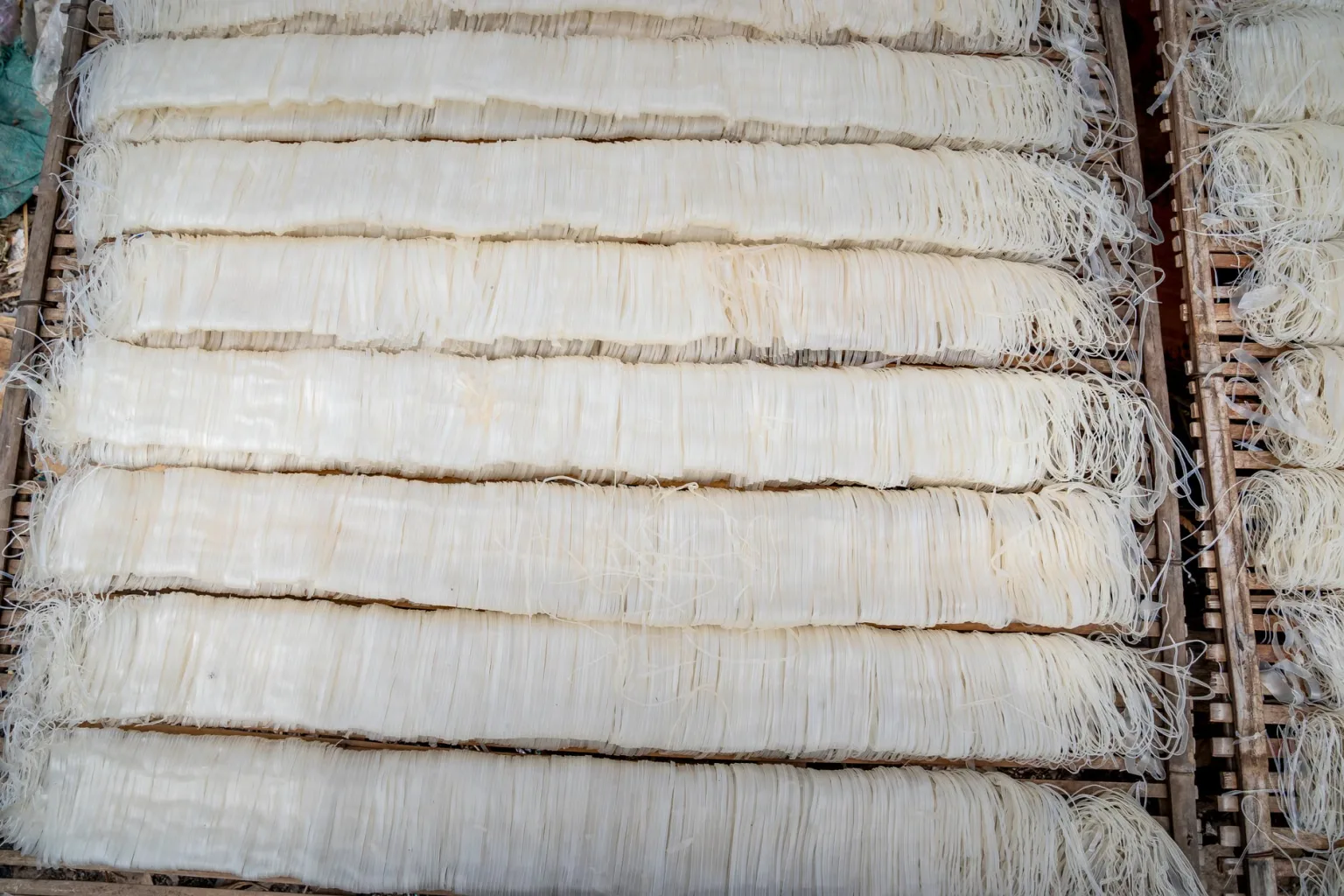
Rice noodles are made mainly from rice flour or rice paste and water. They come in different shapes, thicknesses and product states, including fresh, dried and frozen; some products may also contain tapioca or corn starch to alter texture or transparency. Thick rice noodles are often broad or flat, although their exact shape varies by product. Thickness can influence which dishes suit them and how they need to be softened or cooked. They should not all be treated as interchangeable: check the label and follow the directions for the particular package you have.
When to use it
Choose thick noodles when you want the noodle itself to have a substantial presence in a sauced dish or stir-fry. They can also be used in soups and salads, but the result depends on the noodles’ shape, thickness and state. Broad noodles are associated with stir-fries such as pad thai, while thinner varieties are often used in soups or salads. This is a general guide, not a replacement for package directions: fresh, dried and frozen products may need different handling. When cooking noodles with other ingredients, time their addition so they do not spend too long exposed to heat.
How to use it
First check whether the noodles are fresh, dried or frozen, then read the package directions: thickness affects how they should be prepared and how long they take. Dried noodles may need soaking or softening; some broad varieties are soaked before being added to a dish. Fresh noodles may be ready to use in a cold dish, while a hot preparation may require only brief warming, depending on the product. Handle them gently and separate them without pulling hard to reduce breakage and clumping. For a stir-fry, add them to the pan with the other ingredients and a little liquid if needed, taking care not to scorch them. For soup, follow the label and watch their texture; some recipes add the noodles to the broth close to serving time.
Flavour and texture
Their flavor is generally mild, allowing sauces and other ingredients to stand out. Texture depends on thickness and preparation: the noodles can become tender and flexible, but they are delicate and may stick or break if handled roughly or cooked too long. Some products contain added starches that change their transparency or mouthfeel. Do not assume every thick rice noodle has exactly the same texture; check the product type and adjust preparation to its label.
How to choose it
Check that the package identifies the product as rice noodles and tells you whether they are fresh, dried or frozen. Shapes and thicknesses vary, so choose with the dish in mind: broad noodles can work well in stir-fries, while thinner formats are often used in soups or salads. Read the ingredient list and preparation directions, especially if you want a particular texture or the product contains added starches. For fresh noodles, check the package’s storage directions and date.
Storage
Store the product according to its package directions, since rice noodles are sold fresh, dried and frozen. Do not apply one product’s storage advice to another type. Fresh noodles are more perishable than dried ones, so follow the date and conditions stated for that specific package. Keep the package closed as directed by the manufacturer; if you cannot confirm how to store an opened product, check the label before storing or using it.
Substitutions
You can substitute another thickness of rice noodle, but the preparation and result will change. A thinner format may soften sooner and suit a soup or salad; a broad format often works well in stir-fries. Check the replacement product’s state and directions instead of automatically using the same method as for thick noodles. Changing the format may also affect the final texture and how much sauce seems appropriate.
Common mistakes
Do not rely on one universal cooking time: thickness, product state and manufacturer instructions can all affect preparation. Avoid overcooking, rough stirring or leaving the noodles piled together, since they are delicate and can stick or break. Do not assume every rice noodle should be boiled like wheat pasta; check the package and watch how the noodles soften when they meet heat and liquid in a stir-fry or soup.
Safety and allergens
Check the package to confirm the ingredients and storage conditions for the specific product. Follow the manufacturer’s directions, especially for fresh or frozen noodles; the available evidence does not establish one storage time for every variety.
Culinary uses
- Base de salteados y platos de noodles
- Ingrediente para sopas y ensaladas
Recommended techniques
- Remojar o ablandar según el tipo y las instrucciones del envase
- Añadir a salteados o caldos con cuidado para evitar que se peguen o se rompan
Pairs well with
- Verduras, tofu, carne o marisco
- Salsas de soja, cítricos, hierbas y cacahuetes
Frequently asked questions
Do thick rice noodles always need to be boiled?
No. Preparation depends on the product, its state and its thickness. Check the package before soaking, heating or adding the noodles directly to a dish.
What dishes can I make with them?
They can be used in stir-fries, soups and salads. Broad formats are often used in stir-fries, but the recipe and the specific product also matter.
Why do rice noodles stick or break?
They are delicate, and their result depends on thickness and preparation. Overcooking or rough handling can make them stick or break, so follow the package directions and handle them gently.
Ingredient allergens
Allergen listThere are no verified associations for these ingredients yet.
Estimated nutrition
- Fat
- 0.2 g
- Saturates
- 0.02 g
- Carbohydrate
- 24 g
- Sugars
- 0.03 g
- Fibre
- 1 g
- Protein
- 1.79 g
- Salt
- 0.05 g
Sources and review
Automatically researched, cross-checked and validated content. Sources consulted:
- ¿Por qué la muerte es origen de miedos y tabúes? doi.org/10.64628/aao.fccyk3qj3
- The Essential Glossary of Cooking Terms for the Culinary Arts - Escoffier www.escoffier.edu/blog/culinary-arts/the-essential-glossary-of-cooking-terms-for-the-culinar…
- Sopa de Pollo y Fideos* food.unl.edu/sites/unl.edu.ianr.extension.food/files/recipes/documents/spanish/chicken-noodl…
- Washington State Food Access English-Spanish Glossary wpcdn.web.wsu.edu/wp-snaped/uploads/sites/2/2025/10/Food-Access-Spanish-Glossary.pdf
- Contributions of Medieval Food Manuals to Spain's ... scholar.uc.edu/downloads/8910jw314?locale=en
- Fideo de arroz - Wikipedia, la enciclopedia libre es.wikipedia.org/wiki/Fideo_de_arroz
- Los fideos de arroz, ¿por qué triunfa esta pasta típica asiática? | El Diario Vasco www.diariovasco.com/gastronomia/despensa/fideos-arroz-triunfa-pasta-tipica-asiatica-20230330…
- Tips para cocinar y usar fideos de arroz | Recetas Nestlé www.recetasnestle.com.ar/escuela-sabor/coccion-tecnica/fideos-de-arroz
- - YouTube www.youtube.com/watch?v=8L6VSCVhAWM
- Pad Thai – Community Nutrition Security Research Group web.uri.edu/community-nutrition/pad-thai/
- Salteado de Tofu y Verduras - MyLLU - Loma Linda University myllu.llu.edu/utilities-fileManager/action:image/?item=%2Flivingwhole%2Frecipes%2FSalteado%2…
- ¿Cómo cocinar fideos de arroz? | JUST SPICES® www.justspices.es/blog/como-cocinar-fideos-de-arroz