- Category
- Sauces and condiments
- State
- Preserved
- Usual unit
- Variable
What it is
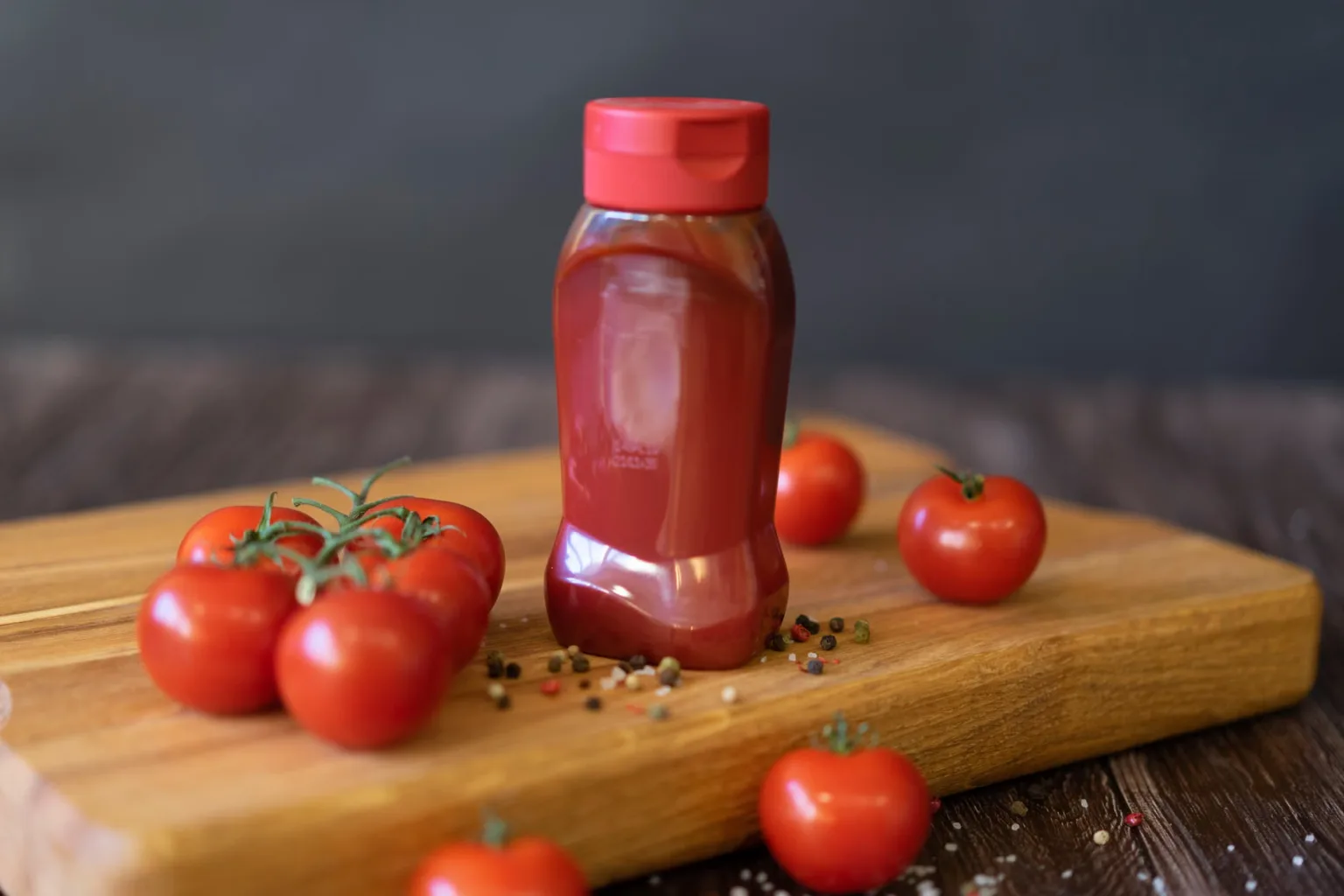
Tomato ketchup is a seasoned tomato sauce whose main ingredient is tomato. A common formulation combines tomato—possibly as concentrate, purée, juice, or another tomato preparation—with vinegar, salt, sugars, and spices. Some versions include other permitted ingredients, such as starches or flavorings. It is typically red, smooth, and thick, with a flavor that balances sweetness and acidity. The proportions, sweetness, vinegar intensity, and seasoning differ from product to product, so read the product name and ingredient list rather than assuming there is one universal recipe. Ketchup is a ready-to-use condiment; it is not interchangeable with plain tomato sauce or with home-canned tomato products.
When to use it
Use ketchup when you want to add a quick sweet-and-tangy contrast to savory food, or to offer a condiment on the side so diners can choose how much to use. It is a familiar accompaniment to burgers, hot dogs, and fries. It can also contribute flavor to a sauce or marinade for grilled or oven-cooked meat. Because vinegar, sugars, and spices can strongly affect a dish, start with a small amount when mixing ketchup into a recipe and taste before adding more. If you mainly want a plain tomato flavor, remember that ketchup is already seasoned and does not behave exactly like fresh tomato, purée, or tomato sauce.
How to use it
Serve ketchup as a dip or table condiment, or mix it with other ingredients to make a sauce or marinade. For grilling or oven cooking, you can mix it into a seasoning mixture or brush on a thin layer; its sweetness and acidity already contribute flavor, so taste the mixture before adjusting other seasonings. You can also stir a small amount into a sauce or stew for a seasoned tomato note, but do not treat it as a neutral tomato substitute. Avoid automatically using the same amount as tomato sauce: ketchup already contains vinegar, sugars, and spices. Check the label when you need to know the exact ingredients in a particular bottle or packet.
Flavour and texture
Ketchup is generally sweet and tangy, with tomato and spice notes; the balance depends on the brand and recipe. Vinegar contributes acidity, sugars round out the taste, and seasonings add flavors that plain tomato purée does not have. Its red color and thick, smooth texture make it easy to serve, spread, or mix. Tomato concentrate can contribute an intense color, aroma, and flavor, although vinegar and spices also shape the finished profile.
How to choose it
Read the product name and ingredient list to confirm that you are buying tomato ketchup and to understand its particular formulation. The tomato base may come from concentrate, purée, juice, or another form, and some recipes include ingredients such as starches or flavorings. Check the package if you want to compare the sweetness, seasonings, or stated tomato amount; do not assume all brands have the same taste or composition. If you have an allergy or need to avoid a particular ingredient, check the specific product label because formulations can vary.
Storage
Follow the storage instructions printed on the package: one rule cannot be assumed for every brand and format. Keep the bottle or packet closed and follow the manufacturer’s directions after opening. Do not use the product if the package is damaged or leaking, or if its appearance or smell seems unexpected. For homemade ketchup intended for canning, do not improvise the process: use a tested preservation recipe and follow its directions exactly, because changing ingredients or proportions can compromise safety.
Substitutions
Tomato sauce can stand in when you want a tomato base, but it may need seasoning adjustments and will not necessarily provide the same balance of sweetness, vinegar, and spices. Tomato purée or paste can also be a starting point for a seasoned preparation, but neither is a ready-to-serve equivalent. Adjust the flavor to the dish, and do not assume an equal amount will produce the same result.
Common mistakes
A common mistake is treating ketchup like neutral tomato purée: it already contains seasonings, vinegar, and sugars, so it can change a recipe’s balance. Adding too much at once may make a sauce sweeter or more acidic than intended. It is also easy to assume every brand has identical ingredients; check the label. When making ketchup for home canning, do not change the proportions in a tested preservation recipe.
Safety and allergens
Check the label for ingredients and product-specific storage directions, especially if you need to avoid an ingredient. For homemade ketchup intended for preservation, follow a tested canning recipe without changing its ingredients, proportions, or process. Do not use the product if the package or contents appear damaged or abnormal.
Culinary uses
- condimento para servir en la mesa
- ingrediente para salsas y marinadas
- toque dulce y ácido para platos salados
Recommended techniques
- mezclar en una salsa o aderezo
- incorporar a una marinada
- untar sobre alimentos antes de asar
Pairs well with
- hamburguesas y perritos calientes
- patatas fritas
- carnes a la parrilla o al horno
Frequently asked questions
What ingredients are usually in tomato ketchup?
It is commonly made with tomato, vinegar, salt, sugars, and spices. The exact formulation varies and may include other ingredients, so check the label.
Is ketchup the same as tomato sauce?
No. Ketchup is a seasoned tomato condiment, commonly including vinegar, sugars, and spices. Tomato sauce can have a different composition and flavor.
How should I store an opened bottle?
Follow the package directions. Storage instructions can differ by product and format, so do not assume one rule applies to all ketchup.
Ingredient allergens
Allergen listThere are no verified associations for these ingredients yet.
Estimated nutrition
- Fat
- 0 g
- Saturates
- 0 g
- Carbohydrate
- 23.5 g
- Sugars
- 23.5 g
- Fibre
- 0 g
- Protein
- 0 g
- Salt
- 2.35 g
Sources and review
Automatically researched, cross-checked and validated content. Sources consulted:
- ¿Por qué la muerte es origen de miedos y tabúes? doi.org/10.64628/aao.fccyk3qj3
- The Essential Glossary of Cooking Terms for the Culinary Arts - Escoffier www.escoffier.edu/blog/culinary-arts/the-essential-glossary-of-cooking-terms-for-the-culinar…
- Canning Tomatoes and Tomato Products | UNL Food | Nebraska food.unl.edu/article/tomatoes-and-tomato-products/
- IBD-AID ALLOWABLE FOODS LIST, BY PHASE www.umassmed.edu/globalassets/nutrition/ibdaid-food-list/foods-list-updated-aug-1.2019.pdf
- Tomato Ketchup - National Center for Home Food Preservation nchfp.uga.edu/how/can/how-do-i-can-tomatoes/tomato-ketchup/
- Qué es el kétchup y qué ingredientes contiene | Consumer www.consumer.es/alimentacion/que-es-ketchup-ingredientes.html
- Language Log » "Tomato sauce" in Cantonese, with a trigger warning languagelog.ldc.upenn.edu/nll/?p=61115
- Tanzania Food Composition Tables | The Nutrition Source nutritionsource.hsph.harvard.edu/wp-content/uploads/2023/09/Tanzania-Food-Composition-Tables…
- Food & Nutrition | Colorado State University Extension foodsmartcolorado.colostate.edu/food/foods-and-beverages/colorado-produce/colorado-tomatoes/
- Ketchup: el clásico condimento que nunca pasa de moda - Garpa Alimentación - Almacenamiento y Distribución para las Islas Canarias garpa-alimentacion.com/ketchup-el-clasico-condimento-que-nunca-pasa-de-moda/
- El curioso origen del ketchup, una salsa para llevar a todas partes - Helios www.helios.es/el-curioso-origen-del-ketchup-una-salsa-para-llevar-a-todas-partes/
- RECETAS CON HISTORIA E HISTORIA DE LA GASTRONOMíA: Ketchup, historiasdelagastronomia.blogspot.com/2007/12/ketchup.html
- El ketchup, llegó el rey de las salsas (y una posible receta) | Mercado Calabajío www.mercadocalabajio.com/2007/10/el-ketchup-la-biografia-de-un-rey.html