- Category
- Dairy and eggs
- State
- Fresh
- Usual unit
- g
What it is
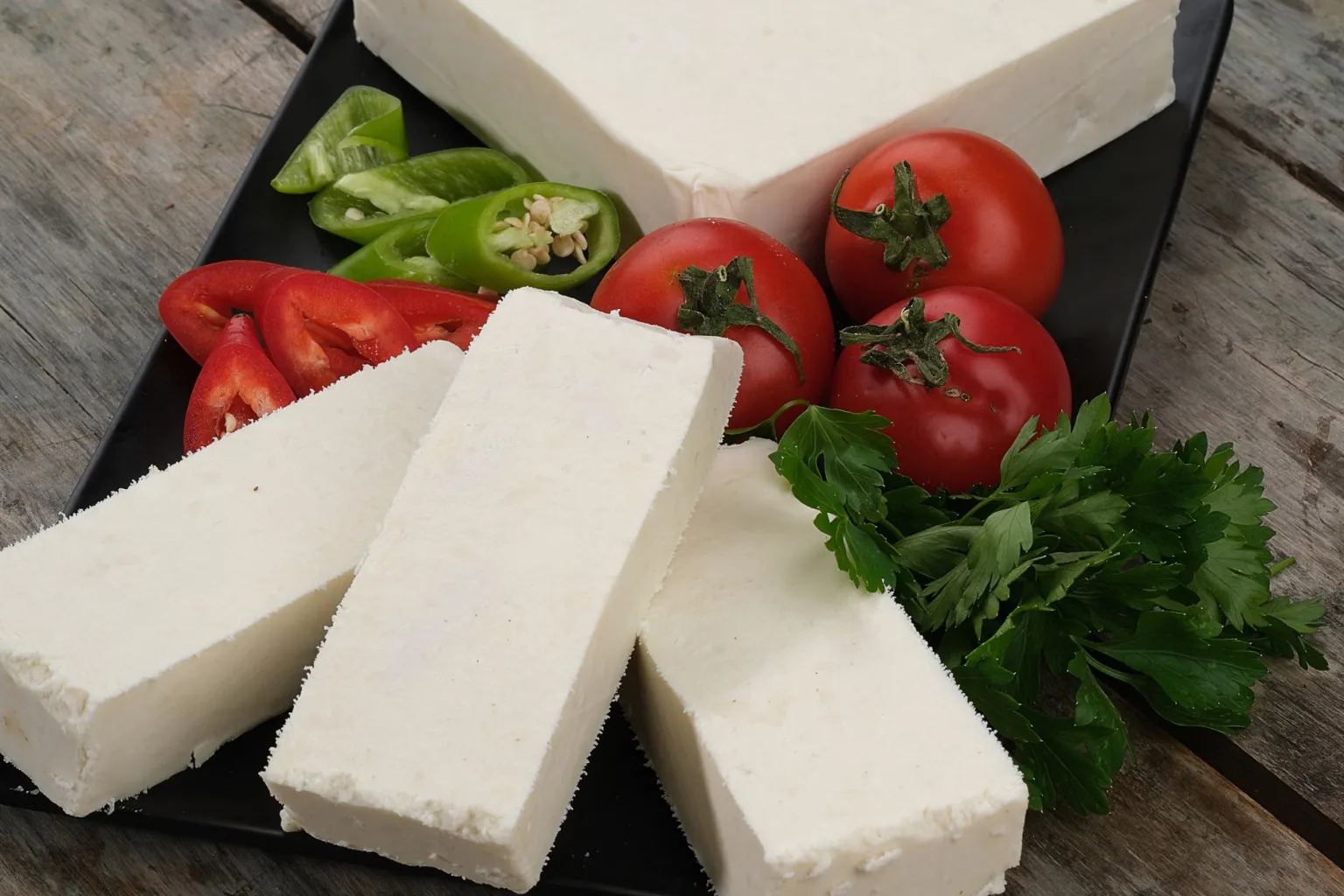
White cheese does not necessarily identify one single cheese style. The name can refer to fresh, pale cheeses whose texture, moisture, and production methods vary. In general, it is a dairy product made from curds and eaten without extended aging. Some fresh cheeses in this group are made by curdling hot milk with an acid, while other products and methods may differ. For that reason, check the label and the cheese’s actual consistency rather than assuming that every product called white cheese is interchangeable. It may be soft and moist, or firmer and easier to cut. This profile describes general culinary uses for fresh white cheese, not one specific regional variety or recipe.
When to use it
Use it when you want to add a generally mild, pale cheese to a meal, especially if you want a fresh texture rather than the stronger character of an aged cheese. It can add pieces or crumbles to a salad, be served as part of a starter, or be mixed into fillings and sweet preparations. Choose according to the product’s moisture and firmness: a cheese that holds its shape is convenient for cubes, while a softer one blends more readily. Because the name covers different products, check the label and select for the result you want rather than assuming that every white cheese will melt or behave the same way when heated.
How to use it
First check whether the cheese is firm, soft, or very moist, then choose a cut that suits it: crumble it over a salad or cut it into cubes to serve as part of a dish. It can also be mixed into fillings and creams, or paired with honey or jam for a sweet serving. When mixing, add the cheese gradually and adjust the consistency of the preparation to account for its moisture. If you plan to heat it, do not assume it will melt like a cheese made for melting; its response to heat depends on the type and how it was made. Keep the package information available and follow its storage instructions.
Flavour and texture
Fresh white cheese is usually mild and milky, but flavor varies by product. Moisture and production affect whether it is creamy, soft, crumbly, or firm enough to cut. Do not infer the texture from the name alone: check the product’s appearance and consistency before deciding how to serve it.
How to choose it
Choose the cheese for the intended use: look for a firm piece if you want cubes, or a softer texture if you plan to mix it into a filling or cream. Read the product name and ingredient list to see what you are buying; “white cheese” can cover different styles. Also check the date and the package’s storage instructions.
Storage
Store it according to the directions on its label; requirements can vary by product and packaging. Keep the cheese in its package or well covered after opening, and avoid leaving it exposed to air. Follow the stated date and do not assume every white cheese has the same usable life after opening.
Substitutions
Consider paneer when you need a mild fresh cheese that holds its shape more firmly, though the texture and result will not be identical. Ricotta or cottage cheese may work in preparations that suit a softer fresh cheese. Check the alternative’s moisture and consistency and adjust the mixture; do not assume these options behave alike when heated.
Common mistakes
A common mistake is treating every product called white cheese as the same variety. Moisture and firmness can differ, so do not choose a substitute or cooking method based on the name alone. Another mistake is leaving the cheese uncovered or ignoring the package’s storage directions.
Safety and allergens
Cheese is a dairy product and may contain milk, an allergen that must be declared under applicable rules. Check the label or ask for allergen information for products sold unpackaged. Follow the manufacturer’s storage and safe-use directions.
Culinary uses
- Salad ingredient and topping
- Fresh component for desserts and fillings
Recommended techniques
- Crumbling or cutting into cubes
- Mixing into fillings, creams, or other dishes
Pairs well with
- Salads and vegetables
- Honey or jam
Frequently asked questions
Is white cheese always the same variety?
Not necessarily. The name can cover different fresh cheeses, so moisture, firmness, and production can vary. Check the specific product’s label.
How can I serve it?
Depending on its consistency, crumble or cube it for a salad, mix it into a filling or cream, or serve it with honey or jam.
How should I store it?
Follow the label directions, keep the cheese covered after opening, and observe the product’s stated date and use instructions.
Ingredient allergens
Allergen listDocumented presence
-
Milk and milk products
White cheese
Estimated nutrition
- Fat
- 25 g
- Saturates
- 16 g
- Carbohydrate
- 3.5 g
- Sugars
- 3.5 g
- Fibre
- 0 g
- Protein
- 27 g
- Salt
- 2.92 g
Sources and review
Automatically researched, cross-checked and validated content. Sources consulted:
- En el etiquetado alimentario hay algunas menciones que son obligatorias eletiquetadocuentamucho.aesan.gob.es/obligatoria.html
- Client Challenge doi.org/10.2307/jj.27939689.16
- The Essential Glossary of Cooking Terms for the Culinary Arts - Escoffier www.escoffier.edu/blog/culinary-arts/the-essential-glossary-of-cooking-terms-for-the-culinar…
- Handling of Cheese for Safety & Quality | Home & Garden Information Center hgic.clemson.edu/factsheet/handling-of-cheese-for-safety-quality/
- Making Homemade Cheese | New Mexico State University - BE BOLD. Shape the Future. pubs.nmsu.edu/_e/E216/
- Storing Food for Safety and Quality wpcdn.web.wsu.edu/extension/uploads/sites/45/2017/03/PNW0612-Storing-Food-for-Safety-and-Qua…
- Para la ciudadanía www.aesan.gob.es/para-la-ciudadania
- Gifts From the Kitchen 2023: Making Cheese in Your Home ucanr.edu/media/276665
- Incorporating flaxseed (linum usitatissimum) oil into queso ... repository.lsu.edu/cgi/viewcontent.cgi?article=2517&context=animalsciences_pubs
- Desroches, Rebecca | Dining Services | Division of Student Life & Enrollment | University of Connecticut dining.uconn.edu/author/red19005/page/8/
- Cheese - Food Source Information www.chhs.colostate.edu/fsi/food-articles/animal-products/cheese/
- Queso - Wikipedia, la enciclopedia libre es.wikipedia.org/wiki/Queso
- Cómo utilizar los quesos en la cocina - Estudia Hostelería estudiahosteleria.com/blog/gastronomia/usar-quesos-cocina/