Documentary synthesis prepared with AI assistance. It does not replace specialist review or certify kitchen testing. · Updated 31 October 2026
A cuisine shaped by valleys and altitude
Bhutan’s foodways reflect a Himalayan landscape of valleys, highlands, and different growing conditions. What is eaten depends in part on the grains and produce available locally: rice is widespread, while buckwheat and barley are important in higher areas and maize is associated with eastern districts. These ingredients do not form a single fixed national menu; they meet different vegetables, dairy products, and meats from place to place.
A striking feature of many meals is the use of chilli as food in its own right, not merely as a seasoning. Chilli cooked with datshi, a local cheese, makes the well-known ema datshi. Yet Bhutanese cooking is broader than this celebrated combination. Rice and other grains accompany vegetable, cheese, and meat dishes; noodles, dumplings, soups, and preserved foods add further forms and textures. Regional variation matters: a dish familiar across the country may still differ in its ingredients or preparation between localities.
Exchange, adaptation, and continuity
Bhutanese food has developed through the meeting of local ingredients with culinary exchange across the Himalaya. Western Bhutanese food includes preparations shared with a wider Tibetan-influenced food culture, such as thukpa noodles, momos, and snacks including khabzey and shabalay. Their presence does not make every version identical: local grains, dairy, vegetables, and cooking preferences shape how such foods appear in Bhutan.
Ingredients themselves also have histories of movement. Chilli is central to contemporary cooking, although one account notes that it is not native to Bhutan and suggests it arrived through contact with India. The precise route and chronology are not established by the evidence available here, so it is safer to describe chilli as an adopted ingredient that became deeply embedded in local foodways. Regional agriculture and preservation have also shaped continuity: rice, buckwheat, and maize are associated with different growing areas, while drying meat and transforming milk into butter and cheese extend the uses of seasonal produce. These changes are part of a living cuisine, not evidence of an unchanging or uniform tradition.
Grains, dairy, chillies, and preserved foods
Rice is a central grain, with red rice especially associated with Paro and other districts. It has a nutty character and a firmer bite than some other varieties. Accounts also describe white rice in southern areas and yellow rice in parts of the east. In central Bhutan, buckwheat is used for noodles and dumpling dough; maize is grown in eastern districts, and barley is another grain found in higher areas.
Potatoes, leafy greens, radishes, and mushrooms supply ingredients for everyday dishes and stews. Dairy is particularly important in cooked preparations. Datshi is used in sauces with vegetables or meat rather than usually eaten plain; butter is another valued product and is churned into tea. Eastern Bhutan is associated in one account with zoedoe, a strong-smelling, greenish cheese added in small quantities to soup. The evidence also describes a very hard cheese in yak-raising areas.
Meat may be fresh or dried, and accounts name pork, beef, chicken, and yak among foods eaten. Drying beef for shakam paa concentrates its flavour and gives it a chewy texture. Chilli appears fresh or dried, and chopped chilli mixtures such as ezay provide another way to serve it.
Heat, dairy richness, and varied textures
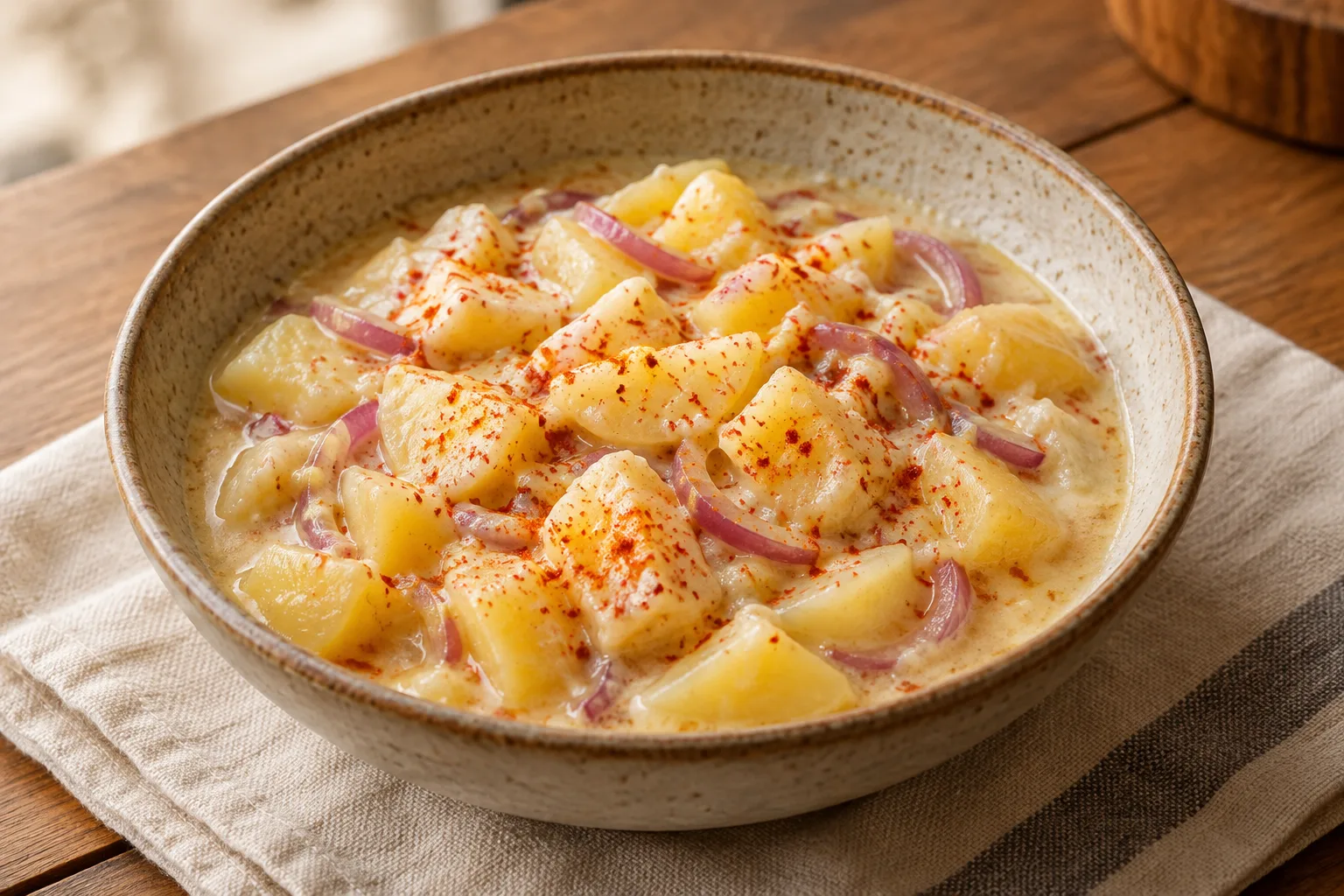
Chilli and cheese give many Bhutanese dishes a distinctive combination of heat and richness. In ema datshi, chillies are cooked with cheese; the result may be a saucy stew, and the level of heat depends on the chillies used. Served with rice, it brings a strong, creamy element to the meal. Related preparations change the main ingredient: kewa datshi combines potatoes and cheese, while shamu datshi uses mushrooms. These names describe families of dishes rather than a single unvarying formula.
Other foods create different contrasts. Dried beef in shakam paa is chewy and concentrated, often cooked with chilli and sometimes radish. Phaksha paa pairs pork with chilli and may include radish or leafy vegetables. In jasha maru, chicken is cooked with aromatics including ginger, garlic, and onion; some descriptions also include tomato. Chilli is important, but it is not the only source of character. The nutty bite of red rice, earthy mushrooms, tender vegetables, sharp or strong cheeses, and the texture of dough or noodles all shape a dish. Together, these ingredients make a cuisine that ranges from creamy stews to savoury meat dishes and broths.
Hospitality, celebration, and everyday transmission
Food knowledge is carried through ordinary cooking: families and cooks prepare familiar dishes with the vegetables, grains, and dairy available to them. A datshi stew can change with the chosen vegetable, the kind or quantity of chilli, and the amount of cheese. Such variation is part of the cuisine’s vitality; no single celebrated dish stands for every household or community.
Offering a drink is an important expression of hospitality in the accounts of Bhutanese food and drink. Suja, tea churned with butter and salt, contrasts with ngaja, milk tea sweetened with sugar. Grain-based alcoholic drinks also have a place in social life. Ara may be made by fermenting or distilling grains, while banchang and sinchang are described as fermented grain drinks. Their presence does not mean that every household serves or makes them.
Some foods are associated with particular gatherings. Momos are eaten as snacks or meals and are linked in accounts with festivals and family gatherings; folding dumplings can involve several people working together. Buckwheat hoentay are associated with celebrations in some highland communities. These are documented local or social contexts, not a single national ritual or a claim that every celebration includes the same dishes.
Stewing, drying, fermenting, and shaping dough
Stewing brings together ingredients that might otherwise be served separately. In ema datshi, chillies cook with cheese; potatoes or mushrooms make the related kewa datshi and shamu datshi. Meat dishes also use moist cooking: chicken in jasha maru is cooked with aromatics, while pork in phaksha paa can be combined with chilli and vegetables. The precise ingredients vary among descriptions and local preparations.
Drying preserves meat and produces a firmer, more concentrated ingredient for dishes such as shakam paa. Dairy undergoes a different transformation: milk is made into butter and cheese, and the cheese is then cooked into sauces or added to soup. Fermenting grain produces traditional drinks; some ara is fermented and some is distilled. These are distinct practices with different results, rather than a single general method of preservation.
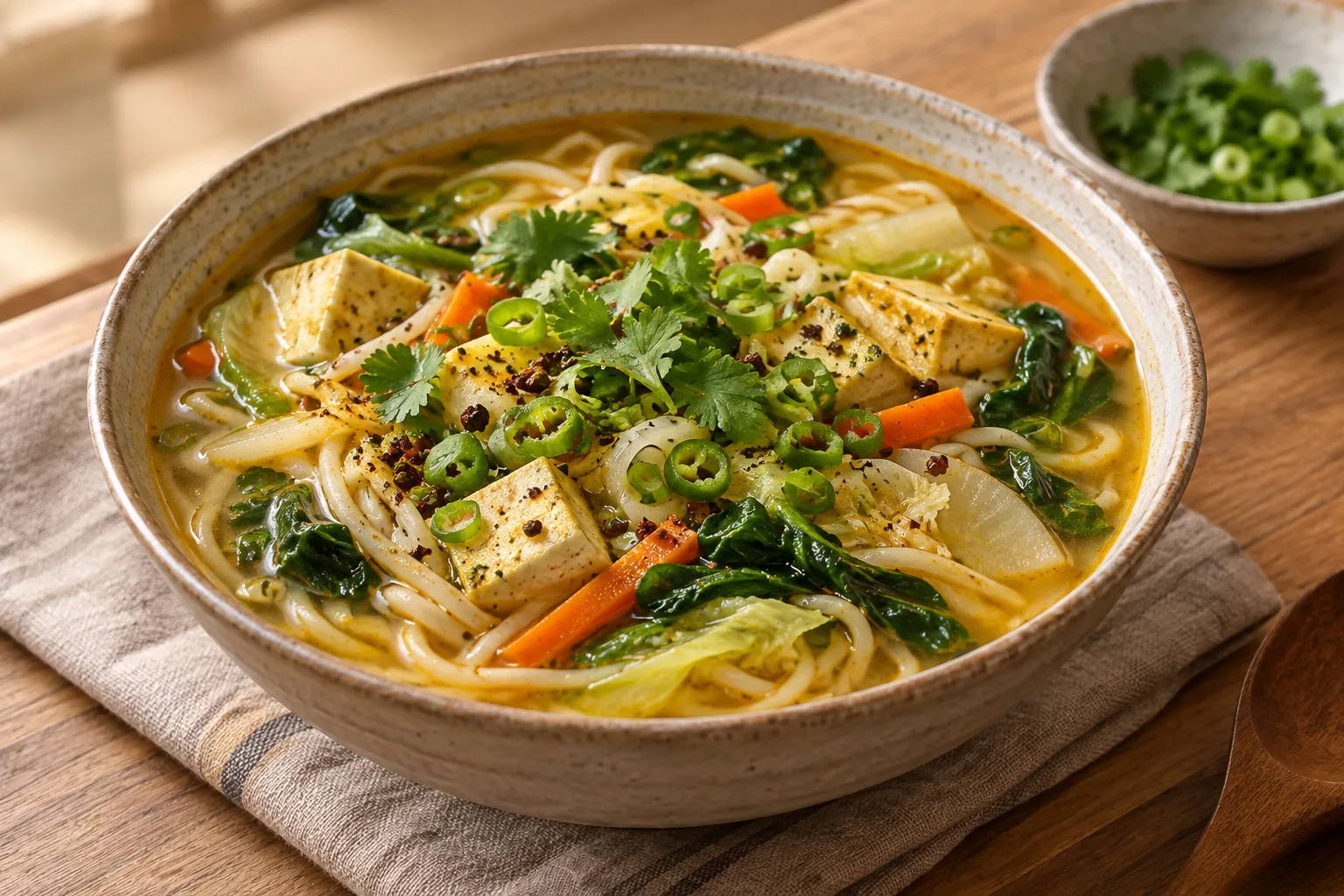
Cereal preparation also includes milling or working grain into dough and noodles. Buckwheat becomes puta noodles and dough for hoentay. Dumplings such as momos are filled and may be steamed or fried. Churning tea with butter and salt makes suja. Together, these processes show how local grains, dairy, meat, and plants are transformed into foods with varied textures and uses.
Rice, stews, drinks, and changing meal settings
Rice commonly provides the base for a meal, with stews and other dishes eaten alongside it. Red rice is often paired with chilli-and-cheese preparations, vegetables, or meat, while local grains may take its place in areas where buckwheat or maize is important. The combination is flexible: the season, locality, and household preferences influence what accompanies the grain and how much chilli is used.
A meal may include several dishes rather than one defining preparation. Ema datshi and kewa datshi illustrate how cheese can bind different ingredients into a sauce, while vegetables, meat, or lentils provide alternatives and additions. Noodle soup, dumplings, and juma sausages widen the range of snacks and meals. Chilli relish such as ezay can be served as an accompaniment. Tea, whether salty and buttery or sweet with milk, is another part of food hospitality.
Eating settings vary. Homes and family gatherings coexist with restaurants and cafés, especially in cities such as Thimphu and Paro. Urban menus can include Bhutanese food alongside international cuisines, while rural food offerings differ by locality. Shared dishes and communal eating are documented, but table arrangements and serving customs should not be treated as identical across every household or occasion.
A glossary of Bhutanese foods and drinks
These names refer to specific ingredients, dishes, and drinks found in Bhutanese foodways. Spellings and recipes may vary, and the definitions describe documented preparations rather than fixed formulas.
- Ema datshi: A stew of chilli cooked with local cheese, commonly served with rice.
- Datshi: Local cheese used chiefly in cooked sauces and stews; related cheeses may have different textures and uses.
- Kewa datshi: A cheese-based preparation with potatoes, generally a different and often milder expression of the chilli-and-cheese combination.
- Shamu datshi: A stew combining mushrooms and cheese, commonly with chilli.
- Phaksha paa: Pork cooked with chilli; radish or other vegetables may also be included.
- Shakam paa: Dried beef cooked with chilli, sometimes with radish.
- Puta: Buckwheat noodles, particularly associated with Bumthang.
- Hoentay: A dumpling made with buckwheat dough and filled with ingredients such as greens and cheese; associated with some highland communities.
- Suja: Tea churned with butter and salt.
- Ara: A traditional alcoholic drink made from grain by fermentation or distillation.
Together, the terms name ingredients and preparations, not a complete inventory of Bhutanese cuisine. Their regional associations and household versions should be understood alongside the country’s wider variety of grains, vegetables, drinks, and stews.
One country, many cuisines
Western valleys of Paro and Thimphu
Rice and stews made with vegetables, cheese, and chilli are documented in western valleys including Paro and Thimphu. Red rice is particularly associated with Paro. Thimphu’s urban food scene includes restaurants and cafés serving Bhutanese dishes as well as international cuisines. Noodles and dumplings shared across the wider Himalayan food culture are also found in the west, alongside local variations of cheese-based preparations.
Bumthang and central Bhutan
Bumthang is documented as an important area for buckwheat, used to make puta noodles and dough for filled dumplings such as hoentay. Accounts of central Bhutan also describe dried meats and fermented foods. These foods illustrate a regional combination of local grain and preservation practices, but they should not be assumed to appear in every community or meal elsewhere in the country.
Eastern districts
Maize is associated with Bhutan’s eastern districts, and one account describes a yellow rice variety in the east. An eastern cheese called zoedoe is described as greenish and strong-smelling, used in small quantities in soups rather than eaten plain. These are regional food references; they do not establish that each ingredient is exclusive to the whole east or present in every local meal.
Cook