Documentary synthesis prepared with AI assistance. It does not replace specialist review or certify kitchen testing. · Updated 31 October 2026
A wide country, many foodways
The Democratic Republic of the Congo lies in Central Africa, where the Congo River and its many waterways connect communities across an immense territory. Rivers and lakes provide fish and shape local livelihoods, while farming, gathering, and markets contribute other foods. The country’s size and cultural diversity mean that ingredients and cooking practices vary; no single dish or meal pattern represents every household.
Many meals pair a filling staple with a sauce, vegetable preparation, or fish. Cassava is especially versatile: people eat the root, prepare flour and dough from it, and cook its leaves in dishes such as pondu. Plantain, maize, rice, and other tubers also appear as substantial accompaniments. Fish is particularly significant in communities connected to rivers and lakes, while beans, peanuts, vegetables, goat, and chicken contribute to different preparations.
This atlas focuses on documented foods and settings, including Kinshasa’s restaurant traditions and river-associated cooking. Some dishes and ingredients are shared across Central African borders; their presence in the DRC does not make neighboring cuisines identical or establish a single origin. The country’s food culture is better understood through its many local practices and adaptations.
History, exchange, and shared dishes
The DRC became independent in 1960 after Belgian colonial rule. Its names have changed across political periods: Congo-Kinshasa and Zaire are among the historical names associated with the country. These shifts provide context for its modern history, but the available evidence does not tie a particular dish to one political era or claim that colonial rule alone explains today’s foodways.
Food is also shaped by exchanges among communities and across borders. The DRC shares ingredients and preparations with other parts of Central Africa, including its neighbor, the Republic of the Congo. The Congo River is both a defining geographical feature and a source of fish; its tributaries and lakes also supply fish that can be eaten fresh or preserved. Such connections help explain overlapping culinary vocabulary and practices, without making the cuisines interchangeable.
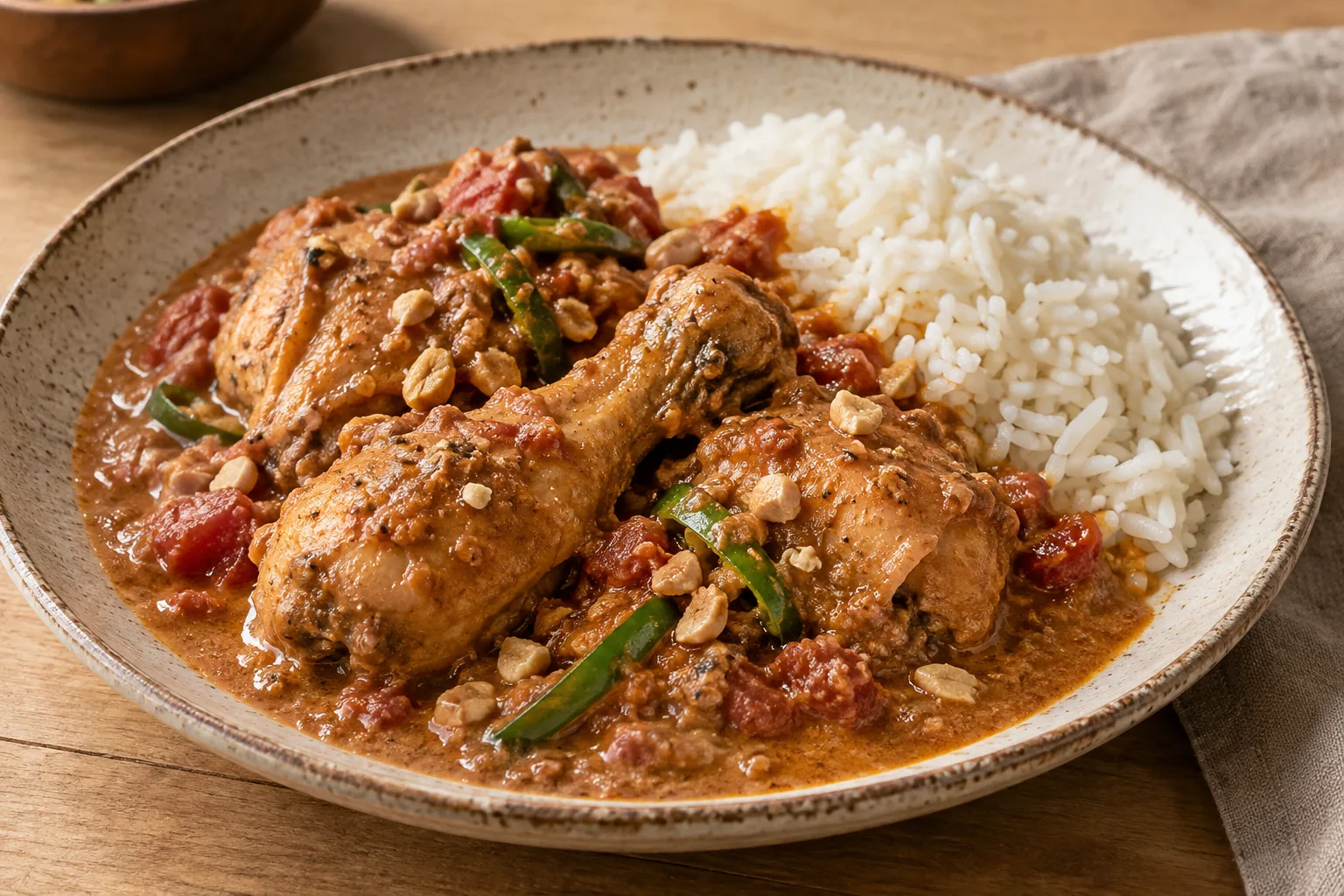
Cassava’s many forms show how one crop can become several different foods: boiled root, flour-based dough, cooked leaves, or a fermented preparation wrapped in leaves. Moambe is another example of a dish with regional variations and cross-border associations. It is commonly described as chicken prepared with a rich palm-based sauce, but ingredients and accompaniments differ. These shared histories are best described as circulation and variation, rather than as exclusive national origins.
Cassava, fish, vegetables, and sauces
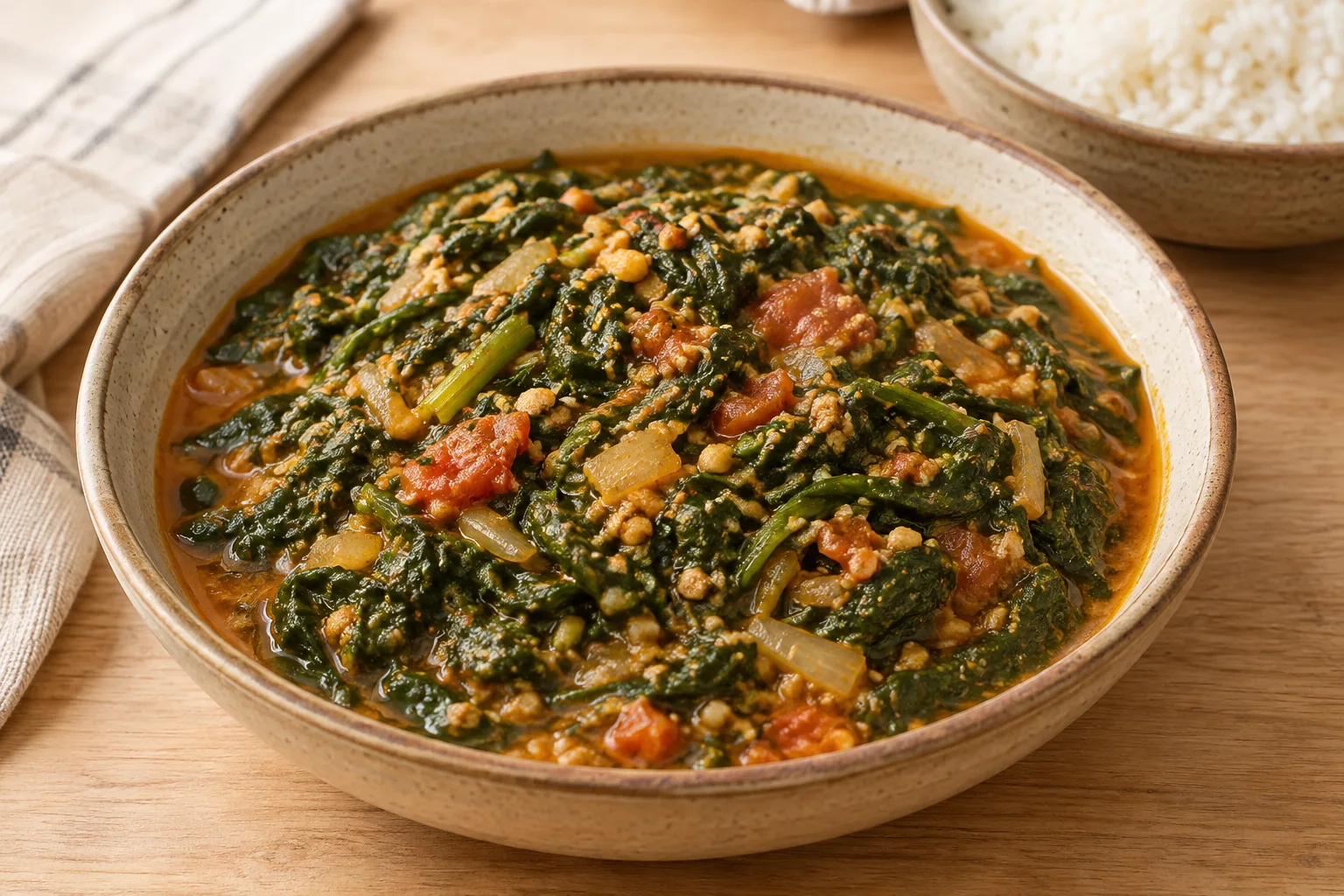
Cassava anchors many accounts of Congolese food because it is used in several forms. Its root may be boiled, while flour becomes dough or fufu. Cassava leaves are ground or pounded and cooked in preparations called pondu or saka-saka. Chikwangue, also called kwanga, is a fermented cassava preparation formed into a paste, wrapped in leaves, and cooked. These are distinct products, not interchangeable names for one dish.
Plantains, maize, rice, sweet potatoes, yams, taro, beans, tomatoes, pumpkin, and okra broaden the pantry. Peanuts appear in sauces and vegetable preparations. Palm oil contributes to some stews, while fish from rivers, tributaries, and lakes may be eaten fresh, baked, boiled, or fried; drying, salting, and smoking help preserve it. Goat and chicken are among the meats used, though meat is not present in every meal. Wild fruits, plants, and mushrooms are also documented, with use depending on place and availability.
A few ingredients have particularly clear culinary roles: cassava leaves form the basis of pondu; okra is central to dongo-dongo; and leaf wrappers are used for both chikwangue and liboke. Together, these examples show a pantry built from crops, waterways, and multiple ways of processing and combining ingredients.
Soft staples and richly flavored sauces
A common pairing is a mild, filling staple alongside a more concentrated sauce or stew. Fufu, made from cassava flour or another starchy flour in some versions, is smooth, firm, and pliable. Its relatively mild taste complements sauces and stews rather than competing with them. Chikwangue offers a denser, fermented cassava alternative, while rice and cooked plantain provide other ways to complete a meal.
The accompanying dish can bring together leafy greens, fish, beans, or meat. Pondu is a cooked cassava-leaf preparation, often combined with ingredients such as palm oil, onion, fish, meat, or peanuts, depending on the version. Ground peanuts can make a sauce thicker and more rounded; palm-based ingredients contribute richness and color. In dongo-dongo, okra gives the preparation its characteristic thick consistency, and fish or meat may also be included.
Heat and seasoning vary. Chili peppers, onion, garlic, and tomato appear in descriptions of some dishes, but there is no single level of spiciness or fixed seasoning formula for the country. A plate may contrast soft dough with a savory stew, or the earthy quality of greens with the stronger flavor of smoked or salted fish. These combinations are useful ways to understand the range of textures and tastes without treating them as universal rules.
Everyday transmission and places to eat
Several familiar Congolese foods depend on knowledge of how ingredients are transformed. Making chikwangue involves processing cassava into a paste, fermenting it, wrapping it in leaves, and cooking it. Preparing cassava leaves for pondu likewise involves processing and cooking them as a dish, rather than treating them as a raw salad ingredient. These examples point to practical, transmitted food knowledge; they do not establish one uniform ritual or timetable for the whole country.
Kinshasa’s nganda restaurants provide a documented urban setting for regional food styles. Descriptions distinguish establishments associated with riverside, Kongo, and Kasai cooking, each with its own combinations of fish, plantain, vegetable sauce, goat, rice, or greens. These categories describe styles represented in the capital and should not be taken as complete portraits of the regions or of all Kinshasa residents. Markets and roadside sellers are also described as places where crops and prepared foods are sold.
Meals may combine fufu, rice, plantain, or chikwangue with a stew, sauce, beans, fish, or vegetables. In many settings, fufu is shaped into a small portion and used to take up accompanying sauce. That practice is documented but should not be presented as the only way people eat. The available evidence supports a varied account of household, market, and restaurant food, not a single nationwide feast or dining ceremony.
Pounding, fermenting, wrapping, and preserving
Congolese preparations include techniques that alter ingredients’ texture and keeping qualities. Cassava can be milled into flour for dough, or processed into a paste that is fermented and cooked as chikwangue. Fufu is prepared by stirring flour into hot water until it forms a smooth, compact mass. Cassava leaves are pounded or ground and cooked in dishes such as pondu. These processes distinguish the resulting foods, even when they begin with the same plant.
In liboke, ingredients—often fish—are enclosed in leaves, commonly banana leaves, and cooked by steaming, baking, or grilling. The parcel holds the food together during cooking. A particular fish liboke may combine fish with ingredients such as tomato and onion, but recipes differ and no single formula is implied by the technique. The term names a method of wrapping and cooking as well as preparations made that way.
Fish may also be baked, boiled, fried, grilled, smoked, or salted. The first methods suit immediate cooking, while smoking and salting are documented ways to preserve fish. Stewing allows vegetables, fish, or meat to cook together with seasonings and sauce ingredients. These techniques occur in different combinations across households and regions; there is no obligatory sequence that applies to every version of a dish.
Staples, accompaniments, and shared meals
Many meals can be understood by looking at the relationship between a staple and what accompanies it. A serving of fufu, rice, plantain, or chikwangue may be paired with a cooked green, bean dish, fish, or sauce. This structure helps explain why relatively mild cassava preparations are served alongside more strongly seasoned foods. It is a pattern found in descriptions of Congolese meals, not a fixed menu or rule for every occasion.
The combination changes with place and availability. Fish may be fresh, dried, salted, or smoked; it can be served with plantain or incorporated into a vegetable preparation. Moambe chicken is described with accompaniments such as rice or fufu, while pondu is also commonly served with a starchy base. Beans and vegetables can form substantial parts of a meal, and meat is not required for every plate.
In Kinshasa, the nganda restaurant descriptions make regional variety visible through particular pairings: baked or grilled fish with cooked plantain, fish with vegetable sauce, and goat with rice and green vegetables. These are examples of food styles represented in the capital, rather than a comprehensive map of the country. Shared eating and the practical use of a staple to take up sauce are documented in some settings, but eating customs differ among households and communities.
A glossary of dishes and food terms
Names can refer to ingredients, finished preparations, or cooking methods. Their meaning and use may vary by community and household. The entries below describe specific foods documented in the DRC; they are not a complete list of Congolese culinary vocabulary.
- Fufu: A smooth, compact dough made from cassava flour or, in some versions, another starchy flour; served with sauces and stews.
- Pondu or saka-saka: A cooked preparation of cassava leaves, sometimes combined with palm oil, fish, meat, or peanuts.
- Chikwangue or kwanga: Fermented cassava paste wrapped in leaves and cooked; commonly served as a substantial accompaniment.
- Moambe: A chicken dish or sauce associated with palm-based ingredients; versions and accompaniments vary.
- Liboke: Ingredients, often fish, wrapped in leaves and cooked by steaming, baking, or grilling.
- Dongo-dongo: An okra-based soup or sauce that may also contain fish or meat and be served with a starchy staple.
- Nganda: A type of Kinshasa restaurant associated in descriptions with regional food styles and their particular menus.
One country, many cuisines
Kinshasa
Kinshasa is documented as a setting where nganda restaurants present different regional food styles, alongside other urban food sellers and eateries. Described pairings include baked or grilled fish with cooked plantain, fish with vegetable sauce, and goat with rice and green vegetables. These examples illustrate restaurant categories in the capital; they are not a complete account of the city’s households or a map of all the country’s cuisines.
Upper Congo Basin Styles
Descriptions of Kinshasa’s riverside nganda associate some food styles with places upriver and mention baked or grilled fish served with cooked plantain. This supports a limited observation about a river-linked restaurant category, not precise geographical boundaries or a claim that all communities in the upper Congo Basin prepare fish and plantain in the same way.
Kasai Style as Represented in Kinshasa
One nganda category described in Kinshasa is associated with Kasai and features goat served with rice and green vegetables; other ingredients may appear for special occasions. This is evidence of a Kasai-associated restaurant style represented in the capital, not an exhaustive description of food in Kasai or a claim that the same meal is common in every household there.
Cook