Documentary synthesis prepared with AI assistance. It does not replace specialist review or certify kitchen testing. · Updated 31 October 2026
A country shaped by farmland, islands, and coastline
Denmark’s culinary landscape connects agricultural production with life beside the sea. The country lies on the Jutland Peninsula and includes numerous islands; its long coastline and fertile farmland help explain why traditional meals draw on both field and water. Rye, potatoes, pork and dairy recur alongside fish, while cabbage, root vegetables and seasonal fruit broaden the pantry. These ingredients form a recognizable pattern, not a single menu followed by every household.
A useful starting point is the contrast between the dense rye loaf rugbrød and the many toppings assembled on it as smørrebrød. The open sandwich is an everyday lunch as well as a preparation with more elaborate versions. Hot meals commonly center on meat or fish, often served with potatoes. Contemporary Danish eating is broader still: traditional dishes sit alongside food from international cuisines, and restaurant kitchens may give local products a very different treatment from home cooking.
The country’s food culture is therefore best understood as several overlapping registers: practical farm cooking, coastal fish preparations, shared domestic meals, seasonal dishes and a prominent contemporary restaurant scene. None alone represents every Danish table. Place and availability matter, but so do changes in work, technology and the ways food is presented to local diners and visitors.
From farm produce to modern culinary promotion
Before industrialization, Danish cooking relied heavily on foods that could be grown, raised or obtained nearby. Rye bread, potatoes, cabbage, fish and pork had an important place in this farm-centered pantry. Preserving meat and fish by smoking or salting, and keeping dry grains for later use, helped households make use of stored foods. These broad patterns developed in practical circumstances and should not be reduced to one defining national recipe.
The changes of the nineteenth century affected both production and domestic cooking. Dairy cooperatives expanded the availability of milk and dairy products. New equipment, including meat grinders and improved stoves, helped make preparations from ground meat more common; frikadeller became one familiar example. The changing organization of work also mattered for lunch. As the midday break shortened, a portable meal of bread and toppings became useful, and smørrebrød developed beyond its simpler forms.
A further change came with the New Nordic Cuisine initiative, begun in 2004 as a collaboration among chefs from several Nordic countries and territories. It promoted regional products and culinary excellence internationally. In Denmark, public-facing food promotion often connected Nordic cuisine closely with Danish cuisine. That modern association is historically significant, but it does not make the culinary traditions of the wider Nordic region interchangeable. The movement added a new way to present food; it did not displace daily meals or erase older dishes.
Rye, potatoes, pork, dairy, and fish
Rye is central to rugbrød, a dark, compact bread that commonly serves as the foundation for open sandwiches. Wheat appears in other breads and pastries. Potatoes and vegetables such as cabbage belong to the agricultural pantry, while meat and dairy reflect the importance of farming and food production. These staple ingredients recur in traditional cooking, even as present-day diets also include a broad selection of international products.
Pork is especially visible: it appears as roast meat, crisp slices, sausage, ground-meat preparations and cold cuts. Stegt flæsk pairs crisp pork belly with potatoes and parsley sauce; flæskesteg is roast pork with crisp skin. Beef and veal also feature in formed or breaded preparations. The growth of cooperative dairying in the second half of the nineteenth century helped make milk and its products more widely available, adding another dimension to everyday cooking.
The sea contributes fish served hot, preserved or as a topping. Herring appears in salted or marinated forms; cod may be poached, and flatfish may be fried. In contemporary restaurant cooking, examples of regional seafood include Limfjord oysters and lumpfish roe. Berries, too, have a place in New Nordic cooking, though varieties and availability differ with region and season. This pantry is not static: familiar ingredients can be used in both established dishes and newer restaurant interpretations.
Contrasts of grain, richness, and the sea
The compact crumb and pronounced character of rugbrød provide a sturdy contrast to creamy, savory or sharp toppings. That contrast is one reason the bread works so well with fish, cold meat, pâté and pickled accompaniments. Smørrebrød is not one fixed combination: a slice may carry herring, roast meat, liver pâté or other ingredients, with garnishes chosen to complement the main topping. A more elaborate sandwich can bring together several textures, while a simpler one keeps the bread and topping in the foreground.
Hot dishes offer another set of contrasts. In stegt flæsk, crisp pork meets potatoes and parsley sauce. Poached cod served with mustard sauce brings a milder fish texture together with a more assertive accompaniment. Frikadeller have a tender center and a browned exterior from cooking in a pan. These examples show how the same broad pantry can produce different experiences through the choice of cut, cooking method and side dish.
The New Nordic restaurant movement introduced a further vocabulary centered on local products, seafood, berries and other regional ingredients. It is particularly visible in contemporary gastronomy, rather than a description of every meal in Denmark. Across these different settings, meals may be hearty and familiar, shaped by preservation and staple foods, or built around fresh ingredients and modern presentation. The contrasts are part of the cuisine’s range, not evidence of a single taste shared by all Danes.
Seasonal occasions and the passing on of dishes
Food traditions are transmitted through repeated meals as much as through special occasions. Frikadeller, potatoes and roast pork belong to a shared repertoire that may appear in household cooking, but the sources do not establish one universal family menu or a single required way of serving them. Domestic habits can differ by generation, household and occasion. A dish may be widely recognizable without being prepared identically everywhere.
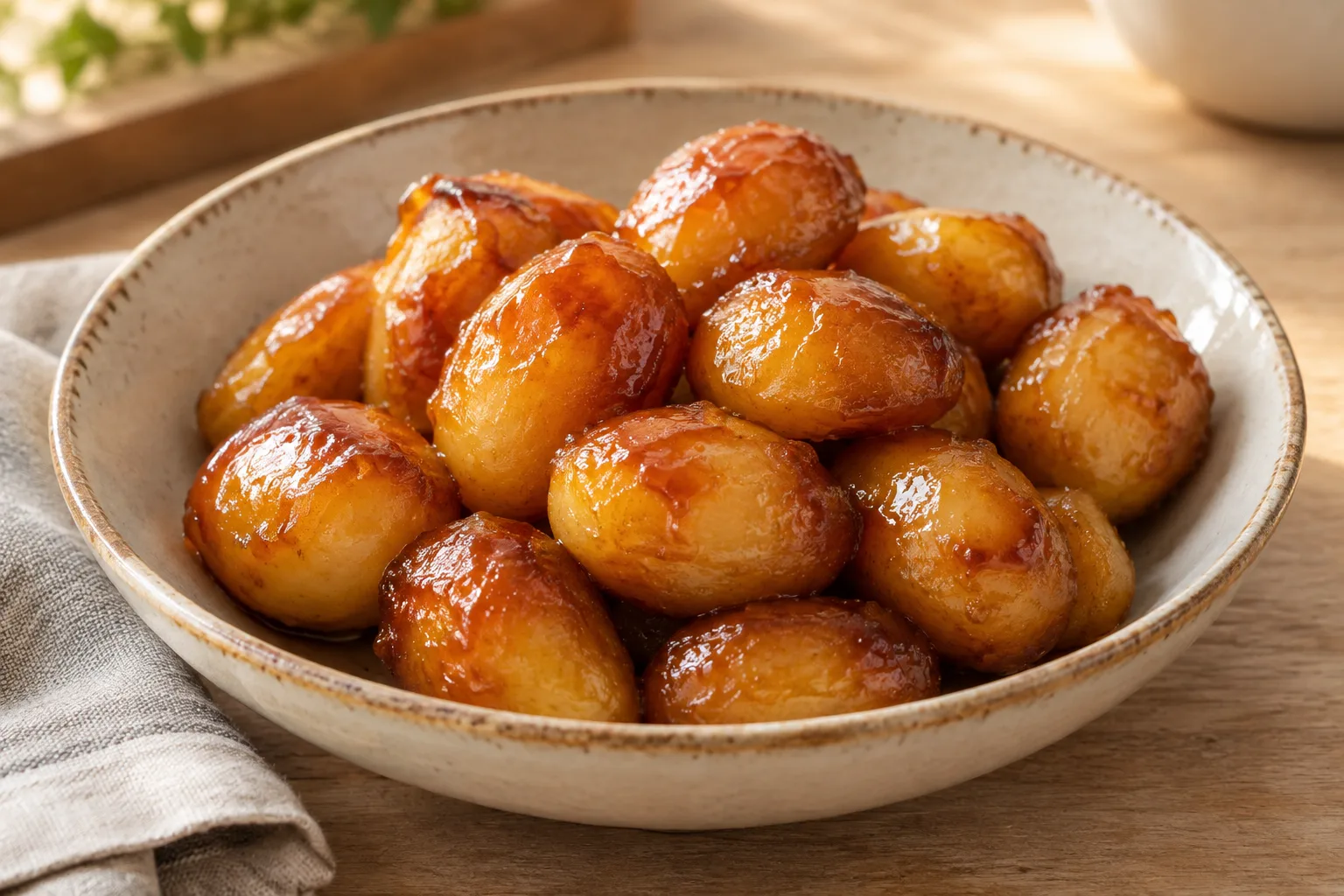
Christmas provides a more clearly documented seasonal setting. Small caramelized potatoes, brunede kartofler, are described as a traditional part of Danish Christmas dinner, often served alongside boiled potatoes. The preparation gives a familiar staple a sweet, browned coating and makes the potato dish distinct from an everyday boiled side. Birthdays also have an associated food tradition: layer cake is described as a customary feature of birthday celebrations. These examples show how dishes can mark particular occasions without implying that every gathering follows precisely the same pattern.
Seasonality also appears in the changing focus of food. Contemporary New Nordic cooking has drawn public attention to local ingredients and regional products, while established home dishes remain present in ordinary life. Its original collaboration crossed Nordic borders, and its Danish promotion later gave the movement a strong national framing. This history is a useful reminder that food traditions are both practiced and represented: shared recipes and ingredients carry on, while public images of cuisine can change over time.
Preserving, cooking, baking, and assembling
Preservation techniques have long formed part of the practical repertoire. Salting and smoking help keep meat or fish, while pickling gives some ingredients a longer life and a sharp accompaniment to richer foods. Herring is a clear example of fish served in preserved or marinated preparations. Such methods belong alongside everyday cooking rather than in a separate, supposedly unchanged past: preserved ingredients can still appear in familiar meals such as open sandwiches.
Other techniques range from poaching and roasting to pan-frying. Cod may be poached, pork roasted, and formed meat mixtures cooked in a pan. Bread-making is important in its own right: the dense rye loaf rugbrød can support substantial toppings without losing its role as a staple. Assembling smørrebrød is also a kind of culinary craft. The topping is arranged directly on the bread, with combinations varying rather than following one mandatory formula.
Some preparations depend on distinctive equipment or careful sequencing. Æbleskiver, small round cakes, are cooked in a special pan with shallow individual wells, which allows their characteristic shape to form as they are turned during cooking. For brunede kartofler, potatoes are boiled first and then browned in melted sugar and butter; they need to cool before the caramelizing stage. These methods show how specific tools and stages can transform familiar ingredients into preparations associated with Danish tables.
Lunch, hot meals, and shared tables
Lunch is an especially characteristic occasion for smørrebrød: slices of rye bread topped with ingredients such as herring, roast beef, chicken salad or pâté. The open format makes it adaptable, from a straightforward portable lunch to a carefully arranged meal. Larger or more layered sandwiches may be eaten with a knife and fork. Some traditional meals have a described order of service that begins with herring, then moves through other fish, meat and cheese; this is a particular convention, not a rule for every Danish lunch.
At home, many families eat a cooked evening meal together. Traditional dinners often include potatoes alongside meat or fish, but individual choices vary. Crispy pork with parsley sauce, roast pork, meatballs and poached cod are examples of substantial hot dishes. A side of potatoes or vegetables can complement them, while bread and dairy products contribute to the wider meal. The combination depends on household habits and what is being served.
Today’s table is not restricted to traditional dishes. Danish homes and restaurants also serve foods from international cuisines, including sushi, hamburgers and pizza. This variety is particularly useful context when considering the New Nordic restaurant scene: kitchens focused on regional products represent an influential contemporary strand, not a complete picture of everyday eating. A Danish meal might draw on familiar staples, a seasonal dish or an international preparation, and these possibilities coexist rather than cancel one another out.
Names for breads and preparations
These Danish terms refer to specific foods and forms of serving. Each name identifies a recognizable preparation, though ingredients and accompaniments may vary. Together, they offer a compact vocabulary for reading a Danish menu or understanding how staple ingredients appear at different meals.
- Rugbrød: dark, dense rye bread; a common base for open sandwiches.
- Smørrebrød: an open sandwich made by topping a slice of bread, often rye, with fish, meat, pâté or other accompaniments.
- Frikadeller: pan-cooked meatballs or patties made from ground meat.
- Stegt flæsk: crisp fried or browned pork belly, commonly served with potatoes and parsley sauce.
- Flæskesteg: roast pork with crisp skin, associated especially with Christmas meals.
- Brunede kartofler: small potatoes browned in a coating of caramelized sugar and butter; a traditional Christmas side dish.
- Æbleskiver: small, round cakes cooked in a special pan with individual wells.
The terms describe categories rather than one compulsory recipe. In particular, smørrebrød covers numerous combinations, and accompaniments can change according to the main topping or the occasion. The same flexibility applies to the place of familiar foods in daily life: a preparation may be a weekday meal, a festive dish or a menu item in a contemporary restaurant, depending on context.
One country, many cuisines
Copenhagen
Copenhagen is a documented focal point of Denmark’s contemporary restaurant gastronomy and the international visibility of New Nordic cooking. The city is associated with restaurants that have presented local and regional ingredients in modern forms, while familiar Danish foods such as smørrebrød also feature in the capital’s food culture. This combination brings restaurant innovation and established dishes into the same urban setting; it should not be taken to mean that Copenhagen represents every Danish household or that the city’s food practices are uniform.
Cook