Asia · Central Asia

Uzbekistan

Uzbekistan’s food reflects the meeting of settled farming and pastoral traditions across Central Asia. Rice, wheat, meat, vegetables, bread and tea appear in a varied repertoire that includes plov, hand-pulled noodles, steamed dumplings, soups and tandoor-baked pastries. Regional styles shape familiar dishes, from Fergana and Samarkand plovs to Khorezm’s dill noodles. Plov culture, Navruz sumalak, everyday bread and the welcome offered to guests reveal how food is made, shared and passed on.

Food and eating habits

How people eat in Uzbekistan

50 indicators exploring everyday meals, ingredients and food culture. Information is completed progressively from documented evidence.

0 of 50 indicators with documented information

Not all data are comparable: food supply, purchases and intake are different measures. Check the period, population and method for each finding. Qualitative descriptions do not establish percentages or amounts.

Timing and company

0/8
Timing and company — Uzbekistan
IndicatorFindings and context
Meal times Awaiting research
Meals per day Awaiting research
Meal duration Awaiting research
Daily energy distribution Awaiting research
Weekdays and weekends Awaiting research
Eating at home and away Awaiting research
Cooking frequency Awaiting research
Eating together Awaiting research

Pantry and recipes

0/2
Pantry and recipes — Uzbekistan
IndicatorFindings and context
Most consumed ingredients Awaiting research
Ingredient prevalence in recipes Awaiting research

Cereals and plant foods

0/6
Cereals and plant foods — Uzbekistan
IndicatorFindings and context
Cereals and cereal products Awaiting research
Bread Awaiting research
Pulses Awaiting research
Vegetables Awaiting research
Fruit Awaiting research
Potatoes, roots and tubers Awaiting research

Protein foods

0/5
Protein foods — Uzbekistan
IndicatorFindings and context
Meat Awaiting research
Fish and seafood Awaiting research
Eggs Awaiting research
Milk and dairy products Awaiting research
Protein sources Awaiting research

Fats, flavours and condiments

0/3
Fats, flavours and condiments — Uzbekistan
IndicatorFindings and context
Cooking fats Awaiting research
Herbs and spices Awaiting research
Sauces and condiments Awaiting research

Meal composition

0/6
Meal composition — Uzbekistan
IndicatorFindings and context
Breakfast composition Awaiting research
Main meal composition Awaiting research
Dinner composition Awaiting research
Appetisers and snacks Awaiting research
Desserts and sweets Awaiting research
Portion sizes Awaiting research

Techniques and equipment

0/5
Techniques and equipment — Uzbekistan
IndicatorFindings and context
Cooking techniques Awaiting research
Vegetable preparation Awaiting research
Food preservation Awaiting research
Fermented foods Awaiting research
Kitchen equipment Awaiting research

Drinks

0/3
Drinks — Uzbekistan
IndicatorFindings and context
Everyday drinks Awaiting research
Coffee and tea preparation Awaiting research
Drinks with meals Awaiting research

Nutrition and dietary patterns

0/3
Nutrition and dietary patterns — Uzbekistan
IndicatorFindings and context
Energy and nutrients Awaiting research
Salt and sugars Awaiting research
Dietary patterns Awaiting research

Shopping, prices and waste

0/7
Shopping, prices and waste — Uzbekistan
IndicatorFindings and context
Food expenditure Awaiting research
Cost of a common basket Awaiting research
Cost of specific meals Awaiting research
Grocery shopping locations Awaiting research
Shopping frequency Awaiting research
Prepared food and delivery Awaiting research
Household food waste Awaiting research

Seasons and celebrations

0/2
Seasons and celebrations — Uzbekistan
IndicatorFindings and context
Seasonal produce Awaiting research
Celebration food Awaiting research
Explore its cuisines

Uzbekistan’s Culinary Atlas: Plov, Bread, Noodles and Shared Tables

Documentary synthesis prepared with AI assistance. It does not replace specialist review or certify kitchen testing. · Updated 31 October 2026

Between Rivers, Oases and Steppe Routes

Uzbekistan lies in Central Asia, in a landscape historically connected with the Amu Darya and Syr Darya river regions and with routes linking communities across the wider region. Its food reflects both settled agricultural life and pastoral traditions: grains and garden produce sit alongside meat and dairy, while breads, noodles, rice dishes and dumplings make a substantial place for dough and cereal foods.

The cuisine is not a single menu repeated from one end of the country to the other. Shared Central Asian preparations—such as plov, lagman, manti and shashlik—have local forms, and household practice varies too. A meal might include a soup, bread, vegetables, tea or a generous rice dish, depending on its setting. Plov is prominent, but it is one part of a broader food culture that also includes samsa from the clay oven, steamed dumplings, salads and regional noodle specialties.

Exchange, Adaptation and Culinary Memory

Uzbek food developed through contact among settled communities, pastoral peoples and travelers moving through Central Asia. Trade and migration helped ideas and ingredients circulate, while neighboring cuisines share related preparations: plov, noodle dishes, filled doughs and skewered meats are not confined to one modern national boundary. Persian and Tajik traditions, as well as later exchanges with Russian, Tatar, Uyghur and other cuisines, are noted among influences on Uzbek cooking. These connections are better understood as layers of exchange than as proof that a dish has one exclusive origin.

Agriculture and animal husbandry also shaped the repertory. Grain cultivation supported bread and noodle-making; sheep raising contributed to the frequent use of lamb and sheep fat. The documented heritage inscription is specific: in 2016, UNESCO recognized the culture and traditions associated with palov, including social practices and the transmission of knowledge. It does not mean that every Uzbek dish, or every regional custom, has the same heritage status.

Grains, Garden Produce and Animal Foods

Rice is central to plov, while wheat flour becomes non bread, noodle dough and pastry. Meat commonly includes lamb and beef; horse meat and horse sausage appear in some dishes and versions. Onions and carrots are especially recognizable in plov, while potatoes, tomatoes, peppers and other seasonal vegetables feature in soups, stews and fillings. Sheep-tail fat is used in some traditional preparations, though the choice of meat and cooking fat varies by dish and cook.

Fresh herbs, dairy foods, nuts and dried fruit widen the pantry. Dill is particularly important in Khorezm’s shivit oshi; cilantro, parsley and other herbs appear in dishes and garnishes. Yogurt or sour cream may accompany dumplings or noodles. Chickpeas, raisins and other additions can appear in some plovs, but are not compulsory ingredients in every version. Useful pantry groups include:

  • Grains and dough: rice, wheat flour, bread and noodles.
  • Vegetables: onions, carrots, potatoes, tomatoes and peppers.
  • Seasonings and accompaniments: cumin, herbs, dairy, nuts and dried fruit.

Warm Aromatics, Savory Depth and Fresh Contrasts

Many familiar Uzbek dishes are aromatic rather than defined by strong chilli heat. Cumin, black pepper and coriander seed season meat, rice and vegetables; onions and carrots contribute sweetness, especially when browned or cooked slowly. The exact balance depends on the dish and regional style. Some preparations include garlic, herbs, dried fruit or other additions, but these should be understood as variations rather than universal features.

Texture is equally important. Plov brings rice together with meat and vegetables, while lagman’s handmade noodles can be served in broth or fried with vegetables. Manti are tender from steaming; samsa has a baked pastry shell; and shivit oshi pairs dill-scented noodles with a meat-and-vegetable topping. Fresh tomato, cucumber and onion salad, herbs or dairy can provide a cool or tangy counterpoint to richer dishes. The contrast between substantial cooked food and fresher accompaniments is more representative than any single fixed flavor profile.

Celebrations, Hospitality and Passing on Skills

Sharing food is an important part of Uzbek hospitality. Plov is prepared for family meals as well as weddings, holidays and other gatherings, and a large kazan makes it possible to cook for many people. The expertise of the oshpaz, or plov cook, and the transmission of associated knowledge are part of the wider culture recognized for palov. This tradition is significant, but it should not be taken to mean that every household or celebration follows one identical practice.

Another seasonal preparation is sumalak, made from sprouted wheat and associated with Navruz and the arrival of spring. Its lengthy preparation is linked with communal celebration. Bread and tea also have a place in welcoming guests; sweets, dried fruit or nuts may accompany them, depending on the household and occasion. These examples show different ways food can mark a gathering: a large shared dish, a seasonal preparation, or the everyday act of offering refreshment.

Kazan, Tandir, Steam and Hand-Formed Dough

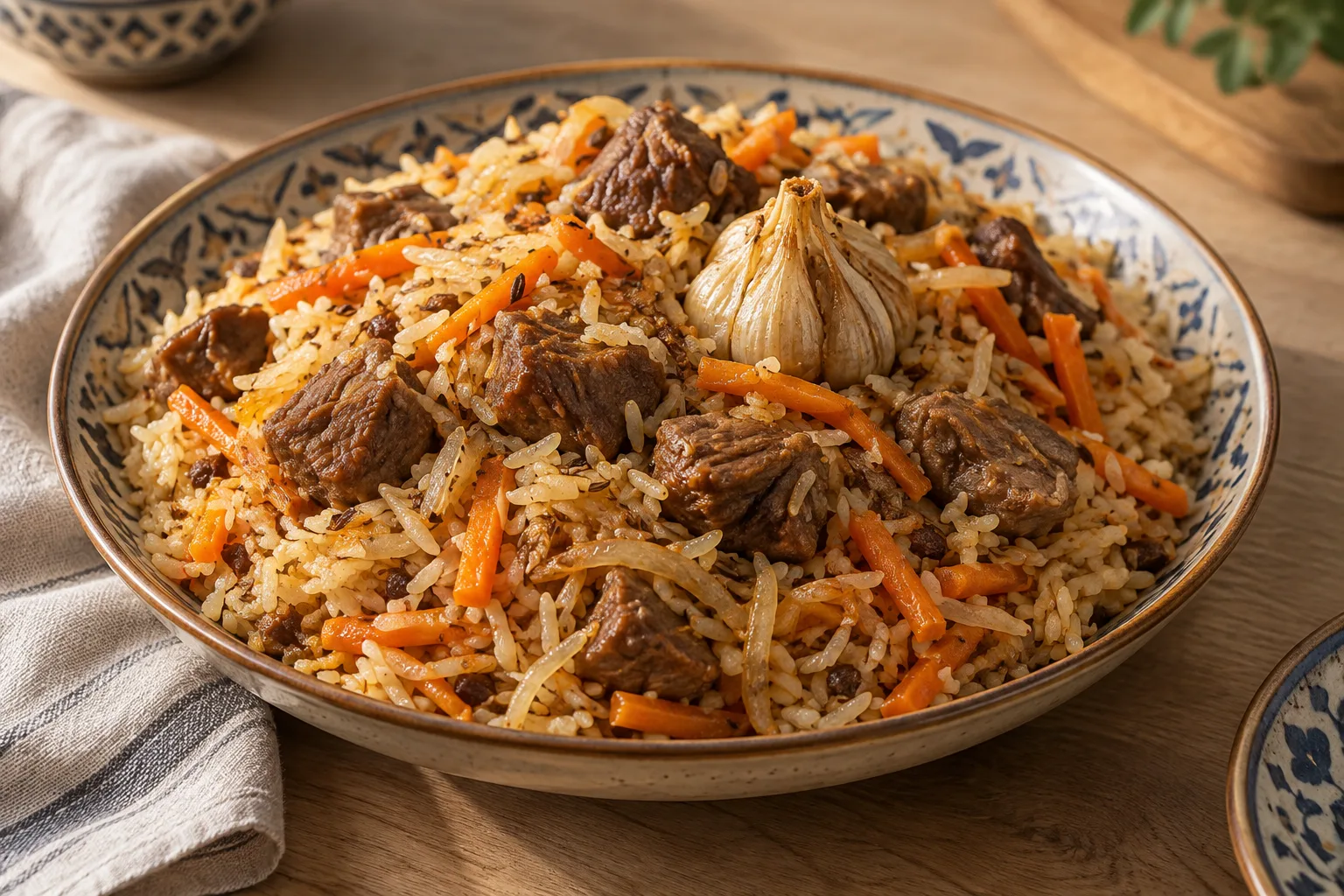
A heavy cast-iron kazan is used for plov and other substantial dishes, including cooking in large quantities over an open fire. A common plov method begins by cooking meat, onions and carrots as a base known as zirvak. Rice is then added and cooked with the other ingredients, often in a layer that finishes by absorbing liquid and steam. There are regional and household differences in ingredients, sequence and serving, so this describes a broad technique rather than a single required formula.

The clay tandir oven is associated with round breads and samsa. Dough for bread or pastry is shaped before baking; traditional tandir baking gives a distinct surface and crust. Lagman noodles may be pulled or stretched by hand, while manti are folded around a filling and cooked in a tiered steamer. Shashlik is skewered and grilled over charcoal. The cooking vessel helps shape the result: a cauldron suits large-batch rice cooking, the tandir browns dough, and steam keeps filled dough tender.

Bread, Tea and Meals Made to Share

Bread is a familiar presence at the Uzbek table, and round non is commonly baked in a tandir. Plov may be served on a large shallow platter for sharing; other foods, such as soup or dumplings, may be served in individual bowls or plates. Tea—green or black, with preference varying by place—is an everyday drink and a customary part of hospitality. A spread for guests can include tea, bread and sweets, though the details depend on the household and occasion.

Not every important meal is a feast. Soups such as shurpa, noodle dishes, salads and pastries belong to the wider repertoire. One documented occasion-specific meal is nahor oshi, a morning plov served to a group, particularly in connection with wedding celebrations. Bazaar and street settings also make samsa and shashlik available as prepared foods. There is no single prescribed sequence that describes every meal: the scale, seating, utensils and dishes differ across families and contexts.

A Glossary of Uzbek Foods and Table Terms

Local names are written in several ways when transliterated into English. These concise definitions identify particular foods and utensils; recipes and details can differ between regions and households.

  • Palov, plov or osh: a rice dish cooked with meat, vegetables and seasonings; its local versions and social settings vary.
  • Non or obi non: round Uzbek bread, commonly baked in a clay tandir.
  • Kazan: a heavy cast-iron cauldron used for plov and other cooking, including large-batch preparation.
  • Tandir: a clay oven associated with baking bread and samsa.
  • Lagman: a noodle preparation served as soup or, in some versions, fried with meat and vegetables.
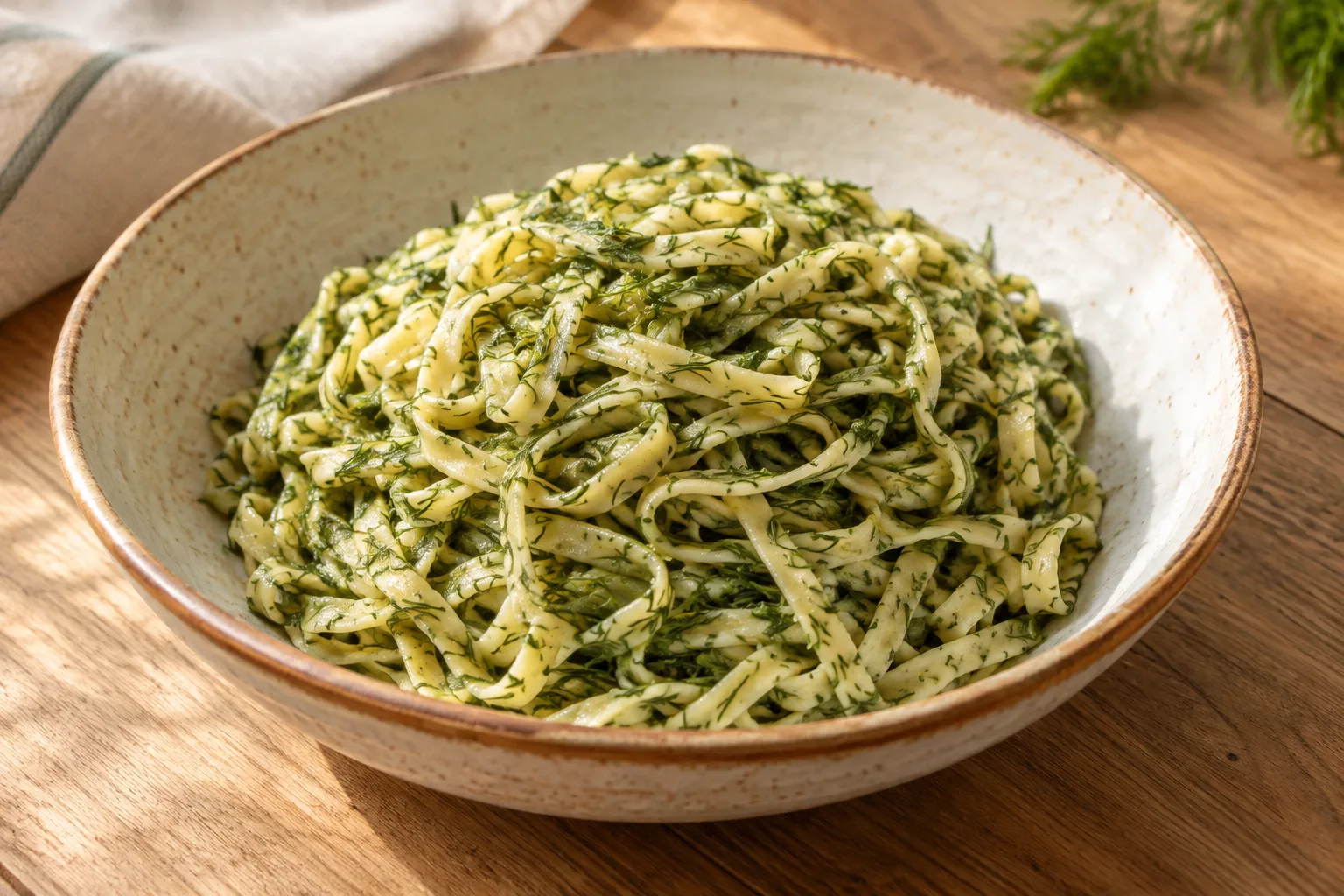
  • Shivit oshi: Khorezmian dill noodles served with a topping of meat and vegetables.
  • Sumalak: a preparation made from sprouted wheat, associated with Navruz.
  • Dastarkhan: a term for a laid-out spread or table setting associated with sharing food and receiving guests.

One country, many cuisines

Fergana Valley

Fergana is associated with a plov style described as darker in color and more deeply fried than lighter versions found elsewhere. This is a regional distinction within a widely shared dish, not a single recipe followed by every household in the valley. Plov ingredients and methods may still vary by cook and occasion.

Tashkent

Tashkent plov is described as lighter than the darker Fergana style, and some versions use yellow carrots. Large-scale plov cooking in kazans is also associated with the city. These characteristics identify documented local styles and settings, rather than defining every household’s cooking or the whole of Tashkent’s food culture.

Samarkand

Samarkand has a recognized local plov style, and its bread traditions include a small, thick variety of non. Regional differences in plov can involve cooking method and how the cooked components are arranged or presented. These are specific local associations, not a complete account of the city’s cuisine or a rule for all its bakers and cooks.

Khorezm and Khiva

Khorezm is particularly associated with shivit oshi, dill-infused noodles served with a topping of meat and vegetables. Khiva is also documented for tukhum barak, a dough preparation filled with egg. These specialties help distinguish regional cooking, but they do not stand for every dish eaten in Khorezm or every meal in Khiva.

Bukhara

Bukhara is among the places associated with a local form of plov. A further dish linked with the city is Nowruz kebab, described as layers of meat, potatoes, onions and tomatoes. These references identify particular culinary associations; they do not establish that the preparations are exclusive to every Bukhara household or restaurant.

Cook
Read as an article ↗
Places and communities

One country, many cuisines

An initial selection of regions to explore. Culinary boundaries may differ from administrative divisions.

Uzbekistan

Fergana Valley

Fergana is associated with a plov style described as darker in color and more deeply fried than lighter versions found elsewhere. This is a regional distinction within a widely shared dish, not a single recipe followed by every household in the valley. Plov ingredients and methods may still vary by cook and occasion.

Uzbekistan

Tashkent

Tashkent plov is described as lighter than the darker Fergana style, and some versions use yellow carrots. Large-scale plov cooking in kazans is also associated with the city. These characteristics identify documented local styles and settings, rather than defining every household’s cooking or the whole of Tashkent’s food culture.

Uzbekistan

Samarkand

Samarkand has a recognized local plov style, and its bread traditions include a small, thick variety of *non*. Regional differences in plov can involve cooking method and how the cooked components are arranged or presented. These are specific local associations, not a complete account of the city’s cuisine or a rule for all its bakers and cooks.

Uzbekistan

Khorezm and Khiva

Khorezm is particularly associated with *shivit oshi*, dill-infused noodles served with a topping of meat and vegetables. Khiva is also documented for *tukhum barak*, a dough preparation filled with egg. These specialties help distinguish regional cooking, but they do not stand for every dish eaten in Khorezm or every meal in Khiva.

Uzbekistan

Bukhara

Bukhara is among the places associated with a local form of plov. A further dish linked with the city is Nowruz kebab, described as layers of meat, potatoes, onions and tomatoes. These references identify particular culinary associations; they do not establish that the preparations are exclusive to every Bukhara household or restaurant.

Cook
Recipes connected with Uzbekistan

Each recipe documents one version. Geographic associations do not imply an exclusive origin.

Khiva Shivit Oshi
Image generated by the Kitchenpause team
40 minIntermediate

Khiva Shivit Oshi

Uzbek noodles from Khorezm made with fresh dill in the dough. This simple version serves one and focuses on the noodles.

View recipe
Uzbek plov
Image generated by the Kitchenpause team
95 minIntermediate

Uzbek plov

An Uzbek pilaf of lamb, rice, carrots and onion, seasoned with cumin and coriander. Serves 6; the rice is soaked overnight and hands-on preparation takes an estimated 20 minutes.

View recipe

Sources consulted

Read the sources and each document’s scope. A heritage inscription concerns a particular practice, not all of a country’s cuisine.

  1. Uzbekistan Food Guide: 16+ Uzbek Dishes You Must Try www.emilyluxton.co.uk/uzbekistan-food-guide/ emilyluxton.co.uk Consulted: October 30, 2026
  2. Uzbekistan Recipes & Ideas For Easy Everyday Cooking - Cookpad cookpad.com/eng/search/uzbekistan cookpad.com Consulted: October 30, 2026
  3. Must eat traditional Uzbek food www.advantour.com/uzbekistan/uzbek-food/must-eat-local-food.htm advantour.com Consulted: October 30, 2026
  4. Uzbek Cuisine | Uzbekistan Discovery uzbekistandiscovery.com/en/post/2-uzbek-cuisine uzbekistandiscovery.com Consulted: October 30, 2026
  5. Uzbekistan food guide: what and where to eat www.melaniemay.com/uzbekistan-food-guide-what-to-eat-restaurants/ melaniemay.com Consulted: October 30, 2026
  6. Uzbek National Kitchen. Uzbekistan. Tours in Uzbekistan. Travel to Uzbekistan. Holidays in Uzbekistan | Centralasia Adventures centralasia-adventures.com/en/uzbekistan/uzbekskaya_nacionalnaya_kuhnya/uzbekskaya_nacionaln… centralasia-adventures.com Consulted: October 30, 2026
  7. Uzbek Cuisine - Embassy of Uzbekistan in Qatar uzembassy-qatar.org/en/page/uzbek-cuisine/ uzembassy-qatar.org Consulted: October 30, 2026
  8. Uzbekistan’s National Dish and Silk Road Flavours | Remitly www.remitly.com/blog/en-au/food/national-dish-of-uzbekistan/ remitly.com Consulted: October 30, 2026
  9. Guide to the Food of Uzbekistan: Dishes, Regions, and Culinary Traditions (2026) www.backpackingdiplomacy.com/guide-to-uzbek-food/ backpackingdiplomacy.com Consulted: October 30, 2026
  10. 15 Must-try Uzbek Food: Explore the Flavors of Uzbek Cuisine adrastravel.com/uzbek-cuisine/ adrastravel.com Consulted: October 30, 2026
  11. Uzbek Food: 33 Dishes to Try - Adventures of Nicole adventuresoflilnicki.com/uzbek-food/ adventuresoflilnicki.com Consulted: October 27, 2026
  12. Qué comer en Uzbekistán - Platos típicos - Exoticca www.exoticca.com/es/asia/oriente-medio/uzbekistan/gastronomia exoticca.com Consulted: October 30, 2026
  13. Uzbekistán www.chefcaprabo.com/es/mundo-cocina/inspiraciones/Uzbekistan/ chefcaprabo.com Consulted: October 30, 2026
  14. Food in Uzbekistan: Traditional Dishes & Dining Rules nuratau.com/food-in-uzbekistan/ nuratau.com Consulted: October 30, 2026
  15. Uzbek cuisine - Wikipedia en.wikipedia.org/wiki/Uzbek_cuisine en.wikipedia.org Consulted: October 26, 2026
  16. Uzbekistan Food: Top 10 Dishes You Have to Try www.advantour.com/uzbekistan/dishes.htm advantour.com Consulted: October 26, 2026
  17. GASTONOMY TOURISM AS AN EMERGING NICHE MARKET IN UZBEKISTAN | OpenAlex openalex.org/W3041692741 openalex.org Consulted: October 27, 2026
  18. Receta de rollitos de papel de arroz con palitos de cangrejo y ensalada | Público www.publico.es/culturas/recetas/receta-plov-arroz-tradicional-uzbekistan.html publico.es Consulted: October 30, 2026
  19. Uzbek Plov Recipe arbuz.com/recipes/uzbek-plov/ arbuz.com Consulted: October 27, 2026
  20. Traditional Uzbek Plov | Food Perestroika foodperestroika.com/2013/10/18/traditional-uzbek-plov/ foodperestroika.com Consulted: October 27, 2026
  21. Uzbek Plov - Peter's Food Adventures petersfoodadventures.com/plov/ petersfoodadventures.com Consulted: October 27, 2026
  22. Uzbek plov - Wikipedia en.wikipedia.org/wiki/Uzbek_plov en.wikipedia.org Consulted: October 27, 2026
  23. Uzbek Plov (Lamb Pilaf) | COOKTORIA cooktoria.com/uzbek-plov/ cooktoria.com Consulted: October 27, 2026
  24. Receta Uzbek Plov | HosteleriaEnValencia.com www.hosteleriaenvalencia.com/Recetas?id=2575 hosteleriaenvalencia.com Consulted: October 27, 2026
  25. Plov - Receta Auténtica de Uzbekistán | 196 flavors www.196flavors.com/es/uzbekistan-plov/?srsltid=AYCX9vI6H_x6Tl1E2ZVOuxBlspbOoHM3WdQuw49bhdjbb… 196flavors.com Consulted: October 27, 2026
  26. Plov, especies, leyendas y mitos del plov... www.centralasia-travel.com/sp/countries/uzbekistan/cuisine/plov centralasia-travel.com Consulted: October 27, 2026
  27. Plov. Carne con arroz estilo uzbeco 🇺🇿 - La cocina del Señor Guille lacocinadelsrguille.es/plov/ lacocinadelsrguille.es Consulted: October 27, 2026
  28. Uzbek plov recipe Recipe www.sbs.com.au/food/recipe/uzbek-plov/6wbgjgopn sbs.com.au Consulted: October 27, 2026
  29. Gastronomía en Uzbekistán www.orienteviajes.com/info/13644/gastronomia_uzbekistan.php orienteviajes.com Consulted: October 30, 2026
  30. Learning to Make Shivit Osh in Khiva (Masterclass Details & Review) www.google.com/goto?url=CAEScwHrOzAVmeR83kQZe7-s8IRWUVYBXPFpHvN08xnvnH-XKyB2JalMggy9RDtHIhbW… google.com Consulted: October 30, 2026
  31. Janum www.centralasia-travel.com/sp/countries/uzbekistan/cuisine/khanum centralasia-travel.com Consulted: October 30, 2026
  32. Kirguistán - Wikipedia, la enciclopedia libre es.wikipedia.org/wiki/Kirguist%C3%A1n es.wikipedia.org Consulted: October 30, 2026
  33. Uzbek cuisine uzbekistan.travel/en/c/uzbek-cuisine/ uzbekistan.travel Consulted: October 30, 2026
  34. CULINARY TOURISM IN UZBEKISTAN: A DESCRIPTIVE STUDY OF NATIONAL CUISINE AS A CULTURAL AND ECONOMIC ASSET | Nashrlar doi.org/10.60078/2026-vol1-iss1-pp34-40 doi.org Consulted: October 31, 2026

We use session and security technologies to provide our features. Only with your permission do we load Google Analytics to measure visits and Google Maps on Contact. Choose separately, reject or accept both.

Withdraw either permission here. Withdrawing analytics reloads the page to unload the running tag.

Cookie policy