What it is
A clay cooking pot is a cooking vessel made of clay. The name covers different pieces: for example, a handmade black-clay La Chamba cazuela and a Japanese donabe are not necessarily interchangeable.
When to use it
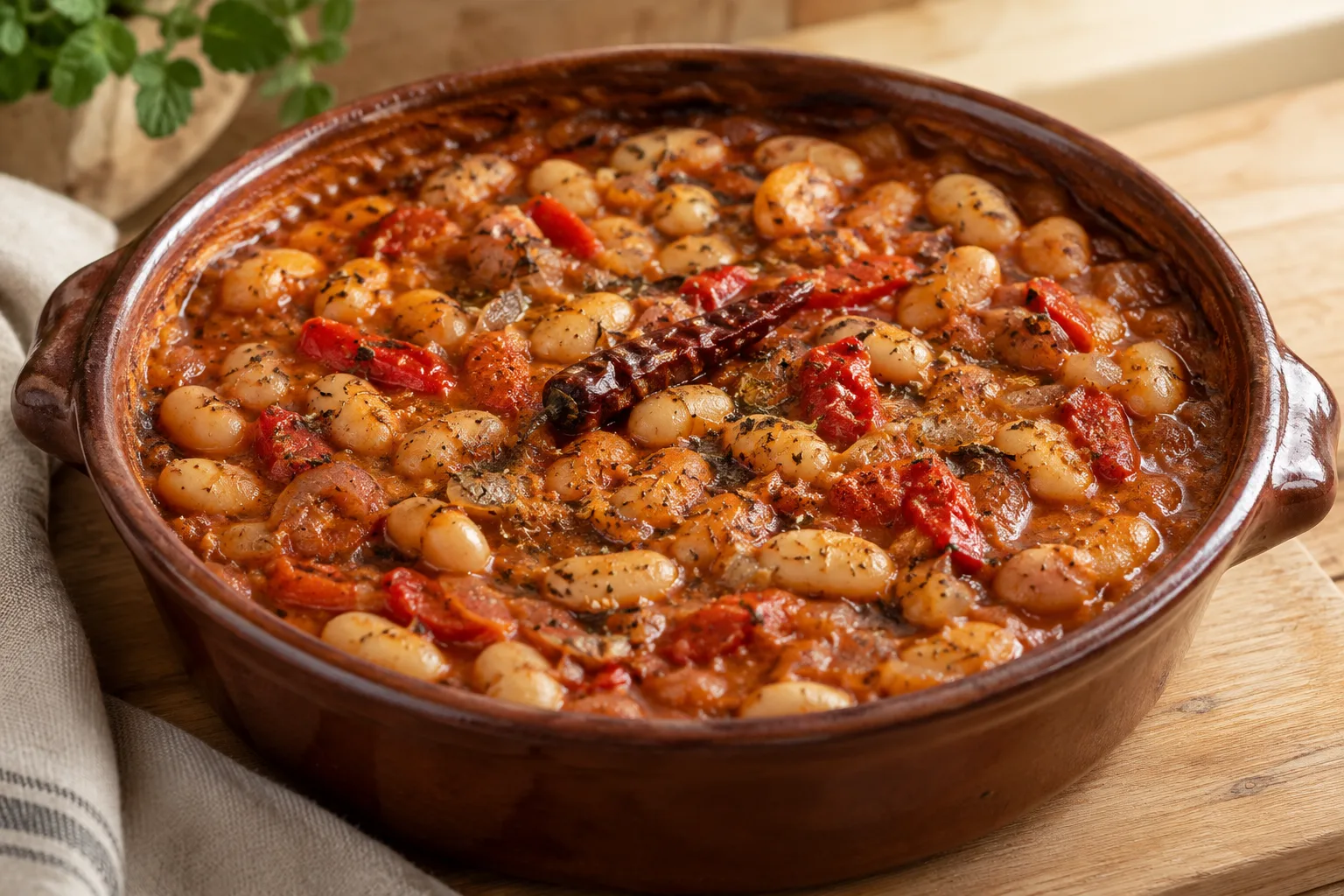
Black-clay La Chamba cazuelas are used to prepare, cook, and serve stews, vegetable soups, beef stews, tapas, and salsas. La Chamba casseroles and roasters are also used for chicken, meat, pasta, and vegetable dishes.
How to use it
Check the instructions for the specific piece before choosing a heat source. Some classic donabe must not be heated empty, while certain styles allow it. Avoid sudden temperature changes to reduce the risk of thermal shock.
How to choose it
Check which heat sources the particular vessel supports; do not assume that all clay cookware works on electric or induction cooktops. Donabe compatibility varies by model, so consult the product information.
Cleaning and storage
For Chamba cookware with stuck-on food, use a brief soak in warm soapy water and a soft, non-abrasive scrubber; avoid sudden temperature changes. For the documented Nagatani-en Iga-yaki donabe, dry the bottom thoroughly before storage and before heating.
Common mistakes
Do not apply one model's instructions to every clay pot. Avoid placing hot Chamba cookware on a cold surface; also, do not heat a classic donabe empty unless the product instructions specifically allow it.
Safe use
Some traditional pottery may contain lead in its glaze or decoration, which can leach into food or drink. Do not cook, serve, or store food in a piece marked “Not for Food Use”; washing or boiling does not remove lead.
Frequently asked questions
Can any clay pot be used on any cooktop?
No. Heat-source compatibility depends on the type and model. Check the instructions for the specific piece; many Iga-yaki donabe, for example, are not suitable for electric or induction cooktops.
Can a clay pot be heated empty?
Do not assume that it can. Classic donabe must not be heated empty, although certain specific styles allow it. Check the product information first.
How should a clay pot be cleaned?
It depends on the type. For Chamba, a brief soak in warm soapy water and a soft scrubber may be enough; a dishwasher can degrade the clay. For a donabe, use lukewarm water and mild dish soap, then dry the bottom thoroughly.
Is every piece of traditional pottery safe for cooking?
Not necessarily. Lead can leach from the glaze or decoration of some pieces. Do not use pottery marked as decorative or labeled as not for food use with food.
Sources and review
Sources consulted for this utensil’s documented uses, care and characteristics.
- Chamba Imports: Black clay cookware uses www.chambaimports.com/
- Chamba Imports: Use and care FAQ www.chambaimports.com/pages/frequently-asked-questions
- TOIRO: Care of donabe toirokitchen.com/pages/how-to-take-care-of-your-donabe
- TOIRO: Iga-yaki donabe compatibility and use toirokitchen.com/pages/frequently-asked-questions
- FDA: Lead-glazed traditional pottery questions and answers, November 2010 www.fda.gov/food/environmental-contaminants-food/questions-and-answers-lead-glazed-tradition…