Africa · Sub-Saharan Africa

Senegal

Explore Senegal’s Atlantic foodways through ceebu jën, the rice-and-fish preparation rooted in Saint-Louis fishing communities, alongside onion-rich yassa, millet sweets, and fish pastels. Rice, millet, peanuts, seafood, and seasonal vegetables take different forms across documented communities and occasions. The guide follows their ingredients, techniques, histories, and ways of sharing without reducing Senegal’s varied cooking to a single national dish.

Food and eating habits

How people eat in Senegal

50 indicators exploring everyday meals, ingredients and food culture. Information is completed progressively from documented evidence.

50 of 50 indicators with documented information

Not all data are comparable: food supply, purchases and intake are different measures. Check the period, population and method for each finding. Qualitative descriptions do not establish percentages or amounts.

Timing and company

8/8
Timing and company — Senegal
IndicatorFindings and context
Meal times
Quantitative findingSurvey

In one Saint-Louis case, a participant places her breakfast around 11 h and the family lunch after the 14 h prayer. She describes her children eating lunch leftovers at 19 h, without preparing another dinner.

Scope, method and limitations
Observation period
July–September 2008
Unit
local clock hour; illustrative reported daily routine
Population or sample
One illustrative case:a 28-year-old woman in Darou, Saint-Louis; her breakfast and family meals. Not a representative meal-time sample.
Geographic scope
Qualitative fieldwork July–September 2008, published in a 2009 synthesis. Case identified with Saint-Louis, not extrapolated to other regions.
Definition and method
Participatory interviews/focus groups; times from one individual daily-routine account, not a timed diary or mean. Study included women and children in urban/rural sites.
Comparison limitations
Historical partial coverage of one case. Approximate reported hours, not national times, population percentages or weekday/weekend differences. Leftovers not recast as a separate dinner; no unstated time added.
Meals per day
Quantitative findingSurvey

76.1% of households report three daily meals for their adults.

Scope, method and limitations
Observation period
2016
Unit
% households
Population or sample
Senegalese households reporting on their adult members.
Geographic scope
August–September 2016; telephone survey of 1338 households from a panel of 1500.
Definition and method
Food survey round of the same panel; household report without an individual diary.
Comparison limitations
Partial historical coverage: percentage of households, not individual adults. No mean frequency, snack frequency or current pattern is estimated.
Meal duration
Quantitative findingSurvey

Mean 57 minutes per day on meals, snacks and drinking outside meals.

Scope, method and limitations
Observation period
2021
Unit
minutes/person/day
Population or sample
Present residents of Senegal aged 15 or older; 11689 respondents.
Geographic scope
National time-use survey, 2021.
Definition and method
Retrospective 24-hour diary for a randomly selected day among the previous seven; weighted national stratified two-stage sample. The published mean is retained without division by meals.
Comparison limitations
Partial coverage: daily category time, not each meal’s duration. Report sections disagree on May or June as fieldwork start; only the year is retained. The mean base is not explicitly identified as participants only.
Daily energy distribution
Quantitative findingObserved intake

The estimated-energy table for the three main meals attributes 29.3% to breakfast, 39.4% to lunch and 31.3% to dinner.

Scope, method and limitations
Observation period
February, June and October 2013
Unit
% of estimated energy in three main meals; household adult-male-equivalent basis
Population or sample
Households in Boly Serere, Poukham Tock and Samba Dia, Fatick;114 households initially selected. Not percentages of people or a national sample.
Geographic scope
Food recalls in February, June and October 2013; three periods in one rural area. Article published 2016.
Definition and method
Repeated 24-hour recall over three waves; recipes, ingredients, household measures and West African composition table. Household adult-male-equivalent calculations; original table percentages, not recalculated or converted to individual kilocalories.
Comparison limitations
Partial historical coverage: denominator is the three main meals, excluding snacks, not all individual daily energy. Exact percentage aggregation not detailed. Cumulative counts differ between text and dish tables; no single analytical size reconstructed. Not a recommended energy split.
Weekdays and weekends
Quantitative findingSurvey

The table reports 1.0 hour of daily eating time on both weekdays and weekends, rounded to one decimal.

Scope, method and limitations
Observation period
2021
Unit
hours/person/day, rounded to one decimal
Population or sample
Present residents of Senegal aged 15 or older; 11689 respondents.
Geographic scope
National time-use survey, 2021.
Definition and method
Retrospective 24-hour diary for a randomly selected day among the previous seven; weighted national stratified two-stage sample. The published mean is retained without division by meals.
Comparison limitations
Partial coverage: daily meals, snacks and drinking outside meals, not duration per meal. Meal times and counts are not reported here. Rounding does not establish equal unrounded means or absence of statistical differences. Partial coverage: daily category time, not each meal’s duration. Report sections disagree on May or June as fieldwork start; only the year is retained.
Eating at home and away
Quantitative findingSurvey

93% of adolescent girls consumed at least one meal outside their home on each studied day.

Scope, method and limitations
Observation period
2019
Unit
% sampled girls
Population or sample
136 girls aged 14–18 from two secondary schools in Dakar.
Geographic scope
January–February 2019; local school sample.
Definition and method
Three non-consecutive 24-hour recalls: two weekdays and one weekend day. A meal required grains, roots, tubers or plantains plus at least one other food group.
Comparison limitations
Partial coverage: purposively selected schools, without national representativeness. Percentage of girls, not meals or a breakfast, lunch and dinner breakdown.
Cooking frequency
Quantitative findingSurvey

Mean 74 minutes per day on food management and preparation.

Scope, method and limitations
Observation period
2021
Unit
minutes/person/day
Population or sample
Present residents of Senegal aged 15 or older; 11689 respondents.
Geographic scope
National time-use survey, 2021.
Definition and method
Retrospective 24-hour diary for a randomly selected day among the previous seven; weighted national stratified two-stage sample. The published mean is retained without division by meals.
Comparison limitations
Partial coverage: management and preparation category, not active cooking alone or cooking days per week. Published mean, not duration per cook. Report sections disagree on May or June as fieldwork start; only the year is retained.
Eating together
Quantitative findingSurvey

33.3% of surveyed households habitually shared meals with unrelated people.

Scope, method and limitations
Observation period
2018
Unit
% sampled households
Population or sample
84 households in ten central Saint-Louis neighbourhoods.
Geographic scope
Senegal, three fieldwork sessions in 2018; food monitoring from Monday to Friday.
Definition and method
Interviews with women responsible for shopping and meals; households included habitual meal sharers. Random street-direction recruitment without a household register; 66% acceptance.
Comparison limitations
Partial local historical coverage: neither a national estimate nor a percentage of individual meals. Sharing meals with unrelated people does not imply living in the same dwelling.

Pantry and recipes

2/2
Pantry and recipes — Senegal
IndicatorFindings and context
Most consumed ingredients
Quantitative findingFood supply

Millet food supply: 23 kg per person per year.

Scope, method and limitations
Observation period
2021
Unit
kg/person/year; millet food supply
Population or sample
National population of Senegal; aggregate food balance.
Geographic scope
Reference year 2021; figure published in 2023.
Definition and method
FAOSTAT food balance: quantity allocated to human food per inhabitant. The methodology combines statistics, estimates and utilization balancing; not an individual dietary diary.
Comparison limitations
Partial coverage of one cereal, without a complete food ranking. Supply, not measured intake, household purchases or cooked millet weight. Published figure retained without conversions.
Ingredient prevalence in recipes
Qualitative descriptionRecipe sample

Céebu jagà and céebu jën bu wéex combine fish, rice and vegetables. The first recipe includes tomato sauce and fish balls; the second lists néré and bissap leaves.

Scope, method and limitations
Observation period
2025 (book publication; workshop dates not stated)
Population or sample
Two cases from a Senegalese cookbook: recipes identified as 25 and 26; not surveyed people.
Geographic scope
Book published in 2025; manually examined on 3 November 2026.
Definition and method
Purposive selection of two consecutive rice recipes; deduplicated by identifier, with a denominator of two cases. Ingredient lists and descriptions read. The book selected one hundred recipes using ENCAS preparation frequencies and tested them in culinary workshops.
Comparison limitations
Partial qualitative coverage: two educational formulations, without ingredient prevalence across the whole book or national diet. No household-measure conversions or treatment of adapted recipes as observed intake.

Cereals and plant foods

6/6
Cereals and plant foods — Senegal
IndicatorFindings and context
Cereals and cereal products
Quantitative findingFood supply

Millet food supply: 23 kg per person per year.

Scope, method and limitations
Observation period
2021
Unit
kg/person/year; millet food supply
Population or sample
National population of Senegal; aggregate food balance.
Geographic scope
Reference year 2021; figure published in 2023.
Definition and method
FAOSTAT food balance: quantity allocated to human food per inhabitant. The methodology combines statistics, estimates and utilization balancing; not an individual dietary diary.
Comparison limitations
Partial coverage of one cereal, without a complete food ranking. Supply, not measured intake, household purchases or cooked millet weight. Published figure retained without conversions.
Bread
Qualitative descriptionObserved intake

In the school sample, lunch sandwiches were usually made with white baguette bread and onion sauce, with possible additions of meat, green peas, French fries or canned mackerel.

Scope, method and limitations
Observation period
2019
Population or sample
136 girls aged 14–18 attending two secondary schools in Dakar; purposive selection.
Geographic scope
January–February 2019; local Senegalese school sample.
Definition and method
Three non-consecutive 24-hour recalls: two weekdays and one weekend day. Quantities estimated with utensils, models or actual foods; food records analysed with Nutrific.
Comparison limitations
Partial qualitative coverage of this sample: no estimate of bread grams per person or national frequency. Schools do not represent all Senegal and observation does not cover all seasons.
Pulses
Quantitative findingObserved intake

Legumes: mean 20 g/person/day (standard deviation: 38 g).

Scope, method and limitations
Observation period
2019
Unit
g/person/day, mean and SD; reported food group
Population or sample
136 girls aged 14–18 attending two secondary schools in Dakar; purposive selection.
Geographic scope
January–February 2019; local Senegalese school sample.
Definition and method
Three non-consecutive 24-hour recalls: two weekdays and one weekend day. Quantities estimated with utensils, models or actual foods; food records analysed with Nutrific.
Comparison limitations
Partial coverage: food-group mean in a purposive sample, not a national mean or species-specific quantity. Possible recall error and seasonal variation; no annual intake or recommendation derived. A uniform dry or cooked basis is not explicitly specified; no conversion between them is made.
Vegetables
Quantitative findingObserved intake

Vegetables: mean 32 g/person/day (standard deviation: 44 g).

Scope, method and limitations
Observation period
2019
Unit
g/person/day, mean and SD; reported food group
Population or sample
136 girls aged 14–18 attending two secondary schools in Dakar; purposive selection.
Geographic scope
January–February 2019; local Senegalese school sample.
Definition and method
Three non-consecutive 24-hour recalls: two weekdays and one weekend day. Quantities estimated with utensils, models or actual foods; food records analysed with Nutrific.
Comparison limitations
Partial coverage: food-group mean in a purposive sample, not a national mean or species-specific quantity. Possible recall error and seasonal variation; no annual intake or recommendation derived.
Fruit
Quantitative findingObserved intake

Fruit: mean 51 g/person/day (standard deviation: 77 g).

Scope, method and limitations
Observation period
2019
Unit
g/person/day, mean and SD; reported food group
Population or sample
136 girls aged 14–18 attending two secondary schools in Dakar; purposive selection.
Geographic scope
January–February 2019; local Senegalese school sample.
Definition and method
Three non-consecutive 24-hour recalls: two weekdays and one weekend day. Quantities estimated with utensils, models or actual foods; food records analysed with Nutrific.
Comparison limitations
Partial coverage: food-group mean in a purposive sample, not a national mean or species-specific quantity. Possible recall error and seasonal variation; no annual intake or recommendation derived.
Potatoes, roots and tubers
Qualitative descriptionRecipe sample

The céebu jagà and céebu jën bu wéex formulations include cassava and sweet potato among their ingredients.

Scope, method and limitations
Observation period
2025 (book publication; workshop dates not stated)
Population or sample
Two cases from a Senegalese cookbook: recipes identified as 25 and 26; not surveyed people.
Geographic scope
Book published in 2025; manually examined on 3 November 2026.
Definition and method
Purposive selection of two consecutive rice recipes; deduplicated by identifier, with a denominator of two cases. Ingredient lists and descriptions read. The book selected one hundred recipes using ENCAS preparation frequencies and tested them in culinary workshops.
Comparison limitations
Partial coverage: presence in two selected educational recipes, not per-capita intake or national prevalence of roots and tubers. No weight conversions or comparison with measured intake.

Protein foods

5/5
Protein foods — Senegal
IndicatorFindings and context
Meat
Qualitative descriptionRecipe sample

The educational formulations of céebu ganar bu wéex and céebu yapp combine rice and vegetables with chicken and beef, respectively.

Scope, method and limitations
Observation period
2025 (book publication; workshop dates not stated)
Population or sample
Two selected educational formulations: céebu ganar bu wéex and céebu yapp; unique recipe cases.
Geographic scope
Book published in 2025; manually examined on 3 November 2026.
Definition and method
Purposive selection of two rice recipes; deduplicated by identifier, with a denominator of two cases. Ingredient lists and descriptions read. The book selected one hundred recipes using ENCAS preparation frequencies and tested them in culinary workshops.
Comparison limitations
Partial qualitative coverage of two purposively selected educational recipes. No per-capita grams, national frequency or animal-protein share measured. Formulations were adapted in workshops; they are not intake records.
Fish and seafood
Qualitative descriptionRecipe sample

The educational formulations of céebu jagà and céebu jën bu wéex include fresh and dried fish; these are two recipe cases, without an estimate of national fish intake.

Scope, method and limitations
Observation period
2025 (book publication; workshop dates not stated)
Population or sample
Two cases from a Senegalese cookbook: recipes identified as 25 and 26; not surveyed people.
Geographic scope
Book published in 2025; manually examined on 3 November 2026.
Definition and method
Purposive selection of two consecutive rice recipes; deduplicated by identifier, with a denominator of two cases. Ingredient lists and descriptions read. The book selected one hundred recipes using ENCAS preparation frequencies and tested them in culinary workshops.
Comparison limitations
Partial qualitative coverage of two purposively selected educational recipes. No per-capita grams, national frequency or animal-protein share measured. Formulations were adapted in workshops; they are not intake records.
Eggs
Quantitative findingObserved intake

Eggs: mean 10 g/person/day (standard deviation: 15 g).

Scope, method and limitations
Observation period
2019
Unit
g/person/day, mean and SD; reported food group
Population or sample
136 girls aged 14–18 attending two secondary schools in Dakar; purposive selection.
Geographic scope
January–February 2019; local Senegalese school sample.
Definition and method
Three non-consecutive 24-hour recalls: two weekdays and one weekend day. Quantities estimated with utensils, models or actual foods; food records analysed with Nutrific.
Comparison limitations
Partial coverage: food-group mean in a purposive sample, not a national mean or species-specific quantity. Possible recall error and seasonal variation; no annual intake or recommendation derived.
Milk and dairy products
Quantitative findingObserved intake

Milk and dairy products: mean 20 g/person/day (standard deviation: 31 g).

Scope, method and limitations
Observation period
2019
Unit
g/person/day, mean and SD; reported food group
Population or sample
136 girls aged 14–18 attending two secondary schools in Dakar; purposive selection.
Geographic scope
January–February 2019; local Senegalese school sample.
Definition and method
Three non-consecutive 24-hour recalls: two weekdays and one weekend day. Quantities estimated with utensils, models or actual foods; food records analysed with Nutrific.
Comparison limitations
Partial coverage: food-group mean in a purposive sample, not a national mean or species-specific quantity. Possible recall error and seasonal variation; no annual intake or recommendation derived. The group combines milk and dairy products; it is not fluid milk alone and does not separate individual products.
Protein sources
Quantitative findingObserved intake

The combined meat and fish group contributed 39% of calculated protein intake from household meals in the three study villages.

Scope, method and limitations
Observation period
2013
Unit
% of calculated household-meal protein; village-mean study average
Population or sample
Households in Boly Serere, Poukham Tock and Samba Dia, Fatick Province. 114 households selected; 93, 99 and 100 participated in February, June and October, respectively.
Geographic scope
February, June and October 2013; published average across three surveys based on village means. Household meals only: snacks and beverages excluded from nutrient calculations.
Definition and method
Two-stage convenience sampling: four randomly selected streets per village and every second household approached. Household 24-hour recall with estimated amounts and West African composition table; nutrients calculated per adult male equivalent and village means.
Comparison limitations
Partial, local and historical coverage; not a national share or complete diet. Meat and fish form one category: their contributions are not separated and no animal/plant split is derived. Individual intake not measured because bowls were shared; equivalents assume distribution according to needs. Possible recall error and replacement of some households.

Fats, flavours and condiments

3/3
Fats, flavours and condiments — Senegal
IndicatorFindings and context
Cooking fats
Qualitative descriptionCultural context

Oil is listed among the components of the saf sap style of cooking and seasoning described. Two selected rice formulations list groundnut or sunflower oil; the chicken-and-rice version also includes olive oil.

Scope, method and limitations
Observation period
Ethnography undated; opening scene early 2023; cookbook publication 2025
Population or sample
Ethnographic account; includes participant observation in two households in Pikine. Cookbook component: two purposively selected educational cases, recipes 23 and 30; not surveyed individuals.
Geographic scope
Senegal; urban Dakar context, including Pikine. The introductory Pikine scene is from early 2023; the full four-month fieldwork is not dated. Cookbook published in 2025; workshop dates unstated.
Definition and method
Ethnographic component: four months of participant observation in two households, complemented by focus groups and interviews; not an intake survey. Cookbook component: ingredient lists and preparation read for two cases, deduplicated by identifier, selected from educational formulations tested in workshops.
Comparison limitations
Partial qualitative coverage: two distinct settings are retained, observed households and educational recipes. No national prevalence, per-capita intake, usual amounts or usage comparison between oils, herbs or condiments established. Recipe lists are not intake.
Herbs and spices
Qualitative descriptionCultural context

In one chicken-and-rice preparation, chilies, garlic, and onions were pounded, and salt and pepper were added; the description of saf sap also includes fresh parsley. This does not establish frequency or quantities. Both selected rice formulations include parsley and bay leaf among their ingredients.

Scope, method and limitations
Observation period
Ethnography undated; opening scene early 2023; cookbook publication 2025
Population or sample
Ethnographic account of cooking practices in Dakar households; includes participant observation in two households in Pikine. Cookbook component: two purposively selected educational cases, recipes 23 and 30; not surveyed individuals.
Geographic scope
Senegal; the cooking scene described is set in Pikine, in urban Dakar. The introductory Pikine scene is from early 2023; the full four-month fieldwork is not dated. Cookbook published in 2025; workshop dates unstated.
Definition and method
Ethnographic component: four months of participant observation in two households, complemented by focus groups and interviews; not an intake survey. Cookbook component: ingredient lists and preparation read for two cases, deduplicated by identifier, selected from educational formulations tested in workshops.
Comparison limitations
Partial qualitative coverage: two distinct settings are retained, observed households and educational recipes. No national prevalence, per-capita intake, usual amounts or usage comparison between oils, herbs or condiments established. Recipe lists are not intake.
Sauces and condiments
Qualitative descriptionCultural context

The saf sap cooking style is described with stock cubes, mustard, vinegar, salt, sugar, dried and smoked fish, fresh parsley, and lime, as well as industrial flavors. This is a qualitative description, not a measure of use. In the selected chicken-and-rice formulation, diced mixed vegetables are marinated with lemon juice, salt, pepper and olive oil.

Scope, method and limitations
Observation period
Ethnography undated; opening scene early 2023; cookbook publication 2025
Population or sample
Ethnographic account of cooking practices in Dakar; includes participant observation in two households in Pikine. Cookbook component: two purposively selected educational cases, recipes 23 and 30; not surveyed individuals.
Geographic scope
Senegal; urban Dakar context, including Pikine. The introductory Pikine scene is from early 2023; the full four-month fieldwork is not dated. Cookbook published in 2025; workshop dates unstated.
Definition and method
Ethnographic component: four months of participant observation in two households, complemented by focus groups and interviews; not an intake survey. Cookbook component: ingredient lists and preparation read for two cases, deduplicated by identifier, selected from educational formulations tested in workshops.
Comparison limitations
Partial qualitative coverage: two distinct settings are retained, observed households and educational recipes. No national prevalence, per-capita intake, usual amounts or usage comparison between oils, herbs or condiments established. Recipe lists are not intake.

Meal composition

6/6
Meal composition — Senegal
IndicatorFindings and context
Breakfast composition
Quantitative findingObserved intake

The study reports that 65% of girls ate breakfast.

Scope, method and limitations
Observation period
2019
Unit
% of girls reporting breakfast; study definition
Population or sample
136 girls aged 14–18 attending two secondary schools in Dakar; purposive selection.
Geographic scope
January–February 2019; local Senegalese school sample.
Definition and method
Three non-consecutive 24-hour recalls: two weekdays and one weekend day. Quantities estimated with utensils, models or actual foods; food records analysed with Nutrific.
Comparison limitations
Partial coverage: reported proportion in a local school sample, not national frequency. A meal requires grains, roots, tubers or plantains and at least one other group. No breakfast menu or its energy reported here; no skipping proportion derived.
Main meal composition
Qualitative descriptionObserved intake

In the school sample, lunch away from home usually consisted of a white baguette sandwich with onion sauce, with additions of meat, green peas, French fries or canned mackerel.

Scope, method and limitations
Observation period
2019
Population or sample
136 girls aged 14–18 attending two secondary schools in Dakar; purposive selection.
Geographic scope
January–February 2019; local Senegalese school sample.
Definition and method
Three non-consecutive 24-hour recalls: two weekdays and one weekend day. Quantities estimated with utensils, models or actual foods; food records analysed with Nutrific.
Comparison limitations
Partial qualitative coverage of school lunches; not all household menus, quantities, course sequences or which meal supplies most energy in Senegal.
Dinner composition
Qualitative descriptionObserved intake

Most study households reported the same dishes for breakfast and dinner.

Scope, method and limitations
Observation period
2013
Population or sample
Households in Boly Serere, Poukham Tock and Samba Dia, Fatick Province. 114 households selected; 93, 99 and 100 participated in February, June and October, respectively.
Geographic scope
February, June and October 2013; household meals in Boly Serere, Poukham Tock and Samba Dia, Fatick Province.
Definition and method
Household recall of meals in the preceding 24 hours over three visits; households defined by people eating from the same bowls. Qualitative description of the reported pattern, not dish-specific counts.
Comparison limitations
Partial, local and historical coverage of three Fatick villages in 2013. No identification here of each dinner dish, its grams or national frequency; not a claim that everyone eats the same breakfast and dinner.
Appetisers and snacks
Quantitative findingSurvey

60.3% of adolescents reported snacking between meals.

Scope, method and limitations
Observation period
2021
Unit
weighted % of adolescents reporting snacking
Population or sample
1433 adolescents of both sexes aged 10–19, in and out of school; national urban and rural Senegalese sample.
Geographic scope
July–November 2021; questionnaire-reported habit, not grams consumed. Published weighted percentage.
Definition and method
Cross-sectional survey with three-stage stratified probability sampling: census districts, households and one adolescent per household. CAPI questionnaires and weighting for representativeness; published proportion retained without recalculating from counts.
Comparison limitations
Partial coverage: adolescents, not the entire population. No snack foods, quantities or precise recall window specified for this habit item. Daily frequency not adopted because table and text disagree. Cross-sectional health associations do not prove causality.
Desserts and sweets
Quantitative findingObserved intake

Study sweets group: mean 139 g/person/day (standard deviation: 115 g). The category is defined with examples such as candy, ice cream and cookies.

Scope, method and limitations
Observation period
2019
Unit
g/person/day; reported sweets-group mean and SD
Population or sample
136 girls aged 14–18 attending two secondary schools in Dakar; purposive selection.
Geographic scope
January–February 2019; local Senegalese school sample.
Definition and method
Three non-consecutive 24-hour recalls: two weekdays and one weekend day. Quantities estimated with utensils, models or actual foods; food records analysed with Nutrific.
Comparison limitations
Partial coverage: the sweets group is not exclusively end-of-meal desserts. Eating occasions and product breakdown not known here. Local school-sample mean, not national; no annualisation.
Portion sizes
Quantitative findingObserved intake

Amounts of up to 750 g of white rice per meal and up to 100 g of white baguette bread are described, eaten at lunch and/or dinner.

Scope, method and limitations
Observation period
2019
Unit
g as reported; rice per meal, bread in meal context
Population or sample
136 girls aged 14–18 attending two secondary schools in Dakar; purposive selection.
Geographic scope
January–February 2019; local Senegalese school sample.
Definition and method
Three non-consecutive 24-hour recalls: two weekdays and one weekend day. Quantities estimated with utensils, models or actual foods; food records analysed with Nutrific.
Comparison limitations
Partial coverage: examples of amounts described in the school sample, not a mean, percentile, recommended portion or national measure. No claim that rice and bread were eaten together. Rice dry/cooked basis not explicit in that passage; no conversion or daily total derived.

Techniques and equipment

5/5
Techniques and equipment — Senegal
IndicatorFindings and context
Cooking techniques
Qualitative descriptionRecipe sample

In the reviewed chicken-and-rice formulation, chicken is browned and rice is steamed before being added to the cooking pot.

Scope, method and limitations
Observation period
2025 (cookbook publication; workshop dates unstated)
Population or sample
One educational formulation of céebu ganar bu wéex, chicken and rice; purposively selected case, recipe 23.
Geographic scope
Senegalese cookbook published in 2025; culinary workshop dates unstated.
Definition and method
Preparation steps of one identified recipe read, without duplicates. Cookbook formulations were selected using preparation frequencies and tested in workshops; not a population-wide survey of cooking methods.
Comparison limitations
Partial qualitative coverage of one educational case. No national technique proportions or raw/cooked vegetable percentages estimated. Times, temperatures and quantities are not extrapolated to other recipes.
Vegetable preparation
Qualitative descriptionRecipe sample

In the reviewed formulation, green beans, carrots and turnips are diced and steamed; cucumber is cut into cubes.

Scope, method and limitations
Observation period
2025 (cookbook publication; workshop dates unstated)
Population or sample
One educational formulation of céebu ganar bu wéex, chicken and rice; purposively selected case, recipe 23.
Geographic scope
Senegalese cookbook published in 2025; culinary workshop dates unstated.
Definition and method
Preparation steps of one identified recipe read, without duplicates. Cookbook formulations were selected using preparation frequencies and tested in workshops; not a population-wide survey of cooking methods.
Comparison limitations
Partial qualitative coverage of one educational case. No national technique proportions or raw/cooked vegetable percentages estimated. Times, temperatures and quantities are not extrapolated to other recipes.
Food preservation
Qualitative descriptionCultural context

Meal records from the study villages include dried baobab leaves. The study notes that its leaves can be stored dry.

Scope, method and limitations
Observation period
2013
Population or sample
Households in Boly Serere, Poukham Tock and Samba Dia, Fatick Province. 114 households selected; 93, 99 and 100 participated in February, June and October, respectively.
Geographic scope
February, June and October 2013; household meals in Boly Serere, Poukham Tock and Samba Dia, Fatick Province.
Definition and method
Household recall of meals in the preceding 24 hours over three visits; households defined by people eating from the same bowls. Qualitative description of the reported pattern, not dish-specific counts.
Comparison limitations
Partial, local and historical coverage of three villages in 2013. Presence in meals and storage description, not national practice frequency. No protocols, duration, temperature, safety or proportions of households drying or fermenting documented here.
Fermented foods
Qualitative descriptionObserved intake

Fermented Parkia biglobosa seeds, identified as netetu in the local repertoire, were used in the studied meals.

Scope, method and limitations
Observation period
2013
Population or sample
Households in Boly Serere, Poukham Tock and Samba Dia, Fatick Province. 114 households selected; 93, 99 and 100 participated in February, June and October, respectively.
Geographic scope
February, June and October 2013; household meals in Boly Serere, Poukham Tock and Samba Dia, Fatick Province.
Definition and method
Household recall of meals in the preceding 24 hours over three visits; households defined by people eating from the same bowls. Qualitative description of the reported pattern, not dish-specific counts.
Comparison limitations
Partial, local and historical coverage of three villages in 2013. Presence in meals and storage description, not national practice frequency. No protocols, duration, temperature, safety or proportions of households drying or fermenting documented here.
Kitchen equipment
Quantitative findingSurvey

41.4% of households owned a refrigerator and 10.9% a gas/electric stove or cooker, using the published categories.

Scope, method and limitations
Observation period
2023
Unit
% of households owning each reported appliance category
Population or sample
8423 successfully interviewed households; national Senegal Continuous DHS 2023, urban and rural areas.
Geographic scope
Fieldwork between January and August 2023, with a pause. Household asset ownership; national percentages published in Table 2.5.
Definition and method
Two-stage stratified area sampling: clusters selected proportional to size and households systematically selected. Tablet interviews and weighted results; national column retained without recalculation from counts.
Comparison limitations
Partial coverage: ownership, not working condition, use or food-storage practices. Stove/cooker category combines gas and electricity; ovens, microwaves and pressure cookers not separated. Equipment groups may overlap and are not summed; households, not people.

Drinks

3/3
Drinks — Senegal
IndicatorFindings and context
Everyday drinks
Quantitative findingObserved intake

Water: mean 693 ml/person/day (standard deviation: 312 ml). Sugary drinks: mean 129 g/person/day (standard deviation: 126 g).

Scope, method and limitations
Observation period
2019
Unit
water: ml/person/day; sugary drinks: g/person/day; mean and SD
Population or sample
136 girls aged 14–18 attending two secondary schools in Dakar; purposive selection.
Geographic scope
January–February 2019; local Senegalese school sample.
Definition and method
Three non-consecutive 24-hour recalls: two weekdays and one weekend day. Quantities estimated with utensils, models or actual foods; food records analysed with Nutrific.
Comparison limitations
Partial coverage of a local school sample, not a national mean. Water is reported by volume and sugary drinks by mass: no conversion, comparison or addition between them. Daily amounts, not glass or meal volumes; individual sugary drinks not separated.
Coffee and tea preparation
Qualitative descriptionCultural context

In the preparations described, Café Touba is obtained by filtering a ground mixture of coffee and Xylopia aethiopica; kinkeliba herbal tea is prepared by decocting dried Combretum micranthum leaves. Ataya is described with green tea and mint, served in three stages.

Scope, method and limitations
Observation period
Survey year unstated; article published 2017; ataya page undated
Population or sample
Local survey around Dakar markets: 60 household women and 60 Café Touba and kinkeliba vendors. Ataya also uses an institutional cultural description without a sampled population.
Geographic scope
Survey observation year unstated; article published in 2017. Institutional ataya page has no observation date; access date is not presented as data year.
Definition and method
Non-probability availability sampling; questionnaires on preparation and consumption, weighed ingredients and measured volumes. Survey distinguished from later standardised formulations. Ataya uses a cultural page, not an intake survey.
Comparison limitations
Partial qualitative coverage of specific preparations. No national frequency, standard cup volume, sugar or milk amounts or health effects established. Survey quantities not published as dated data because observation year is unknown.
Drinks with meals
Qualitative descriptionSurvey

The local study describes Café Touba and kinkeliba herbal tea served at breakfast, in households and in contexts where these drinks are sold.

Scope, method and limitations
Observation period
Observation dates unstated; article publication 2017
Population or sample
Convenience survey in Dakar: 60 household women and 60 Café Touba and kinkeliba vendors; not a national sample.
Geographic scope
Breakfast context described in an article published in 2017; collection dates unstated.
Definition and method
Questionnaires on preparation and consumption and ingredient/volume measurements. Only the qualitative breakfast link is retained here, separately from standardised laboratory recipes.
Comparison limitations
Partial coverage: only these beverages and breakfast in the studied context. No evidence of lunch/dinner accompaniments, meal quantities or national proportions. Daily or between-meal beverage amounts are not reassigned to meals.

Nutrition and dietary patterns

3/3
Nutrition and dietary patterns — Senegal
IndicatorFindings and context
Energy and nutrients
Quantitative findingObserved intake

Estimated daily means (± standard error): energy 1797.6 ± 46.6 kcal/person/day; protein 58.1 ± 1.9 g/person/day; dietary fibre 15.1 ± 0.5 g/person/day.

Scope, method and limitations
Observation period
December 2021
Unit
per person/day; kcal energy; g protein and fibre; mean ± standard error
Population or sample
301 urban Dakar adults aged 20–69; special nutritional needs or conditions requiring a special diet were excluded.
Geographic scope
Urban Dakar, December 2021; results for the whole study sample, not all Senegal.
Definition and method
Cross-sectional study; authors describe a convenience sample with random selection stages. One quantitative multiple-pass 24-hour recall per adult; second recall in a random 20%. Randomly assigned days including weekends, excluding holidays. Estimates from 2019 West African and CIQUAL 2020 food composition tables.
Comparison limitations
Partial local coverage, not a national mean or individual usual intake. Few recall days, possible quantity/composition errors; other ages and seasons not covered. Standard error describes precision of the mean, not individual variability.
Salt and sugars
Quantitative findingObserved intake

Estimated daily means (± standard error): sodium 2685.3 ± 89.5 mg/person/day; free sugars 12.2 ± 1.2 g/person/day.

Scope, method and limitations
Observation period
December 2021
Unit
per person/day; sodium mg; free sugars g; mean ± standard error
Population or sample
301 urban Dakar adults aged 20–69; special nutritional needs or conditions requiring a special diet were excluded.
Geographic scope
Urban Dakar, December 2021; results for the whole study sample, not all Senegal.
Definition and method
Cross-sectional study; authors describe a convenience sample with random selection stages. One quantitative multiple-pass 24-hour recall per adult; second recall in a random 20%. Randomly assigned days including weekends, excluding holidays. Estimates from 2019 West African and CIQUAL 2020 food composition tables.
Comparison limitations
Partial local coverage, not a national mean or individual usual intake. Few recall days, possible quantity/composition errors; other ages and seasons not covered. Standard error describes precision of the mean, not individual variability. Sodium estimated from foods, not urine; no salt conversion. Free sugars are neither total sugars nor only sugar added at the table.
Dietary patterns
Quantitative findingObserved intake

Ultra-processed foods in the NOVA classification supplied an average 17.4% of participants’ total daily energy intake.

Scope, method and limitations
Observation period
December 2021
Unit
percentage of total daily energy intake; mean individual share
Population or sample
301 urban Dakar adults aged 20–69; special nutritional needs or conditions requiring a special diet were excluded.
Geographic scope
Urban Dakar, December 2021; results for the whole study sample, not all Senegal.
Definition and method
Cross-sectional study; authors describe a convenience sample with random selection stages. One quantitative multiple-pass 24-hour recall per adult; second recall in a random 20%. Randomly assigned days including weekends, excluding holidays. Estimates from 2019 West African and CIQUAL 2020 food composition tables.
Comparison limitations
Partial local coverage, not a national mean or individual usual intake. Few recall days, possible quantity/composition errors; other ages and seasons not covered. Standard error describes precision of the mean, not individual variability. Energy percentage, not mass, people, purchases or availability. Disaggregated recipe ingredients were classified; no causal inference or complete national dietary pattern.

Shopping, prices and waste

7/7
Shopping, prices and waste — Senegal
IndicatorFindings and context
Food expenditure
Quantitative findingSurvey

The food-purchases category represents 35.5% of the national consumption-expenditure aggregate.

Scope, method and limitations
Observation period
2021/2022
Unit
% of total consumption expenditure; food purchases category
Population or sample
Senegalese urban and rural households: final sample 7120 households; 7176 planned.
Geographic scope
Senegal, national 2021/2022 household survey, two collection waves.
Definition and method
Stratified two-stage sampling; food consumption recalled for preceding seven days and purchases for preceding thirty days. Study valuation and annualisation; temporal and spatial price adjustment. Table of consumption-aggregate composition.
Comparison limitations
Partial coverage: share of this category, not total food expenditure or monthly amount per person. Purchased cooked meals, own-production consumption and gifts are separate categories; not added here. Aggregate includes non-cash components.
Cost of a common basket
Qualitative descriptionSurvey

The food basket used to construct the poverty threshold is based on products dominating food expenditure and excludes the poorest and wealthiest extremes when selecting reference households.

Scope, method and limitations
Observation period
2021/2022; poverty-line basket methodology
Population or sample
Senegalese urban and rural households: final sample 7120 households; 7176 planned.
Geographic scope
Senegal, national 2021/2022 household survey, two collection waves.
Definition and method
Stratified two-stage sampling; food consumption recalled for preceding seven days and purchases for preceding thirty days. Study valuation and annualisation; temporal and spatial price adjustment. Table of consumption-aggregate composition.
Comparison limitations
Partial qualitative coverage of a poverty-basket method. Does not document here a fixed-quantity retail basket with its cost, currency, price date and outlets; not dietary advice.
Cost of specific meals
Quantitative findingSurvey

Thiéboudienne (rice, fish, tomato sauce and vegetables): menu price 15000 F CFA per listed dish, VAT included.

Scope, method and limitations
Observation period
2025 menu version; advertised price, not transaction date
Unit
F CFA per listed dish; VAT included
Population or sample
One commercial-menu example: a thiéboudienne dish at Casino Terrou-Bi, Dakar; no household or restaurant sample.
Geographic scope
Menu version identified as 2025 in PDF title/metadata. Documents that advertised price, not a dated transaction or present validity.
Definition and method
Direct first-party menu reading and visual dish/price matching; currency and VAT inclusion from the same page. No home-cooking cost calculated.
Comparison limitations
Partial coverage of one establishment/menu version: neither national mean nor current price. Price per listed dish; weight, serving size and diner count unspecified. Not comparable to home recipes or differently composed menus.
Grocery shopping locations
Qualitative descriptionSurvey

Neighbourhood shops, markets and supermarkets coexist in the practices described. Markets are described for vegetables and fresh fish, while shops near home provide small replenishment purchases.

Scope, method and limitations
Observation period
2021–2022
Population or sample
Local Dakar research with 200 consumers purposively selected by residence, workplace, age and gender; complemented by observation and trader interviews.
Geographic scope
Dakar, 2021–2022 field data in shopping charts; thesis defended 2025. Additional interviews from other years not treated as the same survey.
Definition and method
In-person/online questionnaires in Wolof and French, non-probability selection; direct observation and semi-structured interviews. Practice descriptions retained without estimating percentages from chart bars.
Comparison limitations
Partial qualitative coverage of local practices; not nationally representative. Research includes food/non-food shopping and author employment at Auchan. No expenditure shares by channel, mean weekly visits or comparable basket size provided here.
Shopping frequency
Qualitative descriptionSurvey

Daily small-quantity top-up purchases at neighbourhood shops are described alongside weekend or monthly supermarket shopping for larger quantities and often non-fresh products.

Scope, method and limitations
Observation period
2021–2022
Population or sample
Local Dakar research with 200 consumers purposively selected by residence, workplace, age and gender; complemented by observation and trader interviews.
Geographic scope
Dakar, 2021–2022 field data in shopping charts; thesis defended 2025. Additional interviews from other years not treated as the same survey.
Definition and method
In-person/online questionnaires in Wolof and French, non-probability selection; direct observation and semi-structured interviews. Practice descriptions retained without estimating percentages from chart bars.
Comparison limitations
Partial qualitative coverage of local practices; not nationally representative. Research includes food/non-food shopping and author employment at Auchan. No expenditure shares by channel, mean weekly visits or comparable basket size provided here.
Prepared food and delivery
Quantitative findingSurvey

Cooked meals purchased from formal or informal restaurants represent 11.1% of the national consumption-expenditure aggregate. Definition includes consumption at the purchase location, at home or elsewhere.

Scope, method and limitations
Observation period
2021/2022
Unit
% of total consumption expenditure; purchased cooked-meals category
Population or sample
Senegalese urban and rural households: final sample 7120 households; 7176 planned.
Geographic scope
Senegal, national 2021/2022 household survey, two collection waves.
Definition and method
Stratified two-stage sampling; food consumption recalled for preceding seven days and purchases for preceding thirty days. Study valuation and annualisation; temporal and spatial price adjustment. Table of consumption-aggregate composition.
Comparison limitations
Partial coverage: aggregate expenditure share, not frequency, people or a share of food-only expenditure. Delivery, dish types and serving prices not separated.
Household food waste
Quantitative findingSurvey

Estimated household food waste in Dakar is 0.21 kg/person/day.

Scope, method and limitations
Observation period
2022
Unit
kg food waste/person/day; city household estimate
Population or sample
Dakar city households; factsheet reference population 1476669 residents in 2020. Household sample size not detailed in the factsheet.
Geographic scope
Dakar city; Waste Wise Cities survey 2022. Population reference 2020 differs from survey year.
Definition and method
Municipal waste-generation and composition assessment using Waste Wise Cities Tool. Household-flow food-waste indicator read directly; not calculated from total municipal waste.
Comparison limitations
Partial local coverage, not a national mean. Factsheet does not separate edible/inedible parts, specific foods or reasons. No conversion to kg/person/year or conflation with commercial or whole-chain waste. Detailed method, sample size and error not provided in factsheet.

Seasons and celebrations

2/2
Seasons and celebrations — Senegal
IndicatorFindings and context
Seasonal produce
Qualitative descriptionSurvey

February snack/beverage reports frequently included Ziziphus mauritiana, baobab fruit and Diospyros mespiliformis; mango dominated in June. October had few mentions, mainly Detarium senegalense. These are monthly local-consumption observations, not a harvest calendar.

Scope, method and limitations
Observation period
February, June and October 2013
Population or sample
Households in Boly Serere, Poukham Tock and Samba Dia, Fatick:93 in February, 99 in June and 100 in October. Snack questions included other household members present.
Geographic scope
Three Fatick villages, February, June and October 2013 surveys. Not presented as current availability throughout Senegal.
Definition and method
Two-stage convenience sample and food-recall interviews; snacks/beverages recorded as mentions without determinable quantities. Authors’ described pattern retained without converting mentions into intake amounts or retail availability.
Comparison limitations
Partial historical qualitative coverage of three months/three villages. Observed consumption does not establish ripening, production, sales or year-round availability; no complete local/imported distinction or national season. No mentions does not mean food absent.
Celebration food
Qualitative descriptionCultural context

Around Easter, ngalakh made with millet, peanut butter and baobab powder is described as shared with Muslim neighbours. During Tabaski, the reciprocal sharing described is Muslim families offering meals to Christian neighbours.

Scope, method and limitations
Observation period
Undated cultural description; movable Easter and Tabaski calendar
Population or sample
Institutional cultural description concerning Senegal, without household sample or participant counts.
Geographic scope
Easter and Tabaski (Eid al-Adha), with variable civil-calendar dates. Undated description without regional breakdown; no specific day or footer-year observation date assigned.
Definition and method
Reading of the official tourism agency’s public description; evidence of the described custom/ingredients, not measured intake, purchases or frequency.
Comparison limitations
Partial cultural coverage: only these two occasions/described practice, not all households, celebrations or regional variants. No quantities, prevalence, single recipe or Tabaski meal ingredients established.
Explore its cuisines

Senegalese Cooking: Shared Rice, Fish, Millet, and Hospitality

Documentary synthesis prepared with AI assistance. It does not replace specialist review or certify kitchen testing. · Updated 31 October 2026

A country shaped by coast, river, and inland landscapes

Senegal’s cooking reflects a varied West African setting, from Atlantic fishing communities to inland areas and the country’s greener south. Seafood is especially prominent in coastal foodways; rice, millet, peanuts, and vegetables appear across a broader range of dishes. These ingredients do not make one uniform national menu. They meet in distinct preparations, from rice cooked with fish and vegetables to millet-based sweets and dishes served with rice cooked separately.

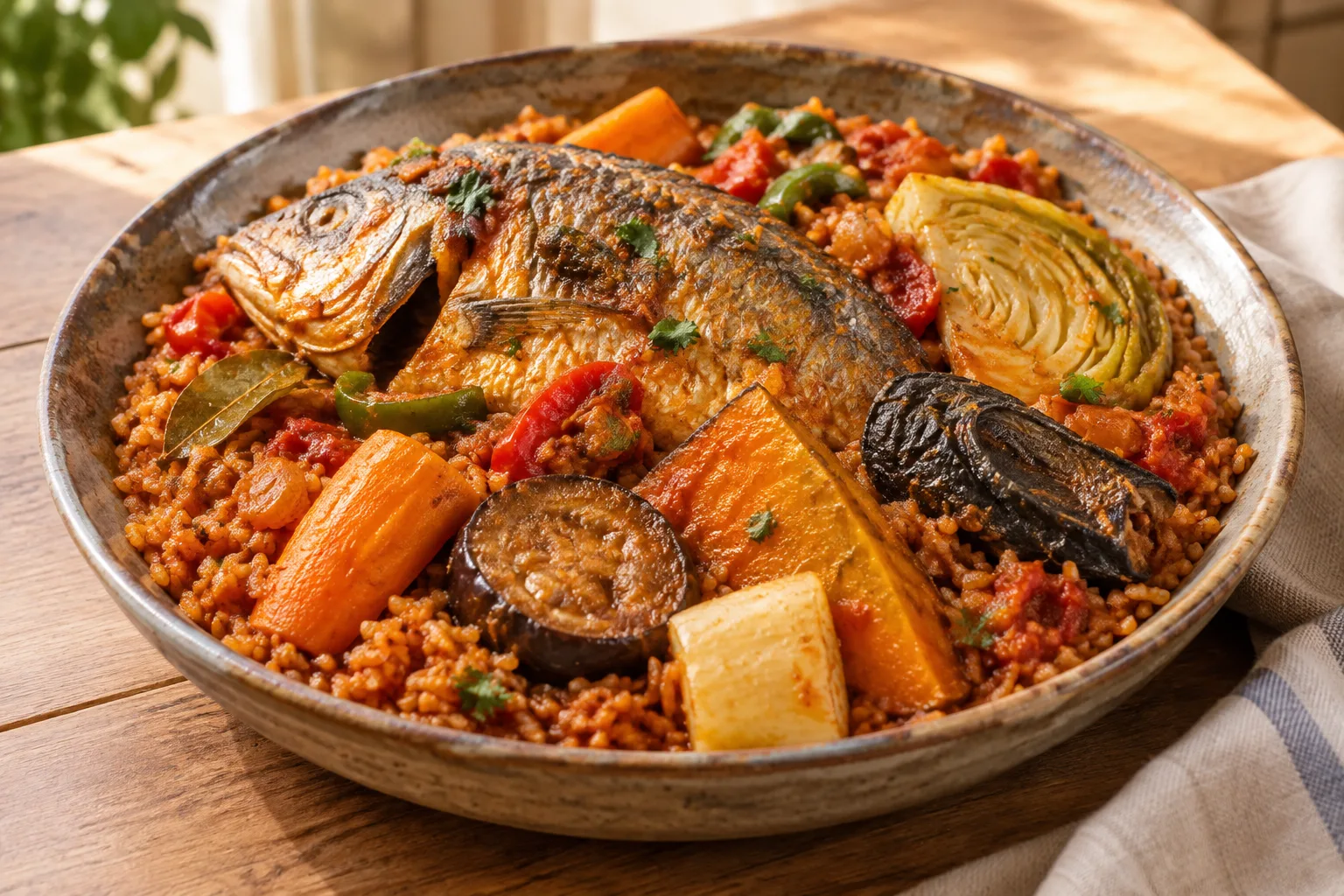
The UNESCO account of ceebu jën offers a focused way into this diversity. It links the preparation’s roots to fishing communities on the island of Saint-Louis, while noting that recipes vary from one region of Senegal to another. Its characteristic combination of broken rice, fish, vegetables, and seasonings is therefore a starting point, not a template for every Senegalese meal. Yassa, millet desserts, grilled fish, and other preparations broaden the picture.

Food also carries social meaning. A large shared dish can bring family, guests, and neighbors together, while teaching and cooking pass knowledge through households. Senegalese cuisine is best approached through those particular ingredients, methods, and occasions rather than as a list of dishes standing for every community.

Histories of exchange and local reinvention

Senegalese cooking has developed through the interaction of local communities and wider regional and overseas histories. The country’s largest ethnic group is Wolof, among many communities whose foodways shape the national repertoire. Historical accounts also describe influences associated with Portugal, North Africa, and France. These encounters should not be mistaken for a single direction of influence: dishes and habits have been adapted within Senegalese households and communities, and their meaning depends on local use.

Islam has had a long presence in the region, and Senegal was under French colonial rule until independence in 1960. These histories form part of the wider context for food, including religious observance, trade, and changing patterns of everyday life. They do not explain every ingredient or dish on their own. The available documentation, for example, identifies the ceebu jën tradition through its fishing-community roots, culinary knowledge, and associated practices, rather than assigning the entire cuisine one origin.

Rice and fish dishes have also circulated beyond Senegal into neighboring West African food cultures, where related preparations are known by different names. Such resemblance points to regional connections, not to exclusive ownership claims. Senegalese cooks continue to give familiar ingredients distinct expression through combinations such as yassa, maafe, and ceebu jën.

Rice, millet, seafood, and the produce pot

Rice is central to many Senegalese meals, while millet and couscous-like preparations offer other cereal traditions. In ceebu jën, broken rice is cooked in a seasoned liquid with fish and vegetables; its form is part of the dish’s character, not merely a substitute for whole grains. Millet appears in foods such as thiakry, a sweet preparation in which millet granules meet dairy, and in ngalakh, where millet is paired with baobab and peanut paste.

Fish is a defining resource in coastal cooking. The UNESCO description of ceebu jën includes fresh and dried fish, molluscs, and seasonal vegetables. Depending on the version, vegetables may include tomato, carrot, aubergine, cabbage, sweet potato, cassava, okra, onion, and chilli. The combination varies with season and occasion, so an ingredient list for one version should not be treated as a fixed national formula.

Peanuts are another important ingredient, used as a paste or sauce as well as eaten in other forms. Baobab fruit contributes a distinctly tangy note to ngalakh. Across these dishes, preparation matters as much as the raw pantry: a cereal may become a savoury base or a sweet grain, while fish can be fresh, dried, or incorporated into a sauce.

Savory depth, citrus lift, and contrasting textures

Senegalese dishes build flavor in different ways. In ceebu jën, tomato, garlic, onion, herbs, chilli, fish, and vegetables contribute to a substantial, savoury cooking liquid that also seasons the rice. Fish and vegetables may be set aside after cooking while the rice finishes in the remaining liquid, bringing the parts back together at serving. Some versions also use dried fish or molluscs, which add a concentrated marine character. The ingredients and their balance vary across recipes.

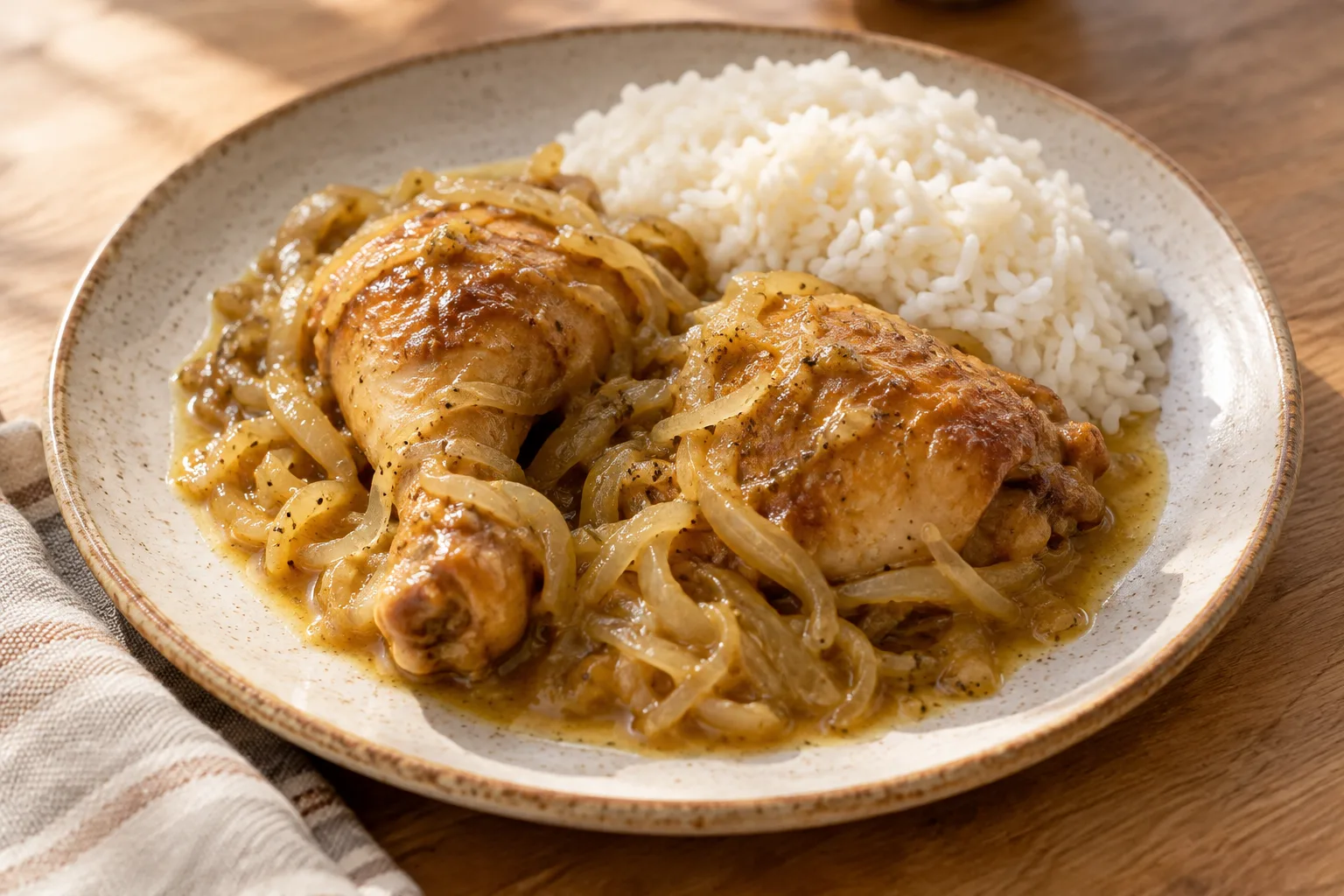
Yassa is a contrasting route: its familiar profile combines onions and lemon with a marinade, often including mustard, and it is served with rice. Chicken is a common version, while fish is also documented. The result turns on the softened onions and bright, tangy seasoning rather than on cooking the rice in a fish-and-vegetable broth. A chilli can add heat, but the level depends on the preparation.

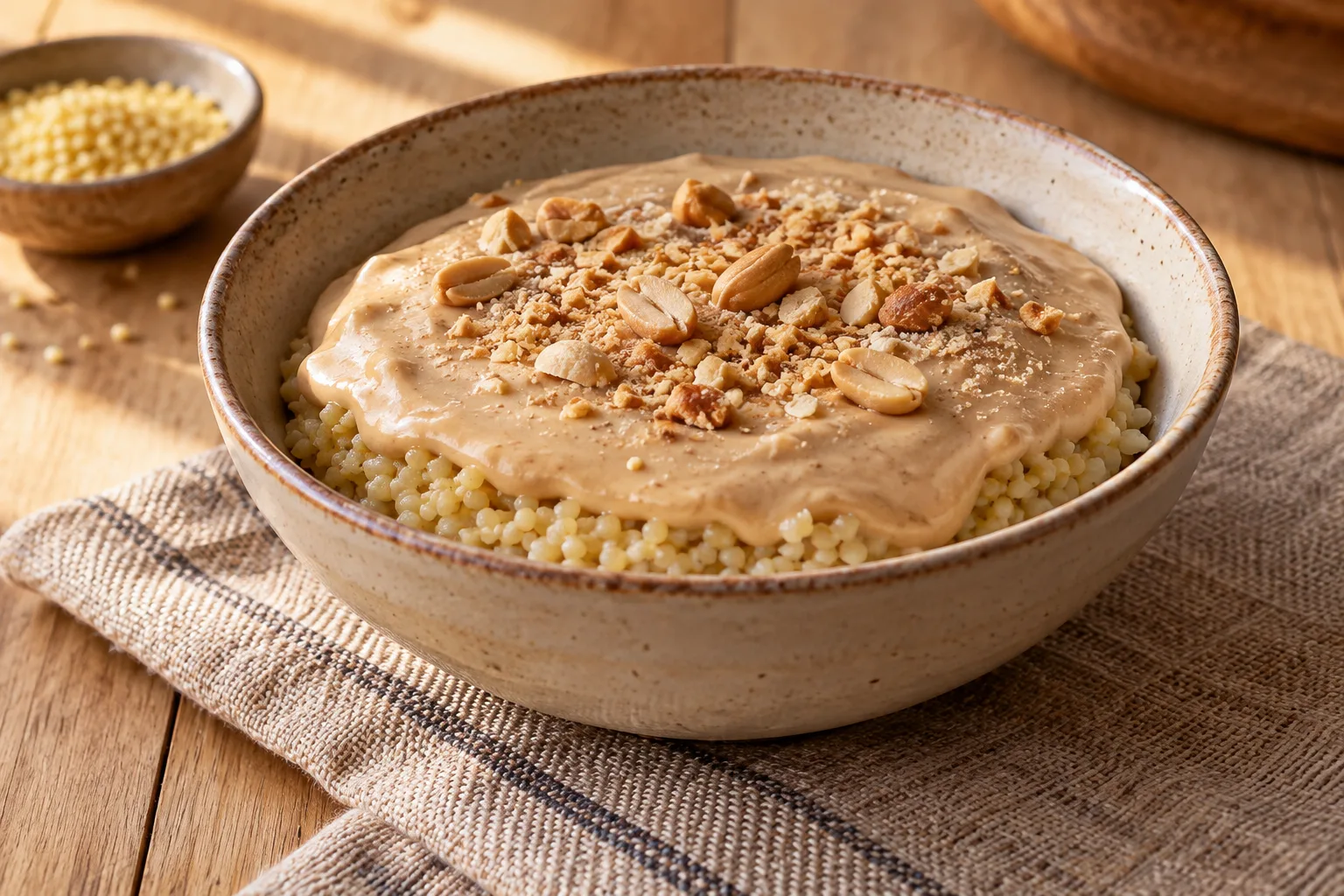
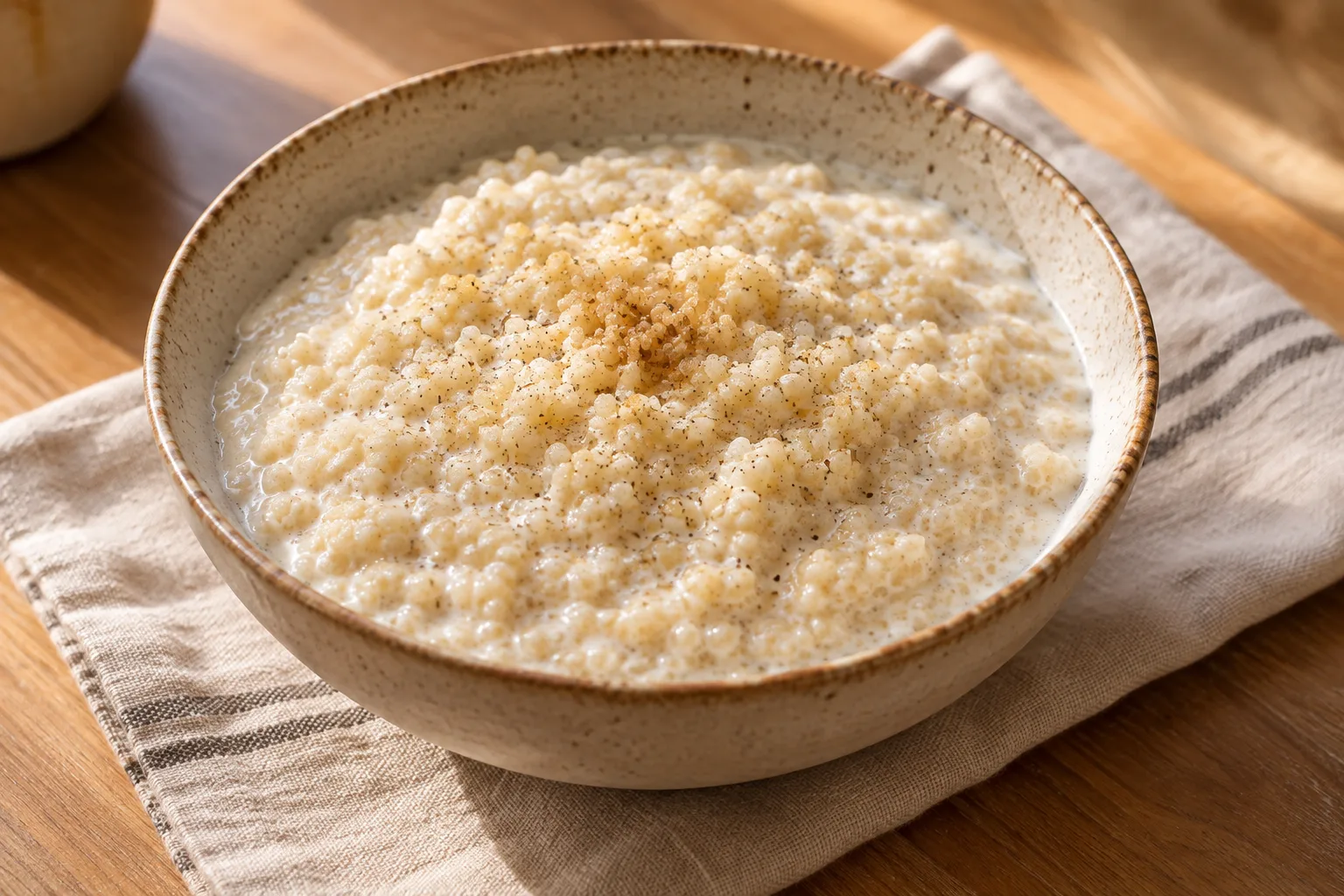
Sweet dishes offer other contrasts. Thiakry pairs millet granules with dairy, sometimes including yoghurt or milk, and may be sweetened or enriched with dried fruit. Ngalakh brings the acidity of baobab together with peanut paste and millet. The creamy, tangy quality of this dessert differs sharply from the rich, savoury depth of a long-simmered rice dish. These are distinct food forms, not simply different courses made from the same ingredients.

Learning, celebration, and neighborly exchange

The culinary art of ceebu jën includes more than a recipe. Its preparation and techniques are traditionally transmitted from mothers to daughters, making household practice and observation important forms of learning. The UNESCO documentation also connects the dish with social customs around preparing and eating it. Its inscription in 2021 recognizes this particular culinary art and its associated practices; it should not be taken as a claim that every Senegalese food tradition is the same or has the same status.

A separate example of food’s social role is ngalakh at Easter. Documentation describes Christian households preparing and sharing this millet, baobab, and peanut preparation with neighbors and friends, including Muslim neighbors. The exchange is presented as a gesture of reciprocity and fellowship between religious communities. It is a specific tradition associated with this occasion, rather than a practice to assume at every celebration or in every household.

Tea, too, can be part of social time. The attaya tea practice is documented in connection with Senegalese food culture, while its form and setting should not be collapsed into one universal ritual. These examples show different ways food and drink can accompany hospitality: learning through family practice, sharing a festive preparation, or making time for company. Their differences are as important as their common emphasis on relationships.

Marinating, simmering, and finishing the grain

The cooking of ceebu jën is organized around a single pot and several stages. Fish may be seasoned with a herb-and-aromatic mixture worked into cuts in the flesh, then briefly fried or otherwise cooked before being reserved. Tomato and aromatics form a base; vegetables and fish cook in the seasoned liquid, and are lifted out when tender. The washed rice then cooks in the remaining broth, taking on its flavor. The fish and vegetables return for serving. Specific ingredients, order, and timings differ between documented recipes, so no one sequence represents every household version.

Yassa uses a different preparation logic. Chicken is marinated with onion, lemon, and seasoning; it is then browned, while the onions are cooked down and the meat finishes with the marinade. Rice is prepared separately and served alongside. Fish yassa is also documented, so the name describes a preparation that is not confined to chicken.

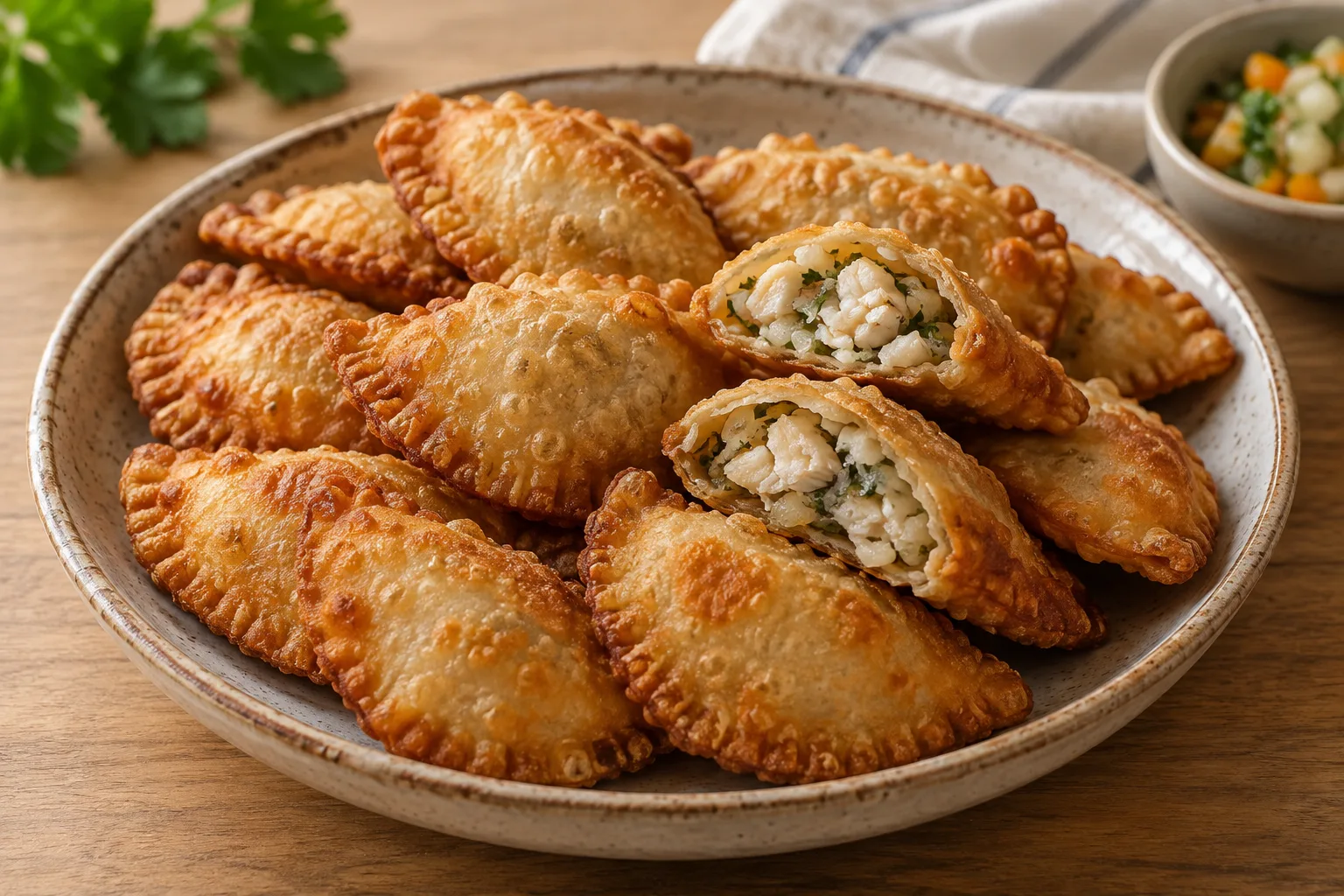
Small pastries offer another technique. For fish pastels, dough is rolled, filled, folded into half-moons, and sealed before frying. They are often served with a tomato-based sauce. Across these examples, mortars, pots, and frying pans support different kinds of work: crushing aromatics, building a broth, softening onions, or enclosing and crisping a filling.

The shared bowl and the meal’s social shape

A large platter of ceebu jën can place rice, fish, and vegetables together at the center of a meal. Sharing is part of the documented practice: UNESCO notes that the dish is eaten with the fingers in many families, while restaurants commonly provide spoons and forks. It also records specific customs associated with eating, including keeping bowls steady with the left hand and avoiding the loss of rice grains. These details belong to the documented practice of this dish and should not be generalized into rules for every meal in Senegal.

Other foods create different table arrangements. Yassa is commonly served with rice prepared separately, while pastels are small savory pastries suited to eating as snacks. A dessert such as thiakry or ngalakh has its own serving form and texture; it need not be presented as part of a fixed national sequence. At Easter, the exchange of ngalakh among neighbors gives the dish a role beyond the household table.

A shared meal can include hospitality without requiring identical customs in every home. The scale of a platter, the way portions are served, and the presence of guests all depend on circumstance. What the documented examples make clear is that food can organize company: a central dish invites sharing, a small pastry offers a portable bite, and a festive sweet can carry a message of fellowship.

A glossary of Senegalese foods and foodways

The names below refer to specific dishes and practices documented in Senegal. Spellings may vary in transliteration, and similar foods across West Africa can have different local names or versions.

  • Ceebu jën: Wolof for “rice and fish”; a Senegalese culinary art combining rice, fish, vegetables, and associated ways of preparing, transmitting, and sharing the dish.
  • Yassa: A preparation built around marinated ingredients and an onion-rich, lemony sauce; chicken and fish versions are documented.
  • Thiakry: A sweet West African preparation of millet granules with dairy, often served as a dessert.
  • Ngalakh: A Senegalese festive sweet combining millet with peanut paste and baobab, notably shared with neighbors at Easter.
  • Attaya: A tea practice associated with Senegalese social life and hospitality.
  • Pastels: Small filled pastries, commonly with fish, folded and fried; they are also known as fataya in some descriptions.

Together these terms name more than ingredients. They point to different textures, techniques, occasions, and forms of company, from a communal rice platter to a shared sweet or a cup of tea.

One country, many cuisines

Casamance

Casamance is documented as a setting associated with yassa, especially chicken yassa, a preparation that pairs marinated meat with softened onions and lemon and is commonly served with rice. Fish yassa is also known, so the dish is not limited to poultry. These associations provide a regional point of entry without implying that every yassa follows one recipe or is exclusive to the south.

Dakar and its urban surroundings

Dakar offers an urban setting for Senegalese foodways that include seafood, rice dishes, and shared meals. Documentation of the Soumbedioune area describes a fish market and coastal cooking, while broader accounts place the capital among the places where varied preparations are encountered. This evidence supports an urban food setting, not a claim that any one dish or social custom belongs exclusively to Dakar.

Saint-Louis

The documented culinary art of ceebu jën traces its roots to a stew prepared and eaten by fishing communities on the island of Saint-Louis. The same documentation emphasizes that recipes vary across Senegal and that techniques are transmitted through family practice. Saint-Louis is therefore an important place in the history of this dish, but not a basis for assigning every present-day version a single local form.

Cook
Read as an article ↗
Places and communities

One country, many cuisines

An initial selection of regions to explore. Culinary boundaries may differ from administrative divisions.

Senegal

Casamance

Casamance is documented as a setting associated with *yassa*, especially chicken yassa, a preparation that pairs marinated meat with softened onions and lemon and is commonly served with rice. Fish yassa is also known, so the dish is not limited to poultry. These associations provide a regional point of entry without implying that every yassa follows one recipe or is exclusive to the south.

Senegal

Dakar and its urban surroundings

Dakar offers an urban setting for Senegalese foodways that include seafood, rice dishes, and shared meals. Documentation of the Soumbedioune area describes a fish market and coastal cooking, while broader accounts place the capital among the places where varied preparations are encountered. This evidence supports an urban food setting, not a claim that any one dish or social custom belongs exclusively to Dakar.

Senegal

Saint-Louis

The documented culinary art of *ceebu jën* traces its roots to a stew prepared and eaten by fishing communities on the island of Saint-Louis. The same documentation emphasizes that recipes vary across Senegal and that techniques are transmitted through family practice. Saint-Louis is therefore an important place in the history of this dish, but not a basis for assigning every present-day version a single local form.

Cook
Recipes connected with Senegal

Each recipe documents one version. Geographic associations do not imply an exclusive origin.

Senegalese Yassa Chicken
Image generated by the Kitchenpause team
175 minIntermediate

Senegalese Yassa Chicken

Chicken marinated with lemon, mustard, and onion, simmered until tender and served with white rice.

View recipe
Senegalese Thiakry
Image generated by the Kitchenpause team
90 minEasy

Senegalese Thiakry

A Senegalese dessert of millet couscous mixed with evaporated milk, milk, and sweetened plain yogurt, with a touch of vanilla sugar.

View recipe
Senegalese Fish Pastels
Image generated by the Kitchenpause team
77 minIntermediate

Senegalese Fish Pastels

Small fried pastries with thin dough, filled with white fish, onion, garlic, and herbs. This version makes about two dozen.

View recipe
Senegalese Thieboudienne
Image generated by the Kitchenpause team
115 minAdvanced

Senegalese Thieboudienne

Senegalese rice cooked with fish, vegetables, and tomato sauce, following a version with fresh and salted fish.

View recipe

Sources consulted

Read the sources and each document’s scope. A heritage inscription concerns a particular practice, not all of a country’s cuisine.

  1. “For us women, flavor is king”: Gender, saf sap and flavor work in urban Senegal - PMC pmc.ncbi.nlm.nih.gov/articles/PMC11286207/ pmc.ncbi.nlm.nih.gov Consulted: October 31, 2026
  2. “For us women, flavor is king”: Gender, saf sap and flavor work in urban Senegal — final published version pure.uva.nl/ws/files/193600372/For_us_women_flavor_is_king_Gender_saf_sap_and_flavor_work_in… University of Amsterdam repository; Branwyn Poleykett; Food, Culture & Society Consulted: November 3, 2026
  3. Patrimoine culinaire et nutrition au Sénégal. Livre de recettes (2025) cres-sn.org/storage/839/01KVDP4BHBKNYZGXTQWG95HDD3.pdf Consortium pour la recherche économique et sociale (CRES) Consulted: November 3, 2026
  4. Food balance sheets 2010–2021. Global, regional and country trends — FAOSTAT Analytical Brief72 www.fao.org/3/cc8088en/cc8088en.pdf FAO Consulted: November 3, 2026
  5. Dietary intake and food behaviours of Senegalese adolescent girls bmcnutr.biomedcentral.com/counter/pdf/10.1186/s40795-021-00436-0.pdf Giguère-Johnson et al.; BMC Nutrition Consulted: November 3, 2026
  6. The contribution of trees and palms to a balanced diet in three rural villages of the Fatick Province, Senegal — author-uploaded full text www.researchgate.net/publication/304062346_The_contribution_of_trees_and_palms_to_a_balanced… Sambou, Kæstel, Theilade and Ræbild; Forests, Trees and Livelihoods Consulted: November 3, 2026
  7. Nutritional status and associated factors among adolescents in Senegal: a nationwide cross-sectional study — original article XML www.ebi.ac.uk/europepmc/webservices/rest/PMC12570916/fullTextXML Sy and colleagues; BMJ Open; Europe PMC full-text archive Consulted: November 3, 2026
  8. Enquête Démographique et de Santé Continue Sénégal 2023 — rapport des tableaux, Table2.5 www.ansd.sn/sites/default/files/2024-07/Rapport-tableaux-EDS-C_2023.pdf Agence nationale de la statistique et de la démographie (ANSD), The DHS Program Consulted: November 3, 2026
  9. Évaluation des modes de préparation et de consommation de la tisane de kinkéliba et du Café Touba consommés dans la ville de Dakar au Sénégal ajfand.net/Volume17/No4/Moussa15710.pdf Moussa Ndong and colleagues; African Journal of Food, Agriculture, Nutrition and Development Consulted: November 3, 2026
  10. Ataya — description culturelle de la boisson au Sénégal www.visitezlesenegal.com/en/quoi-faire/gastronomie/ataya/ Agence Sénégalaise de Promotion Touristique Consulted: November 3, 2026
  11. Ultra-Processed Foods Consumption Is Associated With Intakes of Critical Nutrients Related to Non-Communicable Diseases Among Adults in Dakar, Senegal www.ebi.ac.uk/europepmc/webservices/rest/PMC12133459/fullTextXML Original authors; International Journal of Public Health; Europe PMC full-text repository Consulted: November 3, 2026
  12. Enquête Harmonisée sur les Conditions de Vie des Ménages EHCVM II 2021–2022: rapport final www.ansd.sn/sites/default/files/2024-07/Rapport_Final_EHCVM_2021-2022_VF.pdf Agence nationale de la statistique et de la démographie, Sénégal Consulted: November 3, 2026
  13. Waste Wise Cities Tool in Dakar, Sénégal: factsheet; survey2022 www.africancleancities.org/sites/default/files/2023-07/dakar-factsheet.pdf UN-Habitat; African Clean Cities Platform Consulted: November 3, 2026
  14. Le développement de la grande distribution alimentaire dans les métropoles d’Afrique de l’Ouest: étude du cas d’Auchan à Dakar senretail.sn/wp-content/uploads/2025/10/THESE-DE-MALICK-MBOUP.pdf Malick Mboup; Sorbonne Université doctoral thesis2025; HALtel-05274163 Consulted: November 3, 2026
  15. Carte Casino 2025 — Terrou-Bi, Dakar terroubi.com/media/original/657818e1557ac/carte-casino-2025.pdf Terrou-Bi; original first-party restaurant menu Consulted: November 3, 2026
  16. Esprit Téranga — partage alimentaire autour de Pâques et de Tabaski www.visitezlesenegal.com/esprit-teranga/ Agence Sénégalaise de Promotion Touristique Consulted: November 3, 2026
  17. A l’écoute du Sénégal — Alimentation et sécurité alimentaire 3, septembre 2016 www.ansd.sn/sites/default/files/2022-11/Rapport%20sommaire_alimentation3_VF_0.pdf ANSD Consulted: November 3, 2026
  18. Enquête nationale sur l’emploi du temps au Sénégal 2021 www.ansd.sn/sites/default/files/2023-04/RAPPORT_ENET_2021.pdf ANSD Consulted: November 3, 2026
  19. The Condition of Food Consumption in Urban Senegal: Household Survey in Saint-Louis in 2018 www.jstage.jst.go.jp/article/africa/2020/97/2020_13/_pdf Yachiyo Tobita and Kiyokazu Ujiie; Journal of African Studies Consulted: November 3, 2026
  20. Rechercher des réponses viables aux défis de la nutrition des populations vulnérables — synthèse de l’étude exploratoire Sénégal gret.org/wp-content/uploads/2021/11/09190.pdf Benkahla,Bastard,Broutin,Bruyeron and partners; GRET,IFAN,Enda Graf,danone.communities;2009 Consulted: November 3, 2026
  21. Meals contribution to dietary intake of rural communities in Senegal www.iosrjournals.org/iosr-jestft/papers/vol10-issue3/Version-1/F010315262.pdf Antoine Sambou; IOSR-JESTFT2016; DOI10.9790/2402-10315262 Consulted: November 3, 2026
  22. Cómo cocinar Thieboudienne (Senegal) - Vuelta al Mundo Sabrosa www.vueltaalmundosabrosa.com/africa/senegal/como-cocinar-thieboudienne-senegal/ vueltaalmundosabrosa.com Consulted: October 8, 2026
  23. Thieboudienne (receta senegalesa) - Diario de Gastronomía: Cocina, vino, gastronomía y recetas gourmet diariodegastronomia.com/thieboudienne-receta-senegalesa/ diariodegastronomia.com Consulted: November 1, 2026
  24. Thieboudienne (arroz con pescado). Receta de Senegal blogconichigua.wixsite.com/conichigua/single-post/2016/05/10/thiebou-djene-arroz-con-pescado… blogconichigua.wixsite.com Consulted: September 29, 2026
  25. Receta de Thieboudienne montsia.es/recipe/thieboudienne montsia.es Consulted: September 29, 2026
  26. THIEBOUDIENNE - Mom Koumba momkoumba.com/recetas/thieboudienne/ momkoumba.com Consulted: September 29, 2026
  27. Thieboudienne senegalesa: conoce su receta e historia www.remitly.com/blog/es/cultura-y-estilo-de-vida/platosnacional-thieboudienne-datos-fascinan… remitly.com Consulted: October 8, 2026
  28. Thieboudienne - Wikipedia, la enciclopedia libre es.wikipedia.org/wiki/Thieboudienne es.wikipedia.org Consulted: November 1, 2026
  29. Gastronomía de Senegal: thiéboudienne y platos típicos | NeoGeo DMC Blog neogeodmc.com/blog/gastronomia-de-senegal-thieboudienne-y-los-platos-que-debes-probar neogeodmc.com Consulted: September 29, 2026
  30. Thieboudienne (Arroz con pescado de Senegal) elalpende.wixsite.com/alpende/post/thieboudienne-arroz-con-pescado-de-senegal elalpende.wixsite.com Consulted: October 8, 2026
  31. Thieboudienne - Wikipedia it.wikipedia.org/wiki/Thieboudienne it.wikipedia.org Consulted: September 29, 2026
  32. Thieboudienne (Senegalese Jollof Rice and Fish) - Cooking With Claudy cookingwithclaudy.com/thieboudienne-senegalese-jollof-rice-and-fish/ cookingwithclaudy.com Consulted: September 29, 2026
  33. Ngalakh y Pascua en Senegal - Abarka Coop. abarkacoop.com/ngalakh-y-pascua-en-senegal/ abarkacoop.com Consulted: October 14, 2026
  34. Recepta de ngalakh, postres fetes amb baobab www.rtve.es/play/noticies/20241102/ngalakh-postre-africa-baobab-recepta/16303889.shtml rtve.es Consulted: October 14, 2026
  35. Plan Nacional De Almacenaje De Productos Agrícolas En Senegal | Globaltec | Consultoría Y Ejecución De Proyectos globaltecingenieria.com/plan-nacional-de-almacenaje-de-productos-agricolas-en-senegal/ globaltecingenieria.com Consulted: October 14, 2026
  36. Lakh sow (Senegal) - Recetas deliciosas www.gzrecipes.com/es/viaggiandomangiando/lakh-sow-senegal/ gzrecipes.com Consulted: October 14, 2026
  37. Gastronomia del Senegal - Viquipèdia, l'enciclopèdia lliure ca.wikipedia.org/wiki/Gastronomia_del_Senegal ca.wikipedia.org Consulted: October 26, 2026
  38. gastronomía senegalesa, ceebu jën www.revista5w.com/temas/cultura/mi-receta-senegalesa-ceebu-jen-128388 revista5w.com Consulted: October 25, 2026
  39. Senegal: El país de la teranga www.rtve.es/play/noticias/20100305/pais-teranga/322387.shtml rtve.es Consulted: October 26, 2026
  40. Tiebudién, la 'paella' senegalesa con pescado que admite mil combinaciones www.lavanguardia.com/magazine/buena-vida/20221028/8581484/tiebudien-plato-nacional-senegales… lavanguardia.com Consulted: October 8, 2026
  41. Un viaje alrededor de la gastronomía de Senegal - Plateselector plateselector.com/senegal/ plateselector.com Consulted: October 24, 2026
  42. Gastronomía de Senegal - Wikipedia, la enciclopedia libre es.wikipedia.org/wiki/Gastronom%C3%ADa_de_Senegal es.wikipedia.org Consulted: October 26, 2026
  43. La gastronomía senegalesa – Senegal Baobab senegalbaobab.com/2019/01/13/la-gastronomia-senegalesa/ senegalbaobab.com Consulted: October 8, 2026
  44. Ordenan la retirada total e inmediata de este pescado en España por esconder altos niveles de mercurio www.elespanol.com/ciencia/nutricion/20241010/ordenan-retirada-total-inmediata-pescado-espana… elespanol.com Consulted: October 8, 2026
  45. Cocina Senegalesa: 12 Platos Tradicionales Imprescindibles | Guía Completa cicotours.com/es/blog/cocina-senegalesa-12-platos-tradicionales cicotours.com Consulted: October 26, 2026
  46. Peces de Senegal: Especies y Preparaciones Tradicionales - SENEGAL SHUTTLE www.senegal-shuttle.com/es/peces-de-senegal-especies-y-preparaciones-tradicionales/ senegal-shuttle.com Consulted: October 8, 2026
  47. Arroz Con Pescado "Thieboudiene" Receta de Maríama cookpad.com/es/recetas/915537 cookpad.com Consulted: October 8, 2026
  48. “Ceebu Jën”, arte culinario del Senegal - UNESCO Patrimonio cultural inmaterial ich.unesco.org/es/RL/ceebu-jen-arte-culinario-del-senegal-01748 ich.unesco.org Consulted: October 8, 2026
  49. Pastels | Fataya (Senegalese Fish Pies) - Chef's Pencil www.chefspencil.com/pastels-fataya/ chefspencil.com Consulted: October 8, 2026
  50. Pastels (Fried Fish Pies) | Saveur www.saveur.com/article/Recipes/Pastels-Fried-Fish-Pies/ saveur.com Consulted: October 8, 2026
  51. How to Make Traditional Senegal Pastels - FunTimes Magazine funtimesmagazine.com/recipes/senegal-pastels/ funtimesmagazine.com Consulted: October 8, 2026
  52. Pastel - Traditional Recipe from Cape Verde | 196 flavors www.196flavors.com/cap-verde-pastels/?srsltid=AU7gw4Xl24GRwJUw1VDWkJduiaUijmE5vyBfwcIMU3Xi28… 196flavors.com Consulted: October 8, 2026
  53. Lakh sow (Senegal) — Blog di ViaggiandoMangiando blog.giallozafferano.it/viaggiandomangiando/ricetta-lakh-sow-senegal/ blog.giallozafferano.it Consulted: October 14, 2026
  54. Ngalakh - Dessert sénégalais au baobab et beurre de cacahuète (recette authentique) | Peko Peko www.peko-peko.fr/recettes/ngalakh/ peko-peko.fr Consulted: October 14, 2026
  55. Ngalakh (Peanut and Baobab Cream) | Safe Plated — Allergen-Aware Recipes www.safeplated.com/recipes/ngalakh-peanut-and-baobab-cream-1e8adaf2 safeplated.com Consulted: October 14, 2026
  56. Thiakry - Wikipedia, la enciclopedia libre es.wikipedia.org/wiki/Thiakry es.wikipedia.org Consulted: October 16, 2026
  57. Thiakry Postre de Senegal | Recepta de cuina de Montserrat Reixach Moner - RECEPTES.CAT www.receptes.cat/recepta13382/thiakry_postre_de_senegal receptes.cat Consulted: October 16, 2026
  58. Ceebu jën, arte culinario de Senegal ich.unesco.org/fr/RL/le-ceebu-jn-art-culinaire-du-sngal-01748 UNESCO Consulted: October 20, 2026
  59. Gastronomía de Senegal www.visitezlesenegal.com/quoi-faire/gastronomie/ Agence Sénégalaise de Promotion Touristique Consulted: October 20, 2026
  60. POLLO YASSA: RECUERDOS DE SENEGAL - Las Recetas de MJ www.lasrecetasdemj.com/2026/06/pollo-yassa-recuerdos-de-senegal.html lasrecetasdemj.com Consulted: October 21, 2026
  61. Yassa de pollo o pollo en salsa de mostaza y limón. Receta de Senegal estoyhechouncocinillas.com/2017/05/yassa-de-pollo.html estoyhechouncocinillas.com Consulted: October 21, 2026
  62. Pollo Yassa (Senegal) | Revista con la A conlaa.com/pollo-yassa-senegal/ conlaa.com Consulted: October 21, 2026
  63. Pollo yassa de Senegal | Receta tradicional fácil | Recetas Fáciles ✔️ www.recetasfaciles.com.es/receta-facil/pollo-yassa-senegal/ recetasfaciles.com.es Consulted: October 21, 2026
  64. Yassa (comida) - Wikipedia, la enciclopedia libre es.wikipedia.org/wiki/Yassa_(comida) es.wikipedia.org Consulted: October 21, 2026
  65. Pollo yassa (Senegal) de Bruno Oteiza www.hogarmania.com/cocina/recetas/carnes/pollo-yassa-senegal-24917.html hogarmania.com Consulted: October 21, 2026

We use session and security technologies to provide our features. Only with your permission do we load Google Analytics to measure visits and Google Maps on Contact. Choose separately, reject or accept both.

Withdraw either permission here. Withdrawing analytics reloads the page to unload the running tag.

Cookie policy