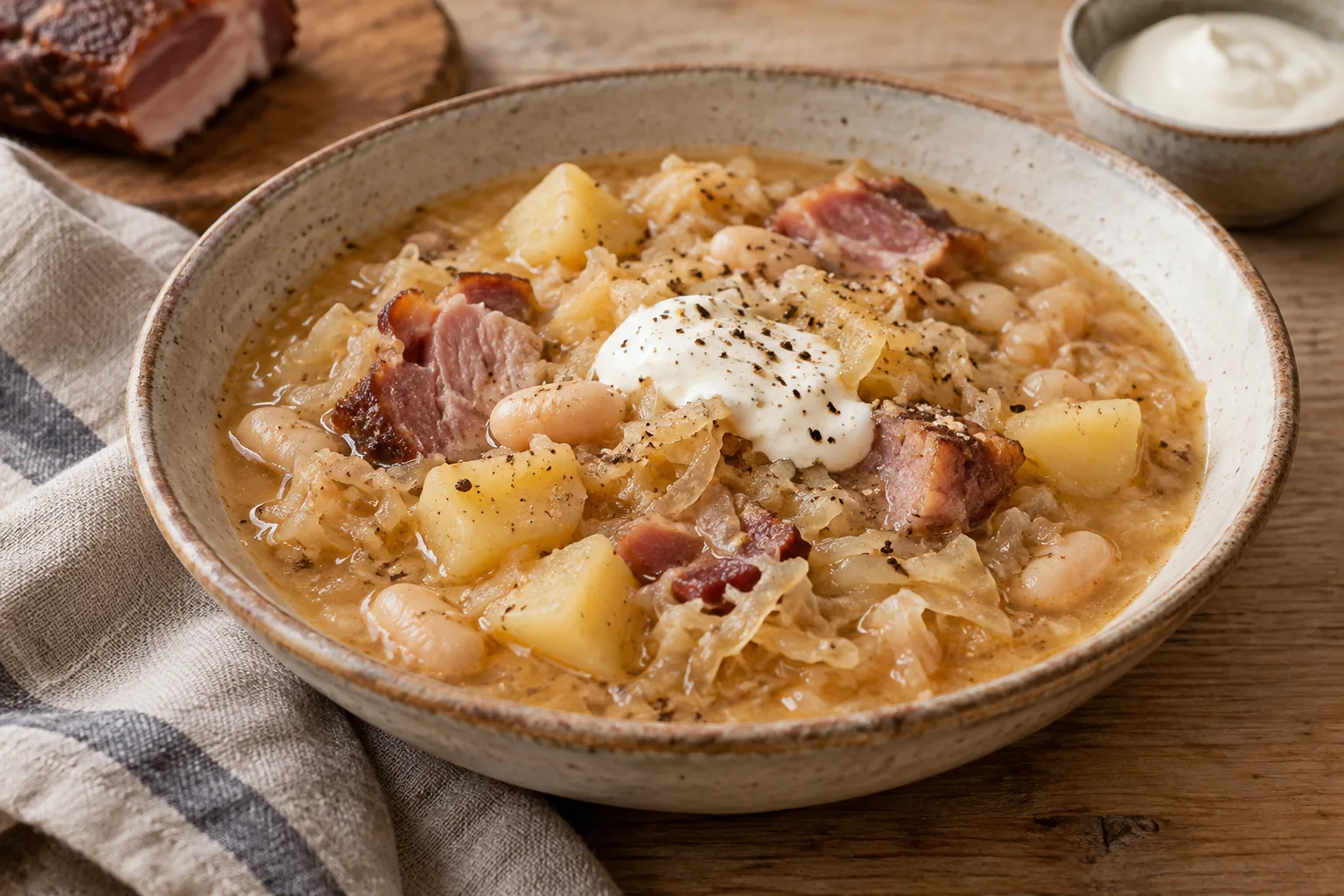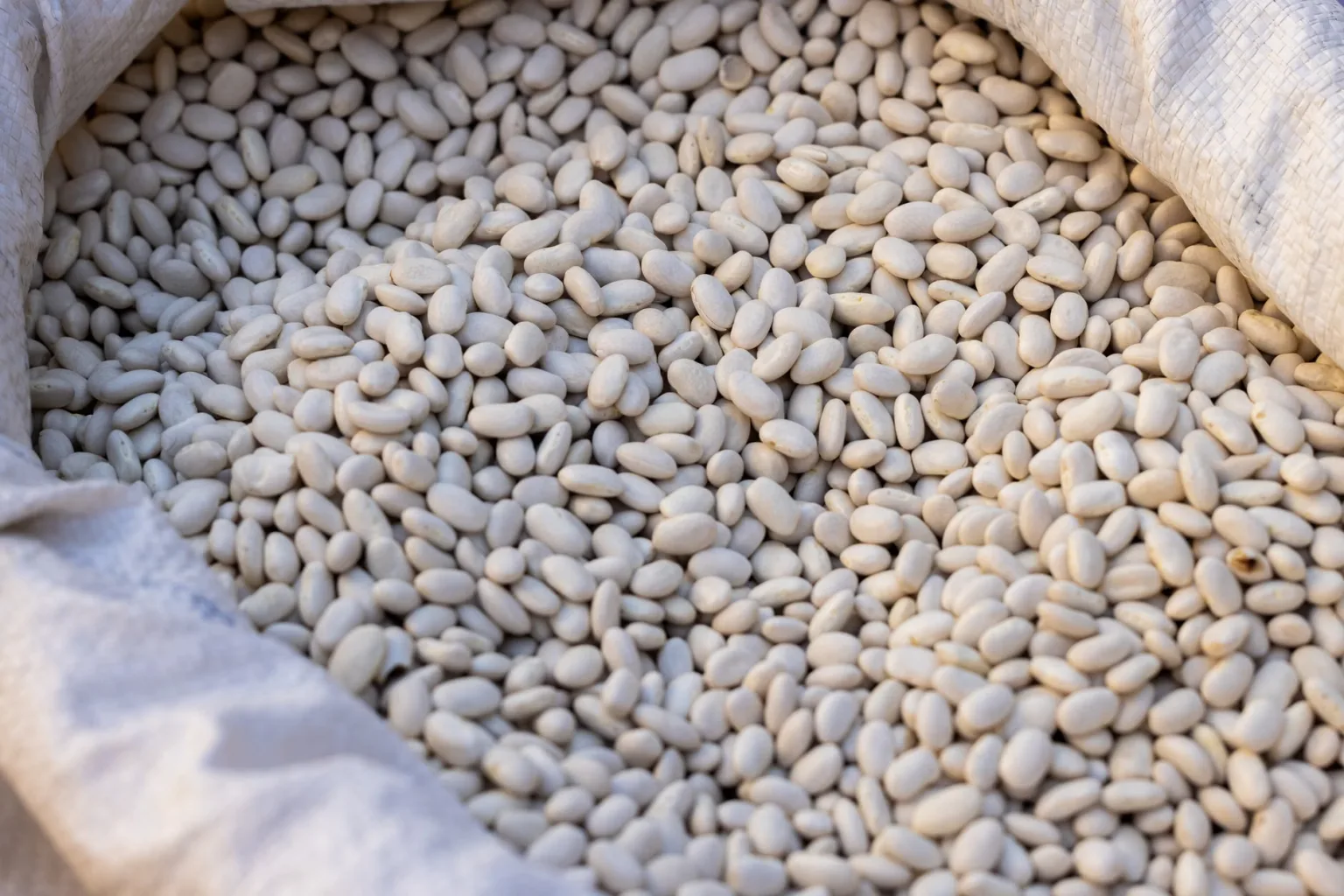
- Category
- Pulses
- State
- Other
- Usual unit
- g
What it is
Beans is a common name for edible seeds from different leguminous plants. Many belong to the genera Phaseolus and Vigna, but the word does not identify one single species or variety. Beans come in many colours, including white, red, black and mottled, and vary in shape and size. Some are eaten tender, while others are sold dried or already cooked. The name therefore covers products in different states, with different preparation needs: check the label and the product before cooking. Tender green bean pods are generally treated as a vegetable, while mature seeds are used as pulses.
When to use it
Use beans to add substance to soups, stews and casseroles, or as the base for a salad or purée. Dried beans suit dishes that allow time for cooking and may be soaked before preparation; cooked or canned beans are convenient when you want a more direct route to a meal. Tender beans may need a different approach from dried seeds. Since flavour, texture and cooking needs vary by variety and form, choose beans that suit the recipe and follow package directions where provided.
How to use it
First identify the form: fresh, dried and cooked beans are not prepared in the same way. Sort dried beans and remove any foreign material; rinse them and soak them if your recipe calls for it. Then cook them in liquid until tender, using a method suited to the variety. Add acidic ingredients such as tomatoes after dried beans have begun to hydrate, since acidity can make water absorption less efficient. Cooked beans can be added to soups, stews, salads or purées; drain or rinse them if that suits the dish. Follow the package directions and applicable food-safety guidance for the form you are using.
Flavour and texture
Flavour and texture differ with species, variety and form. Some beans are mild and buttery; others are firmer, more floury or more pronounced in flavour. Cooking softens them and can thicken the cooking liquid or break the beans down, making them useful in stews and purées. Beans do not all absorb liquid or hold their shape in the same way; variety and doneness affect the result.
How to choose it
Choose beans in the form your recipe needs: fresh, dried or cooked. For dried beans, look for clean, intact seeds and packaging in good condition. Varieties can differ considerably in size, shape and colour, so an unusual appearance alone does not mean the product is defective. Read the label to check the bean type, form and preparation directions; do not assume every bean needs the same method.
Storage
Store beans according to their form and the package directions. Keep dried beans in a cool, dry place in a well-sealed container, protected from moisture. Refrigerate fresh and cooked beans as directed for the product. After opening a package, use a suitable container and follow its storage instructions. There is no single storage period that applies to every variety and form, so check the label.
Substitutions
In soups and stews, one bean variety can often replace another if the size and texture suit the dish, though the result may change. Chickpeas or lentils can stand in for beans in some recipes, but they are not identical and may need different cooking times. Adjust the liquid and cooking method to the ingredient you choose.
Common mistakes
Treating all beans as the same product can lead to uneven results: dried beans are not prepared like cooked or tender beans. Avoid adding acidic ingredients too early if dried beans still need to hydrate, and do not assume they are done just because the outside feels soft. Check that they are tender throughout and follow the package directions.
Safety and allergens
Follow the preparation directions on the package and applicable food-safety guidance. Preparation can differ between dried, fresh and cooked products, so check the form and avoid improvising when the package provides specific instructions.
Culinary uses
- Base for soups and stews
- Ingredient for salads, purées and side dishes
Recommended techniques
- Rinse and sort dried beans before cooking
- Soak and simmer dried beans as directed for the variety
- Mash or purée cooked beans
Pairs well with
- Onion, carrot and other vegetables
- Rice and other grains
Frequently asked questions
Are all beans sold dried?
No. Beans can also be sold fresh or already cooked. Check the form, because each requires different preparation.
Do dried beans need soaking?
Soaking can be part of preparation, but it is not the same for every variety and recipe. Follow the package directions or a reliable recipe.
Can I substitute one bean variety for another?
Often, especially in soups and stews, but texture, flavour and cooking needs may differ. Adjust the method to the variety you use.
Ingredient allergens
Allergen listThere are no verified associations for these ingredients yet.
Estimated nutrition
- Fat
- 3 g
- Saturates
- 0 g
- Carbohydrate
- 70 g
- Sugars
- 0 g
- Fibre
- 26 g
- Protein
- 22 g
- Salt
- 0.02 g
Sources and review
Automatically researched, cross-checked and validated content. Sources consulted:
- Client Challenge doi.org/10.2307/jj.27939689.16
- The Essential Glossary of Cooking Terms for the Culinary Arts - Escoffier www.escoffier.edu/blog/culinary-arts/the-essential-glossary-of-cooking-terms-for-the-culinar…
- Los japonesismos culinarios | OpenAlex openalex.org/W2906636610
- Las alubias o habichuelas: origen, variedades, beneficios y recetas para cocinar la legumbre más extendida del mundo www.directoalpaladar.com/ingredientes-y-alimentos/alubias-habichuelas-origen-variedades-bene…
- Eating Spain: National Cuisine Since 1900 - UKnowledge uknowledge.uky.edu/context/hisp_etds/article/1031/viewcontent/Eating_Spain_National_Cuisine_…
- Para la ciudadanía www.aesan.gob.es/para-la-ciudadania
- Killer Kidney Beans | USU extension.usu.edu/nutrition/research/killer-kidney-beans
- Plant Based Cooking Classes | ICE Recreational Classes recreational.ice.edu/plant-based-classes
- Protein • The Nutrition Source nutritionsource.hsph.harvard.edu/what-should-you-eat/protein/
- Recent Posts – Page 2 – Pulse Quality and Nutritional Breeding blogs.clemson.edu/organics/recent-posts/page/2/
- modified atmosphere packaging of - Scholar@UPRM scholar.uprm.edu/bitstreams/ff01e3dc-2bae-4e12-8644-5016a5187f87/download
- La alubia www.joseanalija.com/alubia/
- Alubia carilla para Niños ninos.kiddle.co/Alubia_carilla
- Las alubias o judías secas | Consumer www.consumer.es/app/alimentacion/las-alubias-o-judias-secas.html