- Category
- Meat
- State
- Fresh
- Usual unit
- g
What it is
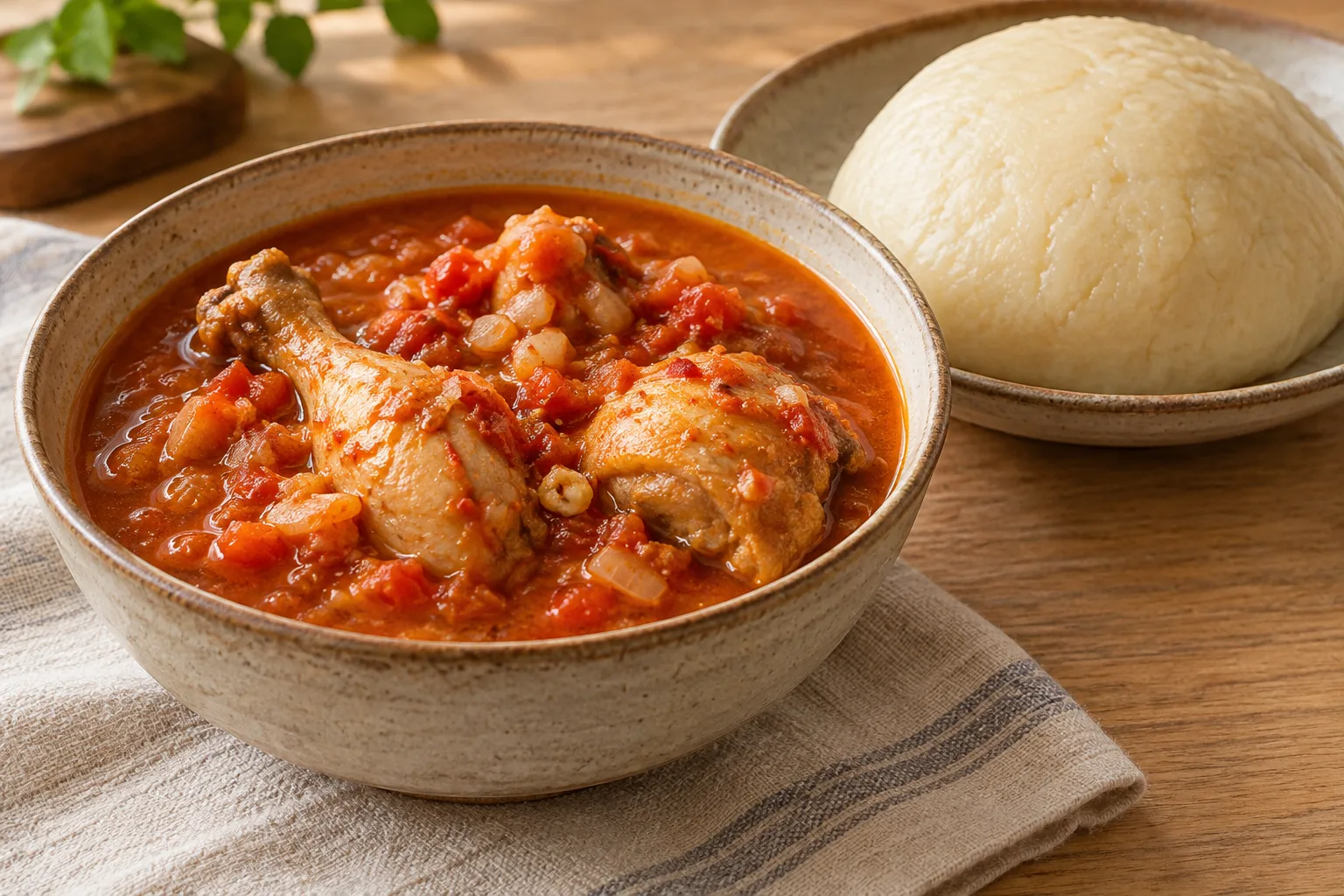
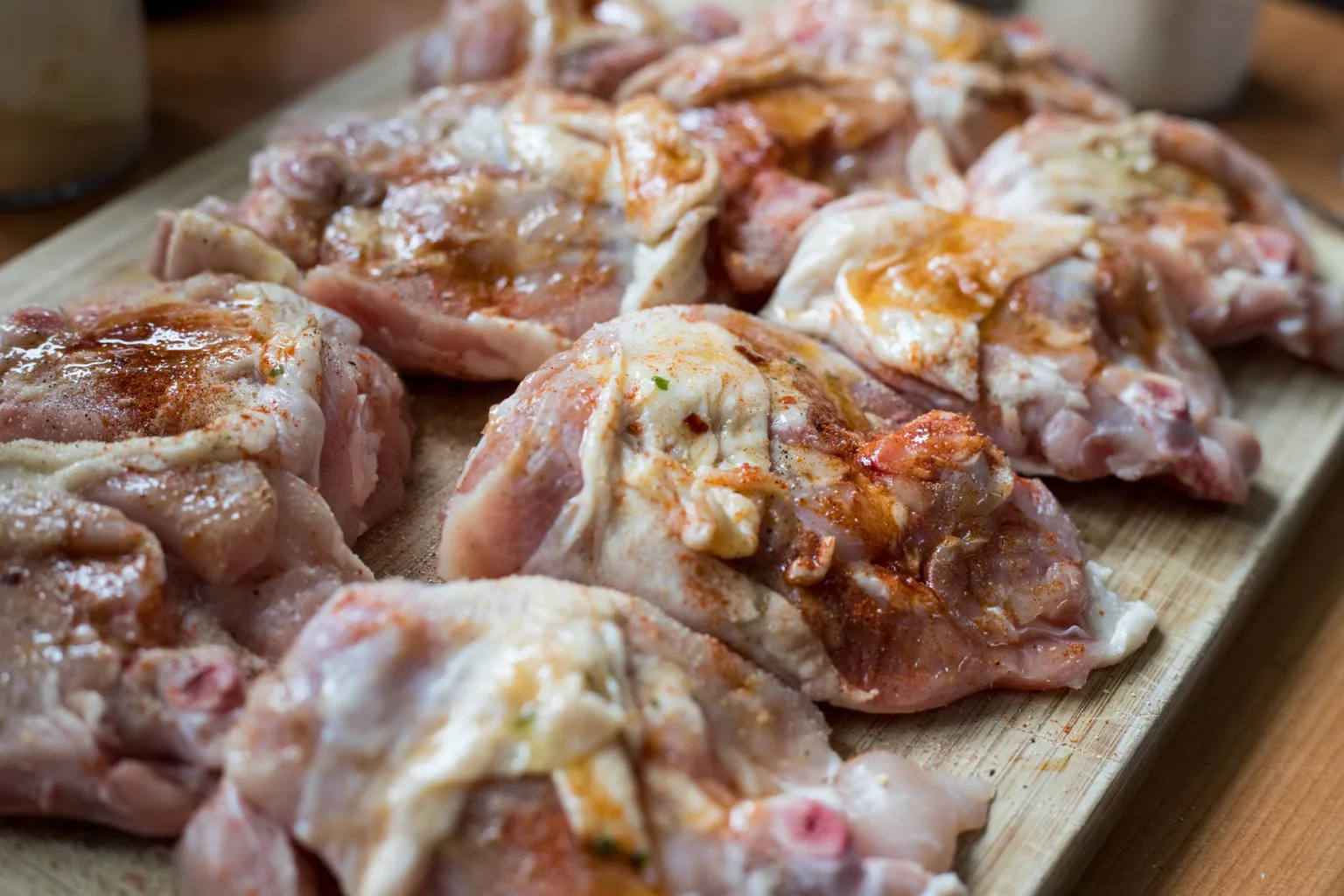
Bone-in chicken thighs are chicken-leg pieces that retain the bone during cooking. In culinary use, “thigh” can refer to different cuts depending on how the bird is butchered: it may mean the upper leg, while some everyday naming is broader. Check whether the piece is an upper thigh, a drumstick, or a cut that includes both if that distinction matters to your recipe. Skin is not guaranteed; the piece may be sold skin-on or skinless. Keeping the bone in makes this cut different from boneless thighs, so cooking instructions should not automatically be transferred from one to the other. Bone-in thighs can be browned, roasted, or cooked with liquid in a stew. The culinary descriptions supplied for chicken thighs also characterize them as better suited than breast to longer cooking. Size, shape, skin, and the exact cut all affect how a piece behaves in a dish.
When to use it
Choose bone-in thighs when you want chicken pieces that can be browned before liquid is added, roasted, or cooked slowly in a stew. They work well in recipes where the pieces stay intact around the bone through cooking and where a leisurely, moist method suits the dish. If speed or easy slicing without bones is more important, consider boneless thighs and adjust the method. For roasting, check whether the pieces have skin and consider their size and thickness, since those differences affect browning and cooking. Do not assume every package contains precisely the same part of the leg. If a recipe specifies drumsticks or a combined leg portion rather than thighs, check the shape and cut before using the same cooking directions.
How to use it
Before cooking, check whether each piece is an upper thigh, a drumstick, or a portion that includes both, and note whether it has skin. Season with salt, pepper, garlic, or herbs such as thyme; lemon, onion, and carrot can also be used alongside chicken in a dish. To brown the pieces, place them in a pan or casserole and let them take on color before adding liquid or vegetables. Finish them in the oven, or cover and cook them with liquid for a stew. They can also be roasted without a separate browning step. Cooking time depends on piece size, method, and the presence of bone, so do not automatically copy directions written for boneless chicken. Cook the chicken thoroughly before serving. After handling raw chicken, wash your hands and clean any contacted surfaces and utensils with warm water and soap.
Flavour and texture
Thigh meat has a chicken flavor and a texture that can stay relatively juicy and hold up in longer cooking, as described in culinary uses for this cut. The bone remains in the piece, while skin, when present, can brown during cooking. The finished flavor also depends on the skin, browning, seasonings, and any liquid or vegetables used in the dish.
How to choose it
Choose pieces that look fresh, are clearly identified as the cut you need, and come in packaging without damage or leaks. Check whether the label specifies upper thighs, drumsticks, or a portion that includes both, and whether the skin is on. Piece sizes can vary, so similarly sized portions are useful when cooking them together. Keep raw chicken separate from ready-to-eat foods while preparing it.
Storage
Store raw chicken according to the package directions and local food-safety guidance; the evidence available here does not establish a storage time or a specific temperature for this cut. Prevent raw juices from dripping onto other foods, and wash hands, surfaces, and utensils after handling it. If you will not use it, follow the package or relevant food-safety authority guidance for freezing.
Substitutions
Boneless chicken thighs can replace bone-in thighs when you need to remove the bone or simplify serving, but adjust the cooking method and time for the different cut. Drumsticks are another chicken-leg cut, though their shape, meat-to-bone ratio, and cooking behavior differ. Adapt the recipe in either case and cook the chicken thoroughly.
Common mistakes
A common mistake is treating an upper thigh, a drumstick, and a portion containing both as interchangeable: their size and shape can change how they cook. Do not automatically use timings written for boneless thighs. Also, do not assume the skin is included or that browned surfaces alone mean the chicken is thoroughly cooked.
Safety and allergens
Handle raw chicken hygienically. After contact, wash your hands and clean surfaces and utensils with warm water and soap. Cook thoroughly before serving; do not rely on exterior color alone.
Culinary uses
- Main dish protein
- Ingredient for braises and stews
- Roasted or pan-browned chicken cut
Recommended techniques
- Roasting
- Braising
- Pan-browning
Pairs well with
- Lemon and thyme
- Onion and carrot
- Garlic and dried herbs
- Mashed cassava or other soft starchy sides
Frequently asked questions
Do bone-in thighs always have skin?
No. They may be sold skin-on or skinless, so check the package or the pieces.
Can I use boneless thighs instead?
Yes, but adapt the method and cooking time to the boneless cut rather than automatically using the same directions.
Which cooking methods work for bone-in thighs?
They can be pan-browned, roasted, or cooked with liquid in a stew. Choose according to the recipe and the exact cut.
Ingredient allergens
Allergen listThere are no verified associations for these ingredients yet.
Estimated nutrition
- Fat
- 15.2 g
- Saturates
- 4.02 g
- Carbohydrate
- 0 g
- Sugars
- 0 g
- Fibre
- 0 g
- Protein
- 15.2 g
- Salt
- 0.47 g
Sources and review
Automatically researched, cross-checked and validated content. Sources consulted:
- ¿Por qué la muerte es origen de miedos y tabúes? doi.org/10.64628/aao.fccyk3qj3
- The Essential Glossary of Cooking Terms for the Culinary Arts - Escoffier www.escoffier.edu/blog/culinary-arts/the-essential-glossary-of-cooking-terms-for-the-culinar…
- - YouTube www.youtube.com/watch?v=qk-jV61NYRQ
- Vamos a Conservar Alimentos: Sopas extension.psu.edu/vamos-a-conservar-alimentos-sopas/
- DAM texashistory.unt.edu/ark:/67531/metapth1205156/m1/23/
- ¿Qué partes del pollo son comestibles? - Tirso de Molina mercadotirsodemolina.es/partes-del-pollo/
- Comité Científico aesan.gob.es/dam/jcr:a7c4e553-46f5-4def-9ede-b6d1e19b3948/comite_cientifico_42.pdf
- Translating Eduardo del Campo's Capital Sur etd.ohiolink.edu/acprod/odb_etd/ws/send_file/send?accession=oberlin1435008097&disposition=in…
- evaluacion de la calidad y composicion quimica de la carne de bovinosparacarne.uprm.edu/publication/santrichvacca%5B1%5D.pdf
- Receta de Muslos de Pollo | Kelvin's Kitchen kelvinskitchen.com/es/recipe/juicy-chicken-thigh/
- Muslos de pollo jugosos de sábado - Gallina Blanca www.gallinablanca.es/receta/muslos-de-pollo-jugosos-de-sabado/