- Category
- Meat
- State
- Fresh
- Usual unit
- unit
What it is
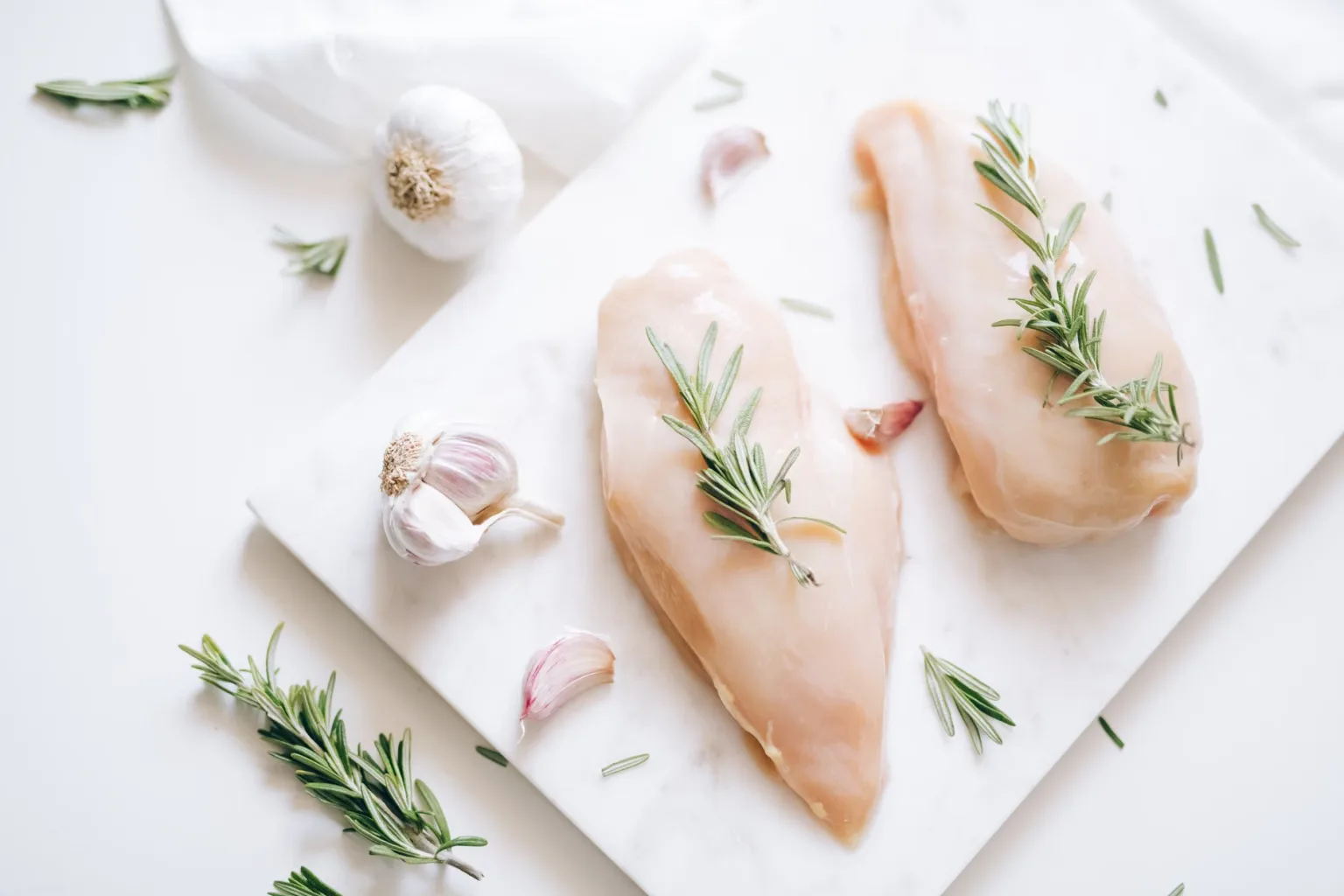
Cooked chicken breast is meat from the breast of a chicken that has already been fully cooked and is ready to slice, dice, or shred for another dish. It may be sold or prepared whole, in pieces, or shredded. Its mild flavor makes it useful as a main ingredient or as an addition to soups, salads, pasta, rice, tortillas, and sandwiches. It is different from raw chicken breast: this ingredient profile is for chicken that has already been cooked and needs only to be incorporated into a recipe or reheated before serving.
When to use it
Use cooked chicken breast when you want to add chicken to a meal without starting a full cooking process. It works well in soups and stews, where it can be stirred into broth and vegetables, and in salads, pasta, rice, tortillas, and sandwiches. If the recipe includes hot sauce or broth, add the chicken near the end and heat it until thoroughly hot. This lets it blend into the dish without exposing it to more cooking than necessary.
How to use it
Cut the breast into cubes or strips to distribute it through soup, salad, pasta, or a tortilla filling. For sandwiches and mixtures that benefit from a more even texture, shred it with two forks and combine it with the other ingredients. In a soup or stew, add the chicken once the broth and vegetables are hot, stir, and heat the dish until the chicken is thoroughly hot. You can also serve it over rice or noodles, or add it to a salad. Refrigerate leftovers promptly and use clean utensils and surfaces when handling the food.
Flavour and texture
Cooked chicken breast generally has a mild flavor that pairs readily with broth, vegetables, herbs, spices, and sauces. Its texture depends on how it was cooked and cut: it can be tender and moist, or firmer and dry if heated too much. Cubes retain distinct pieces, while shredded meat distributes more evenly through soups and fillings. Pair it with moist ingredients such as broth or sauce for a more satisfying dish.
How to choose it
When buying ready-cooked chicken breast, check the package to confirm that the product is cooked and follow the storage directions on its label. Choose a format that suits the recipe: a whole piece to cut yourself, or chicken that is already sliced, diced, or shredded for quick use. If cooking at home, you can also set aside cooked breast from another meal and use it later in soup, salad, pasta, or sandwiches.
Storage
Keep cooked chicken breast refrigerated and store leftovers promptly; a university food-extension guide advises refrigerating leftovers within two hours of preparation. Use a clean container and follow any specific storage directions on the package. When adding it to a hot dish, reheat it thoroughly. The evidence available here does not establish a general refrigerated storage duration, so do not assume a longer period than the product label or applicable guidance provides.
Substitutions
If you do not have cooked breast, cooked meat from another chicken cut, such as thigh, can be cut or shredded for the dish. You can also change the form of the ingredient: use shredded chicken where diced chicken is called for, or cut a whole cooked breast into pieces. Different cuts can vary in flavor and texture, so choose a piece size that suits the recipe.
Common mistakes
Do not confuse cooked chicken with raw chicken: this ingredient is already cooked and only needs reheating or mixing into a dish. Avoid warming it for a long time, since breast meat can become dry. Do not add it too early to a dish that will continue simmering for a long time. Also, do not leave leftovers unrefrigerated for an extended period; store them promptly and heat them thoroughly before serving.
Safety and allergens
Refrigerate leftovers within two hours of preparation and reheat them thoroughly before serving. Use clean containers and utensils, and follow package storage directions for commercially prepared chicken. No longer storage period is given here because the available evidence does not establish one.
Culinary uses
- Main ingredient in soups and stews
- Filling or topping for sandwiches, salads, pasta, rice dishes, and tortillas
Recommended techniques
- Slice, dice, or shred before adding to a dish
- Warm through in soup, broth, or sauce; avoid prolonged heating that can dry the meat
Pairs well with
- Broth and vegetables
- Rice, noodles, salad greens, or bread
Frequently asked questions
How can I use cooked chicken breast?
Slice, dice, or shred it for soups, salads, pasta, rice, tortillas, and sandwiches. In hot dishes, add it near the end and heat it thoroughly.
Can I add it straight to soup?
Yes. Add it once the broth and other ingredients are hot, stir, and heat until the chicken is thoroughly hot. Avoid simmering it longer than necessary so it does not dry out.
When should I refrigerate leftovers?
Refrigerate them promptly; a university food-extension guide says leftovers should be refrigerated within two hours of preparation. Reheat them thoroughly before serving.
Ingredient allergens
Allergen listThere are no verified associations for these ingredients yet.
Estimated nutrition
- Fat
- 7.78 g
- Saturates
- 2.19 g
- Carbohydrate
- 0 g
- Sugars
- 0 g
- Fibre
- 0 g
- Protein
- 29.8 g
- Salt
- 0.18 g
Sources and review
Automatically researched, cross-checked and validated content. Sources consulted:
- ¿Por qué la muerte es origen de miedos y tabúes? doi.org/10.64628/aao.fccyk3qj3
- The Essential Glossary of Cooking Terms for the Culinary Arts - Escoffier www.escoffier.edu/blog/culinary-arts/the-essential-glossary-of-cooking-terms-for-the-culinar…
- 8 usos del pollo en la cocina que no conocías www.cashfresh.es/8-usos-del-pollo-en-la-cocina-que-no-conocias/
- Carne de pollo - Wikipedia, la enciclopedia libre es.wikipedia.org/wiki/Carne_de_pollo
- Sopa De Pollo Baja En Sodio - Recipes - Live Healthier - UTHealth Houston School of Public Health sph.uth.edu/research/centers/hispanic-health/tu-salud-si-cuenta/live-healthier/recipes/recip…
- Food & Nutrition | Colorado State University Extension foodsmartcolorado.colostate.edu/category/recipes-and-how-tos/recipe-index/pantry-staples-and…
- Todo lo que debes saber sobre la carne de pollo - Estudia Hostelería estudiahosteleria.com/blog/cocina/todo-lo-que-debes-saber-sobre-la-carne-de-pollo/
- Para la ciudadanía www.aesan.gob.es/para-la-ciudadania
- Pollo cocido, una receta básica imprescindible en cualquier cocina bonviveur.com/es/recetas/pollo-cocido
- Pollo con Mole | Servicio de Extensión de OSU extension.oregonstate.edu/es/imported-publication/pollo-con-mole
- Chicken Vegetable Soup/Sopa de Pollo y Verduras (LCH) | CSU Northridge w2.csun.edu/wic/lets-cook-healthy/recipes/soups/chicken-vegetable-soup-sopa-de-pollo-y-verdu…
- pechugas de pollo Archives | Dinner Tonight dinnertonight.tamu.edu/ingredient/pechugas-de-pollo/
- Pollo italiano - Spend Smart Eat Smart spendsmart.extension.iastate.edu/spendsmart/2021/03/01/pollo-italiano/?lang=es
- Sopa de pollo y verdura con tortillas | University of Maryland Extension extension.umd.edu/eatsmart-espanol/recipes-spanish/sopa-de-pollo-y-verdura-con-tortillas
- - YouTube www.youtube.com/watch?v=4DG4_XFQSl4