- Category
- Vegetables
- State
- Fresh
- Usual unit
- cup
What it is
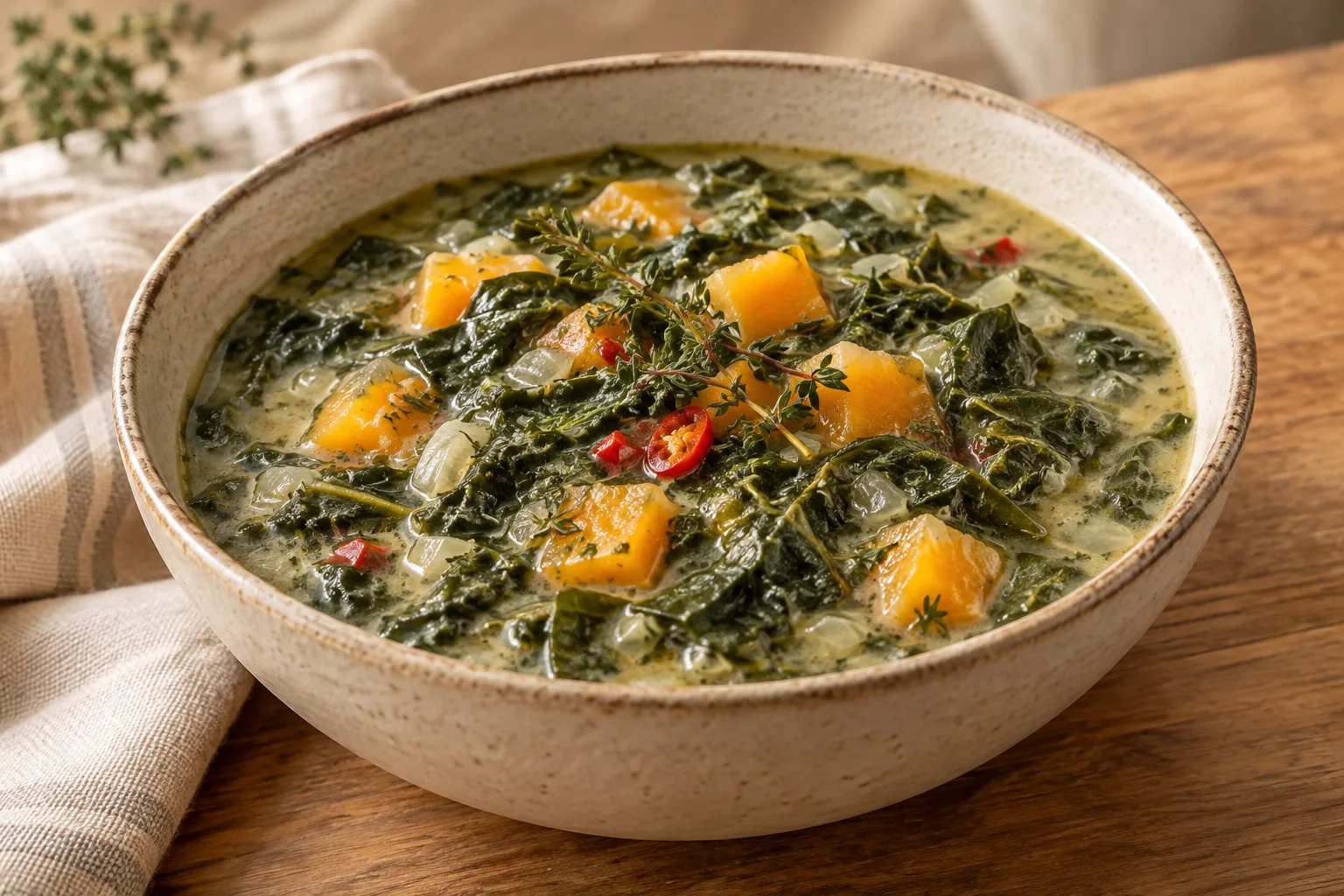
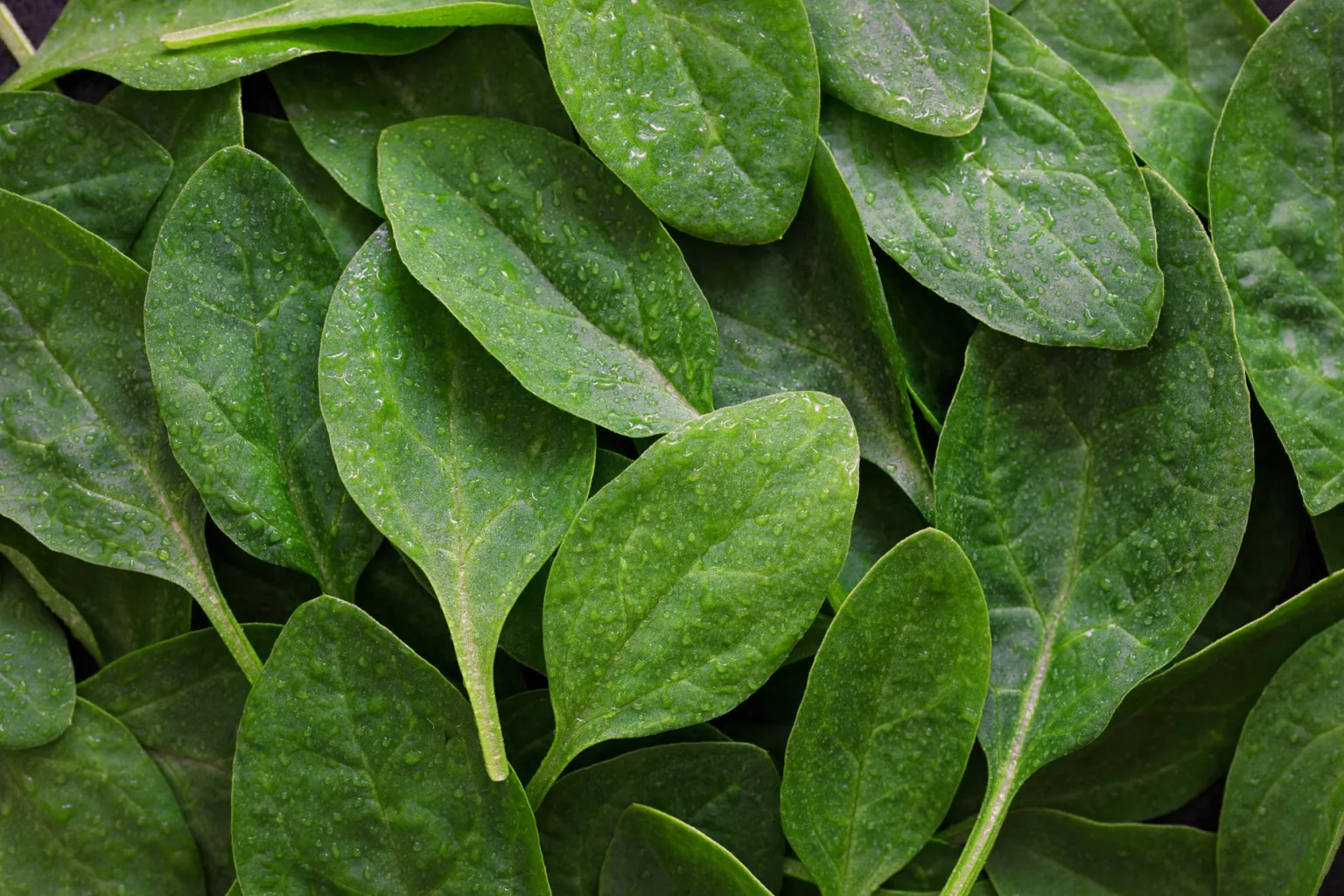
Dasheen is a common name associated with taro, and leaves sold under that name are used as a leafy vegetable. Taro belongs to the Araceae family, a plant group whose leaves can contain needle-like calcium oxalate crystals. These crystals can irritate the skin, and the leaves must be cooked before they are eaten. In cooking, the leaves may be prepared as a vegetable, added to a leafy stew, or used to wrap food. Common names can differ from one market to another, so choose leaves explicitly identified as edible and intended for cooking rather than similar-looking ornamental foliage.
When to use it
Choose dasheen leaves when you want a cooked leafy vegetable or a leaf wrapper for food. They can be part of a leafy stew, served as a cooked side, or paired with coconut cream. Do not treat them as a ready-to-eat salad leaf or add them at the last moment without allowing enough cooking. If you cannot confirm that the leaves are edible and identified for culinary use as dasheen or taro, do not use them.
How to use it
Buy leaves intended for eating and remove damaged portions before preparation. Handle them carefully because calcium oxalate crystals in this plant group can irritate the skin. Cook the leaves thoroughly before eating; do not serve them raw or assume that brief warming is a substitute for cooking. They can be boiled or simmered like other leafy vegetables, added to a leafy stew, or used cooked to wrap other foods. Coconut cream is one possible accompaniment. There is no universal cooking time here: leaf size, condition, and preparation can vary, so make sure the leaves are fully cooked.
Flavour and texture
Dasheen leaves are used as a cooked leafy vegetable and as a wrapper for food. The available information does not establish one precise flavor profile or texture for every variety or stage of maturity. Choose how to serve them according to their role in the dish: as a cooked vegetable, part of a stew, or a wrapping leaf. Do not taste the leaves raw to judge their flavor; they must be cooked before consumption.
How to choose it
Look for leaves explicitly sold as dasheen or taro for culinary use, and ask for clarification if their identity is uncertain. Do not gather or buy ornamental leaves that merely look similar: the group commonly called elephant ears includes different plants. Choose leaves without obvious signs of deterioration and buy an amount you can prepare. Appearance alone cannot confirm that a leaf is edible or correctly identified.
Storage
No specific storage method or shelf life for fresh dasheen leaves is established here, so do not assume a fixed holding period. Buy leaves intended for cooking and plan to prepare them without unnecessary delay. Keep raw leaves separate from ready-to-eat foods, and never eat them without thorough cooking. Do not use leaves that are deteriorated or whose identity or condition is uncertain.
Substitutions
Cooked mustard greens or turnip greens can stand in for dasheen leaves in some cooked leafy dishes, but they are not identical. A substitution may change the result, and recipe instructions cannot automatically be transferred from one leaf to another. If you substitute, use a clearly identified edible leaf and follow the cooking guidance appropriate to that vegetable.
Common mistakes
The key mistake is eating the leaves raw or giving them only a brief warming. This plant group can contain irritating calcium oxalate crystals, so the leaves must be cooked before eating. Other pitfalls include confusing edible dasheen with similar ornamental leaves, assuming there is one cooking time for every leaf, or tasting leaves before confirming their identity.
Safety and allergens
Do not eat dasheen leaves raw. Plants in this group can contain irritating calcium oxalate crystals, and the leaves must be cooked before consumption. Handle them carefully and do not use leaves unless you can confirm their identity as an edible food. Cooking is essential; no single cooking time is provided that applies to every leaf and preparation.
Culinary uses
- Cooked leafy vegetable
- Leaf wrapper for food
Recommended techniques
- Boiling or simmering until thoroughly cooked
- Cooking in a leafy-vegetable stew
Pairs well with
- Coconut cream
- Tropical fruits
Frequently asked questions
Can dasheen leaves be eaten raw?
No. The leaves must be cooked before eating because plants in this group can contain irritating calcium oxalate crystals.
How are dasheen leaves used in cooking?
They are cooked as a leafy vegetable, added to leafy stews, or used cooked to wrap food.
Can mustard greens replace dasheen leaves?
Cooked mustard greens can be an alternative in some leafy dishes, but the result will differ and the substitute needs its own suitable cooking method.
Ingredient allergens
Allergen listThere are no verified associations for these ingredients yet.
Sources and review
Automatically researched, cross-checked and validated content. Sources consulted:
- ¿Por qué la muerte es origen de miedos y tabúes? doi.org/10.64628/aao.fccyk3qj3
- Sevin 16oz Concentrate Label v20 ucanr.edu/media/278902
- Sevin RTU Gallon Label v14 picol.cahnrs.wsu.edu/DownloadLabel/67239/WA
- List of Archived EDIS Publications ask.ifas.ufl.edu/archived-publications
- Elephant Ears (Colocasia, Alocasia, and Xanthosoma) – Wisconsin Horticulture hort.extension.wisc.edu/articles/elephant-ears-colocasia-alocasia-and-xanthosoma/
- El taro www.joseanalija.com/taro/
- Browse Plants by Common Name / Plant Atlas dev.florida.plantatlas.usf.edu/browse/common
- Usos de la hoja de plátano (Musa paradisiaca L.) en la ... academiaculinaria.org/index.php/gastronomia-cocina/article/download/40/68/315
- Oriental – Fitoralia www.fitoralia.com/oriental/