- Category
- Other
- State
- Liquid
- Usual unit
- ml
What it is
Dashi is a Japanese broth or extracted liquid used as a base in many dishes. It does not have just one recipe: it may be made with kombu, a dried edible seaweed; dried bonito flakes; dried sardines or anchovies; or dried shiitake mushrooms. Some varieties combine kombu and bonito to bring their flavors together. The result is usually a light broth intended to add depth and umami without overwhelming other ingredients. Kombu and shiitake versions can be made without fish, but check the ingredients of a particular recipe or product rather than assuming every dashi is fish-free.
When to use it
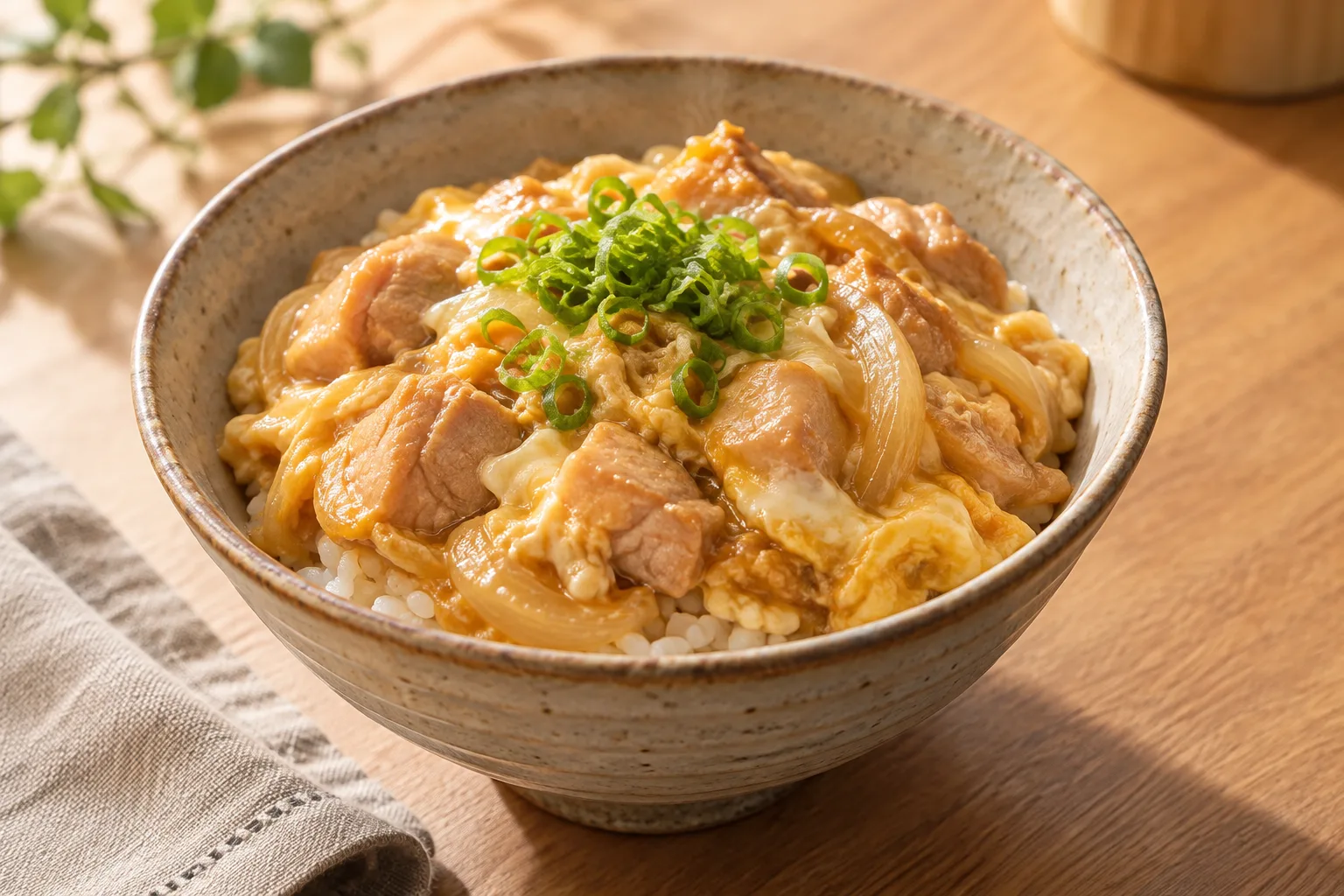
Use dashi when you want a savory, relatively light base for miso soup, noodles, stews, or simmered dishes. It can also add depth to sauces, rice dishes, and savory egg custards such as chawanmushi. Choose a variety to suit the dish and your needs: kombu or shiitake provides a fish-free option, while bonito and small dried fish give the broth a more pronounced seafood character. If you are unfamiliar with a recipe, begin with a moderate amount and adjust the finished dish to taste.
How to use it
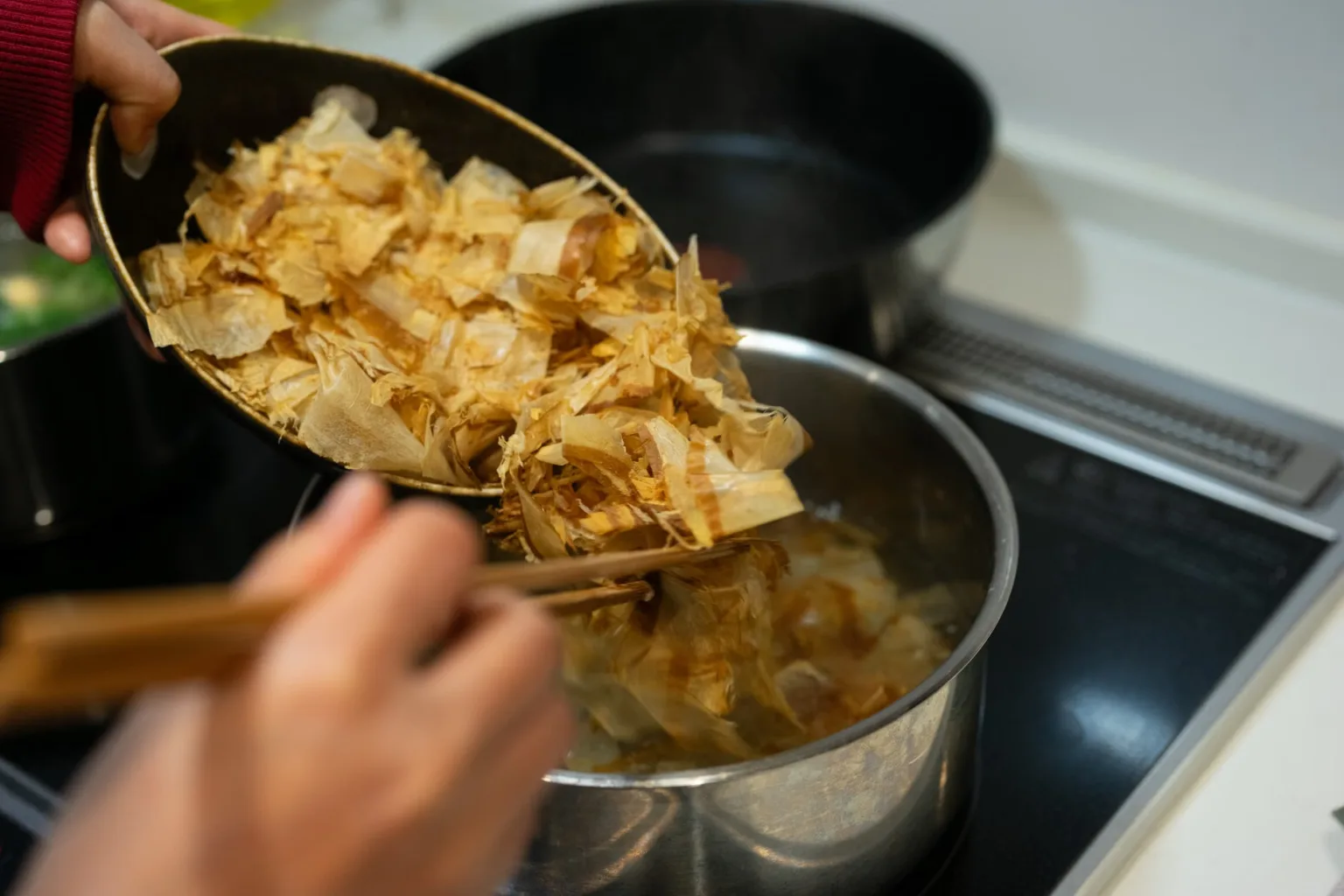
Dashi can be made by steeping kombu, dried shiitake, or other suitable ingredients in water to extract their flavor; some varieties use cold-water extraction, while others are gently heated. For combined dashi, kombu is commonly infused first and bonito flakes are added afterward; the liquid is strained to remove the solids. Use the broth as a base for soup or noodles, or add it to stews, sauces, rice, and savory egg dishes. Instant dashi is another option: follow its package directions because ingredients and concentration vary. Check the label if preparing food for someone who avoids fish.
Flavour and texture
Dashi is generally a clear, light broth with umami that can be delicate or more pronounced depending on its ingredients. Kombu contributes subtle marine notes; bonito, sardines, and anchovies give it a stronger seafood character, while shiitake brings an earthy quality. The varieties differ in flavor and are not always interchangeable.
How to choose it
Dashi is available ready-made or in instant form, and you can also buy the dried ingredients to prepare it at home. Read the ingredient list: some blends contain bonito or other fish, while kombu- or shiitake-based options can be fish-free. Check the stated concentration and directions so you know how to use the product.
Storage
The available evidence does not establish one universal storage period for prepared dashi or commercial products. Follow the storage instructions on the package and do not assume the same period applies to every variety. If you make broth at home, handle and store it carefully, and consult official food-safety guidance for appropriate storage times and temperatures.
Substitutions
To replace a fish-based variety, try kombu or shiitake dashi, bearing in mind that the flavor will differ. A simple vegetable broth may work in some recipes, but it will not necessarily provide the same umami profile. Check the ingredient list of instant products as well.
Common mistakes
Do not assume that all dashi is vegetarian or that every variety tastes the same: some contain bonito, sardines, or anchovies. Another common mistake is treating instant powder and homemade broth as having the same concentration; follow the package directions and adjust the flavor gradually.
Safety and allergens
If you have a fish allergy or are cooking for someone who avoids fish, check every ingredient and the package information; some varieties contain bonito, sardines, or anchovies. Dashi ingredients vary by type.
Culinary uses
- Soup and noodle broth base
- Savory flavor enhancer for stews, sauces, rice dishes and savory custards
Recommended techniques
- Steeping dried ingredients in cold or hot water
- Gentle heating and straining to make a clear broth
Pairs well with
- Miso, tofu and noodles
- Vegetables, rice and savory egg dishes
Frequently asked questions
Does all dashi contain fish?
No. Kombu or shiitake dashi can be made without fish, while other varieties include bonito, sardines, or anchovies. Check the recipe or product label.
What dishes use dashi?
It is used as a base for miso soup and noodle dishes, and can also be added to stews, sauces, rice dishes, and savory egg preparations.
What can I use instead of fish-based dashi?
Kombu or shiitake dashi are fish-free alternatives. Each has a different flavor, so choose one that suits the dish and check the product ingredients.
Ingredient allergens
Allergen listThere are no verified associations for these ingredients yet.
Estimated nutrition
- Fat
- 0 g
- Saturates
- 0 g
- Carbohydrate
- 40 g
- Sugars
- 0 g
- Protein
- 20 g
- Salt
- 26.5 g
Sources and review
Automatically researched, cross-checked and validated content. Sources consulted:
- Client Challenge doi.org/10.2307/jj.27939689.16
- The Essential Glossary of Cooking Terms for the Culinary Arts - Escoffier www.escoffier.edu/blog/culinary-arts/the-essential-glossary-of-cooking-terms-for-the-culinar…
- ¿Qué es el dashi? El secreto de Washoku | Historias | El sitio web global de Grupo Ajinomoto - Comer Bien, Vivir Bien. www.ajinomoto.com/es/stories/dashi-the-secret-of-washoku
- 2019-2020 Undergraduate and Graduate Academic ... catalog.ciachef.edu/sites/default/files/2019-2020-Undergraduate-and-Graduate-Catalog.pdf
- How Dashi Led to the Discovery of MSG | Institute of Culinary Education www.ice.edu/blog/how-dashi-led-discovery-msg
- Dashi Powder Near Me A Guide for Flavors in Local Stores and Online Retailers cms.ncwc.edu/dashi-powder-near-me/
- Sugar Kelp Profile & Recipes | National Seaweed Hub | A Collaborative Partnership Funded by the National Sea Grant Program | University of Connecticut seaweedhub.extension.uconn.edu/ocean-farm-to-table/sugar-kelp-profile-recipes/
- Two Truths and a Lie: Buddhist Food Today Through a Cooking Project by Ella Biehn – Takeshi Watanabe twatanabe.faculty.wesleyan.edu/2021/05/29/two-truths-and-a-lie-buddhist-food-today-through-a…
- ¿Qué es el dashi y por qué es importante en la cocina japonesa? - Food & Wine en Español foodandwineespanol.com/actualidad/que-es-el-dashi-y-por-que-es-importante-en-la-cocina-japon…
- ¿Qué es el caldo dashi? Sus usos en la cocina | Excelencias Gourmet excelenciasgourmet.com/es/tradiciones/caldo-dashi-esencia-de-la-cultura-japon
- Dashi: ¿Qué es? Y ¿De dónde surge? | Recetas Nestlé www.recetasnestlecam.com/escuela-de-sabor/tecnicas-culinarias/dashi
- ¿Sabes qué es el dashi? www.directoalpaladar.com/ingredientes-y-alimentos/sabes-lo-que-es-el-dashi
- Un Sabor de Japón - Cómo hacer Dashi, un Ingrediente Básico en la Cocina Japonesa - Medio turístico japonés MATCHA matcha-jp.com/es/5702