- Category
- Sugar and sweeteners
- State
- Dry
- Usual unit
- g
What it is
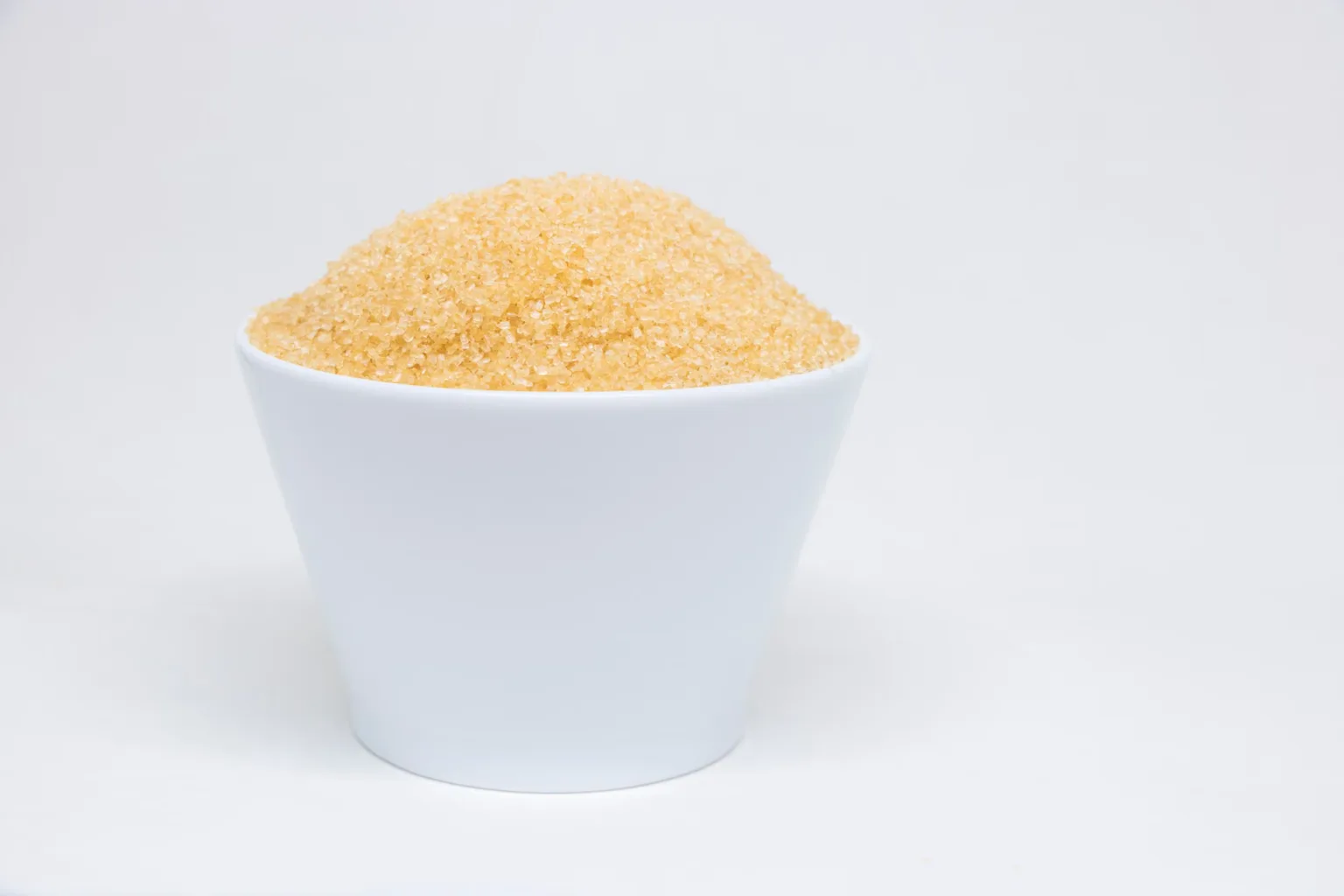
Demerara sugar is a brown sugar commonly recognized by its large crystals, golden or amber color, and a texture that is generally drier and looser than moist brown sugars such as muscovado. Its flavor has gentle molasses and caramel notes, though color, texture, and molasses character can differ from one product to another. The name is historically associated with Demerara in Guyana, but for everyday cooking it is most useful to consider the sugar’s actual characteristics. Brown sugars sold under different names do not necessarily share the same production process. Demerara is a granulated sweetener: use it as it is in drinks or as a crunchy topping, or grind it when a finer grain is needed.
When to use it
Choose demerara when you want sugar to contribute more than sweetness: its large crystals can give cookies, cakes, and other baked goods a noticeable surface crunch. It is also handy for sweetening coffee or tea, especially when you do not mind crystals dissolving more slowly than fine sugar. Its warm flavor suits foods that welcome a light caramel or molasses note. For delicate mixtures that need sugar to dissolve quickly and evenly, or recipes that depend on a precise texture and measurement, consider grinding the crystals or using the sugar specified by the recipe.
How to use it
Measure demerara sugar as directed and add it to coffee, tea, or another drink; stir until dissolved, allowing for the fact that its coarse crystals can take longer to dissolve than fine sugar. For a crunchy finish, sprinkle a modest amount over cookies, rolls, or cakes before baking when the recipe allows. You can mix it into batters as a granulated sugar, but its crystal size may mean slower dissolving and a different final texture. If you need smaller crystals, briefly grind it to the desired size; avoid turning it to powder if you want a crunchy topping. In precise recipes, do not assume it is a perfect one-for-one textural match: crystal size and product moisture can affect the result.
Flavour and texture
It tastes sweet with gentle caramel and molasses notes and is generally less intense and less moist than muscovado. The large, loose crystals are crunchy and may remain noticeable as a topping; they can dissolve slowly in a drink.
How to choose it
Look for loose, visibly large crystals with a golden or amber color and an intact, well-sealed package. Check the product name and description, since brown sugars can vary in moisture, grain size, and processing. If quick dissolving matters, choose a finer sugar or plan to grind it.
Storage
Keep it in a clean, airtight, dry container in a cool place away from strong odors. Moisture can make crystals hard or lumpy, and sugar can absorb odors from its surroundings. Refrigeration is unnecessary; reseal the container after each use.
Substitutions
Granulated brown sugar can provide sweetness and a related flavor, though crystal size and molasses intensity vary. White granulated sugar replaces the sweetness but not the color or caramel notes. For a finer texture, grind demerara before adding it.
Common mistakes
Do not assume it will dissolve as quickly as fine sugar: its large crystals can remain noticeable. Also, not every brown sugar has the same flavor, moisture, or behavior. If a recipe needs an even texture, consider grinding it or using the specified sugar.
Safety and allergens
Keep the sugar dry and protected from strong odors. If the product looks unusual or its packaging is damaged, follow the manufacturer’s guidance.
Culinary uses
- sweetener
- crunchy topping
Recommended techniques
- stirring into hot drinks
- sprinkling over baked goods before baking
- grinding to a finer texture when a recipe needs smaller crystals
Pairs well with
- coffee
- tea
- yogurt
- cakes and cookies
Frequently asked questions
What does demerara sugar taste like?
It is sweet with gentle caramel and molasses notes. The intensity varies by product.
Does it dissolve quickly in coffee or tea?
Its crystals are usually large, so they may dissolve more slowly than fine sugar. Stir the drink well.
How can I keep it from clumping?
Store it tightly sealed in a cool, dry place, away from moisture and strong odors.
Ingredient allergens
Allergen listThere are no verified associations for these ingredients yet.
Estimated nutrition
- Fat
- 0 g
- Saturates
- 0 g
- Carbohydrate
- 100 g
- Sugars
- 100 g
- Protein
- 0 g
- Salt
- 0 g
Sources and review
Automatically researched, cross-checked and validated content. Sources consulted:
- Client Challenge doi.org/10.2307/jj.27939689.16
- Del blanco a la panela: los 19 tipos de azúcar más comunes, en qué se diferencian y cómo usarlos en cocina www.directoalpaladar.com/ingredientes-y-alimentos/blanco-a-panela-19-tipos-azucar-comunes-qu…
- Tipos de azúcar: cuáles son y cómo usarlos | Fine Dining Lovers www.finedininglovers.es/explorar/noticias/tipos-de-azucar-cuales-son-y-como-usarlos-en-cocin…
- El azúcar: tipos y usos. Parte II - Blog de recetas de María Lunarillos www.marialunarillos.com/blog/el-azucar-tipos-y-usos-parte-ii.html
- Storing Sugars | USU extension.usu.edu/preserve-the-harvest/research/storing-sugars
- SugarScience.UCSF.edu | Hidden in Plain Sight sugarscience.ucsf.edu/hidden-in-plain-sight/
- Azucar Moreno de caña integral: demerara y muscovado – La vida sabe mejor www.lavidasabemejor.es/recetas/azucarer-moreno-de-cana-integral/
- Guía de la temporada de impuestos | Internal Revenue Service www.irs.gov/es/newsroom/tax-time-guide
- Sugar Sculpting Explained: The Intricate Craft Behind Edible Art - Escoffier www.escoffier.edu/blog/baking-pastry/sugar-sculpting-explained/
- Rum aroma descriptive analysis repository.lsu.edu/cgi/viewcontent.cgi?article=3769&context=gradschool_theses
- The Architecture of Nineteenth-Century Cuban Sugar Mills academicworks.cuny.edu/context/gc_etds/article/2170/viewcontent/TezanosToral_minarees_0046D_…
- A Revision of the Genus Strategus (Coleoptera: Scarabaeidae) digitalcommons.unl.edu/cgi/viewcontent.cgi?article=1033&context=museumbulletin
- Azúcar demerara | Gastronomía & Cía www.gastronomiaycia.com/azucar-demerara/
- Azúcar demarara: nutritiva y sin refinar – Casa Perris casaperris.com/blogs/general/azucar-demarara-nutritiva-y-sin-refinar?srsltid=AYCX9vJqt2utE_E…