- Category
- Pulses
- State
- Dry
- Usual unit
- g
What it is
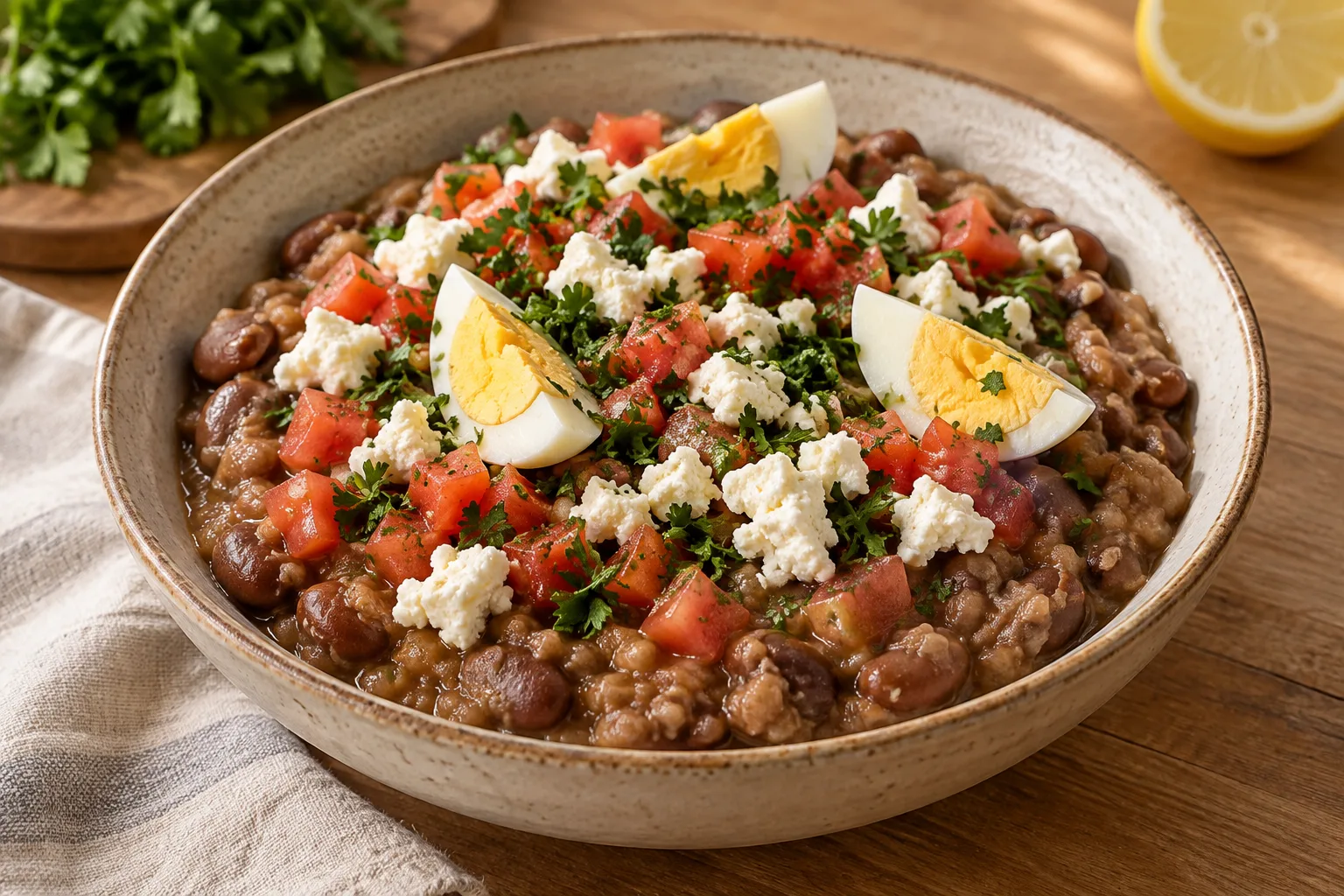
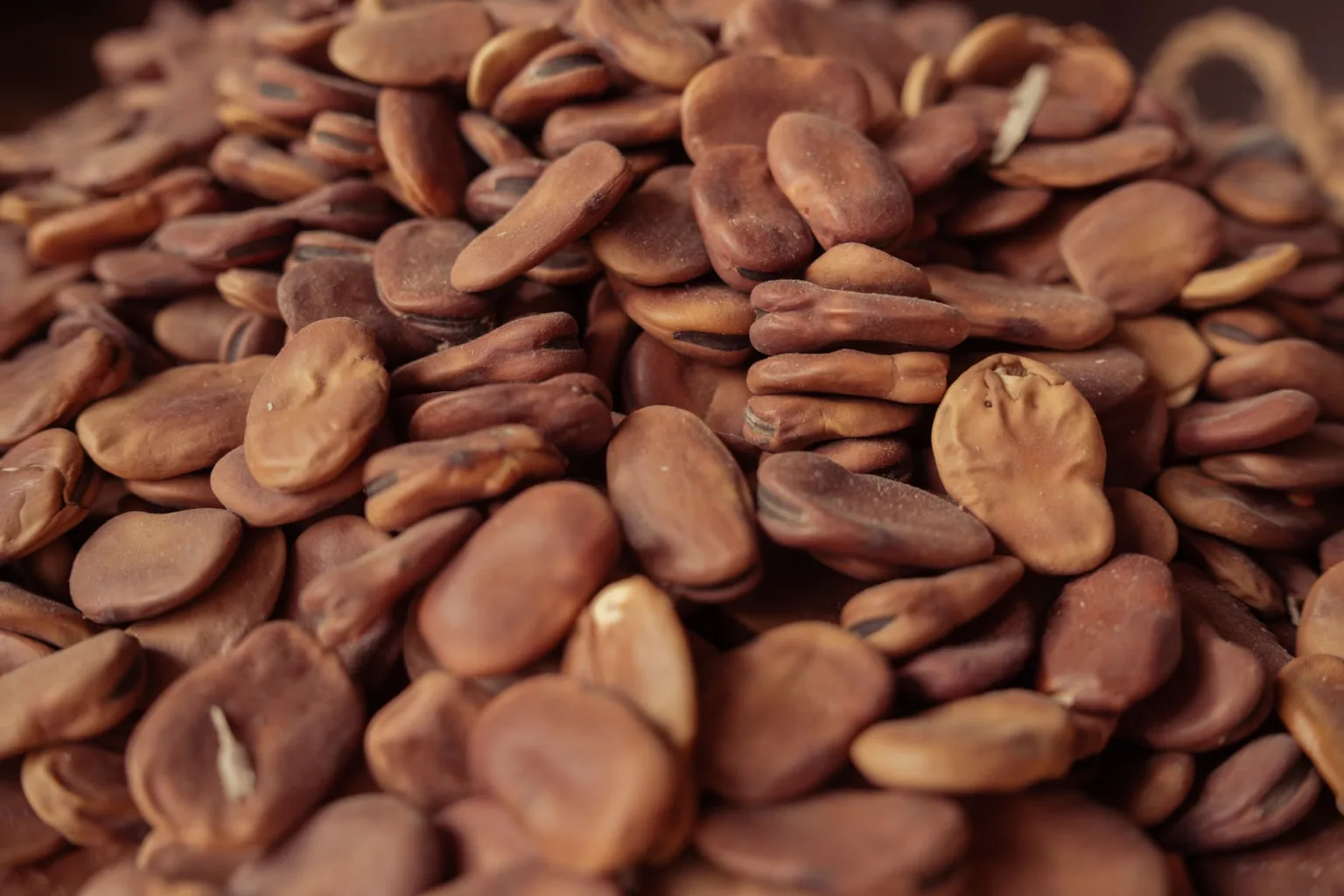
Dried fava beans are the mature, dehydrated seeds of Vicia faba, a legume. Unlike fresh fava beans, the dried seeds need to be rehydrated before cooking. Once tender, they work well in hearty dishes and can also be mashed or blended into purées and creams. Their skins may remain firm, so some cooks remove them after cooking. Soaking and cooking needs can vary, and older beans may take longer to soften. Dried fava beans are used in a range of savoury preparations, including stews, soups, salads, sauces, fillings and snacks.
When to use it
Choose dried fava beans when you want a pantry legume for a savoury dish and have time to soak and cook it. They work in stews and soups, where the cooked beans can be served whole, and in purées and creams, where they are blended after becoming tender. They can also be added to salads, sauces, fillings or savoury snacks. Because the dried beans need rehydrating and cooking, they are not a direct replacement for fresh fava beans in dishes that rely on the texture of tender, freshly harvested beans. Allow extra time if the beans are older, as they may take longer to soften.
How to use it
Check the beans and remove any foreign matter. Cover them with water and soak, ideally overnight. Drain and simmer in fresh water until tender; the time varies with the age and size of the beans, so check their texture rather than relying on a fixed cooking time. Do not add dried beans directly to a recipe with a short cooking time. Once cooked, serve them whole in stews, soups or salads, or blend them into a cream, sauce or filling. If the skins seem thick, remove them after cooking, when the beans are cool enough to handle comfortably.
Flavour and texture
Cooked dried fava beans have a mild flavour reminiscent of chickpeas or some common beans. The center becomes tender and buttery, while the skin can remain comparatively thick. The final texture depends on soaking and cooking; older beans may take longer to soften.
How to choose it
Look for beans clearly labelled as dried, rather than fresh or already cooked. Check that the package is intact and the beans show no visible signs of moisture or deterioration. Bean size and age can affect how long they take to soften, so check package directions and cook until they reach the texture you want.
Storage
Keep dried fava beans in a tightly closed container in a dry, cool place away from light and heat. Protect them from moisture and inspect them before use. Beans kept for a long time may need a longer soak and cooking period to become tender. Once soaked or cooked, they are no longer a dry pantry product: refrigerate them promptly and follow usual guidance for cooked foods.
Substitutions
Chickpeas can replace fava beans in some stews, purées or salads because their flavour profiles are comparable. Other beans may also work in these preparations. Adjust soaking and cooking to suit the chosen legume; do not assume it will have the same size, skin or cooking time as fava beans.
Common mistakes
Do not treat dried fava beans like fresh beans or skip soaking when the recipe calls for rehydrating the legume. Avoid relying on one fixed cooking time: older beans may take longer to soften. Do not judge tenderness by the skin alone; check the interior, and remove the skins after cooking if you prefer.
Safety and allergens
Use beans that look normal and discard any with visible moisture, mould or deterioration. Soak and cook them until tender; do not eat them dry or insufficiently cooked. For soaked or cooked beans, follow usual food-handling and storage guidance for cooked foods.
Culinary uses
- Ingredient for stews and soups
- Base for purées, creams, sauces and fillings
- Addition to salads and savoury snacks
Recommended techniques
- Soak before cooking, ideally overnight
- Simmer until tender; older beans may need longer soaking and cooking
- Mash or blend cooked beans for purées and creams
- Remove the skins after cooking if desired
Pairs well with
- Soups and stews
- Purées and creams
- Salads and savoury fillings
Frequently asked questions
Do dried fava beans need soaking?
Yes. They are generally soaked before cooking, ideally overnight. Drain them and cook until tender.
How can I use dried fava beans?
Once cooked, use them in stews, soups, salads, purées, creams, sauces and fillings.
Can I remove the skins?
Yes. The skins can be thick, and you can remove them after cooking if you prefer a smoother or more tender texture.
Ingredient allergens
Allergen listThere are no verified associations for these ingredients yet.
Estimated nutrition
- Fat
- 0.73 g
- Saturates
- 0.12 g
- Carbohydrate
- 17.6 g
- Sugars
- 9.21 g
- Fibre
- 7.5 g
- Protein
- 7.92 g
- Salt
- 0.06 g
Sources and review
Automatically researched, cross-checked and validated content. Sources consulted:
- Client Challenge doi.org/10.2307/jj.27939689.16
- The Essential Glossary of Cooking Terms for the Culinary Arts - Escoffier www.escoffier.edu/blog/culinary-arts/the-essential-glossary-of-cooking-terms-for-the-culinar…
- Vicia faba - Wikipedia, la enciclopedia libre es.wikipedia.org/wiki/Vicia_faba
- Aplicaciones de la Biotecnología en Seguridad Alimentaria aesan.gob.es/dam/jcr:2eecb52a-e252-4339-b93a-db3e3c7faab6/biotecnologia.pdf
- Project MUSE -- Verification required! muse.jhu.edu/pub/114/article/870790/pdf
- Vamos a Conservar Alimentos: Sopas extension.psu.edu/vamos-a-conservar-alimentos-sopas/
- Habas, origen, historia y creencias sobre esta hortaliza. blog.plantamus.com/habas/
- Qué son las habas secas y cómo aprovechar al máximo esta legumbre típica de Murcia, de sabor delicado y mantecoso www.directoalpaladar.com/ingredientes-y-alimentos/que-habas-secas-como-aprovechar-al-maximo-…
- Diferencias entre las habas secas y las habas tiernas – Botanical-online www.botanical-online.com/alimentos/habas-tiernas-secas-diferencia
- De Compras para la salud: Comidas para una persona ask.ifas.ufl.edu/publication/FS266/pdf
- Cloud Forest | The Healers Project healers.uoregon.edu/gathering-grounds/cloud-forest/