- Category
- Grains, flour and pasta
- State
- Dry
- Usual unit
- g
What it is
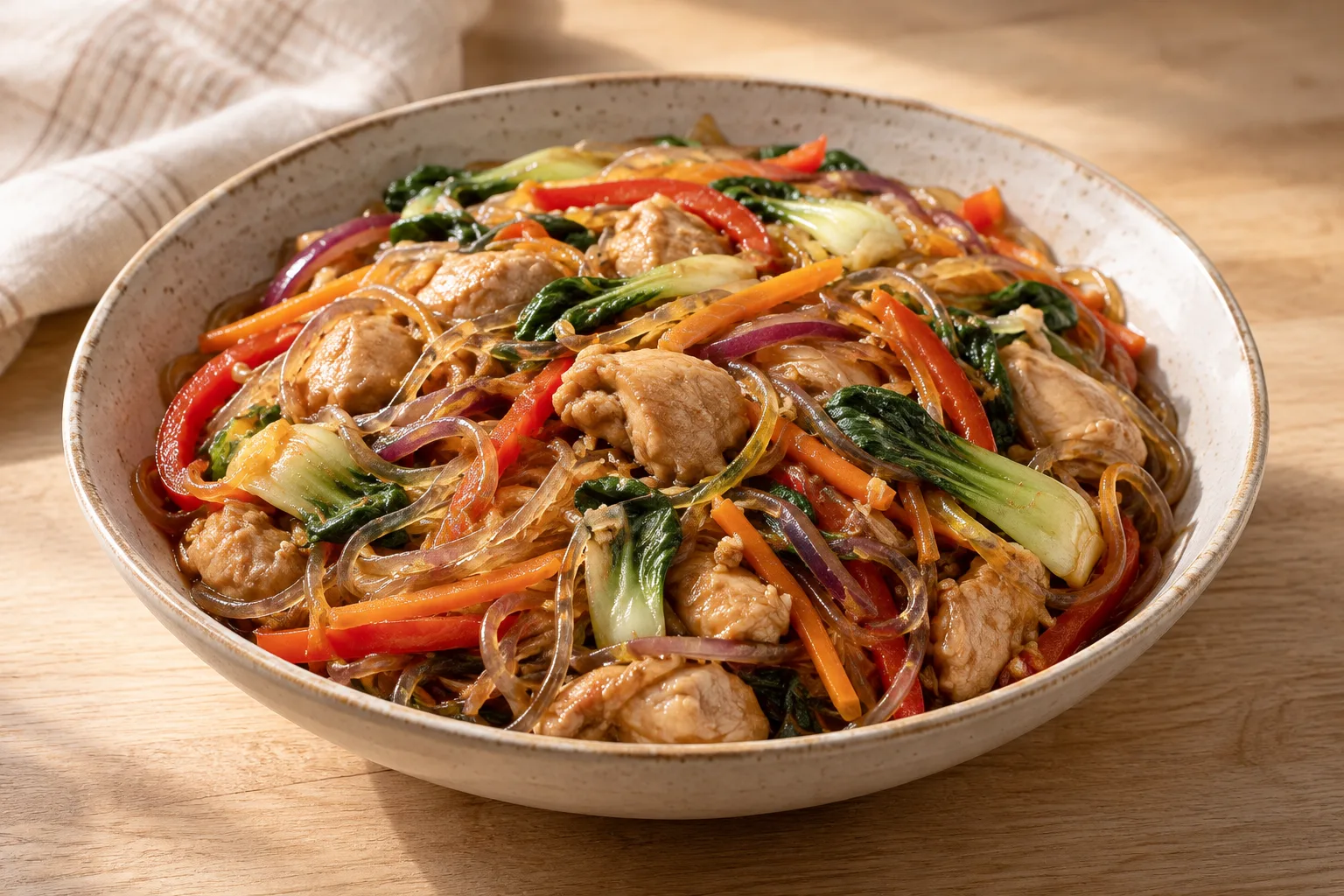
Glass noodles are dry strands or noodles known for becoming translucent when prepared. They are also called cellophane noodles, and some varieties are labelled mung bean noodles. There is no single fixed formula: they may be made with water and mung bean, potato or tapioca starch, and some products combine starches. The name alone therefore does not establish the ingredients or the exact preparation method. Read the ingredient list and package directions. Glass noodles are used in stir-fries, soups and salads, and they readily take on the character of the liquid or sauce with which they are served.
When to use it
Choose glass noodles when you want a soft, springy texture in a stir-fry, soup or warm or cold salad. They work with vegetables and sauces, and can also be served with egg, chicken or prawns. Because products differ in starch and thickness, check the package before deciding whether to soak or cook them. For a stir-fry, prepare the other ingredients first. That lets you add the hydrated or cooked noodles without leaving them to soften while you finish chopping or mixing the sauce.
How to use it
Start by checking the ingredients and package directions: preparation depends on the product. Some varieties soften in hot water; one mung-bean-noodle recipe uses a brief five-minute soak, while other directions may call for boiling. Drain the noodles before adding them to a dish. For a stir-fry, prepare the vegetables and sauce first, cook the other ingredients, then add the noodles near the end and toss briefly. Try carrots, mushrooms, cabbage or spinach with garlic, soy sauce and chilli; egg, chicken or prawns are other options. For soup or salad, prepare the noodles as directed and combine them with the broth or dressing. Do not assume one cooking time suits every variety.
Flavour and texture
Glass noodles usually have a mild taste, so the sauce, broth and other ingredients provide much of a dish’s flavour. Once prepared, they become translucent and have a tender, springy, somewhat slippery texture. The result can vary with the starch, thickness and method. If softened for too long, they may become limp or sticky. Follow the package directions and check the texture before mixing them into the rest of the dish.
How to choose it
Read the ingredient list: glass noodles may contain mung bean, potato or tapioca starch, and some products combine different starches. Check the thickness and preparation directions too, since products do not all need the same treatment. Choose a dry, well-sealed package with legible product information. If a recipe calls for a particular variety, check that the package lists the ingredients you intend to buy.
Storage
Keep uncooked noodles in a dry place and close the package securely, following the manufacturer’s directions. Storage advice can vary by product, so use the label as your guide. Once soaked or cooked, handle them as cooked pasta: do not leave them sitting at room temperature, and promptly refrigerate leftovers in a clean container. Do not eat them if their smell or appearance seems unusual.
Substitutions
Since glass noodle ingredients vary, another starch-based glass noodle may be the closest substitute. Check whether the alternative is made with mung bean, potato or tapioca starch, and follow its own directions: thickness and hydration needs may differ. Do not assume every variety behaves the same way in a stir-fry or soup.
Common mistakes
A common mistake is treating all glass noodles as if they have the same ingredients or need the same cooking time. Read the package and avoid soaking or cooking them longer without checking their texture. Another pitfall is adding them to a stir-fry before the other ingredients are ready; they can become too soft. Drain them and toss briefly with the sauce and the rest of the dish.
Safety and allergens
Follow the package directions and handle prepared noodles as cooked pasta. Promptly refrigerate leftovers in a clean container, and do not eat them if their smell or appearance is unusual. Check the ingredient list if you need to avoid a particular ingredient.
Culinary uses
- Base para salteados y platos de wok
- Ingrediente para sopas, ensaladas y guarniciones
Recommended techniques
- Remojar en agua caliente y escurrir
- Cocer según las instrucciones del envase
- Saltear brevemente con verduras y salsa
Pairs well with
- Verduras como zanahoria, champiñones, col y espinacas
- Salsa de soja, ajo y chile
- Huevo, pollo o gambas
Frequently asked questions
What are glass noodles made from?
Ingredients vary by product. They may contain water and mung bean, potato or tapioca starch; check the ingredient list.
Should I soak or boil glass noodles?
It depends on the variety. Follow the package directions; some are soaked in hot water and others are boiled.
How can I use glass noodles?
Use them in stir-fries, soups and salads. Pair them with vegetables and a sauce or broth, and prepare them as directed on the package.
Ingredient allergens
Allergen listThere are no verified associations for these ingredients yet.
Estimated nutrition
- Fat
- 0 g
- Saturates
- 0 g
- Carbohydrate
- 88 g
- Sugars
- 0 g
- Fibre
- 4 g
- Protein
- 0 g
- Salt
- 0 g
Sources and review
Automatically researched, cross-checked and validated content. Sources consulted:
- ¿Por qué la muerte es origen de miedos y tabúes? doi.org/10.64628/aao.fccyk3qj3
- Food for Profit: Home-Style Kitchen Food Processing (Limited Food Establishments) extension.psu.edu/food-for-profit-home-style-kitchen-food-processing-limited-food-establishm…
- Gastronomy Blog | Page 18 sites.bu.edu/gastronomyblog/page/18/
- Identifying and Handling Spoiled Canned Food - National Center for Home Food Preservation nchfp.uga.edu/how/can/general-information/identifying-and-handling-spoiled-canned-food/
- What Should I Eat? • The Nutrition Source nutritionsource.hsph.harvard.edu/what-should-you-eat/
- Wining and Dining | UCLA newsroom.ucla.edu/magazine/evan-kleiman-courtney-cochran
- Fideos de Cristal con Verduras - El Mundo Eats elmundoeats.es/fideos-de-cristal-con-verduras/
- Fideos de cristal: análisis y comparativa de las mejores opciones para cocinar comida asiática thaibistro.es/fideos-de-cristal/
- Fideos de cristal con verduras - LaWebcinera lawebcinera.es/fideos-de-cristal-con-verduras/
- Fideos de cristal con verduras - - Receta - Canal Cocina canalcocina.es/receta/fideos-de-cristal-con-verduras-2
- Fideos de cristal: platos, usos y origen www.menuella.com/es/food-wiki/ingredients/glass-noodles