- Category
- Meat
- State
- Fresh
- Usual unit
- g
What it is
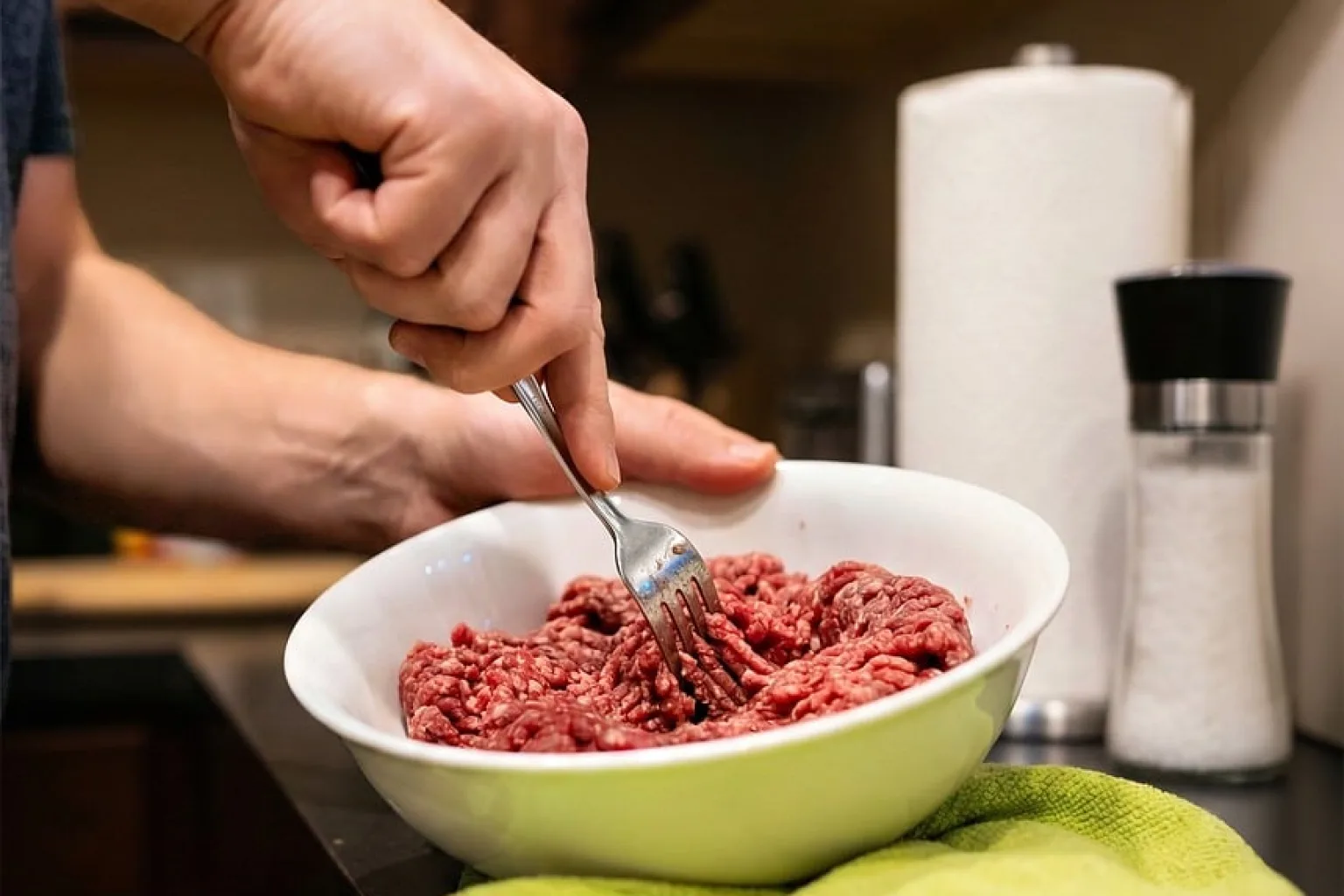
Ground beef is beef that has been minced or ground into small pieces. Different products can contain different proportions of lean meat and fat. Grinding makes the meat easy to season, mix, and shape. It is used in burgers, meatballs, pasta sauces, stews, and fillings for pastries and other dishes. Fat content can vary: a fattier mixture may stay juicier in some preparations, while leaner ground beef can become dry if overcooked. Because grinding can spread bacteria through the meat, cook ground beef thoroughly rather than serving it rare or undercooked.
When to use it
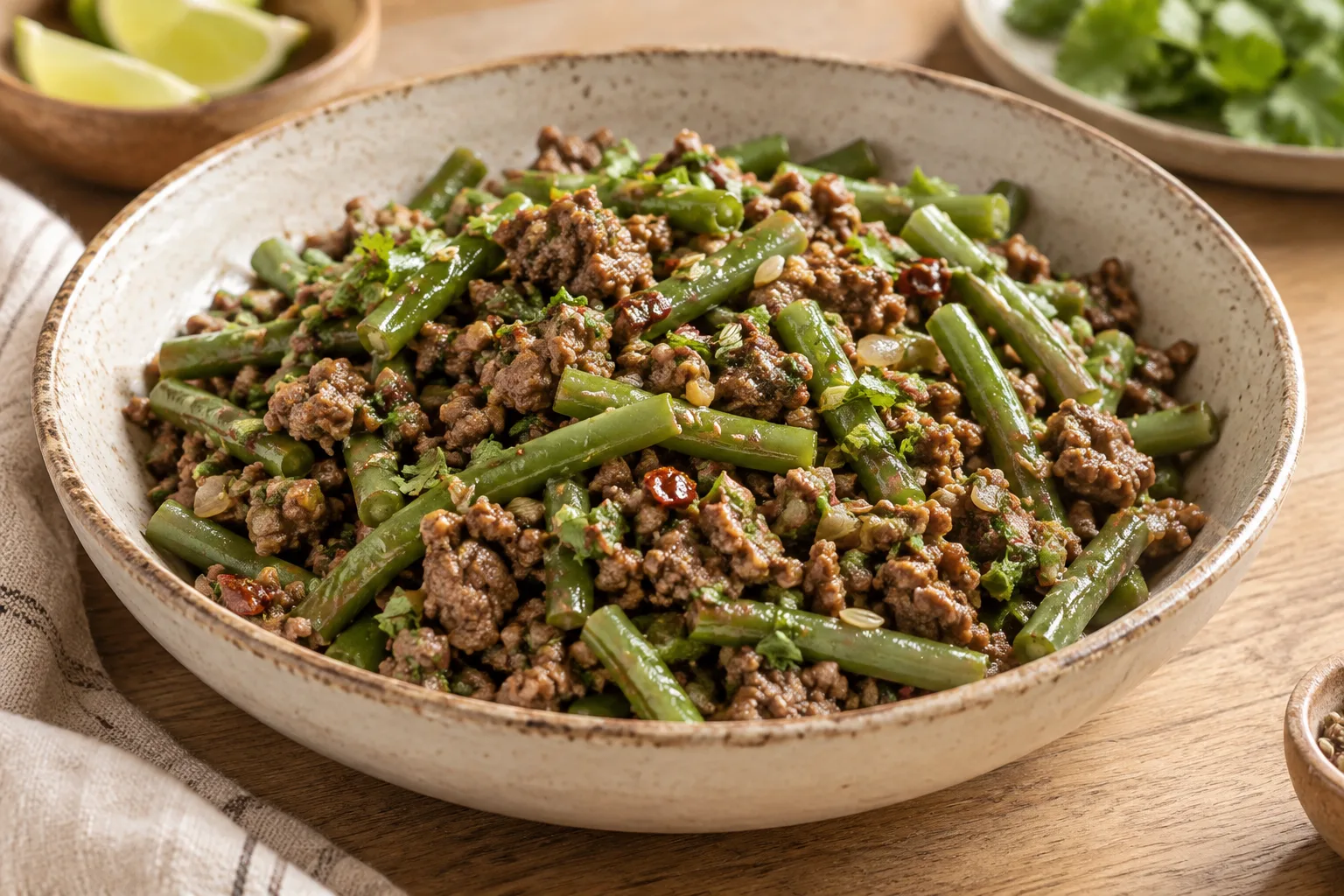
Use ground beef when you want meat that can be broken into small pieces and mixed evenly with vegetables, herbs, spices, or sauce. It works in burgers and meatballs, vegetable or potato stews, and tomato sauces for pasta. It can also be used as a filling for pastries. Choose the preparation to suit the dish: shape it when you want cohesive portions, or crumble it while browning for a sauce or filling. Fat content and cooking method affect the finished texture, so adapt the dish to the result you want and cook the meat thoroughly.
How to use it
Keep raw ground beef separate from ready-to-eat food, and wash hands and utensils after handling it. To brown it, break it up in a pan and cook, stirring, until done. Check the center with a clean food thermometer: it should reach at least 160°F (71.1°C). For burgers or meatballs, make portions of similar size and check the internal temperature rather than relying only on color. Add cooked crumbled beef to tomato sauce, a vegetable stew, or a filling. Serve cooked meat on a clean plate, never on a plate that held it raw, and wash surfaces that touched raw meat.
Flavour and texture
Ground beef has a savory, meaty flavor that takes well to herbs, spices, garlic, and sauces. Its small pieces blend readily into stews and sauces; when shaped, it can form burgers or meatballs. The result depends partly on fat content: a fattier mixture may be juicier, while lean ground beef can dry out if cooked too long.
How to choose it
Choose ground beef that has been kept refrigerated and select a fat level suited to the dish: a fattier mixture may be useful when juiciness is wanted, while leaner meat gives a different texture. Ground beef can vary in color, so do not use color alone to judge freshness or doneness. Keep it cold on the way home and follow the package’s storage directions.
Storage
Refrigerate ground beef promptly and keep the refrigerator at 40°F (4.4°C) or below. For frozen storage, keep the freezer at 0°F (−17.8°C) or below. Prevent its juices from contacting ready-to-eat food and clean surfaces after handling it. The supplied evidence does not establish one universal storage time here, so follow the package date and directions.
Substitutions
Ground chicken, turkey, or pork can replace ground beef, though the dish’s flavor and texture will change. In some preparations, tofu can be used as a meat-free alternative; it is not an identical substitute, so the seasoning and cooking approach may need adjustment.
Common mistakes
Do not serve ground beef pink or judge doneness by appearance alone: use a thermometer and check that the center reaches 160°F (71.1°C). Do not put cooked meat on a plate that held raw meat. Keep raw meat and its juices away from ready-to-eat foods.
Safety and allergens
Wash hands and clean utensils and surfaces after contact with raw meat. Keep it separate from ready-to-eat foods and cook ground beef to an internal temperature of at least 160°F (71.1°C), checked with a clean thermometer. Refrigerate promptly and keep the refrigerator at 40°F (4.4°C) or below.
Culinary uses
- Base for hamburgers and meatballs
- Filling for pasta, pastries, and other stuffed dishes
- Main ingredient in meat sauces and savory stews
Recommended techniques
- Brown in a pan, breaking the meat into small pieces
- Shape and cook as patties or meatballs
- Simmer in a sauce or stew with vegetables
Pairs well with
- Tomatoes and tomato sauce
- Onion and garlic
- Potatoes and carrots
- Pasta, rice, or bulgur
Frequently asked questions
What internal temperature should ground beef reach?
Cook it until the center reaches at least 160°F (71.1°C). Check with a clean food thermometer; color alone is not a reliable measure.
What can I make with ground beef?
Use it for burgers, meatballs, tomato sauces, stews, and fillings. It can be browned in crumbles or shaped, depending on the dish.
How should I store ground beef?
Refrigerate it promptly and keep the refrigerator at 40°F (4.4°C) or below. If freezing it, keep the freezer at 0°F (−17.8°C) or below and follow the package directions.
Ingredient allergens
Allergen listThere are no verified associations for these ingredients yet.
Estimated nutrition
- Fat
- 9.82 g
- Saturates
- 4.02 g
- Carbohydrate
- 0 g
- Sugars
- 0 g
- Fibre
- 0 g
- Protein
- 19.6 g
- Salt
- 0.17 g
Sources and review
Automatically researched, cross-checked and validated content. Sources consulted:
- Cuatro Pasos Simples Para la Seguridad en los Alimentos | Home & Garden Information Center hgic.clemson.edu/factsheet/cuatro-pasos-simples-para-la-seguridad-en-los-alimentos/
- Carne picada - Wikipedia, la enciclopedia libre es.wikipedia.org/wiki/Carne_picada
- Vamos a Conservar Alimentos: Carnes extension.psu.edu/vamos-a-conservar-alimentos-carnes/
- Consumer Preparation and Preservation - KSRE Bookstore bookstore.ksre.ksu.edu/topic/food/consumer-preparation-and-preservation?page=7
- Carne Molida con Vegetales [Video+Receta] www.cocinadominicana.com/carne-molida-con-vegetales-receta
- Revista del comité científico de la aecosan número 24 aesan.gob.es/dam/jcr:979384c0-5bd9-46d4-a29e-ccf5876c769c/RCC_24.pdf
- Recetas y Guías Españolas - Spanish Recipes and Guides | UC Master Food Preservers of San Joaquin County ucanr.edu/site/ucce-master-food-preservers-san-joaquin-county/recetas-y-guias-espanolas-span…
- de carne molida Archives | Dinner Tonight dinnertonight.tamu.edu/ingredient/de-carne-molida/
- Carne de res y papas | University of Maryland Extension extension.umd.edu/eatsmart-espanol/recipes-spanish/carne-de-res-y-papas
- Carne de Res y Brócoli | Servicio de Extensión de OSU extension.oregonstate.edu/es/imported-publication/carne-de-res-y-brocoli
- - YouTube www.youtube.com/watch?v=XVSxlQSEhzM
- 7 usos y preparaciones con carne molida www.lanacional.co/post/carne-molida?srsltid=AYCX9vKQtO__H_fiU0KWWv8Qsh0-ig12qthpKKRB238v52Oj…