- Category
- Vegetables
- State
- Fresh
- Usual unit
- unit
What it is
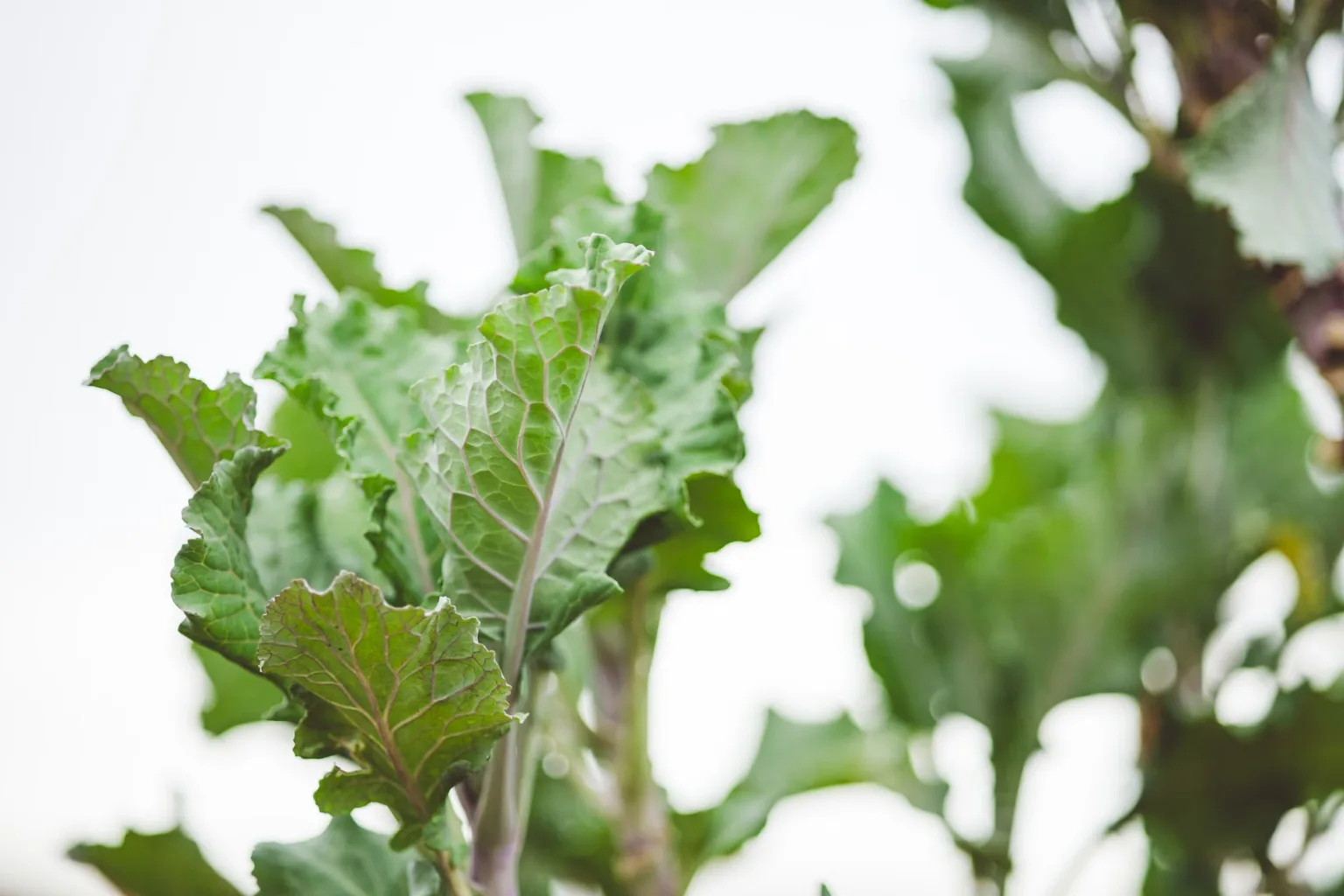
Kale is a leafy vegetable in the Brassicaceae family, which also includes other cabbages and broccoli. Varieties have curly, flatter, or purple-tinged leaves; familiar types include curly kale and lacinato, also called dinosaur kale for its textured surface. The leaves can be firm and substantial, and the central rib may be tough. Kale can be eaten raw or cooked, making it suitable for both salads and hot dishes. Its shape, color, and texture vary by variety, so not every bunch will have tightly curled leaves. Choose a preparation that suits the firmness of the leaves and stems.
When to use it
Use kale when you want a leafy green for a salad, soup, stew, pasta dish, stir-fry, or grain bowl. Raw leaves work in salads, and briefly massaging them can soften their texture. For a hot side dish, sauté them with garlic and oil; you can also add chopped leaves to soups, stews, pasta, or scrambled eggs. Separate leaves can be baked into crisp chips. If the central ribs seem too firm for your dish, remove them or add them to the pan before the leaves so they have more time to soften.
How to use it
Separate the leaves and rinse them well under cool water, paying attention to folds where soil can remain. Dry them with a salad spinner or clean kitchen towels. For a salad, chop or tear the leaves and briefly massage them to soften their texture; dress with lemon or a vinaigrette. For cooking, remove the central rib if you find it too tough, then chop the leaves. Sauté them with garlic and oil, stir them into soup or stew, mix them with pasta, or add them to scrambled eggs. To make chips, separate the leaves, season them, and bake until crisp. Add thicker stems earlier than the leaves if you plan to cook them too.
Flavour and texture
Kale has substantial leaves that may be smooth or curly depending on the variety. Raw leaves can feel firm and somewhat coarse; brief massaging helps soften them. The central rib is usually tougher than the leaf. Cooking makes the leaves more tender. Its green, vegetal character works with garlic, oil, lemon, and salad ingredients, while the precise flavor and texture vary with the variety and preparation.
How to choose it
Choose firm leaves with a rich color and no obvious damage, yellowing, or brown patches. Green kale should look fresh; purple varieties may show purple coloring on the leaves or stems. For a bunch, check that the leaves are not wilted and the stems do not look limp. Varieties differ in shape, color, and texture, so tightly curled leaves are not essential for a bunch to be kale.
Storage
Keep fresh kale unwashed in a clean bag in the refrigerator crisper and wash it just before use. If the leaves are wet, dry them before storage; excess moisture can speed deterioration. Storage guidance indicates that kale can keep refrigerated for several days, roughly up to five days or a week depending on its initial condition and storage conditions. Refrigerate cooked kale and use it within four days.
Substitutions
Other dark leafy greens can stand in for kale in a salad; lettuce gives a more tender texture and milder flavor. In soups, stews, or stir-fries, try another leafy vegetable and adjust the cut and cooking to suit its firmness. A substitute may change the finished texture and the time needed for the leaves to become tender.
Common mistakes
Do not store the leaves wet or wash them long before you need them; dry them for storage and rinse them just before preparation. Do not assume the central rib will soften as quickly as the leaf: remove it or add it earlier. In a salad, serving the leaves without softening them can result in a firmer texture than expected.
Safety and allergens
Separate the leaves and rinse them well under cool water before use, especially if they have visible soil. Keep fresh kale refrigerated and refrigerate cooked leftovers as well. Discard deteriorated leaves and follow food-safety guidance applicable in your area.
Culinary uses
- Leafy vegetable for salads and other raw dishes
- Cooked green for soups, stews, pasta, stir-fries, and side dishes
- Crisp baked snack when prepared as kale chips
Recommended techniques
- Rinse and dry the leaves; remove the tough central stems if preferred
- Massage chopped raw leaves briefly to soften them for salads
- Sauté, steam, or add chopped leaves to soups and pasta
- Bake separated leaves into crisp chips
Pairs well with
- Garlic and olive oil
- Lemon juice or vinegar
- Onions and other vegetables
- Pasta, rice, and other grains
- Eggs and potatoes
Frequently asked questions
Can kale be eaten raw?
Yes. Wash and dry the leaves before using them in salads or smoothies. For a softer salad texture, massage the leaves briefly.
Should I remove the stems?
It is optional, but the central rib can be tough. Remove it for a more tender texture, or add it to the pan before the leaves if cooking it.
How should I store fresh kale?
Keep it unwashed in a clean bag in the refrigerator crisper and wash it just before cooking. Dry the leaves first if they are wet.
Estimated nutrition
- Fat
- 0.88 g
- Saturates
- 0 g
- Carbohydrate
- 9.73 g
- Sugars
- 0 g
- Fibre
- 1.8 g
- Protein
- 3.54 g
- Salt
- 0.11 g
Sources and review
Automatically researched, cross-checked and validated content. Sources consulted:
- Client Challenge doi.org
- Nutrition After Your Transplant - Health Online healthonline.washington.edu
- EFNEP Hispanic Heritage Recipes | Community Nutrition | Extension/College of Agriculture, Health & Natural Resources | University of Connecticut communitynutrition.cahnr.uconn.edu
- The Happy Kitchen: Community Designed Cooking Classes digital.library.unt.edu
- Para la ciudadanía aesan.gob.es
- Cómo utilizar kale (col rizada) | Colorado State University Extension extension.colostate.edu
- Kale | UNL Food | Nebraska food.unl.edu
- Harvest of the Month: Kale – Health & Well-Being health.extension.wisc.edu
- Guides for beginning gardeners extension.oregonstate.edu
- Kale and Collard Greens - Spend Smart Eat Smart spendsmart.extension.iastate.edu
- Col kale | Gastronomía & Cía gastronomiaycia.com
- Kale: qué es, beneficios para la salud y usos en la cocina de esta col rizada bonviveur.com
- - YouTube youtube.com
- Col rizada, cruda (¿col rizada, orgánica?) | Fundación G+E diet-health.info
- Col rizada: una verdura versátil y nutritiva para tus platos de invierno – Fortini fortinigroup.es