- Category
- Vegetables
- State
- Preserved
- Usual unit
- g
What it is
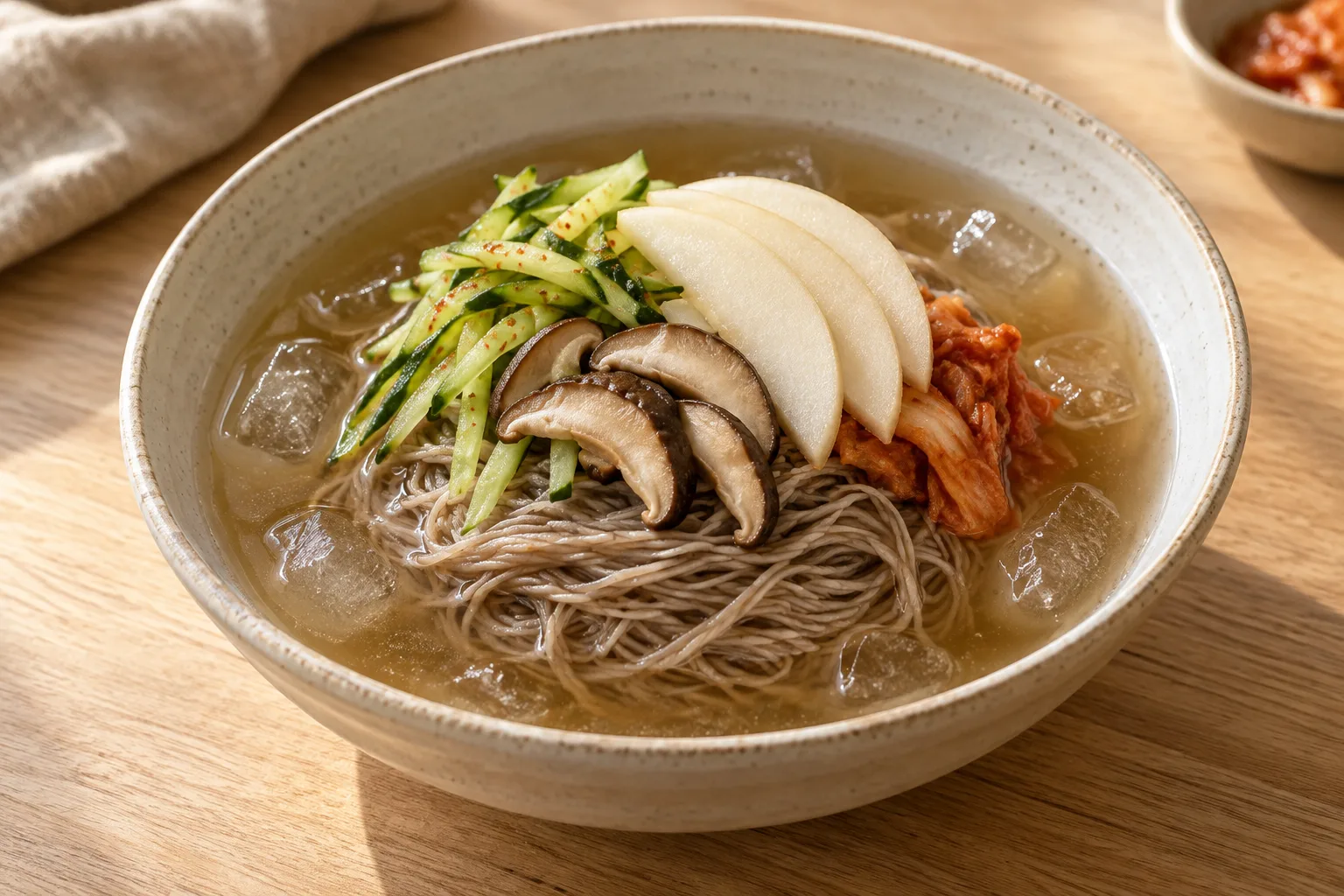
Kimchi is a preparation of salted, fermented vegetables associated with Korean cuisine. The best-known version is often made with napa cabbage, while radish and cucumber versions are also common. Garlic, ginger, and chili may contribute aroma and heat; some recipes include fish sauce, fermented fish, or salted shrimp, while others are entirely plant-based. Salting and fermentation give the vegetables a tangy, savory flavor and a texture that can range from crisp to tender. There is no single formula: ingredients, heat, and fermentation level differ from one product to another. For that reason, check the label rather than assuming every kimchi is vegetarian, equally spicy, or contains live cultures.
When to use it
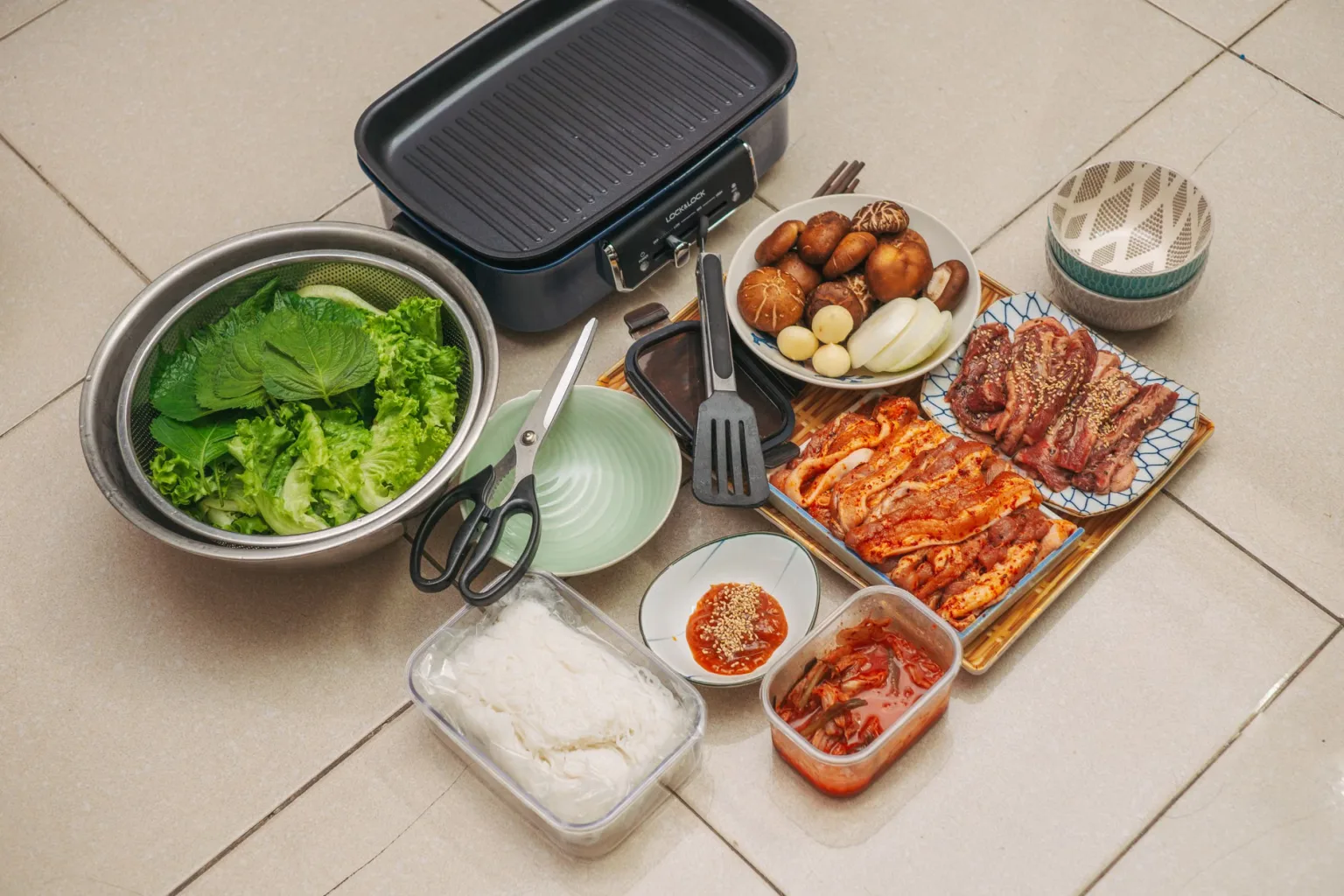
Use kimchi when you want to add acidity, salt, heat, and a pronounced fermented flavor to a meal. Serve a small portion as a side, especially alongside rice, noodles, eggs, or tofu, where it can contrast with milder foods. It is also useful as an ingredient when a dish needs a bold savory note without a separate sauce. Fresher, crunchier kimchi can stand out as a side; a more sour or softer batch can be chopped and mixed into cooked food. Since saltiness, heat, and acidity vary widely, taste it before adding more salt, chili, or acidic ingredients to the dish.
How to use it
Taste a small amount first to gauge its heat, acidity, and saltiness, then serve it directly as a side or chop it so it distributes evenly through a dish. Toss it with cooked rice or noodles, add it to eggs, or use it on tofu, sandwiches, and other mild foods. You can also stir it into soups, stews, or stir-fries for a fermented, spicy note; cooking blends its flavor into the dish and softens its texture. Adjust other seasonings only after tasting, since kimchi may already contribute considerable salt and acidity. If the package calls for refrigeration, keep it cold and follow its storage directions. Varieties and ingredients are not interchangeable, so check the ingredient list if you avoid fish, shellfish, or soy.
Flavour and texture
Kimchi commonly combines fermented tang, salt, and—when chili is used—heat. Garlic and ginger may stand out, while fish ingredients can add a deeper savory note. Cabbage often retains some bite, although it may soften as fermentation progresses. Intensity depends on the recipe and fermentation level, so not every kimchi tastes equally sour or spicy.
How to choose it
Read the ingredient list: the vegetable base and heat level vary, and some recipes contain fish sauce, salted shrimp, or soy. If you want a plant-based option, check that fish or shellfish ingredients are absent. Flavor and texture also change with fermentation. Choose a product that suits your intended use, and check whether the label says it must be refrigerated.
Storage
Follow the package storage directions and refrigerate kimchi when the label requires it. Use clean utensils for serving and close the container securely. Refrigeration slows fermentation, but the flavor may continue to change and become more sour over time. Do not assume every product has the same shelf life: consult the label and discard kimchi if it shows mold, has a clearly unpleasant odor, or develops an unusual texture.
Substitutions
Sauerkraut can stand in when you want fermented cabbage and acidity, though it usually does not reproduce kimchi’s combination of garlic, chili, and seasonings. Fermented radish or cucumber can provide a similar contrast if available. Quick-pickled cabbage offers acidity and crunch, but not the characteristic flavor of kimchi fermentation.
Common mistakes
Adding kimchi without tasting it first can make a dish too salty, sour, or spicy. Do not assume that every variety contains cabbage, is vegetarian, or has live cultures: check the ingredients and label. Cooking changes its texture, so add it near the end if you want to preserve more crunch.
Safety and allergens
Store the product according to its label and use clean utensils. If you see mold, notice a clearly unpleasant odor, or find an unusual texture, discard it rather than tasting it. If you need to avoid fish, shellfish, or soy, check the ingredients because some kimchi recipes include them.
Culinary uses
- side dish
- seasoning and flavoring ingredient
- vegetable component
Recommended techniques
- serve chilled or at room temperature as a side
- chop and fold into cooked dishes
- use as a topping
- stir-fry or simmer in a dish
Pairs well with
- rice
- noodles
- eggs
- tofu
- mild vegetables
- meat
Frequently asked questions
Is all kimchi spicy?
No. Heat depends on the recipe and the amount and type of chili; some varieties are mild or contain no chili.
Is kimchi always vegetarian?
No. Some recipes include fish sauce, fermented fish, or salted shrimp. Check the ingredient list if you need to avoid these ingredients.
Can you cook with kimchi?
Yes. Add it to soups, stews, stir-fries, rice, or noodles. Heating softens it and blends its flavor with the rest of the dish.
Ingredient allergens
Allergen listThere are no verified associations for these ingredients yet.
Estimated nutrition
- Fat
- 0 g
- Saturates
- 0 g
- Carbohydrate
- 4.71 g
- Sugars
- 2.35 g
- Fibre
- 1.2 g
- Protein
- 1.18 g
- Salt
- 0.85 g
Sources and review
Automatically researched, cross-checked and validated content. Sources consulted:
- Client Challenge doi.org/10.2307/jj.27939689.16
- Comité Científico www.aesan.gob.es/dam/jcr:ed009337-0085-4c40-8a9d-4941400ca954/comite_cientifico_35.pdf
- Food & Nutrition | Colorado State University Extension foodsmartcolorado.colostate.edu/food-safety/safe-preparation-handling-and-storage/1understan…
- Homemade Kimchi: A Science-Based Guide to Safe Fermentation | CAES Field Report fieldreport.caes.uga.edu/publications/C1362/homemade-kimchi-a-science-based-guide-to-safe-fe…
- Kimchi basics | OSU Extension Service extension.oregonstate.edu/catalog/sp50-1007-kimchi-basics
- Kimchi Basics and How to Make Homemade Kimchi | Home & Garden Information Center hgic.clemson.edu/kimchi-basics-and-how-to-make-homemade-kimchi/
- How to Recognize Fermented Foods | Nutrition med.stanford.edu/nutrition/education/Resources/Fermenting-the-Facts/How-to-Recognize-Ferment…
- Kimchi - Wikipedia, la enciclopedia libre es.wikipedia.org/wiki/Kimchi
- ¿Sabes qué es el kimchi? Aquí te contamos | Recetas Nestlé www.recetasnestle.com.ar/escuela-de-sabor/recetas-caseras/kimchi
- Qué es el kimchi: Receta, Benificio, Desventaja, Nutrición | OneSupermarket www.onesupermarket.es/blogs/guias/kimchi?srsltid=AYCX9vKT3PO_Jq5bGUF7DZ3w-1DJ_xN4XpR8jYCgjMD…
- Todo sobre el kimchi coreano: origen, beneficios, variedades y cómo prepararlo en casa koreanmarket.es/blog/descubriendo-el-kimchi/?srsltid=AYCX9vLoO1KYBHPtVqSgnadEb6c2ShVYhtR3F-a…
- El kimchi de forma sencilla: origen, sabor y efectos | FreshMAG de Liebherr www.liebherr.com/es-es/refrigeradores-congeladores/freshmag/ideas-de-refrigeraci%C3%B3n/kimc…
- Kimchi coreano: qué es, origen, recetas y ingredientes www.finedininglovers.es/explorar/noticias/que-es-el-kimchi-todo-sobre-la-preparacion-coreana
- - YouTube www.youtube.com/watch?v=6aYpniZ2G7Q
- Todo sobre el Kimchi: Beneficios, Recetas y Curiosidades... www.google.com/goto?url=CAESlAEB6zswFfGlEVzqrK_mJkmAkT-jbSuNRIFg0FdO__1VrvP5egkm2NxfgZqOWiyJ…