- Category
- Vegetables
- State
- Fresh
- Usual unit
- unit
What it is
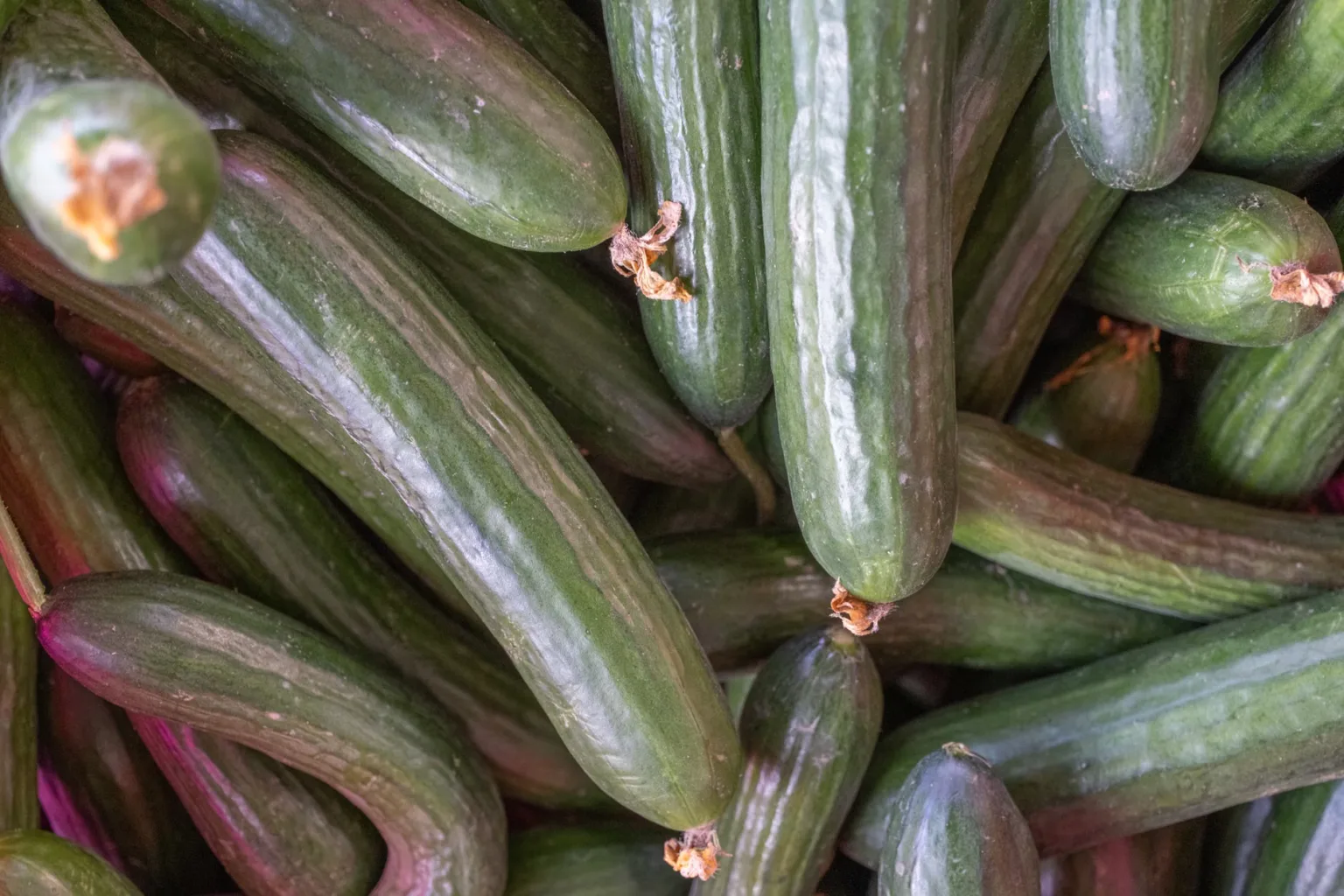
Here, Lebanese cucumber is treated as a fresh slicing cucumber. The common cucumber, Cucumis sativus, belongs to the cucurbit family and is used as a vegetable in cooking, although botanically it is a fruit. The name “Lebanese” alone does not establish that every cucumber sold under that name has the same size, shape, skin or number of seeds. Assess the cucumber you have and use it according to its texture and flavor. In the kitchen, it adds freshness and crunch without needing to be cooked. Slice it for salads and sandwiches or blend it into cold dishes. If it tastes intensely bitter, do not try to mask the flavor with other ingredients; discard that cucumber and choose another.
When to use it
Use it when you want freshness and a crisp bite in a meal, especially in salads, sandwiches, cold dishes and sauces. Its mild, watery flavor can accompany salty, tangy or spiced ingredients without requiring cooking. It is also handy in blended chilled soups. Cucumbers can vary in skin, seeds and texture, so check the individual cucumber before using it in a recipe where it takes center stage. If you want firm slices, choose one that feels taut rather than soft.
How to use it
Rinse the cucumber and dry it before cutting. For a salad, slice or dice it and combine it with tomato, herbs, oil and a tangy dressing; for sandwiches, use thin slices that are easy to bite through. You can also blend it with yogurt, garlic and herbs for a sauce or chilled dish, or add it to cold soup. If seasoning it on its own, add salt shortly before serving. Taste a piece before mixing it into the rest: intense bitterness can dominate a dish, so it is better to discard that cucumber than try to disguise its flavor. Peel it if the skin seems thick or if you prefer a more delicate texture.
Flavour and texture
Cucumber is usually mild and fresh-tasting, with watery flesh and a crisp texture when firm. The skin can be thinner or thicker from one cucumber to another, so decide whether to peel it based on the result you want. Some cucumbers can be very bitter; taste a piece before adding it to a large preparation so it does not overwhelm the other flavors.
How to choose it
Choose a firm cucumber with fresh-looking skin and no soft areas, conspicuous blemishes or dry ends. A limp or dull-looking cucumber may have a less pleasant texture. Size and skin vary among types, so do not judge quality by shape alone. If you can taste it, try a small piece before using it in a recipe where cucumber will stand out.
Storage
Keep fresh cucumber in the refrigerator and aim to use it within the days after purchase. Leave it whole until needed; once cut, cover it and use it soon, since cutting shortens its keeping time. Avoid exposing it to temperature extremes. Do not freeze fresh cucumber if you want to retain a crisp texture, since freezing is not suitable for preserving that texture.
Substitutions
If Lebanese cucumber is unavailable, use another fresh slicing cucumber, such as an English cucumber. Size, skin and seeds may differ, so adjust the cut and peel the substitute if its skin seems thick. Pickling cucumbers are not always interchangeable; their texture and intended use may differ from those of a fresh slicing cucumber.
Common mistakes
Do not assume every cucumber has the same skin, size or number of seeds. Avoid adding a very bitter cucumber to a whole salad or soup, where it may overpower the dish. Do not cut it far ahead of serving if you want it to stay crisp; leave it whole until you are ready to prepare it.
Safety and allergens
Do not eat a cucumber with an intensely bitter flavor; discard it and choose another. Do not use one with obvious deterioration.
Culinary uses
- Fresh, crisp ingredient for salads and sandwiches
- Cooling component in cold soups and sauces
Recommended techniques
- Slice or dice and serve raw
- Blend into cold soups or sauces
- Salt shortly before serving to season
Pairs well with
- Tomato, olive oil and vinegar
- Yogurt, mint and garlic
- Lemon and fresh herbs
Frequently asked questions
Can Lebanese cucumber be eaten raw?
Yes. Slice it into salads and sandwiches, or blend it into a cold soup or sauce.
Does Lebanese cucumber need to be peeled?
Not necessarily. Skin varies between cucumbers; peel it if it is thick or if you prefer a more delicate texture.
What should I do if it tastes very bitter?
Do not mix it into a large dish. Discard that cucumber and taste another before using it.
Ingredient allergens
Allergen listThere are no verified associations for these ingredients yet.
Sources and review
Automatically researched, cross-checked and validated content. Sources consulted:
- Client Challenge doi.org/10.2307/jj.27939689.16
- Pepino: propiedades y variedades - CocinoPedia.com cocinopedia.com/enciclopedia-gastronomica/pepino/
- El pepino, es la base de nuestra alimentación y gastronomía www.lechepuleva.es/blog/pepino/
- Client Challenge doi.org/10.2307/j.ctt1zgwmmb.4
- Historia de la gastronomía - Wikipedia, la enciclopedia libre es.wikipedia.org/wiki/Historia_de_la_gastronom%C3%ADa
- Pepino, la hortaliza más refrescante del verano: propiedades, beneficios y cómo usarlo en la cocina www.directoalpaladar.com/ingredientes-y-alimentos/pepino-hortaliza-refrescante-verano-propie…
- Neologismes documentats en textos escrits i orals en castellà ( ... repositori.upf.edu/server/api/core/bitstreams/6f3d04a4-7d61-4e58-bdc6-9da5a5a4de73/content
- Los pepinos en la cocina mediterránea www.abc.es/gurme/sevilla/sevi-los-pepinos-en-la-cocina-mediterranea-201106072200_noticia.htm…
- Pepino, el ingrediente estrella de la dieta mediterránea que no debe faltar en tus comidas www.elespanol.com/cocinillas/recetas/20211227/pepino-ingrediente-estrella-mediterranea-no-fa…
- Ingredientes que maridan con pepino ✓ basmatic.com/maridaje/pepino
- Conoce los sabores de la comida libanesa | Recetas Nestlé www.recetasnestle.com.ec/escuela-sabor/coccion-tecnica/comida-libanesa
- Choisir le vin au restaurant libanais comme un chef – Flakon flakon.com/es/blogs/noticias/el-vino-en-el-restaurante-las-especialidades-libanesas