- Category
- Vegetables
- State
- Fresh
- Usual unit
- unit
What it is
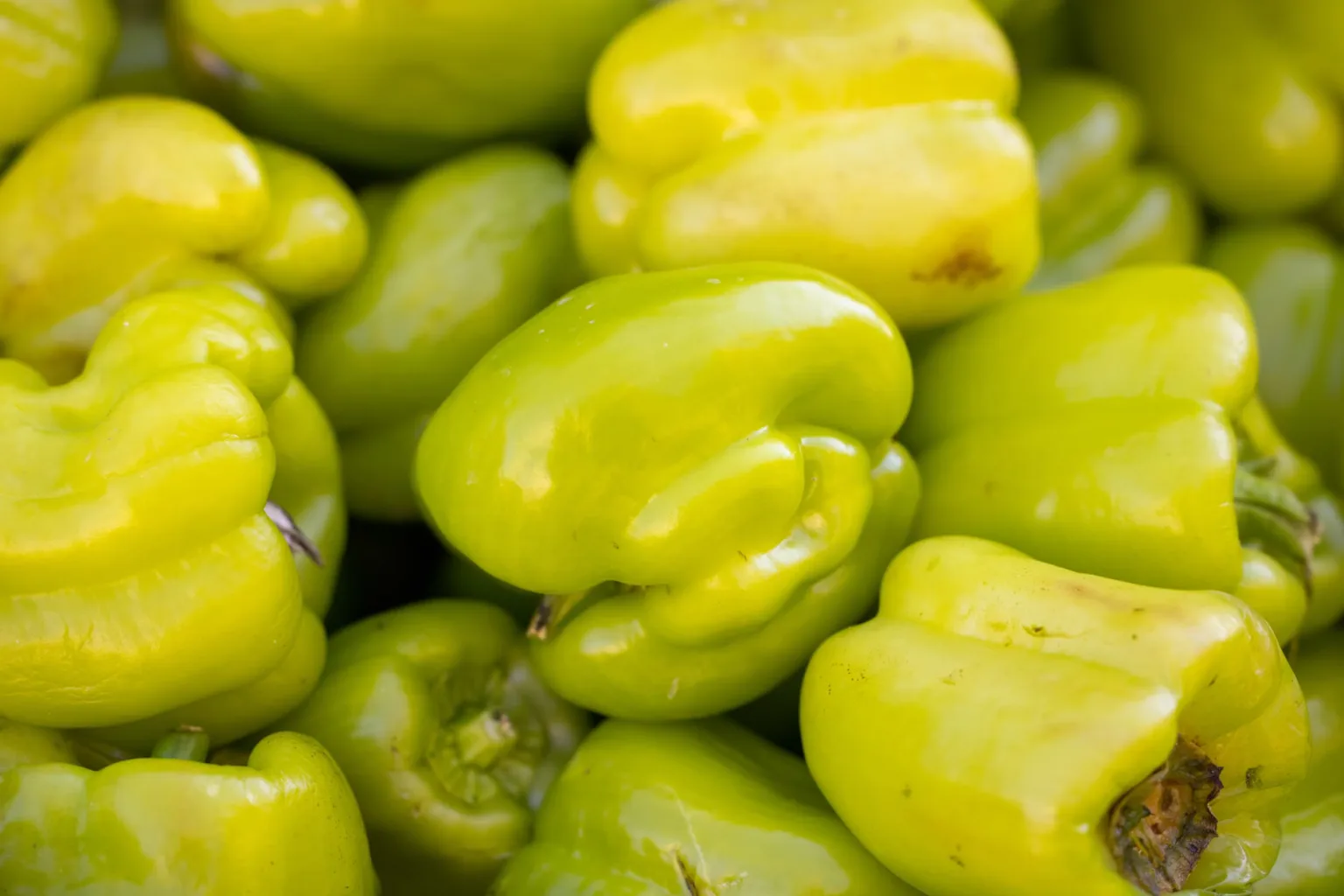
A medium green bell pepper is the fresh fruit of a Capsicum plant, used as a vegetable in cooking. Green color commonly indicates that a sweet pepper was picked before reaching the color and maturity of a red pepper, so its flavor is generally less sweet and may be slightly bitter. A medium-sized pepper is handy for slicing, sautéing, or stuffing, although shape and flesh thickness vary by variety. It is not the same as black pepper, and the name “pepper” does not mean every Capsicum fruit is sweet: some varieties are hot. This profile refers to a sweet, bell-shaped green pepper.
When to use it
Use it raw when you want a fresh, crisp bite in a salad or as a snack with a dip. Cook it when you want a vegetal note in a sauté, stew, or mixed vegetable dish. Its less-sweet flavor than a red pepper can suit recipes where you do not want as much sweetness or ripeness. It can also be roasted, fried, or stuffed; the pepper’s shape and the cooking method matter, so choose a firm, broad pepper for stuffing. If a recipe calls for another sweet pepper, green bell pepper is often a useful alternative, but the finished dish will differ in color and flavor.
How to use it
Wash the pepper before preparing it. For a salad or snack, remove the stem and seeds, then slice or dice the flesh. For sautéing or frying, cut it into similar-sized pieces so they cook evenly; it can also go into a mixture with tomatoes, onions, garlic, or other vegetables. To roast it, cook until the flesh is tender and serve it as a side or use it in a vegetable dish. To stuff it, remove the stem and seeds, add your chosen filling, and cook until the dish is done. Leftover pepper can be frozen raw or blanched; its texture will change, so frozen pepper is often more useful as an ingredient in cooked dishes.
Flavour and texture
Sweet green bell pepper tastes vegetal and is less sweet than a mature red pepper; it may have a slightly bitter note. Raw, its flesh is fresh and crisp, and its hollow shape makes it easy to cut into strips or dice. Cooking softens the texture, while the flavor varies with the technique: roasting, frying, and sautéing give different results. Sweetness and flesh thickness also vary among pepper varieties, so green peppers do not all behave identically in a recipe.
How to choose it
Choose a firm pepper with green color and no soft spots, bruises, or visible damage. If you plan to stuff it, look for a shape that can hold a filling and enough flesh to suit the preparation. Shape matters less for salads or sautés, so prioritize firmness. Green color commonly indicates that the pepper was picked before ripening to red, so do not expect the same sweetness as a red pepper.
Storage
The available evidence does not establish a specific storage period or detailed storage conditions for a fresh pepper. For longer keeping, you can freeze it raw or blanched, whole or cut, and save it for cooking. Frozen pepper will not retain exactly the same texture as fresh pepper, so it is practical as an ingredient in cooked dishes. Do not improvise home canning: peppers are low-acid, and incorrect canning can be dangerous; use a tested recipe and the specified equipment.
Substitutions
You can replace it with another sweet pepper, such as a red or yellow one, when the recipe can accommodate a change in flavor and color. Red pepper is usually sweeter because it is more mature, so it is not a flavor-identical substitute. You can also choose another sweet variety to suit the shape you need, but a long, thin pepper may not work like a broad one for stuffing. Do not mistake a sweet pepper for a hot variety.
Common mistakes
Do not assume a green pepper will taste as sweet as a mature red one: it is usually less sweet and may be slightly bitter. Do not assume every variety works equally well for every technique; shape and flesh thickness matter, especially for stuffing. Avoid improvising room-temperature jar canning: peppers are low-acid and require a validated process. If you freeze the pepper, expect its texture to change.
Safety and allergens
Wash the pepper before cutting or cooking it. Do not home-can peppers using an improvised method: because they are low-acid, incorrect canning can cause botulism; follow a tested recipe from a competent authority. If you substitute a hot pepper for the sweet one, wear gloves when handling it and wash your hands before touching your face.
Culinary uses
- Crunchy raw addition to salads and vegetable snacks
- Aromatic vegetable for sautés, sauces, and mixed dishes
- Vegetable to roast, fry, or stuff
Recommended techniques
- Eat raw, sliced or diced
- Sauté or fry
- Roast or grill
- Stuff and bake
Pairs well with
- Tomatoes
- Onions and garlic
- Carrots, zucchini, or broccoli
- Beans, corn, and avocado
Frequently asked questions
Is a green bell pepper less sweet than a red one?
Usually, yes. Green peppers are commonly picked before they reach the maturity and red color of a red pepper, and their flavor tends to be less sweet.
Can you eat green bell pepper raw?
Yes. Slice or dice it for salads and snacks; its raw texture is fresh and crisp.
Can green bell pepper be frozen?
Yes. It can be frozen raw or blanched, whole or cut. Its texture changes, so it is often more useful afterward in cooked dishes.
Ingredient allergens
Allergen listThere are no verified associations for these ingredients yet.
Sources and review
Automatically researched, cross-checked and validated content. Sources consulted:
- The Essential Glossary of Cooking Terms for the Culinary Arts - Escoffier www.escoffier.edu/blog/culinary-arts/the-essential-glossary-of-cooking-terms-for-the-culinar…
- Pimientos: variedades y usos en cocina - CocinoPedia.com cocinopedia.com/enciclopedia-gastronomica/pimientos-tipos-y-usos/
- El Pimiento Verde. Un ingrediente tradicional - Restaurante La Española restaurantelaespanola.es/el-pimiento-verde-un-ingrediente-tradicional/
- Usos culinarios apropiados de las variedades de plátano verde barraganete, dominico y maqueño, en la gastronomía ecuatoriana. | Revista de Gastronomía y Cocina doi.org/10.70221/rgc.v4i2.97
- EFNEP Hispanic Heritage Recipes | Community Nutrition | Extension/College of Agriculture, Health & Natural Resources | University of Connecticut communitynutrition.cahnr.uconn.edu/efnep-hispanic-heritage-recipes/
- El Pimiento Y Su Importancia En La Gastronomía Española - Restaurante Romero restaurante-romero.es/el-pimiento-y-su-importancia-en-la-gastronomia-espanola/
- El pimiento ecológico: un ingrediente principal en nuestras cocinas www.afuegolento.com/articulo/el-pimiento-ecologico-ingrediente-principal-nuestras-cocinas/51…
- Conservando los Coloridos Pimientos del Huerto extension.psu.edu/conservando-los-coloridos-pimientos-del-huerto/
- Food & Nutrition | Colorado State University Extension foodsmartcolorado.colostate.edu/category/recipes-and-how-tos/recipe-index/pantry-staples-and…
- 4 diferencias entre el pimiento verde y el pimiento rojo - Ametller Origen www.ametllerorigen.com/es/blog/diferencias-entre-el-pimiento-rojo-y-el-pimiento-verde/
- Chiles/Pimientos (Spanish) - National Center for Home Food Preservation nchfp.uga.edu/how/can/canning-vegetables-and-vegetable-products/chiles-pimientos-spanish/
- Preserving peppers | Servicio de Extensión de OSU extension.oregonstate.edu/es/catalog/sp-50-454-preserving-peppers
- Pimientos dulces, verdes (¿crudos, orgánicos?) | Fundación G+E www.diet-health.info/es/recetas/ingredientes/in/yr3300-pimiento-verde-crudo
- Basque Recipe: Pimientos Rellenos | Smithsonian Folklife Festival festival.si.edu/blog/2015/basque-recipe-pimientos-rellenos