- Category
- Pulses
- State
- Dry
- Usual unit
- g
What it is
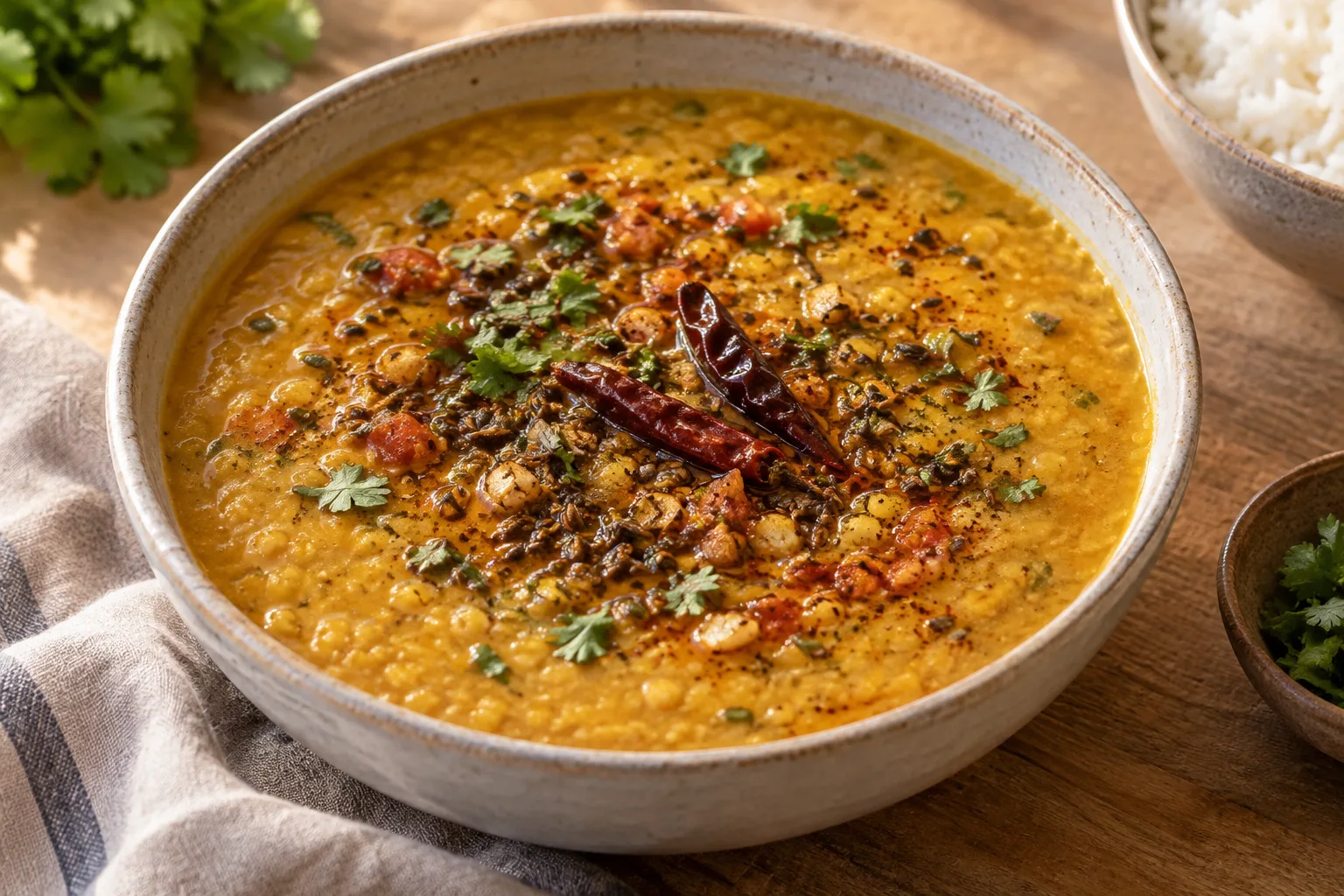
Moong dal is a South Asian cooking name for mung bean prepared as a dried pulse, often split and skinned. The skinned form is usually yellow; the skin-on form is green, and whole beans are also sold. These forms are not identical: they differ in how readily they soften and whether they keep their shape or break down into a creamy dish. Dal can also mean the cooked dish, not just the ingredient. Check the product description and appearance, since naming on packages and in shops can vary. This ingredient is a dry pantry staple, rather than a fresh vegetable or a cooked, ready-to-eat product.
When to use it
Use moong dal when you want a mild base for dal, soup or stew, or a pulse that can become tender and creamy. Split, skinned dal suits dishes cooked until the beans soften and break down; whole or skin-on forms are useful when you want more texture. It can also be cooked with rice in dishes such as khichdi. Choose the form to match the consistency you want, and cook it until fully tender. Its gentle flavor works well with assertive aromatics, so it is a practical choice for meals seasoned with spices, onion, garlic or ginger.
How to use it
Before cooking, spread out the beans and remove any visible stones or debris, then rinse well. Put the dal in a pot with water or stock and simmer until fully tender. The amount of liquid and cooking time depend on the form of the bean and the texture you want, so check as it cooks and add more liquid if needed. For a more flavorful dish, cook onion, garlic, ginger and spices such as cumin or turmeric separately in a little oil, then stir this mixture into the dal. Add tomato or spinach if desired. Serve with rice and finish with fresh cilantro. Avoid tasting or serving the beans before they are fully cooked.
Flavour and texture
Moong dal is generally mild, so it takes on the flavor of spices and aromatics without overwhelming them. When cooked, it may retain some shape or become soft and creamy, depending on whether it is whole, skin-on, split or skinned, and on how long it cooks. Yellow split dal readily blends into soups and purées; the skin can contribute a more noticeable texture. Do not assume every package will produce the same consistency, and adjust the liquid and cooking to suit the form you have.
How to choose it
Choose a dry product with clean-looking beans and no visible moisture, mold, insects or obvious damage. Read the label to tell whole beans from split ones and to check whether the skin remains: skinned moong dal is usually yellow, while skin-on dal is green. Do not rely on the name alone, because the use of “dal” can vary. Select the form that suits your intended texture, and check that the package is sealed and intact. Avoid products with signs of dampness or pests.
Storage
Keep dry moong dal in a clean, airtight container, protected from light in a cool, dry place. Keeping moisture out helps prevent spoilage. Inspect the beans before use and discard any showing signs of dampness, mold or infestation. Once cooked, treat the dal as prepared food: refrigerate leftovers promptly in a covered container and do not leave them at room temperature for extended periods. Keep raw dry beans separate from cooked leftovers and use clean utensils when handling them.
Substitutions
For soups and creamy dishes, split red lentils or yellow lentils can stand in for moong dal; the flavor and texture will not be identical. Split pulses may break down differently, so check the pot as they cook and adjust the liquid to reach the consistency you want. The result may differ more in dishes where the beans are expected to retain their shape. Choose a dry substitute and cook it fully before serving.
Common mistakes
Do not mistake moong dal for a lentil: it is mung bean, although some cooked versions can resemble lentil purée. Do not assume every product called moong dal is skinned or split; check the label and appearance. Avoid serving it raw or undercooked. If you use too little liquid and do not check the pot, the beans may stick before they soften. Adjust the texture after the beans are tender, rather than judging it only while they are still firm.
Safety and allergens
Do not eat dry moong dal raw or partly cooked. Like other dried pulses, it needs to be cooked thoroughly before eating. Before cooking, check and rinse the beans to remove debris or foreign particles. Discard the product if it shows signs of dampness, mold or pests, and refrigerate cooked leftovers promptly.
Culinary uses
- Base for dals, soups and stews
- Thickener for soft, creamy dishes
- Ingredient in rice-and-legume dishes such as khichdi
Recommended techniques
- Sort and rinse before cooking
- Simmer in water or stock until fully tender
- Cook with aromatics and spices, then adjust the consistency
Pairs well with
- Rice
- Cumin, turmeric, ginger and garlic
- Tomato, spinach and fresh cilantro
Frequently asked questions
Is moong dal the same as mung bean?
Moong dal usually means dried mung bean, often split and skinned. Whole and skin-on forms are also available, so check the package.
Does moong dal need soaking?
Preparation depends on whether it is whole, split or skinned. Follow the package directions; whichever form you use, rinse it and cook it thoroughly.
What can I use instead of moong dal?
Split red or yellow lentils can work in soups and creamy dals. They change the flavor and texture, so adjust the liquid and cooking as needed.
Ingredient allergens
Allergen listThere are no verified associations for these ingredients yet.
Estimated nutrition
- Fat
- 20 g
- Saturates
- 3 g
- Carbohydrate
- 50 g
- Sugars
- 0 g
- Fibre
- 5 g
- Protein
- 20 g
- Salt
- 1.48 g
Sources and review
Automatically researched, cross-checked and validated content. Sources consulted:
- Client Challenge doi.org/10.2307/jj.27939689.16
- The Essential Glossary of Cooking Terms for the Culinary Arts - Escoffier www.escoffier.edu/blog/culinary-arts/the-essential-glossary-of-cooking-terms-for-the-culinar…
- Storing Dry Beans | USU extension.usu.edu/preserve-the-harvest/dev/storing-dry-beans-1
- Lentils • The Nutrition Source nutritionsource.hsph.harvard.edu/food-features/lentils/
- Urad dal | CreatiVegan.net creativegan.net/archives/urad-dal/
- Dal (alimento) - Wikipedia, la enciclopedia libre es.wikipedia.org/wiki/Dal_(alimento)
- Learning to Love Lentils - Tufts Health & Nutrition Letter www.nutritionletter.tufts.edu/general-nutrition/learning-to-love-lentils-2/
- Shipra Khanna, cuisine chef | Le Cordon Bleu Paris www.cordonbleu.edu/paris/shipra-khanna-cuisine-chef/en
- On the Move to Better Health Teen Cooking School Workbook -- Focus on Pulse Foods | NDSU Agriculture www.ndsu.edu/agriculture/extension/publications/move-better-health-teen-cooking-school-workb…
- A Panoramic View From the Interior of the Later Spanish Church | ClipVR ETC etc.usf.edu/clipvr/376-a-panoramic-view-from-the-interior-of-the-later-spanish-church?xml=da…
- Moong Dal (Mung Daal, ¿orgánico?, ¿crudo?) | Fundación G+E www.diet-health.info/es/recetas/ingredientes/in/tk9433-moong-dal-judias-mungo-partidas-por-l…
- Beneficios para la salud del Moong Dal para la digestión y el bienestar www.apollohospitals.com/es/health-library/health-benefits-of-moong-dal
- Dal de porotos mung veggiefestchicago.org/es/recipe/moong-dal/?amp=
- Lentejas y dal explicados: guía de compra para principiantes – Desi Gourmet desigourmet.es/blogs/recetas-de-comida-india/lentejas-y-dal-explicados-guia-de-compra-para-p…
- Dal, daal, dahl o dhal | Gastronomía & Cía www.gastronomiaycia.com/dal-daal-dahl-o-dhal/amp/
- Moong Dal - Spice and Colour www.spiceandcolour.com/moong-dal/