- Category
- Pulses
- State
- Dry
- Usual unit
- cup
What it is
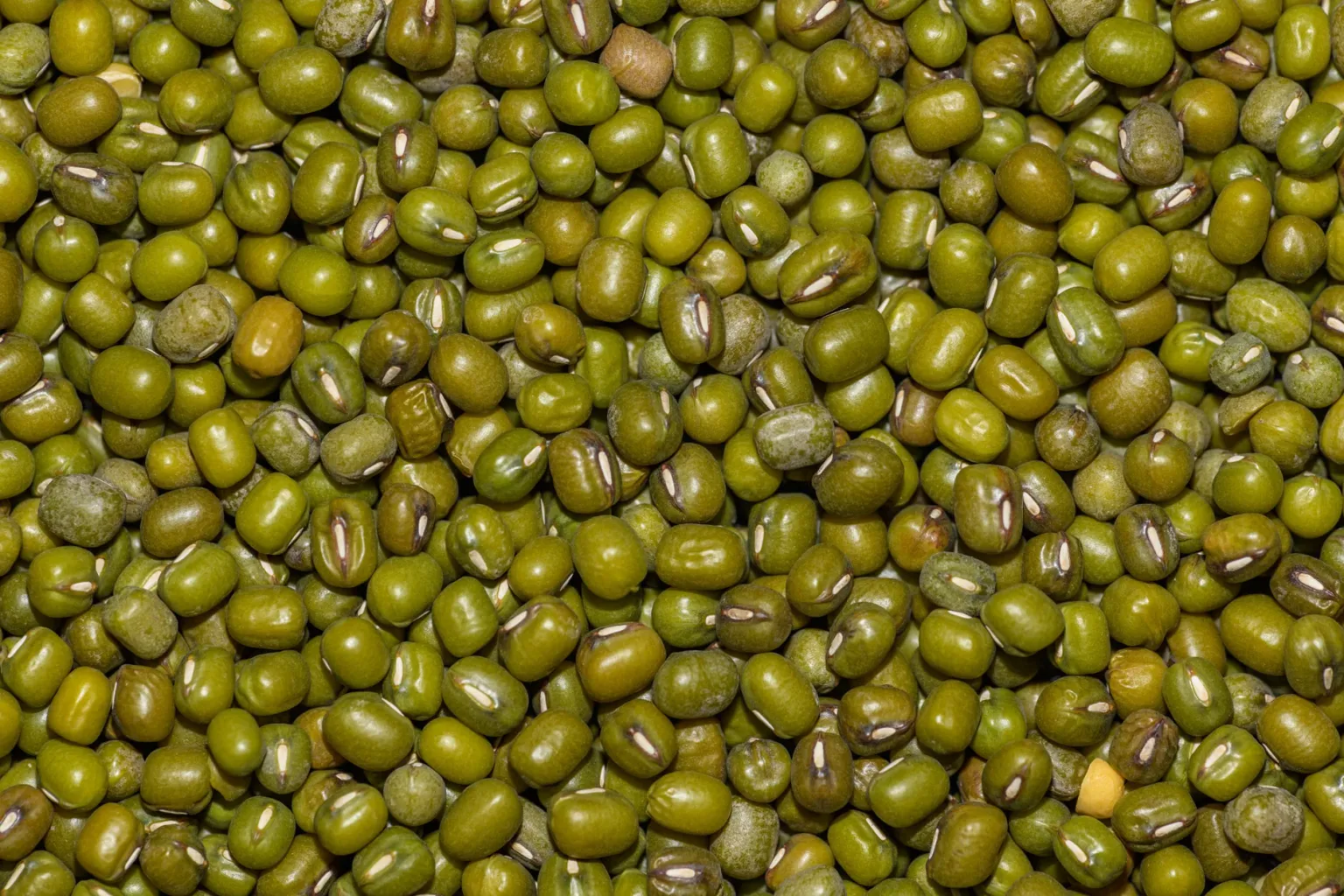
Peeled mung beans are dried mung seeds with their outer coat removed. Mung beans are legumes identified as Vigna radiata. They need to be cooked before eating; dried beans are not a ready-to-eat raw food. Once cooked, mung beans have a mild, slightly nutty flavor that works well with vegetables and aromatic seasonings. They can form the base of dals, soups, stews and curries, or be mashed into a purée. This profile is for the peeled, dried seed, not mung bean sprouts or mung bean flour, which are different products with different uses.
When to use it
Choose peeled mung beans when you want a dried legume for a warm meal, dal, soup, stew or curry. Their mild flavor pairs well with vegetables and aromatic seasonings, and cooked beans can also be mashed for a purée. They are an option for vegetarian or vegan dishes that call for cooked legumes. Soaking can be part of preparation, but there is no need to assume one universal soaking or cooking time: follow the package directions and check the beans for tenderness as they cook.
How to use it
Sort through the beans and rinse them with clean water. If you wish, soak them before cooking; then drain, cover with fresh water and cook until tender. Cooking time can vary, so use the texture and package directions as your guide. Add the cooked beans to a soup, stew, curry or dal, or drain them and serve as a side. For a smoother result, mash or blend the cooked beans and season with garlic, lemon or spices. Add onion, ginger, spinach, carrots or peppers, and adjust the seasoning near the end. Do not eat the dried seeds raw.
Flavour and texture
Cooked mung beans have a mild flavor with a slight nutty note, leaving room for spices, herbs and vegetables to stand out. Cook them until tender for use in brothy dishes, or mash them for a more uniform preparation. The result depends on the cooking method and recipe, so check the texture rather than assuming every peeled batch behaves identically.
How to choose it
Look for a product labeled peeled mung beans and check that the package is intact and clean. Read the label for soaking instructions and cooking guidance. Do not mistake peeled beans for whole mung beans, mung bean sprouts or mung bean flour: these are different products and are not used in exactly the same way. Choose a different package if it is damp, torn or appears contaminated.
Storage
Keep dried beans in a clean, tightly sealed container in a cool, dry place. Protect them from moisture and pests. Follow the package directions, especially after opening, and discard the beans if you find dampness, mold, insects or an unusual smell. Once cooked, do not leave them at room temperature for extended periods; refrigerate in a covered container and follow local food-storage guidance.
Substitutions
Red lentils can replace mung beans in some soups, stews or dals, though the flavor and consistency may change. Whole mung beans are another option if the recipe can accommodate their skins and a different texture. Adjust the liquid and cooking according to the ingredient you choose; do not assume all legumes cook alike.
Common mistakes
Do not taste the dried beans raw or assume that soaking makes them ready to eat: they still need to be cooked. Avoid relying on a fixed cooking time without checking tenderness, as products and recipes can vary. Do not confuse peeled beans with mung bean sprouts or flour, which have different uses.
Safety and allergens
Cook the beans before eating; do not eat the dried seeds raw. Discard the product if it shows mold, dampness or other signs of spoilage.
Culinary uses
- Base for dals, soups and stews
- Ingredient for curries and purées
- Legume for side dishes and bowls
Recommended techniques
- Rinse and cook in water until tender
- Soak before cooking if desired
- Mash or blend cooked beans into a purée
Pairs well with
- Onion, garlic and ginger
- Spinach, peppers, carrots and leeks
- Cumin, coriander, turmeric and chili
- Lime or lemon and fresh cilantro
Frequently asked questions
Do peeled mung beans need soaking?
You can soak them before cooking, but follow the package directions and check when the beans are tender.
Can I eat them raw?
Do not eat the dried seeds raw. Cook them before eating.
How can I use peeled mung beans?
Add them to dals, soups, stews and curries, or mash the cooked beans to make a purée.
Ingredient allergens
Allergen listThere are no verified associations for these ingredients yet.
Estimated nutrition
- Fat
- 0.09 g
- Saturates
- 0.02 g
- Carbohydrate
- 3.6 g
- Sugars
- 2.84 g
- Fibre
- 0.8 g
- Protein
- 2.03 g
- Salt
- 0.62 g
Sources and review
Automatically researched, cross-checked and validated content. Sources consulted:
- ¿Por qué la muerte es origen de miedos y tabúes? doi.org/10.64628/aao.fccyk3qj3
- Client Challenge doi.org/10.2307/jj.27939689.16
- Alubia carilla - Wikipedia, la enciclopedia libre es.wikipedia.org/wiki/Alubia_carilla
- Frijoles mungo, crudos (orgánicos) | Fundación G+E www.diet-health.info/es/recetas/ingredientes/in/wv5613-judia-mungo-semilla-madura-cruda
- Frijol mungo – DRV+ drv.co/es/pages/mung-bean
- ¿Dónde se produce el frijol mungo en el mundo? – Agropecuaria San Marino www.agropecuariasanmarino.com/donde-produce-frijol-mungo
- frijol mungo(Una planta de la Familia Fabaceae, del género Vigna.)_Baidu Enciclopedia baike.baidu.com/es/item/frijol%20mungo/1329486
- - YouTube www.youtube.com/watch?v=OtqgcS1Peww
- Receta de sopa de frijoles mungo con verduras | Veggie Fest veggiefestchicago.org/es/recipe/cooking-under-pressure-mung-beans-with-veggies-soup/