- Category
- Meat
- State
- Fresh
- Usual unit
- g
What it is
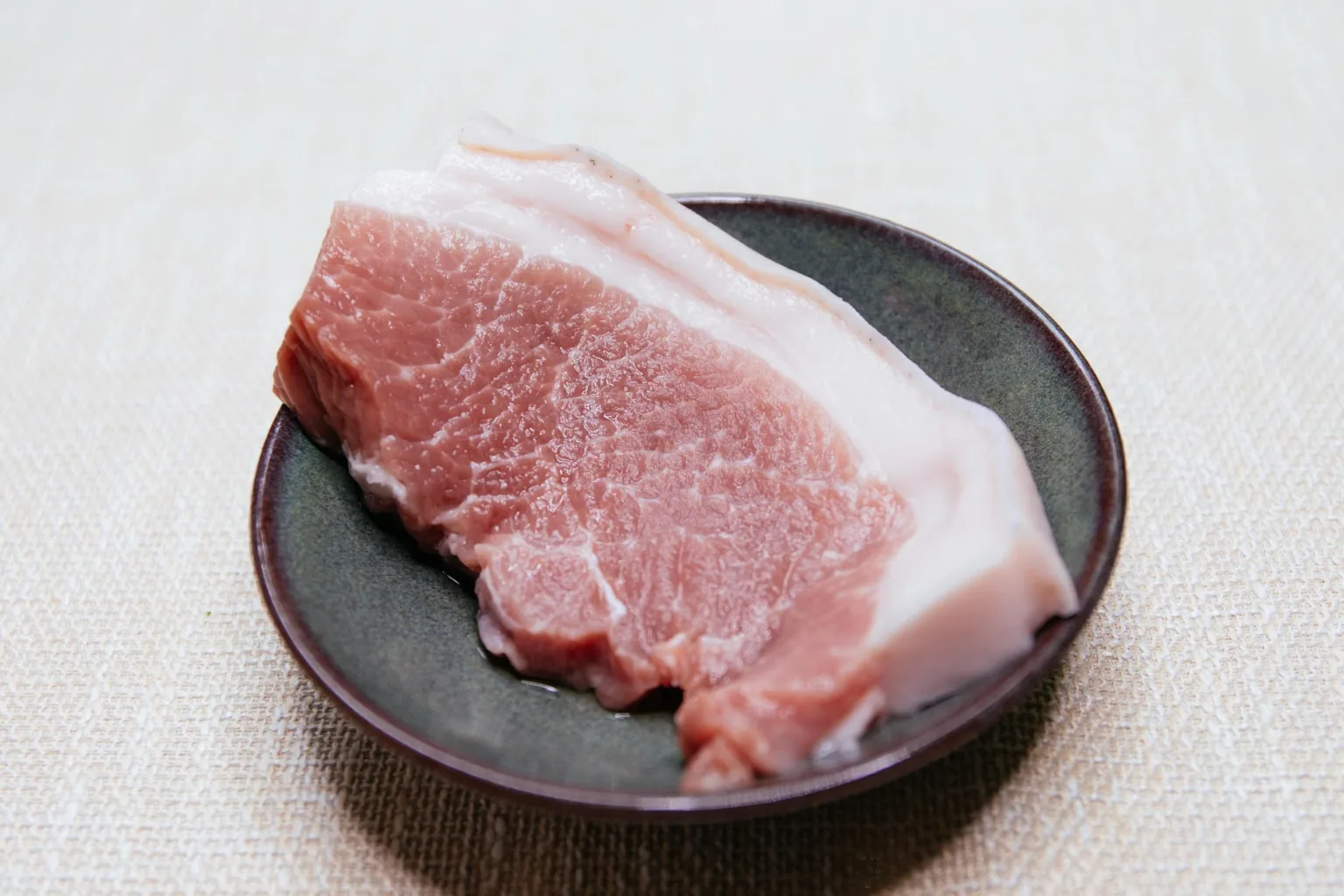
Pork is meat from pigs, sold fresh as whole cuts or in forms such as ground pork. Different cuts behave differently in the kitchen: loin is commonly described as relatively lean and tender, while shoulder and leg cuts are fattier and are used in longer-cooking preparations. Ribs are often roasted, grilled or smoked. It is therefore useful to choose the cut for the dish and cooking method rather than assume every cut is interchangeable. This profile covers fresh pork; cured, smoked or otherwise prepared pork products may have different instructions for buying, storage and use.
When to use it
Choose pork for a roast, a grilled dish or a stew. A tender, relatively lean cut such as loin may suit quicker preparations, while fattier cuts such as shoulder or leg are used for longer cooking. Ribs work in roasted, grilled or smoked preparations. The form of the meat matters too: ground pork is handled and stored differently from a whole cut, so check which form your recipe calls for before you begin. The available evidence does not establish a particular season for pork availability.
How to use it
Choose a cut suited to the cooking method and keep it refrigerated until you are ready to prepare it. Follow a recipe appropriate to the cut for roasting or grilling; for fattier or firmer pieces, consider a stew or longer cooking. You can also cut the meat into portions or use ground pork in recipes that call for it. Wash your hands thoroughly before and after handling raw pork, and keep the meat and its juices away from ready-to-eat foods. Use clean utensils and surfaces, and never put cooked meat on a plate that held raw pork. Cook it thoroughly according to a reliable recipe and refrigerate leftovers.
Flavour and texture
Flavor and texture vary with the cut and its fat content. Loin is generally relatively lean and tender; cuts such as shoulder and leg are fattier and can remain juicy in longer-cooking dishes. Ribs offer a different eating experience because of the meat around the bone. Browning, doneness and final texture depend on the cut and the cooking method.
How to choose it
Choose packages that feel cold and are intact, with no punctures. Fresh pork should be firm and grayish-pink, with relatively little exterior fat; a little marbling can contribute to flavor and tenderness. Select the meat near the end of your shopping trip and keep it separate from other foods so its juices cannot contaminate them. Check any dates and handling instructions on the package.
Storage
Refrigerate or freeze fresh pork as soon as you get home; keep it below 40°F (about 4°C) and separate from cooked foods. As a guide, fresh whole cuts may be kept in their original wrapping in the refrigerator for up to four or five days, while ground pork may be kept for up to two days. If you will not cook a whole cut within that period, wrap it well and freeze it. Thaw in the refrigerator, in cold water or in a microwave, never at room temperature.
Substitutions
If you do not have the cut named in a recipe, another pork cut may work if it suits the cooking technique; adapt the method to its texture and fat content. Ground pork and pork cut into pieces are not automatic substitutes for one another because the cooking method and result change. Substituting a different meat requires a recipe suited to that meat; cooking times are not universally interchangeable.
Common mistakes
Do not choose a cut by name alone without considering the recipe: leaner and fattier cuts do not always cook alike. Avoid thawing raw pork at room temperature, reusing unwashed utensils, or putting cooked meat on a plate that held raw pork. Do not disregard the package date or storage directions.
Safety and allergens
Refrigerate fresh pork promptly and keep its juices away from ready-to-eat foods. Wash hands, utensils and surfaces after handling raw meat. Thaw it in the refrigerator, in cold water or in a microwave, not at room temperature; if thawed in a microwave, cook it immediately. Cook thoroughly and keep leftovers refrigerated.
Culinary uses
- Plato principal
- Ingrediente para guisos y preparaciones de cocción lenta
- Ingrediente para asados y parrillas
Recommended techniques
- Asar
- Cocinar a la parrilla
- Estofar o guisar
- Freír en sartén
Pairs well with
- Ajo
- Condimentos y especias
Frequently asked questions
How long does fresh pork keep in the refrigerator?
As a guide, fresh whole cuts may keep for up to four or five days, and ground pork for up to two days. Follow the package directions and dates.
Can I thaw pork on the counter?
No. Thaw it in the refrigerator, in cold water or in a microwave. If you use a microwave, cook the pork immediately afterward.
Which pork cut works for a stew?
Fattier cuts such as shoulder or leg are used in longer-cooking preparations. Choose a cut that suits your recipe and follow its directions.
Ingredient allergens
Allergen listThere are no verified associations for these ingredients yet.
Estimated nutrition
- Fat
- 4.12 g
- Saturates
- 2.35 g
- Carbohydrate
- 1.18 g
- Sugars
- 0 g
- Fibre
- 0 g
- Protein
- 21.2 g
- Salt
- 0.53 g
Sources and review
Automatically researched, cross-checked and validated content. Sources consulted:
- Client Challenge doi.org/10.2307/jj.27939689.16
- The Essential Glossary of Cooking Terms for the Culinary Arts - Escoffier www.escoffier.edu/blog/culinary-arts/the-essential-glossary-of-cooking-terms-for-the-culinar…
- Safe Handling of Pork | Home & Garden Information Center hgic.clemson.edu/factsheet/safe-handling-of-pork/
- revista del - Comité Científico www.aesan.gob.es/dam/jcr:c6a76f54-0d6e-43b4-ad26-ac603ba37960/comite_cientifico_38.pdf
- Eating Spain: National Cuisine Since 1900 - UKnowledge uknowledge.uky.edu/context/hisp_etds/article/1031/viewcontent/Eating_Spain_National_Cuisine_…
- Cookbooks and Reading Suggestions - UNT Food Pantry - Guides at University of North Texas guides.library.unt.edu/food-pantry/cook-books
- Chef Greg Proechel at Debjo | Institute of Culinary Education www.ice.edu/blog/debajo-tapas-bar
- La carne de cerdo, pilar de la cocina tradicional – Ibéricos Alhandiga ibericosalhandiga.com/la-carne-de-cerdo-pilar-de-la-cocina-tradicional/
- \r\n \n El Cerdo y su Deliciosa Versatilidad en la Gastronomía\n \r\n www.recetasexplicadas.com/el-cerdo-y-su-deliciosa-versatilidad-en-la-gastronom%C3%ADa
- Recipes | Servicio de Extensión de OSU extension.oregonstate.edu/es/food/recipes
- El cerdo en la gastronomía mundial: un viaje global de sabor, cultura y tradición - Gesalor. Abonos Orgánicos www.gesalor.es/el-cerdo-en-la-gastronomia-mundial-un-viaje-global-de-sabor-cultura-y-tradici…
- El Uso del Cerdo en la Gastronomía: Tradición y Versatilidad - Rancho El Rincón de los Romo ranchoelrincondelosromo.com/el-uso-del-cerdo-en-la-gastronomia-tradicion-y-versatilidad/