- Category
- Pulses
- State
- Fresh
- Usual unit
- cup
What it is
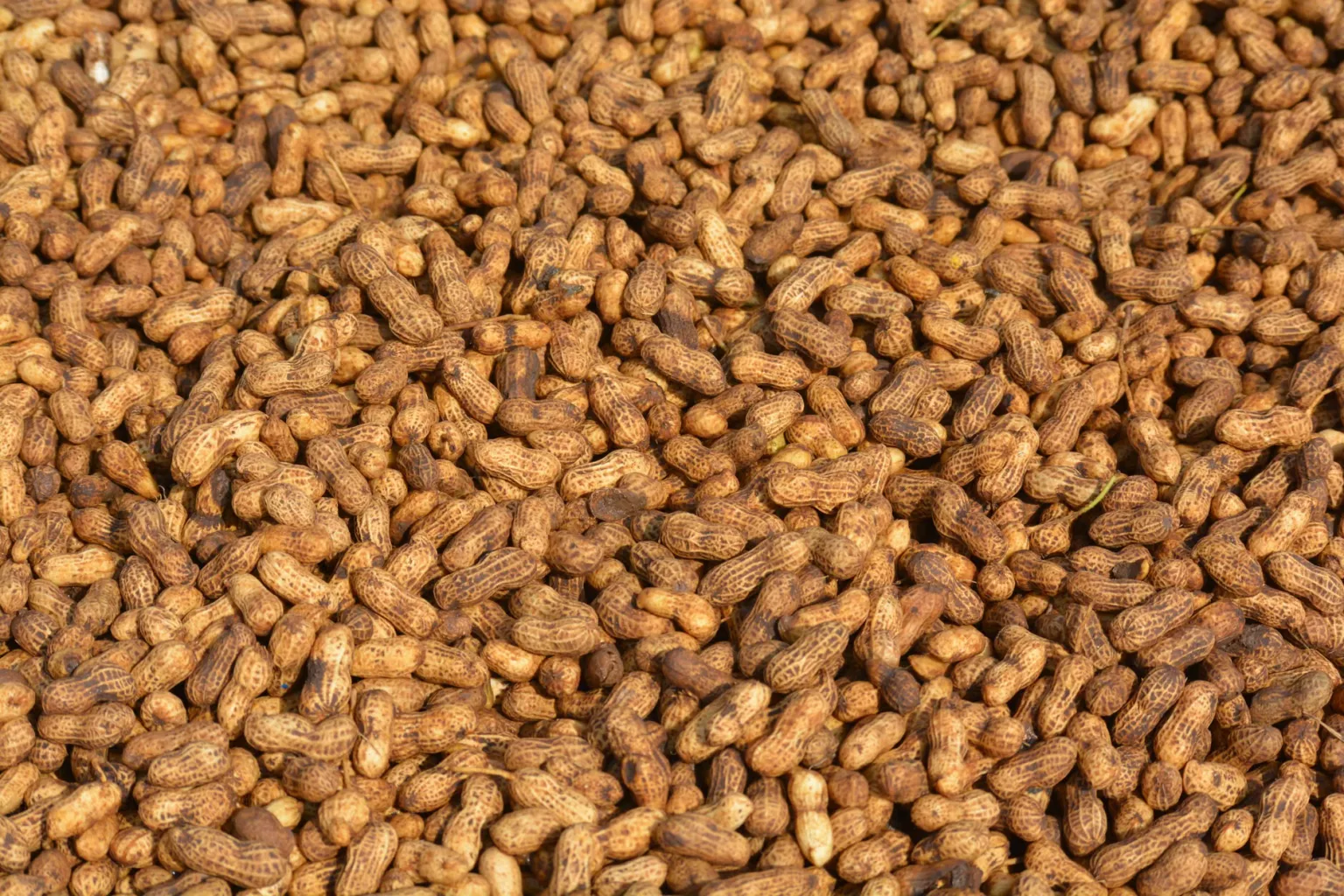
Raw shelled peanuts are the kernels removed from their pods and not roasted. Although cooking and retail often group them with tree nuts, botanically they are legumes. They can be used whole, chopped or ground, and are also processed into peanut butter. In this profile, “raw” distinguishes the product from roasted peanuts; it does not mean that every kernel has the same size, color or moisture level. Their flavor is milder and less roasted than that of heated peanuts. This makes them useful in recipes that will be cooked, as a chopped topping, or ground into sauces and spreads.
When to use it
Choose raw peanuts when you want their flavor without the stronger roasted aroma of a product that has already been roasted. Whole or chopped, they add contrast to salads, rice dishes, sandwiches and desserts; ground, they can be incorporated into a sauce or dressing. They also suit recipes in which the peanuts will be cooked or roasted as part of the preparation. If you want a very crunchy texture and a stronger aroma for eating as is or adding at the end, roasted peanuts may be a better fit.
How to use it
Inspect the kernels before using them and set aside any with visible signs of deterioration. Leave them whole to add bite to salads, rice dishes, sandwiches or baking mixtures; chop them for a more even distribution. For a thicker sauce or dressing, grind the peanuts and mix them with the other recipe ingredients. You can also roast them to develop a stronger flavor and crunch. Timing and results depend on size and method, so keep an eye on them and follow the recipe. Pair them with chocolate in desserts or use them in sauces for vegetables and meat. Season to suit the dish rather than assuming raw peanuts are already roasted or seasoned.
Flavour and texture
Raw peanuts have a milder, less aromatic flavor than roasted peanuts. Their texture is firm, but they do not have the same dry crunch that develops with heating. Roasting deepens the aroma and gives them a crunchier bite. Kernel size, color and presentation can vary from one product to another.
How to choose it
When a recipe calls for raw, shelled peanuts, choose a product clearly labeled that way: raw and roasted peanuts differ in flavor and texture. Check that the package is intact and look over the kernels; avoid any with visible signs of dampness, mold or deterioration. Size and color can vary, so do not use them alone to decide whether a product has been roasted.
Storage
Keep peanuts in their closed packaging or in a clean, tightly sealed container. Protect them from moisture, heat and direct light, and avoid storing them beside strongly scented foods. Raw and roasted peanuts can differ in their characteristics; follow the package directions and check their appearance and smell before use. No specific storage period is given here.
Substitutions
Roasted peanuts can replace raw peanuts when a recipe can accommodate a stronger flavor and crunchier texture. In a sauce, peanut butter can stand in for ground peanuts, but it will change the consistency and may require an adjustment to the liquid. Neither option is identical to the original ingredient, so adapt the amount and seasoning to the result you want.
Common mistakes
Do not assume raw peanuts have the aroma or crunch of roasted ones. Avoid adding them whole when you need a smooth sauce, and do not replace them with peanut butter without considering the change in consistency. Do not use kernels with visible signs of dampness, mold or deterioration.
Safety and allergens
This ingredient is peanut. Check the package information for ingredients and allergens, especially when cooking for others, and follow the product directions.
Culinary uses
- Base para salsas y cremas
- Elemento de textura para ensaladas, arroces y repostería
Recommended techniques
- Picar o triturar para incorporar a salsas y aliños
- Tostar para conseguir un sabor más intenso y una textura más crujiente
Pairs well with
- Chocolate en postres
- Verduras y carnes en salsas de maní
Frequently asked questions
Are peanuts tree nuts?
Botanically, peanuts are legumes, although cooking and retail often group them with tree nuts.
How do raw and roasted peanuts differ?
Raw peanuts have not been roasted and taste milder; roasting develops a stronger aroma and a crunchier texture.
How can I use raw shelled peanuts?
Add them whole or chopped to salads, rice dishes and desserts, grind them for sauces, or roast them according to a recipe.
Ingredient allergens
Allergen listThere are no verified associations for these ingredients yet.
Estimated nutrition
- Fat
- 50 g
- Saturates
- 7.88 g
- Carbohydrate
- 15.8 g
- Sugars
- 2.59 g
- Fibre
- 10.6 g
- Protein
- 26.4 g
- Salt
- 0.06 g
Sources and review
Automatically researched, cross-checked and validated content. Sources consulted:
- Client Challenge doi.org/10.2307/jj.27939689.16
- Vamos a Conservar Alimentos: Tomates extension.psu.edu/vamos-a-conservar-alimentos-tomates/
- El maní y su versatilidad en la cocina | Recetas Nestlé www.recetasnestle.com.ar/escuela-de-sabor/ingredientes/mani
- El maní | Consumer www.consumer.es/alimentacion/el-mani.html
- Diferencia entre maní crudo y tostado - Rafael López SRL www.rlopezsrl.com/guia/diferencia-mani-crudo-tostado/
- Revista del comité científico de la aecosan número 24 aesan.gob.es/dam/jcr:979384c0-5bd9-46d4-a29e-ccf5876c769c/RCC_24.pdf
- Dialect Poetry of Southern Italy (Italian ... userhome.brooklyn.cuny.edu/bonaffini/DP/southern.pdf
- Las múltiples caras del maní | alimento y conciencia alimentoyconciencia.com/las-multiples-caras-del-mani/
- Food allergen labelling and information requirements technical guidance - GOV.UK www.gov.uk/government/publications/food-allergen-labelling-and-information-requirements-tech…