- Category
- Vegetables
- State
- Other
- Usual unit
- unit
What it is
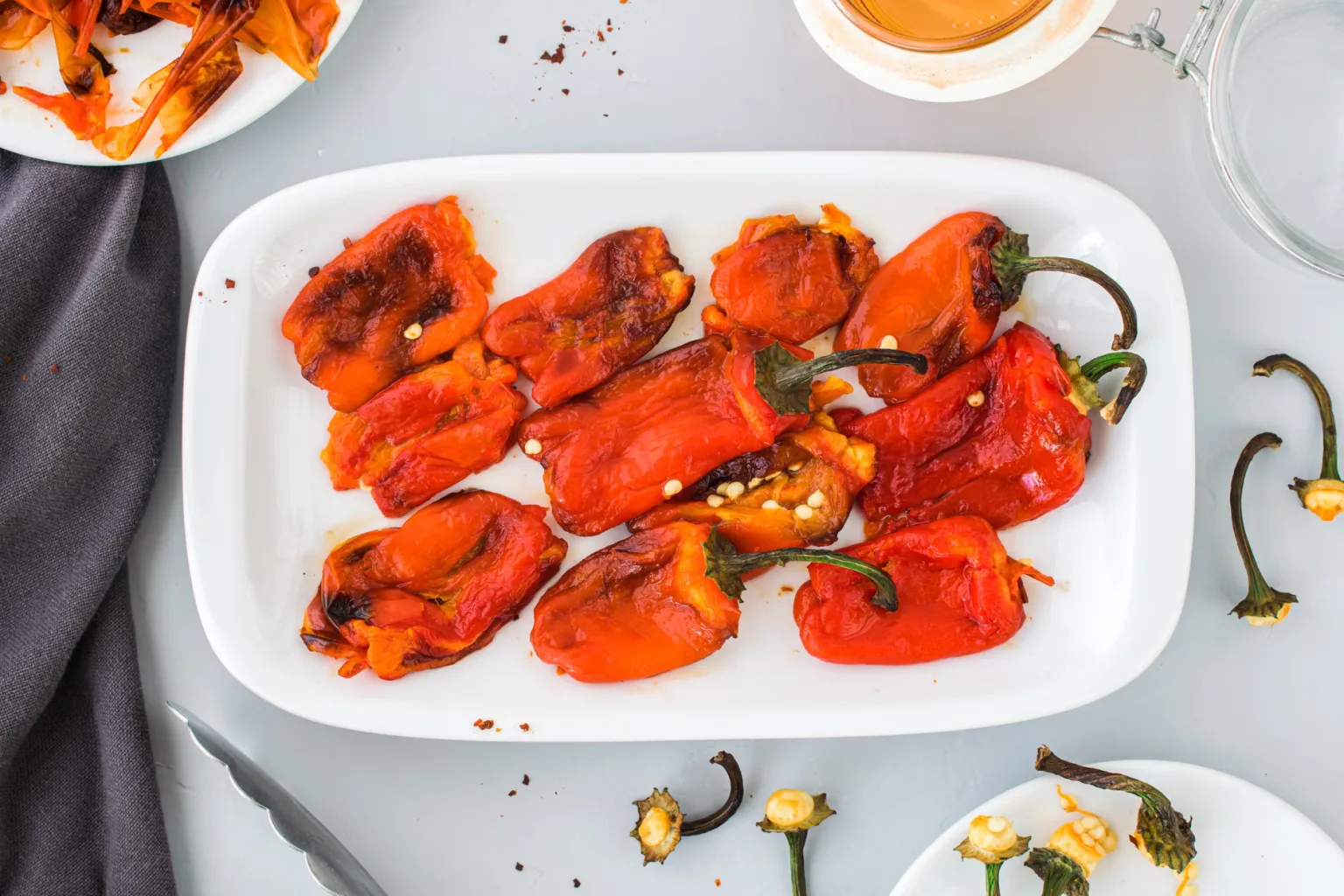
Roasted red peppers are red peppers cooked with heat, a preparation that makes them tender and mellow compared with raw peppers. In cooking they are treated as a vegetable, although a pepper is botanically the fruit of a Capsicum plant. The name can describe peppers roasted at home or a prepared, packaged product; the contents and ingredients may differ, so check the label. Their flavor is typically sweet and aromatic, and their soft texture makes them easy to cut, serve or mix into other dishes.
When to use it
Use them when you want to add a cooked vegetable, color and a mild sweetness without starting a recipe with raw peppers. They work as a simple side and in cold dishes such as salads or sandwiches, and can also be added to hot rice, pasta or legume dishes. Pair them with eggs, cheese, meat or fish when you want a tender accompaniment for contrast. If buying a packaged product, check its label for ingredients and any specific use or storage directions.
How to use it
Drain the peppers if the package contains liquid, then cut them into strips or pieces to suit the dish. Serve them cold or warm as a side, add them to salads and sandwiches, or mix them into legumes, rice and pasta. They also pair well with eggs, cheese, meat and fish. For a sauce or a smoother mixture, blend them with the other recipe ingredients; to retain some texture, fold in strips near the end of cooking. If you roasted them at home, let them become easy to handle before cutting, and follow storage guidance appropriate to your preparation.
Flavour and texture
Roasting makes red peppers sweeter, more aromatic and more mellow than raw peppers. The flesh is tender and juicy, so it cuts easily and can be blended into a sauce or left in strips for texture. The exact result depends on the pepper and preparation; packaged products may also contain other ingredients, so check the label.
How to choose it
Choose a product clearly identified as roasted red peppers and check its ingredient list and package directions. Products can differ in packing liquid, seasonings and cut, so match the label to your intended use. If buying fresh peppers to roast, look for firm peppers without visible dents; roast them before using them in a recipe that calls for roasted peppers.
Storage
Storage depends on whether the peppers were freshly roasted at home or are a packaged product, and on the specific instructions provided. Keep an unopened package according to its label, and after opening follow the storage and use-by guidance given there. For home-roasted peppers, use storage guidance suitable for your preparation; do not assume that directions for a commercial product also apply to them.
Substitutions
Another roasted sweet pepper can stand in when the goal is a similarly tender texture and mild flavor. If you do not have ready-roasted peppers, roast fresh red peppers and use them once prepared. A raw pepper is not an identical replacement: it brings more freshness and crunch rather than the mellow character of roasting.
Common mistakes
Do not assume every roasted-pepper product contains only peppers: check the label, since ingredients and packing liquid can vary. Avoid swapping in raw peppers without adjusting the dish if it depends on a tender texture and roasted flavor. Follow any specific use or storage instructions on the package.
Safety and allergens
For packaged products, read and follow the label’s storage and use directions, especially after opening. If the package information is missing or unclear, ask the seller or manufacturer; do not assume a storage life.
Culinary uses
- verdura cocinada lista para servir
- ingrediente para guarniciones, ensaladas y platos calientes
Recommended techniques
- asar
- cortar en tiras o trozos e incorporar a una preparación
- servir frío, templado o caliente
Pairs well with
- huevos y queso
- legumbres, arroz o pasta
- carne o pescado
Frequently asked questions
Can roasted red peppers be served cold?
Yes. They can be served cold or warm, such as in salads, sandwiches or as a side; follow package directions if they are a packaged product.
What goes well with roasted red peppers?
Serve them with eggs, cheese, meat or fish, or add them to legumes, rice, pasta, salads and sandwiches.
What can I use if I do not have ready-roasted peppers?
Roast fresh red peppers and use them once prepared. Another roasted sweet pepper can also work; raw pepper will give a different texture and flavor.
Ingredient allergens
Allergen listThere are no verified associations for these ingredients yet.
Estimated nutrition
- Fat
- 0 g
- Saturates
- 0 g
- Carbohydrate
- 3.08 g
- Sugars
- 0.77 g
- Fibre
- 0.8 g
- Protein
- 0.77 g
- Salt
- 0.54 g
Sources and review
Automatically researched, cross-checked and validated content. Sources consulted:
- En el etiquetado alimentario hay algunas menciones que son obligatorias eletiquetadocuentamucho.aesan.gob.es/obligatoria.html
- Client Challenge doi.org/10.2307/jj.27939689.16
- The Essential Glossary of Cooking Terms for the Culinary Arts - Escoffier www.escoffier.edu/blog/culinary-arts/the-essential-glossary-of-cooking-terms-for-the-culinar…
- Pimientos: variedades y usos en cocina - CocinoPedia.com cocinopedia.com/enciclopedia-gastronomica/pimientos-tipos-y-usos/
- Duke University Dissertation Template dukespace.lib.duke.edu/bitstreams/e673585b-67b7-4e97-a14c-766083285457/download
- Cocina Fácil, de la Despensa a la Mesa Enlaces de Nutrición - Número #10 extension.psu.edu/cocina-facil-de-la-despensa-a-la-mesa-enlaces-de-nutricion-numero-10/
- El Pimiento Y Su Importancia En La Gastronomía Española - Restaurante Romero restaurante-romero.es/el-pimiento-y-su-importancia-en-la-gastronomia-espanola/
- Making Corn Tortillas and Salsa coloradosph.cuanschutz.edu/docs/librariesprovider151/default-document-library/inventasalsa--…
- Publicaciones de Seguridad alimentaria www.aesan.gob.es/actualidad/publicaciones-seguridad-alimentaria
- Winter vegetable production on small farms and gardens west of the Cascades | Servicio de Extensión de OSU extension.oregonstate.edu/es/catalog/pnw-548-winter-vegetable-production-small-farms-gardens…
- Cómo sacar partido a los pimientos: variedades, consejos y una receta tradicional para hacer en casa www.huleymantel.com/despensa/cocinamos-pimientos-en-espana-variedades-historia-algunas-recet…
- Pimientos asados: beneficios y dieta mediterránea | Campo Rico huertacamporico.es/pimientos-asados-beneficios-dieta-mediterranea/