- Category
- Vegetables
- State
- Preserved
- Usual unit
- g
What it is
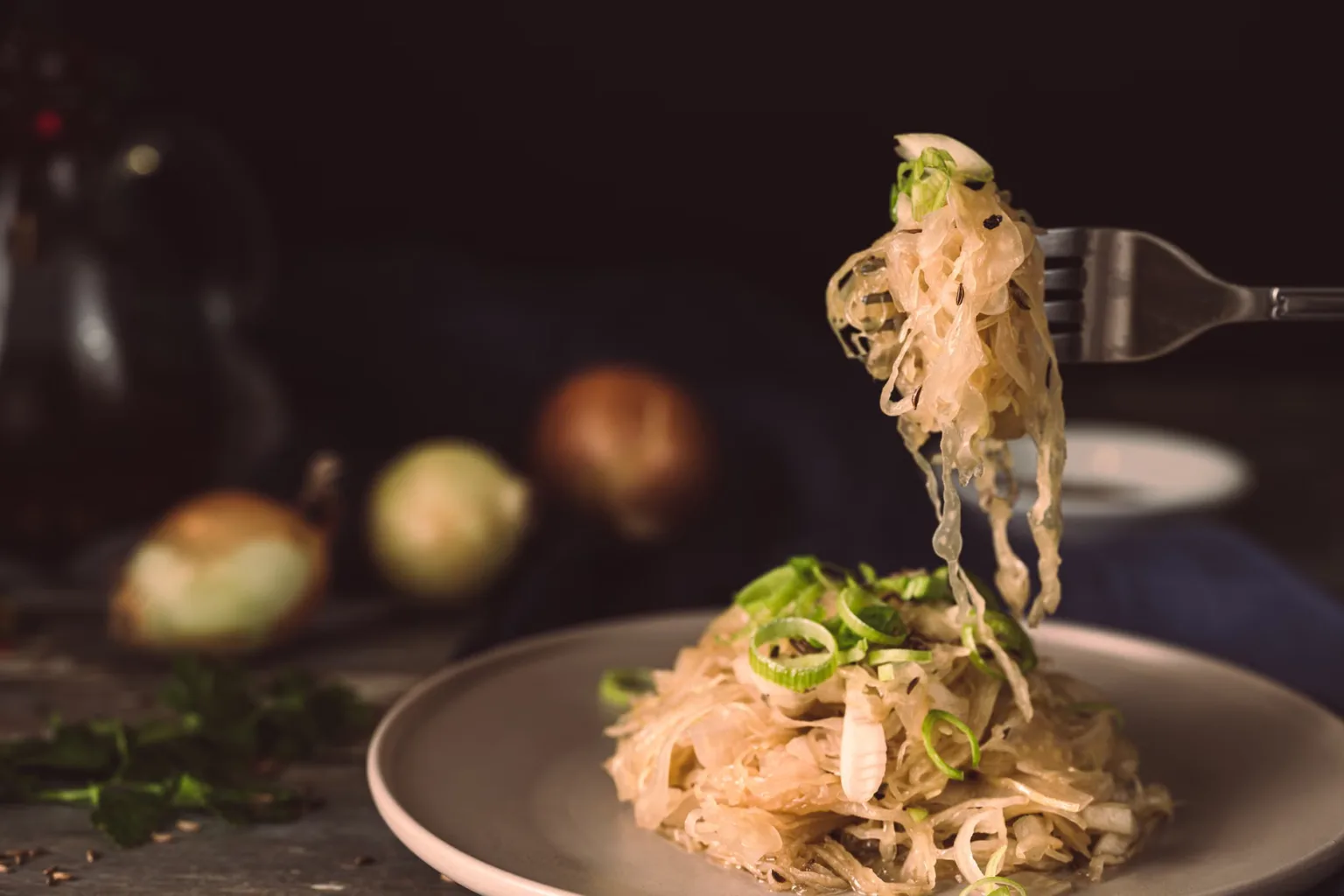
Sauerkraut is a preparation made mainly from finely shredded cabbage and salt. During fermentation, lactic-acid bacteria convert some of the cabbage’s sugars and produce lactic acid, giving the food its characteristic tang. The liquid released by the cabbage helps keep the shreds submerged in traditional preparations. The finished product is usually moist and somewhat crisp, though the cabbage variety, cut, and fermentation can affect its color, firmness, and acidity. It can be eaten raw or used as a cooked ingredient. The word may also describe a cooked dish of fermented cabbage, but this profile refers to the ingredient itself. Sauerkraut’s distinctive acidity makes it useful as a contrast to rich or mild foods.
When to use it
Use sauerkraut when a dish needs a tangy, savory vegetable note to balance richer or milder ingredients. It is a familiar side for sausages and roasted pork, and it also adds brightness to salads, sandwiches, and soups. Serve it cold or add it near the end of cooking when you want a firmer texture and a more pronounced taste. Cook it with the other ingredients for a more integrated, milder result. Taste it before adding salt to a dish, because the saltiness and intensity can vary from one product to another.
How to use it
Taste a small amount first to check its acidity and saltiness. For a cold preparation, drain it and combine it with grated carrot, sliced apple, cooked potatoes, or other salad ingredients. Add it to sandwiches as a tangy, crunchy contrast alongside meat, potatoes, or creamy ingredients. It can also go into vegetable or lentil soup; stir it in toward the end if you want to retain more firmness and fresh tang. For a warm side, heat it with roasted pork, sausages, or potatoes. If the flavor is too strong, drain it or rinse it briefly, then taste again. Adjust the dish’s salt only after adding the sauerkraut.
Flavour and texture
Sauerkraut tastes tangy and savory, with a distinct cabbage flavor that can range from mild to pronounced. The shreds are moist and often retain some firmness and crunch, though longer fermentation and cooking soften them. Color varies with the cabbage; red cabbage produces a different hue from pale cabbage. The acidic fermentation liquid can also be used sparingly for seasoning.
How to choose it
Choose an intact package and check that the product looks appropriate for its variety, with moist shreds and no visible package damage. Cut, color, and intensity can differ; red cabbage, for example, gives a different appearance from pale cabbage. If you specifically want an Alsatian product, its protected geographical indication can identify origin. Check the label for ingredients and the storage directions for that particular product.
Storage
Store the product as directed on its package. After opening, close it and refrigerate it; transfer homemade sauerkraut that has finished fermenting to a clean container and keep it refrigerated. When fermenting at home, keep the cabbage submerged in liquid and use a tested recipe without changing its salt proportions. Handle it with clean utensils and on clean surfaces.
Substitutions
Kimchi or suan cai can fill a similar role when you want another fermented cabbage preparation, but neither tastes exactly like sauerkraut. Their seasonings, acidity, and texture may differ, so start with a smaller amount and adjust the dish to taste. A substitute will change a recipe that relies on sauerkraut’s relatively simple tangy profile.
Common mistakes
Do not automatically add more salt: taste the sauerkraut first, since it can contribute noticeable saltiness. Avoid prolonged cooking if you want it to retain firmness and tang. Drain it before adding it to salads or sandwiches if excess liquid could make other ingredients soggy. For home fermentation, do not change a tested recipe’s salt proportions, and keep the cabbage submerged.
Safety and allergens
For home fermentation, use clean hands, surfaces, and utensils; follow a tested recipe without changing its salt proportions; and keep the cabbage submerged during fermentation. Refrigerate it once ready. For a commercial product, follow the package instructions.
Culinary uses
- Tangy vegetable side dish
- Acidic, crunchy addition to salads and sandwiches
- Flavorful ingredient in soups and stews
Recommended techniques
- Serve raw after draining or gently squeezing
- Warm or cook with other ingredients
- Rinse or drain to adjust its intensity
Pairs well with
- Sausages and roasted pork
- Potatoes and mustard
- Apples, carrots, and salads
- Lentils and vegetable soups
Frequently asked questions
Can sauerkraut be served raw or cooked?
Both. Drain and serve it cold, or heat it as a side and add it to soups and stews.
What foods pair well with sauerkraut?
It pairs well with sausages, roasted pork, and potatoes. It also works in salads, sandwiches, and vegetable or lentil soups.
What if the flavor is too strong?
Drain it or rinse it briefly, then taste it again. Rinsing can make its flavor milder.
Ingredient allergens
Allergen listThere are no verified associations for these ingredients yet.
Estimated nutrition
- Fat
- 0 g
- Saturates
- 0 g
- Carbohydrate
- 5.83 g
- Sugars
- 3.33 g
- Fibre
- 0.8 g
- Protein
- 1.67 g
- Salt
- 2 g
Sources and review
Automatically researched, cross-checked and validated content. Sources consulted:
- Client Challenge doi.org/10.2307/jj.27939689.16
- Chucrut - Wikipedia, la enciclopedia libre es.wikipedia.org/wiki/Chucrut
- Nutrition After Your Transplant - Health Online healthonline.washington.edu/sites/default/files/record_pdfs/Nutrition-After-Your-Transplant-…
- Comité Científico www.aesan.gob.es/dam/jcr:ed009337-0085-4c40-8a9d-4941400ca954/comite_cientifico_35.pdf
- Vamos a Conservar Alimentos: Fermentación— Col Fermentada (Chucrut) y Pepinillos extension.psu.edu/vamos-a-conservar-alimentos-fermentacion-col-fermentada-chucrut-y-pepinill…
- What Is Kefir—and Is It Good for You? - Consumer Reports news.stonybrook.edu/?press_clips=what-is-kefir-and-is-it-good-for-you
- Col Fermentada (Chucrut) y Pepinillos (Spanish) - National Center for Home Food Preservation nchfp.uga.edu/how/ferment/recipes/chucrut-y-pepinillos-spanish/
- Qué debes saber antes de fermentar chucrut | Sra. Kraut srakraut.com/once-cosas-antes-fermentar-chucrut/
- 5 minutos para saberlo todo sobre la choucroute de Alsacia www.france.fr/es/articulo/5-minutos-choucroute-alsacia/
- Qué es el chucrut y cómo prepararlo en casa | Recetas Nestlé www.recetasnestle.com.ec/escuela-de-sabor/trucos/chucrut?amp=
- Cómo hacer chucrut natural o repollo fermentado - Burbujas de Recuerdos Blog burbujasderecuerdos.blogspot.com/2019/05/como-hacer-chucrut-sauerkraut-natural.html
- Cómo hacer chucrut casero y cómo emplearlo | Consumer www.consumer.es/alimentacion/como-hacer-chucrut-casero-en-que-platos
- Chucrut o col fermentada, receta de cocina fácil, sencilla y deliciosa www.directoalpaladar.com/curso-de-cocina/asi-facil-hacer-chucrut-casero-col-fermentada-que-p…