- Category
- Vegetables
- State
- Fresh
- Usual unit
- unit
What it is
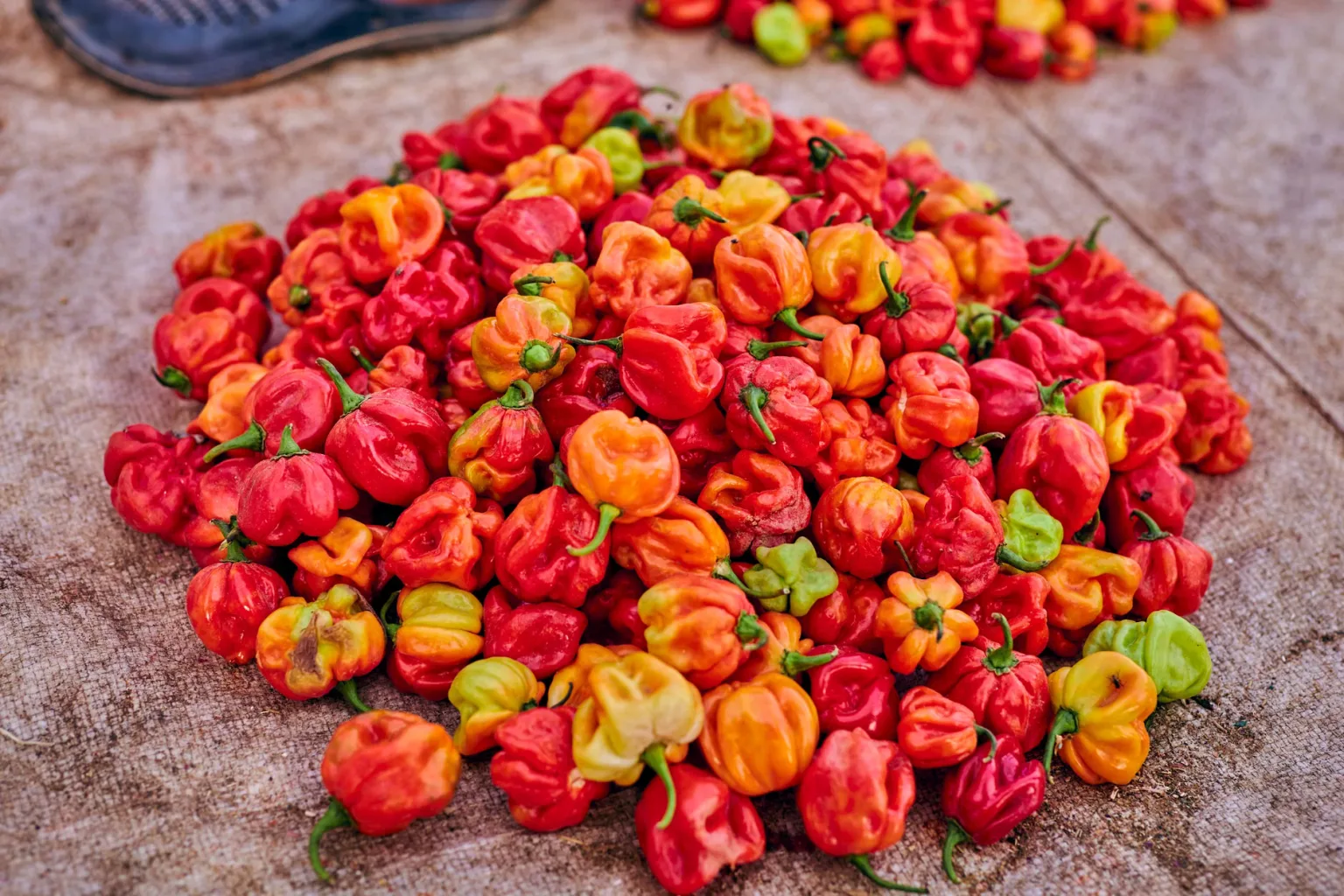
The Scotch bonnet is a chile of the species Capsicum chinense, often recognized by its broad, somewhat flattened fruit shape, which can resemble a bonnet. It may be green before ripening and can also appear yellow, orange, or red, depending on the variety and stage of maturity. The pepper is particularly associated with Caribbean cooking and is used in hot sauces and jerk-style marinades. Its heat is very high; published estimates vary, so a single figure cannot predict the pungency of an individual pepper precisely. Its fruity character can work well with sweet ingredients, but that does not make the chile mild. It is related to other peppers in the species, including habaneros, though their flavor and heat should not be assumed to be identical.
When to use it
Use it when you want pronounced heat and a fruity note in a sauce, marinade, or cooked dish. It can bring character to jerk-style preparations and Caribbean recipes with meat, fish, or vegetables. It also pairs well with fruit such as mango in a hot sauce. Because Scotch bonnets can be extremely hot and individual peppers vary, begin with a small amount and taste before adding more. If you want chile flavor without as much heat, use only a little or choose a milder pepper such as ají dulce or cachucha.
How to use it
Wash the pepper under running water and handle it carefully. To add it to a sauce, remove the stem and mince it finely, or blend it with fruit and other ingredients; start with a small amount and adjust after tasting. You can also add a little finely chopped pepper to a marinade or a dish that will be cooked, distributing it well so the heat is not concentrated in one bite. Wear plastic or rubber gloves when handling or cutting hot peppers, and do not touch your face. If you work without gloves, wash your hands thoroughly with soap and water before touching your face or eyes. Hot peppers can be frozen whole and uncut in suitable freezer packaging.
Flavour and texture
Scotch bonnet combines very intense heat with a fruity character that can add depth to sauces and marinades. Its fruit is often broad and somewhat flattened, although appearance and color depend on variety and maturity: it may range from green to yellow, orange, or red. Fruity flavor does not mean mild heat. Pungency can also vary among cultivars and individual peppers, so taste cautiously and do not estimate the heat from size or color alone.
How to choose it
Choose whole peppers with the characteristic shape, but do not use color alone to judge maturity or heat. Scotch bonnets are sold in several colors, including green, yellow, orange, and red, and both appearance and pungency can vary. If you do not know the variety or batch, start with a small amount in your recipe. Do not assume a Scotch bonnet and a habanero are interchangeable simply because they are closely related; their shape, flavor, and heat need not be exactly the same.
Storage
The available guidance supports freezing hot peppers whole and uncut in suitable, sealed freezer packaging. Freezing can preserve them for later use, though no quality-storage period specific to Scotch bonnets is provided here. A refrigerated storage duration for the fresh pepper is not specified; follow package directions if it is packaged, and freeze it if you want to keep it longer.
Substitutions
Habanero is a reasonable alternative because it is closely related to Scotch bonnet and is used in hot sauces, but adjust the amount by tasting: heat and flavor can vary. Ají dulce or cachucha can provide a milder, sweeter chile character, but will not replace Scotch bonnet's intense heat. With any substitution, begin with a small amount and adjust to the flavor you want.
Common mistakes
Do not add a large amount all at once: Scotch bonnets can be extremely hot, and pungency is not identical in every pepper. Do not assume color or size tells you exactly how hot it will be. Another common mistake is handling the pepper and then touching your face or eyes; wear gloves or wash your hands thoroughly with soap and water first.
Safety and allergens
Handle hot peppers carefully: wearing plastic or rubber gloves and avoiding face contact are recommended. If you do not wear gloves, wash your hands thoroughly with soap and water before touching your face or eyes. Add the pepper gradually because its heat can be very intense.
Culinary uses
- Fresh chile for adding intense heat and fruity character
- Flavoring for hot sauces, Caribbean jerk marinades, and cooked dishes
Recommended techniques
- Finely chop or mince and add in small amounts to salsa or a dish
- Blend with fruit and other seasonings to make a hot sauce
Pairs well with
- Mango and other tropical fruit
- Jerk-style marinades, meat, fish, and grilled vegetables
Frequently asked questions
How hot is a Scotch bonnet pepper?
It is a very hot chile. Estimates vary, and the heat of individual peppers can differ, so begin with a small amount.
How can I use it in cooking?
Use it in hot sauces, jerk-style marinades, and cooked dishes. It can also be blended with mango or another fruit for a sauce.
Can I freeze it whole?
Yes. The available guidance for hot peppers is to wash them, remove the stem, pack them whole and uncut in suitable freezer packaging, and freeze.
Ingredient allergens
Allergen listThere are no verified associations for these ingredients yet.
Estimated nutrition
- Fat
- 0 g
- Saturates
- 0 g
- Carbohydrate
- 0 g
- Sugars
- 0 g
- Protein
- 0 g
- Salt
- 4.25 g
Sources and review
Automatically researched, cross-checked and validated content. Sources consulted:
- Client Challenge doi.org/10.2307/jj.27939689.16
- Grow your own peppers | OSU Extension Service extension.oregonstate.edu/catalog/ec-1227-grow-your-own-peppers
- How to Freeze Sweet, Bell and Hot Peppers | UNL Food | Nebraska food.unl.edu/article/freezing-peppers/
- Peppers by Scoville Units – Gardening Solutions gardeningsolutions.ifas.ufl.edu/plants/edibles/vegetables/peppers-by-scoville-units/
- Scotch bonnet - Wikipedia, la enciclopedia libre es.wikipedia.org/wiki/Scotch_bonnet
- Effect of Enzyme Activity and Frozen Storage on Jalapeño ... etd.ohiolink.edu/acprod/odb_etd/ws/send_file/send?accession=osu1274810596&disposition=inline
- Ultra-Niche Crops Series: Production and Marketing of Habañero Peppers in New Jersey | Rutgers Cooperative Extension extension.rutgers.edu/fs1273
- Global Aromatic Bases: From Mirepoix to Sofrito to the Holy Trinity - Escoffier www.escoffier.edu/blog/recipes/aromatic-bases/
- ¿Qué son los chiles Scotch Bonnet? - Blog de La Parada de las Especias comprarespecias.net/blog/scotch-bonnet/?srsltid=AYCX9vL75vFkxfZ-bx6gtAW411FAkqkrM_oPTMvDkgeK…
- Chile Scotch Bonnet: cultivo, riego y cosecha en 100 días plotmygarden.com/es/plants/pepper-scotch-bonnet
- Chile Habanero Scotch Bonnet: su picor y sabor | Pikantista pikantista.com/es/pages/variedades-chile-habanero-scotch-bonnet?srsltid=AYCX9vLF3OMEgFmxetlk…
- Chile Habanero Scotch Bonnet | Chili-Plants.com chili-plants.com/es/variedades-chile-pimiento/chile-habanero-scotch-bonnet/?srsltid=AYCX9vLS…