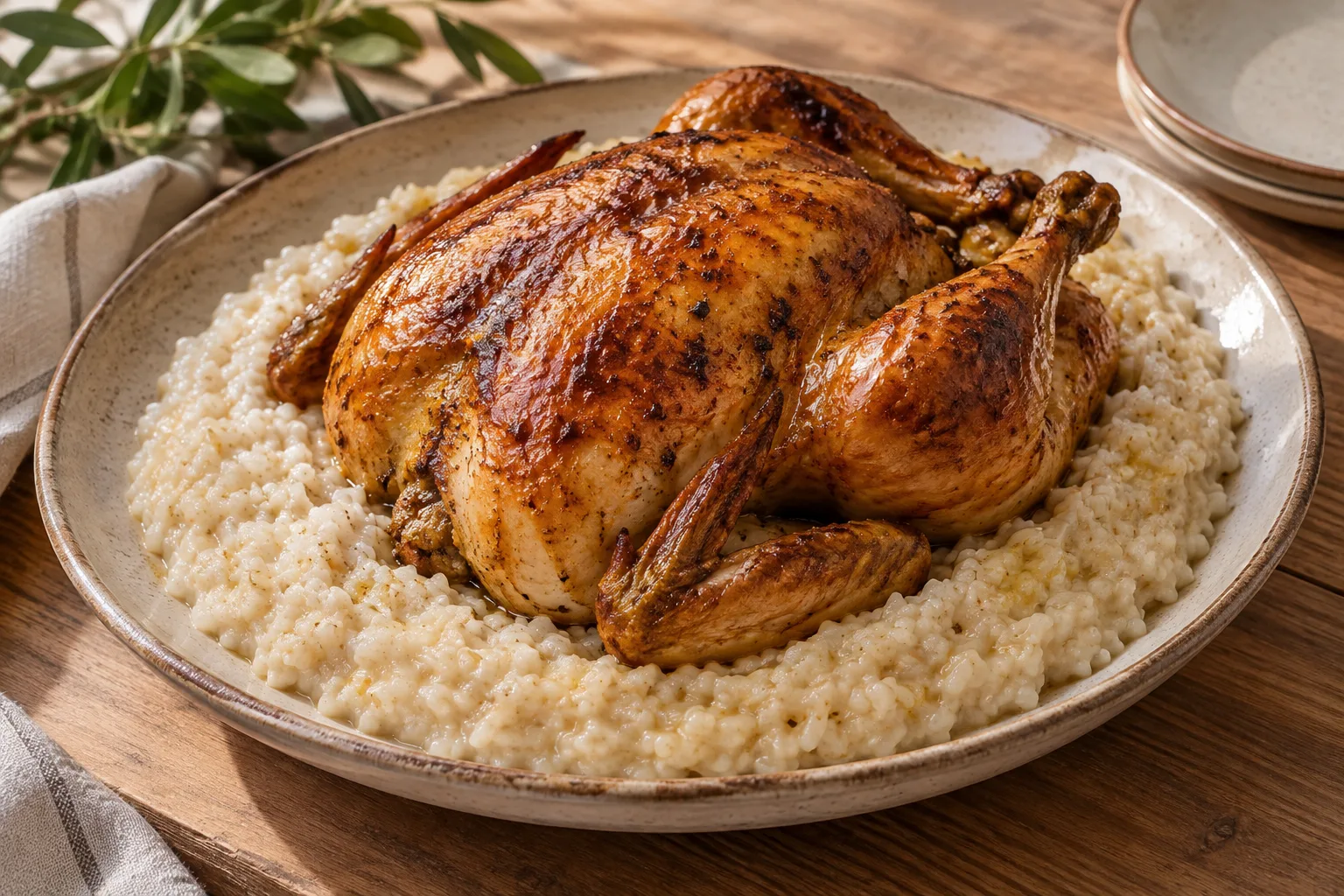
- Category
- Meat
- State
- Liquid
- Usual unit
- cup
What it is
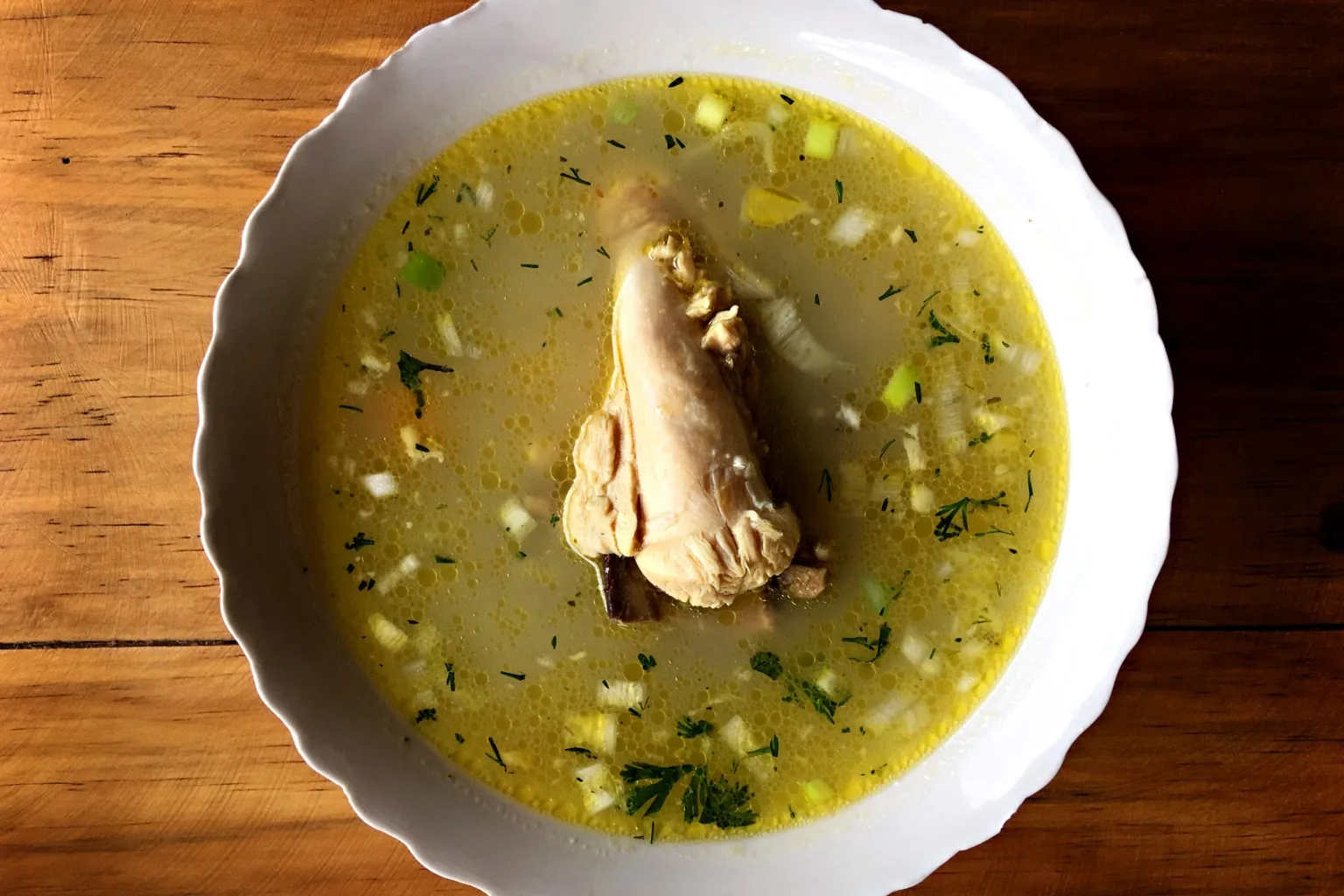
Strained chicken broth is the liquid left after chicken—often cooked with vegetables and seasonings—has simmered in water and the solid ingredients have been removed through a strainer. “Strained” describes that separation; it does not specify the ingredients, salt level, or whether the broth is clear, concentrated or fatty. A fine-mesh strainer can catch smaller particles and produce a cleaner-looking liquid. The broth can be served hot on its own or added to other dishes for flavor and moisture. Homemade and packaged broths can differ in their ingredients and seasoning, so taste the broth and check its label before adjusting a recipe.
When to use it
Use it when a soup, stew or rice dish calls for a liquid with chicken flavor. It can form the base of noodle soup, chicken soup or a creamy soup, and can add flavor to risotto, rice or a stew. To enjoy it on its own, serve it hot in a cup or bowl. Choose a clearer broth when you want a lighter texture; if particles remain, strain it again. Since saltiness and intensity vary, taste the broth before adding salt or other seasonings to the dish.
How to use it
Pour the broth through a fine-mesh strainer to separate bones, meat, vegetables and other solids. If foam or fat has collected on the surface, skim it with a spoon or skimmer; cooling the broth makes solidified fat easier to remove. For soup, heat the broth and add the ingredients called for in the recipe, such as noodles or vegetables. For rice, risotto and stews, use it for some or all of the cooking liquid as the recipe directs, keeping in mind that it may contribute salt. Taste before seasoning. If you have more broth than you plan to use, divide it into portions and freeze them so convenient amounts are ready for later.
Flavour and texture
Its flavor is usually chicken-forward, with possible notes from the vegetables and seasonings used to make it. Strength, saltiness and color depend on the preparation; straining does not make them uniform. A fine-mesh strainer reduces visible particles, though it will not necessarily remove all the fat. Surface fat can be skimmed separately. The finished broth may be light and fluid or more concentrated, depending on the starting broth and how it was prepared.
How to choose it
When buying packaged broth, read the ingredient list and the storage directions on the package. Check whether it contains salt or other seasonings so you can account for them when seasoning a dish. The word “strained” does not guarantee that every product has the same clarity, concentration or composition. If you need to avoid particular ingredients, check the full label rather than relying on the product name alone.
Storage
To keep homemade broth for later use, divide it into portions and freeze it; this makes it practical to thaw only what you need. Freezing in containers or measured portions is one way to store prepared broth. Follow the package directions for commercial broth after opening. Do not assume that broth is safe to store at room temperature simply because it has been strained; for home canning, use tested directions specifically for poultry stock.
Substitutions
Strained homemade chicken broth can replace another chicken broth in a dish, though flavor and seasoning may differ. Broth made from chicken bouillon cubes is also a convenient alternative; follow the package directions and taste it before adding salt. Adjust the liquid and seasoning to suit the recipe and the strength of the product.
Common mistakes
Do not assume all strained broths have the same salt level or strength: taste before seasoning. A coarse strainer may let particles through, so use a fine-mesh one when you want a cleaner liquid. Straining is not the same as removing fat; skim surface fat separately. Do not improvise a home-canning method for shelf-stable storage.
Safety and allergens
Check the ingredients and follow the package storage directions, especially after opening. Freezing broth in portions is an option for storing it. Home canning poultry broth requires validated pressure-canning directions for that product; do not substitute general directions for other soups.
Culinary uses
- Base líquida para sopas y guisos
- Líquido de cocción para arroz y risotto
Recommended techniques
- Colar con un colador fino para retirar los sólidos
- Desespumar y retirar la grasa superficial; congelar en porciones
Pairs well with
- Fideos y verduras en sopa
- Arroz, risotto y guisos de pollo
Frequently asked questions
What is strained chicken broth used for?
Serve it on its own or use it as the base for soups, stews and creamy soups, or as cooking liquid for rice and risotto. Taste it before adjusting the salt.
Does straining chicken broth remove all the fat?
Not necessarily. Straining removes solids; skim surface fat separately with a spoon or skimmer.
Can I freeze strained chicken broth?
Yes. Divide it into portions before freezing so you can use only the amount you need later.
Ingredient allergens
Allergen listThere are no verified associations for these ingredients yet.
Estimated nutrition
- Fat
- 13.9 g
- Saturates
- 3.43 g
- Carbohydrate
- 18 g
- Sugars
- 17.4 g
- Fibre
- 0 g
- Protein
- 16.7 g
- Salt
- 59.75 g
Sources and review
Automatically researched, cross-checked and validated content. Sources consulted:
- Gastronomía del Perú - Wikipedia, la enciclopedia libre es.wikipedia.org/wiki/Gastronom%C3%ADa_del_Per%C3%BA
- Paella - Wikipedia, la enciclopedia libre es.wikipedia.org/wiki/Paella
- Regionalismo y centralismo culinario en un manuscrito huancaíno del siglo XIX : influencias y sabores | OpenAlex openalex.org/W2981277873
- Cómo hacer caldo de pollo casero bonviveur.com/es/recetas/caldo-de-pollo-casero
- Location www.coloradomesa.edu/library/special-collections/documents/cookbook-donation_aid-for-sca-web…
- - YouTube www.youtube.com/watch?v=fxz4xt3YJdE
- Caldo de Pollo Casero (Consomé) | Video+Receta - Tia Clara tiaclara.com/es/consome-caldo-pollo-casero/
- Sopa de Frijoles Negros 2000 (Black Bean Soup) - lacocina.utsa.edu/sopa-de-frijoles-negros-black-bean-soup-2000-2/
- ¿Qué es el índice de estilo de vida saludable y qué utilidad tiene? doi.org/10.64628/aao.ratny9tja
- HSH Recipe Book 03 web - Dining Services dining.vt.edu/content/dam/dining_vt_edu/assets/docs/HSH_Recipe_Book_03.pdf
- Qué es la cirugía en paciente despierto y qué revela sobre el funcionamiento de nuestro cerebro doi.org/10.64628/aao.w3nvcv5hx