- Category
- Vegetables
- State
- Fresh
- Usual unit
- unit
What it is
Sweet peppers are fruits from the Capsicum group that are commonly eaten as vegetables. This guide covers fresh sweet peppers, including bell peppers, rather than dried paprika or pepper paste. They can be prepared raw or added to cooked dishes; when frozen and thawed, they retain some crispness and can also be used in cooked preparations. Their appearance, size, and color can vary with variety and maturity, so choose and cut each pepper with its intended use in mind. Growing guidance describes warm conditions, full sun, and well-drained soil, but that information alone does not establish a fixed availability season for every region.
When to use it
Use sweet peppers raw when you want a fresh vegetable cut into strips or dice, or when you need a vegetable component in a mixed dish. They also fit cooked dishes such as casseroles and can be included in sofrito or recaito preparations with ingredients such as onion, garlic, and cilantro. If you have peppers prepared for later cooking, they can be frozen raw and used afterward in cooked dishes. Choose a whole pepper, strips, or dice according to the recipe and the texture you want in the finished dish.
How to use it
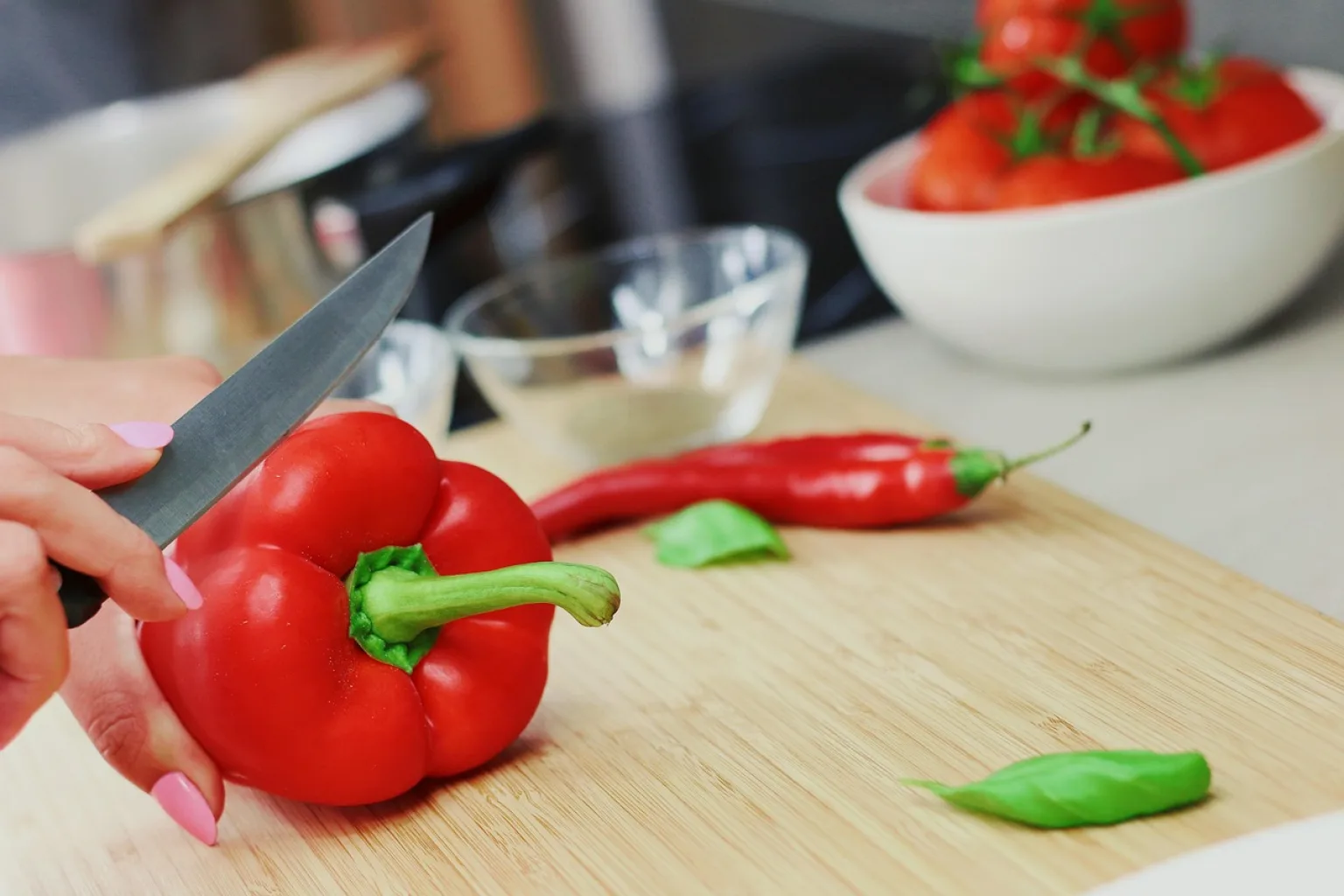
Before preparing sweet peppers, scrub them with a clean vegetable brush under running water. Remove the stem, cut the pepper open, and take out the seeds and membrane; then cut it into strips, slices, or dice to suit the recipe. Serve it raw or add it to cooked dishes such as casseroles. For a sofrito- or recaito-style base, blend it with ingredients such as onion, garlic, and cilantro. To freeze, prepare clean cut pieces, spread them in a single layer on a tray until frozen, and transfer them to a freezer bag with as much air removed as possible. Blanching is not required before freezing sweet peppers.
Flavour and texture
Sweet peppers are used as a fresh vegetable both raw and cooked, so their texture can be matched to the dish: cut into strips or dice for raw use, or added to a cooked preparation. Frozen and thawed peppers retain some crispness, although not necessarily all the texture of a freshly cut pepper. Variety, color, and maturity can affect the individual pepper; check its firmness and adapt the cut and use rather than assuming every pepper will behave in exactly the same way.
How to choose it
Choose sweet peppers that are crisp and tender, with a fresh appearance. Do not rely on color alone when selecting them. If a recipe calls for strips or dice, size and shape may make cutting and portioning easier, but they are not by themselves a guarantee of quality. Select peppers that suit the planned use: one intended for a raw dish can be cut when needed, while peppers being saved for cooked dishes can also be prepared and frozen.
Storage
The available guidance supports freezing, but does not establish a specific fresh-storage duration for sweet peppers here. To freeze them, wash the peppers, remove the stems, seeds, and membranes, and cut them as you plan to use them. Freeze the pieces separately on a tray first, then pack them in a freezer-safe bag with little air. For best quality, keep the freezer at 0°F (about −18°C) or below; as a quality guideline, frozen vegetables are generally used within about eight months. Follow package directions for purchased packaged products.
Substitutions
If a recipe needs the role of a sweet pepper, try another fresh sweet pepper and adjust the cut to fit the preparation. Mild chili peppers are also listed alongside sweet peppers for sofrito or recaito bases, but they may add heat and are not a neutral swap. Do not assume that a dried product such as paprika replaces the texture of a fresh pepper.
Common mistakes
Do not confuse fresh sweet peppers with dried paprika: they are different products and do not provide the same texture. Avoid skipping washing or leaving seeds and membrane in place when the recipe calls for their removal. Sweet peppers do not need to be blanched before freezing; cut them for their intended use and choose packaging designed for freezer storage rather than bags not intended for that purpose.
Safety and allergens
Before cutting, scrub sweet peppers with a clean vegetable brush under running water. If you buy a packaged or prepared product, follow its storage and use instructions. No specific allergen warning for fresh sweet peppers is established here; check the product information when the item is a preparation containing other ingredients.
Culinary uses
- Fresh ingredient for raw dishes
- Cooked vegetable for casseroles and mixed dishes
- Ingredient in blended sofrito or recaito bases
Recommended techniques
- Wash and scrub under running water, then remove the stem, seeds, and membrane
- Slice, dice, or cut into strips for the intended dish
- Blend with other ingredients for a sofrito-style base
- Freeze raw in prepared pieces without blanching
Pairs well with
- Onion, garlic, and cilantro in sofrito or recaito
- Meat, fish, poultry, and mixed dishes
- Tomatoes and other vegetables in blended seasoning bases
Frequently asked questions
Do sweet peppers need to be blanched before freezing?
No. They can be frozen raw without blanching. Wash them, remove the stem, seeds, and membrane, cut them, and freeze in a single layer before transferring them to a freezer-safe bag.
Can thawed sweet peppers be eaten raw?
Thawed peppers retain some crispness and can be used in cooked dishes or eaten raw. Their texture may differ from that of a freshly cut pepper.
What goes well with sweet peppers in sofrito?
They can be blended into a sofrito- or recaito-style base with ingredients such as onion, garlic, and cilantro. They are also listed for use with meat, fish, poultry, and mixed dishes.
Ingredient allergens
Allergen listThere are no verified associations for these ingredients yet.
Estimated nutrition
- Fat
- 12.8 g
- Saturates
- 1.56 g
- Carbohydrate
- 6.57 g
- Sugars
- 4.28 g
- Fibre
- 1.8 g
- Protein
- 1.04 g
- Salt
- 0.05 g
Sources and review
Automatically researched, cross-checked and validated content. Sources consulted:
- En el etiquetado alimentario hay algunas menciones que son obligatorias eletiquetadocuentamucho.aesan.gob.es/obligatoria.html
- The Essential Glossary of Cooking Terms for the Culinary Arts - Escoffier www.escoffier.edu/blog/culinary-arts/the-essential-glossary-of-cooking-terms-for-the-culinar…
- El pimiento rojo:¿ una verdura o un condimento? - Grupo Gastronómico El Almirez ggelalmirez.com/el-pimiento-rojo-una-verdura-o-un-condimento/
- Page 7 | See All Home Food Preservation and Safety - Home Food Preservation and Safety - Food Safety and Quality extension.psu.edu/food-safety-and-quality/home-food-preservation-and-safety/see-all-home-foo…
- EFNEP Hispanic Heritage Recipes | Community Nutrition | Extension/College of Agriculture, Health & Natural Resources | University of Connecticut communitynutrition.cahnr.uconn.edu/efnep-hispanic-heritage-recipes/
- How to Freeze Sweet, Bell and Hot Peppers | UNL Food | Nebraska food.unl.edu/article/freezing-peppers/
- Pimentón | CreatiVegan.net creativegan.net/archives/pimenton/
- El Pimiento Y Su Importancia En La Gastronomía Española - Restaurante Romero restaurante-romero.es/el-pimiento-y-su-importancia-en-la-gastronomia-espanola/
- Food | Ohioline ohioline.osu.edu/topic/food
- Chiles/Pimientos (Spanish) - National Center for Home Food Preservation nchfp.uga.edu/how/can/canning-vegetables-and-vegetable-products/chiles-pimientos-spanish/
- UTIA Real. Life. Solutions. doi.org/10.7290/utiapub/sp811e-es
- A Cookbook for Teens extension.umd.edu/sites/extension.umd.edu/files/2021-04/MO-NUPA-TeenCookbook.pdf
- Tipos y variedades de pimentón – Pimentón de la Vera Vegacáceres pimentondelaveravegacaceres.com/tipos-y-variedades-de-pimenton/