- Category
- Fish and seafood
- State
- Fresh
- Usual unit
- g
What it is
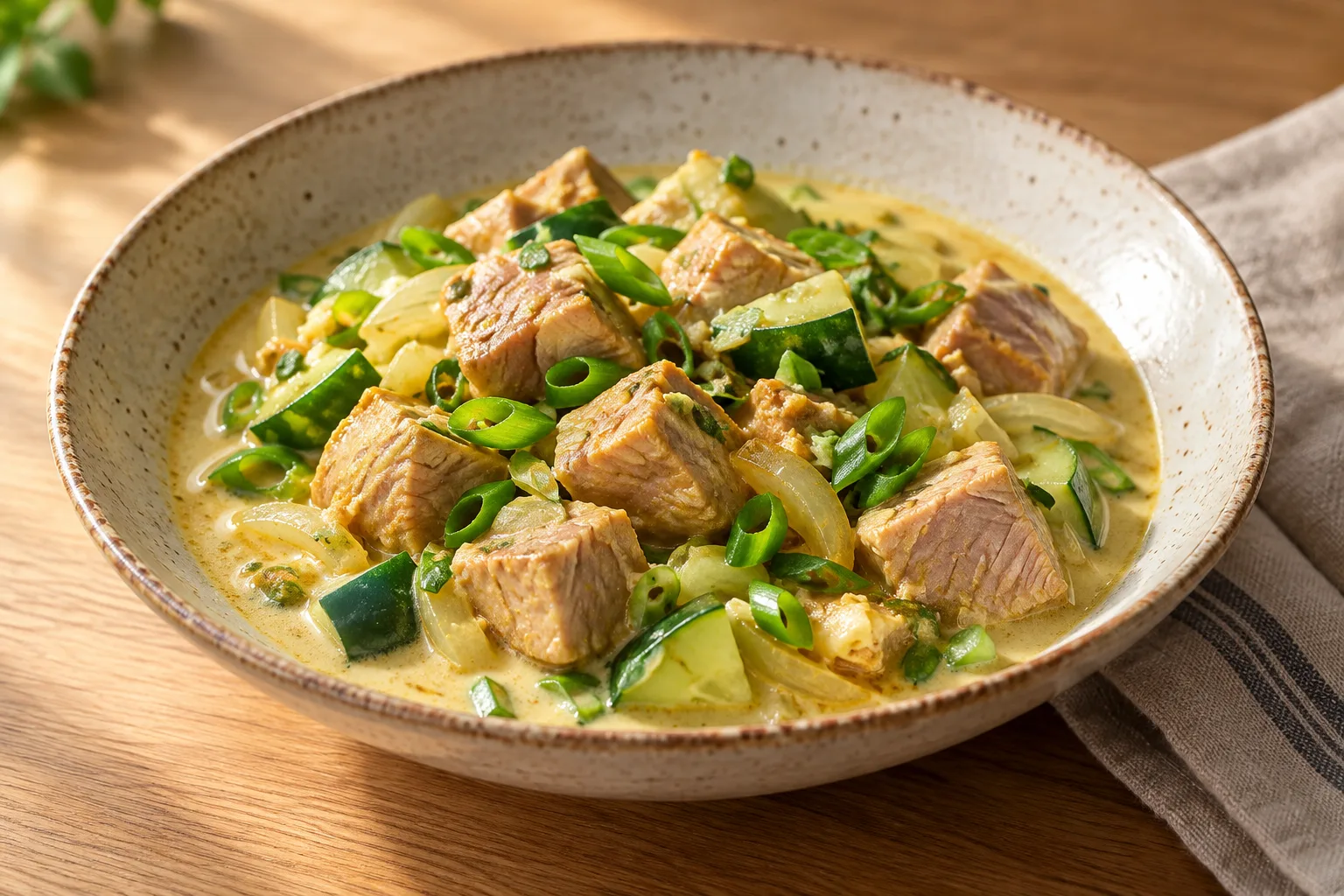
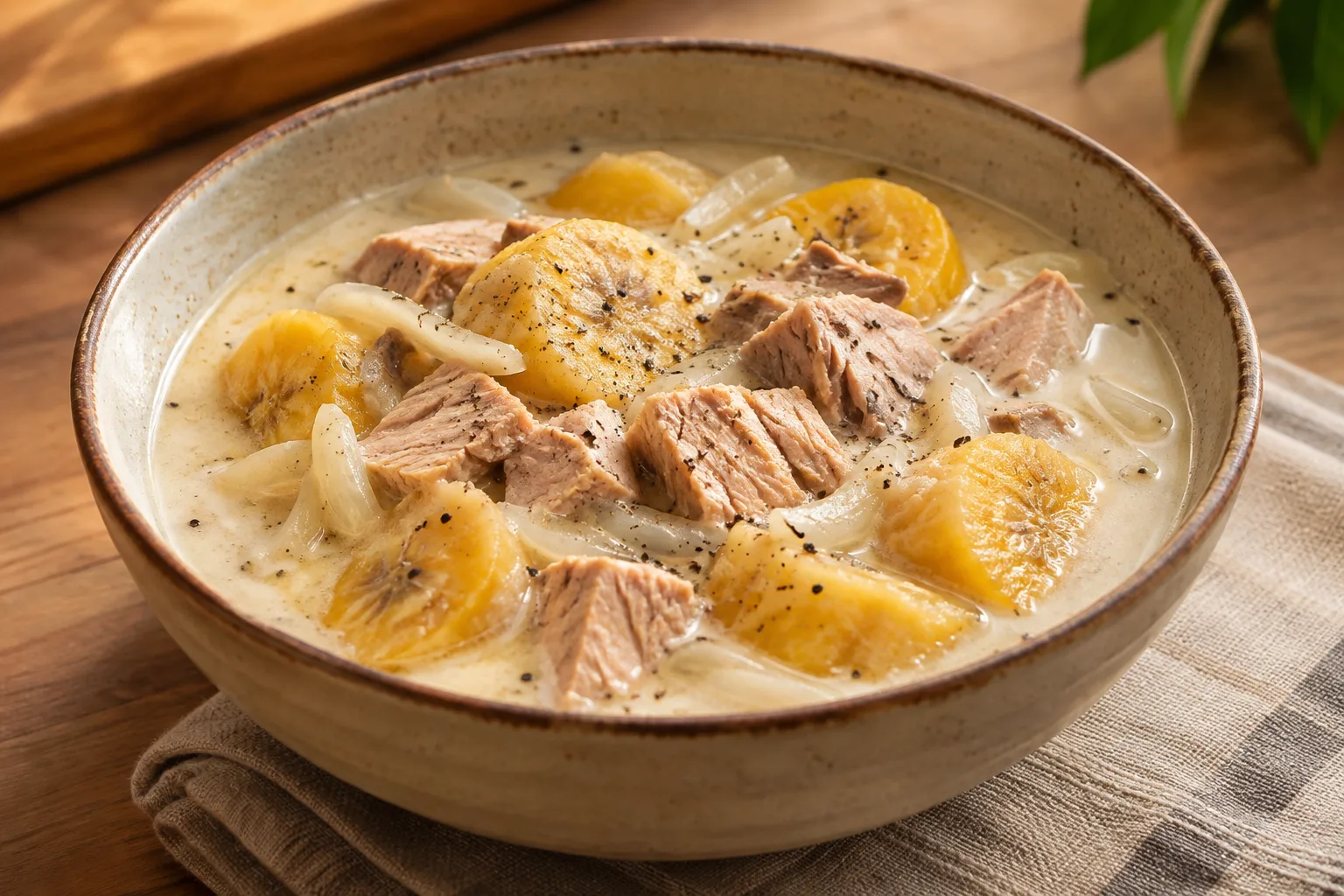
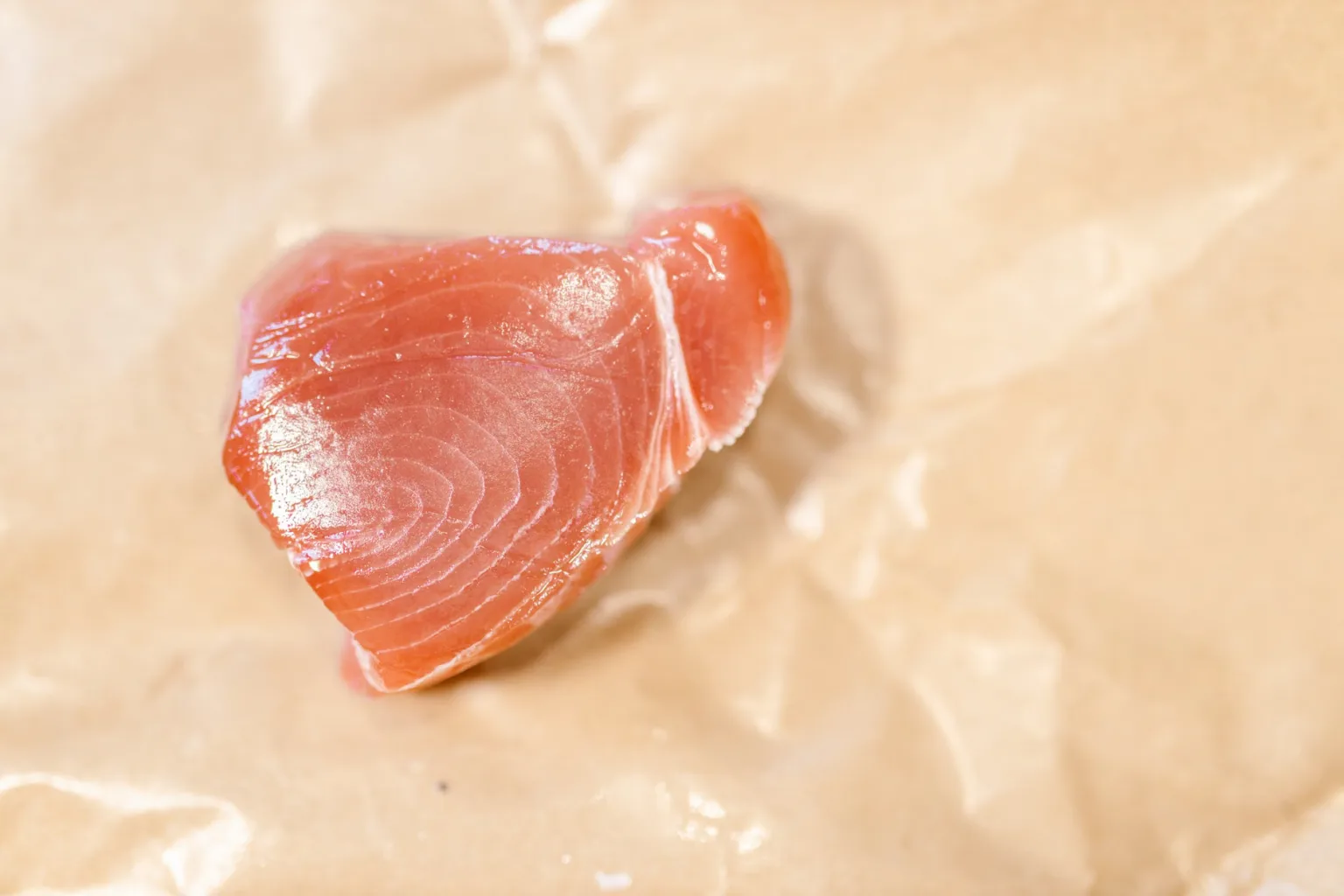
Tuna is a marine fish in the Scombridae family, which also includes mackerel. The name covers several species, so the color, firmness and intensity of the flesh can differ. In the kitchen, tuna is sold fresh in cuts such as loins or steaks, and it is also available canned. This guide focuses on fresh tuna: flesh that can be prepared as whole pieces, portions or chunks in simple or more elaborate dishes. The cut matters. Steaks are often cooked as individual pieces, while chunks can be added to stews or fillings. Different tuna species and cuts are not automatically interchangeable, and replacing one with another may change the finished dish.
When to use it
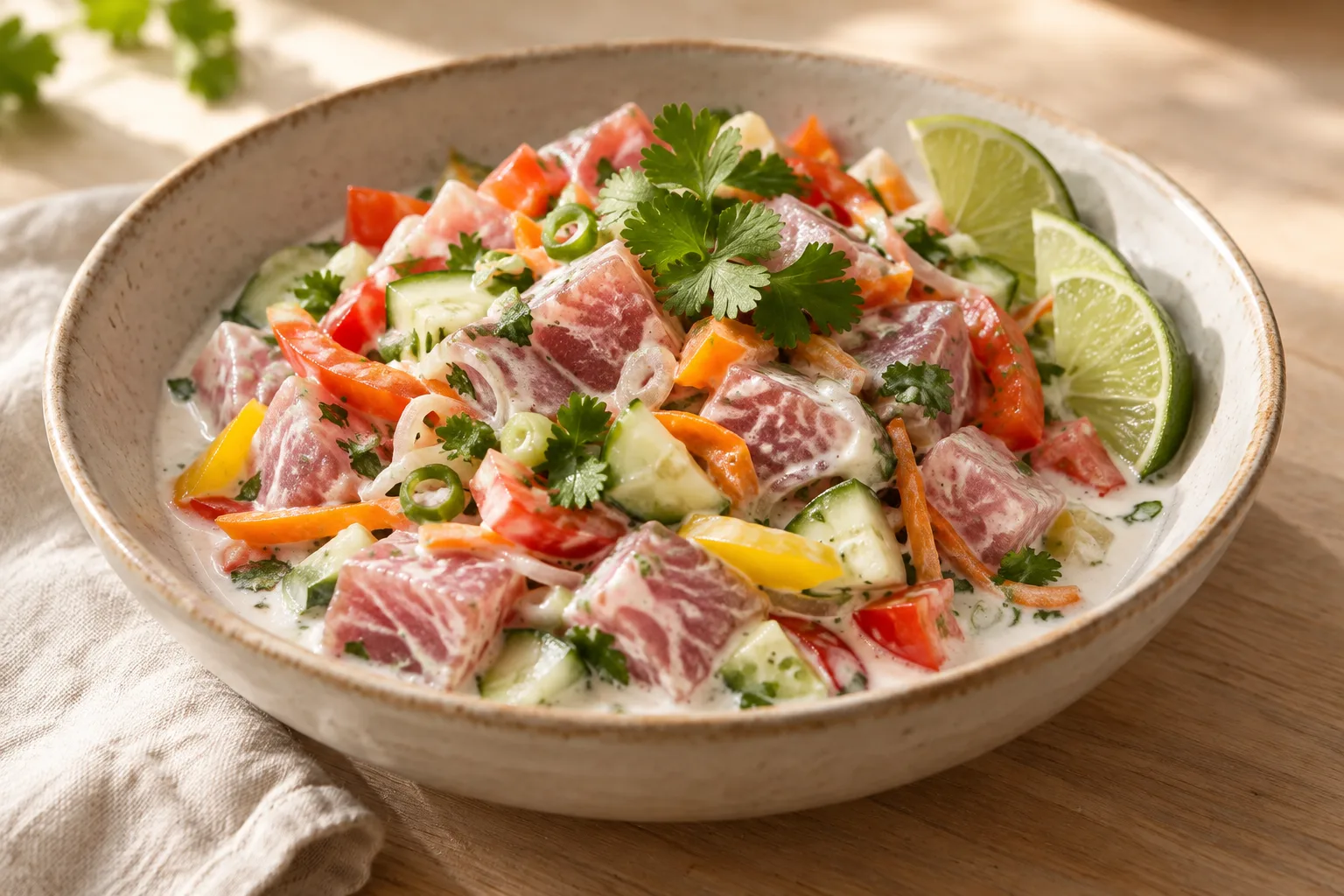
Choose fresh tuna when you want the fish to be the main feature of a meal or to bring a distinct seafood flavor to a dish. Steaks and loins suit grilling or a short cooking period; evenly sized chunks can go into vegetable stews. Tuna may also be used raw, marinated or lightly cooked in suitable preparations, provided the product has been handled appropriately for that use. Watch the cooking closely: prolonged heat can dry the flesh. If you prefer a milder flavor or a different texture, remember that tuna species and cuts vary, so ask what you are buying and adapt the preparation accordingly.
How to use it
Keep fresh tuna cold until you are ready to prepare it, and prevent its juices from contacting other foods. Pat it dry and cut portions to a similar thickness for more even cooking. For a pan or grill, cook the pieces and check the result as you go; avoid applying heat longer than needed, since the flesh can dry out. For a stew, add evenly sized chunks with vegetables and monitor the cooking so the texture remains pleasant. Tuna can also be cut for salads, fillings or marinated dishes. Use it raw only when the product has been bought and handled for that purpose; marinating does not replace safe handling.
Flavour and texture
Flavor and texture depend on species, cut and fat content. Tuna flesh can be firm and pronounced in flavor, while some varieties are milder and some cuts juicier. Brief cooking generally keeps it more tender than prolonged heat, which can dry it out. Canned tuna has a different texture and role from fresh tuna, so the two should not be expected to give identical results in a recipe.
How to choose it
Buy tuna from a retailer that keeps fish refrigerated, and ask which species and cut are available if that matters for your dish. Choose fish that feels cold and packaging that is intact when applicable; take it home promptly. If your journey will be long, use an insulated cooler with ice. Follow the package date and handling directions. Do not rely on appearance alone: how a fish looks or smells cannot by itself establish that it is safe.
Storage
Refrigerate fresh tuna as soon as you get home and keep it cold until use. Wrap it securely or use a container that catches any juices, and keep it apart from other foods to reduce cross-contamination. Clean spills promptly and wash hands and utensils after handling raw fish. Follow package directions and use the tuna promptly; appearance and smell alone are not reliable safety checks.
Substitutions
For a cooked or flaked preparation, canned tuna can be a convenient alternative, although its flavor and texture differ and it should be added in a way that suits the recipe. Another tuna species may also work if available, but expect variation in firmness, color and intensity. Adjust the cut and cooking to the fish you have rather than assuming the timing or result will be identical.
Common mistakes
A common mistake is cooking tuna for too long: prolonged heat can dry the flesh and make its flavor less appealing. Avoid putting very different-sized pieces into the same preparation, since they will not cook evenly. Do not treat fresh tuna as though it were canned, or assume that a marinade makes raw fish handling safe.
Safety and allergens
Keep fish refrigerated, wash hands, and clean surfaces and utensils that have touched raw tuna. Keep its juices away from other foods and follow package directions. Eat tuna raw only if it was intended and handled for that use; if you cannot confirm this, cook it.
Culinary uses
- Main ingredient in a fish dish
- Ingredient for salads, fillings and mixed preparations
Recommended techniques
- Grilling or searing
- Stewing
- Serving raw or lightly cooked in suitable preparations
- Marinating
Pairs well with
- Tomato and onion
- Vegetables
- Rice
- Olive oil or vinegar
Frequently asked questions
Can I use fresh and canned tuna in the same way?
Not exactly. Canned tuna is generally cooked and flakes easily, while fresh tuna is sold in cuts that need suitable preparation. They can be substituted in some dishes, but the texture and flavor will change.
How can I keep fresh tuna from drying out?
Avoid cooking it longer than necessary and check it as it cooks. Pieces of similar size help the fish cook more evenly.
Can fresh tuna be eaten raw?
Only use it raw when it has been bought and handled for that purpose. Keep it cold, and cook it if you cannot confirm that it is suitable for raw consumption.
Ingredient allergens
Allergen listDocumented presence
-
Fish
Tuna
Estimated nutrition
- Fat
- 3.77 g
- Saturates
- 0.47 g
- Carbohydrate
- 10.4 g
- Sugars
- 5.66 g
- Fibre
- 0.9 g
- Protein
- 5.66 g
- Salt
- 1.11 g
Sources and review
Automatically researched, cross-checked and validated content. Sources consulted:
- Client Challenge doi.org/10.2307/jj.27939689.16
- Food Selection & Storage | Home & Garden Information Center hgic.clemson.edu/factsheet/food-selection-storage/
- Tuna - National Center for Home Food Preservation nchfp.uga.edu/how/can/preparing-and-canning-poultry-red-meats-and-seafoods/tuna/
- Kitchen Companion: Your Safe Food Handbook ucanr.edu/sites/default/files/2020-09/336322.pdf
- El atún, ese gran ingrediente de nuestras cocinas - EN LA COCINA Magazine enlacocina.telemesa.es/cocina/el-atun-ese-gran-ingrediente-de-nuestras-cocinas/
- Atún- Gastronomía - Región de Murcia Digital www.regmurcia.com/servlet/s.Sl?r=ReP-20389-DETALLE_REPORTAJESPADRE&sit=c%2C543%2Cm%2C2716
- Tunato, un alimento 100% vegetal que imita al atún crudo y está elaborado en España | Gastronomía & Cía www.gastronomiaycia.com/tunato-un-alimento-100-vegetal-que-imita-al-atun-crudo-y-esta-elabor…
- Qué partes del atún se utilizan en la gastronomía gourmet | Herpac www.herpac.com/partes-atun-gastronomia-gourmet
- Para la ciudadanía www.aesan.gob.es/para-la-ciudadania
- What is the shelf life of tuna preserved at home? | OSU Extension Service extension.oregonstate.edu/ask-extension/featured/what-shelf-life-tuna-preserved-home
- Canned Tuna - Food Source Information www.chhs.colostate.edu/fsi/food-articles/shellfish-and-seafood/canned-tuna/
- Campus Lobo Food Pantry Accepted Donations loborespect.unm.edu/services/highly-requested-list1.pdf
- Emergency Food Supply | Food Safety | Illinois Extension | Illinois extension.illinois.edu/food-safety/emergency-food-supply
- Tuna Canning Season is Here! | Pacific County | Washington State University extension.wsu.edu/pacific/food-2/tuna-canning-season-is-here/
- Tipos de atún: ¿Qué variedades de atún existen? - La Chanca lachanca.com/tipos-de-atun-que-variedades-de-atun-existen/?srsltid=AYCX9vLHqiKtGlLLggepWdvhE…