- Category
- Fruit
- State
- Fresh
- Usual unit
- g
What it is
Watermelon is the edible fruit of a plant in the cucurbit family. It typically has a firm green rind and juicy flesh that may be red or pink; appearance and the presence of seeds vary by variety. It is sold whole or cut, and the flesh can be eaten as it is or used in sweet and savory dishes. Its juiciness suits salads, drinks, and cold soups, while frozen pieces can be used in chilled preparations. Because the rind is handled and cut before reaching the flesh, wash the whole melon under running water and use clean utensils before cutting.
When to use it
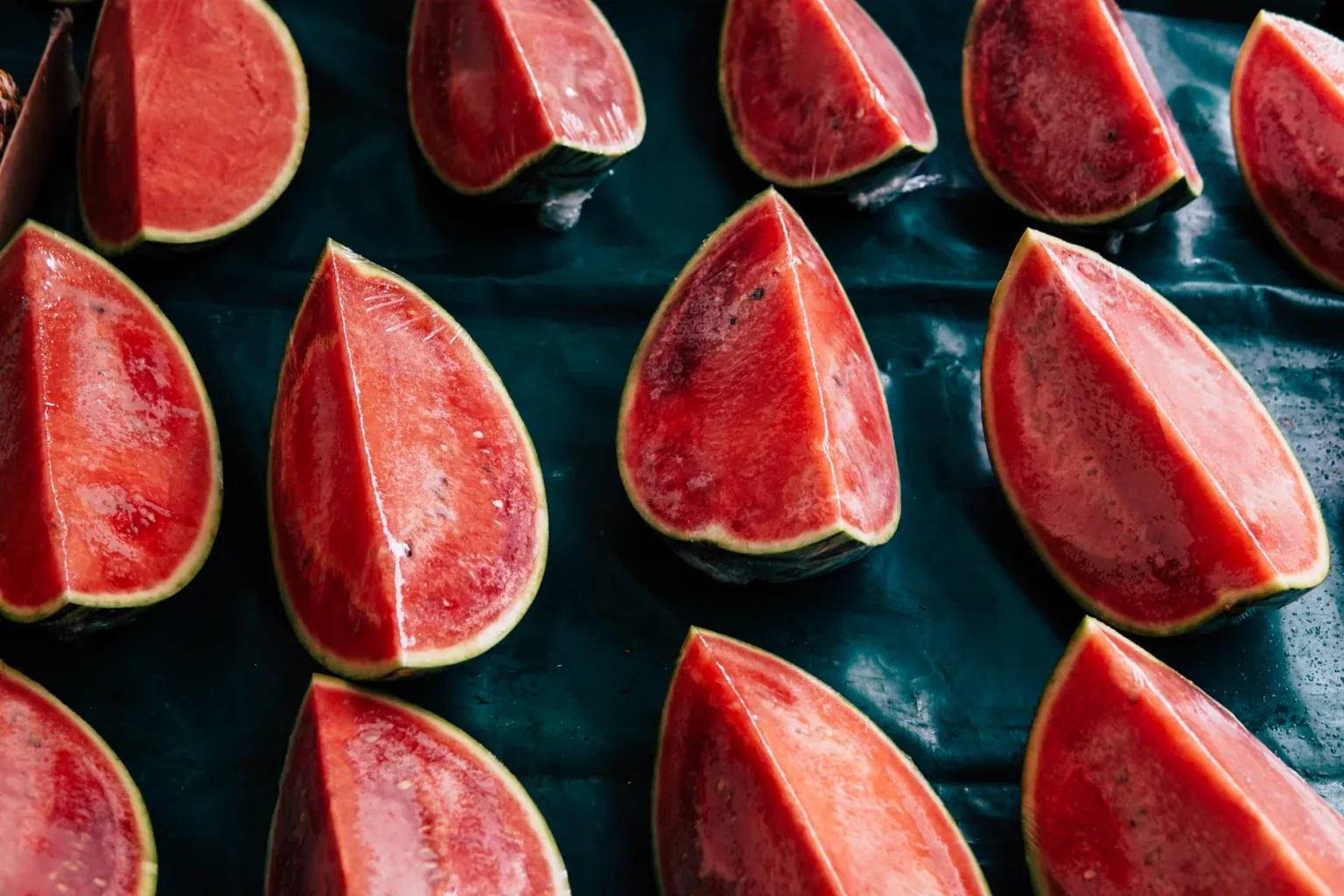
Use fresh watermelon when you want to add a juicy texture and sweet, refreshing flavor to a snack, salad, or dessert. It can also bring sweetness to drinks and cold soups, particularly alongside savory or acidic ingredients. Choose a whole melon if you want to decide when to cut it and how to use it; pre-cut watermelon is convenient when you plan to serve it soon. For a chilled or frozen preparation, cut the flesh into pieces before chilling or freezing it. If you buy a half or packaged cut watermelon, check that it is refrigerated at the point of sale.
How to use it
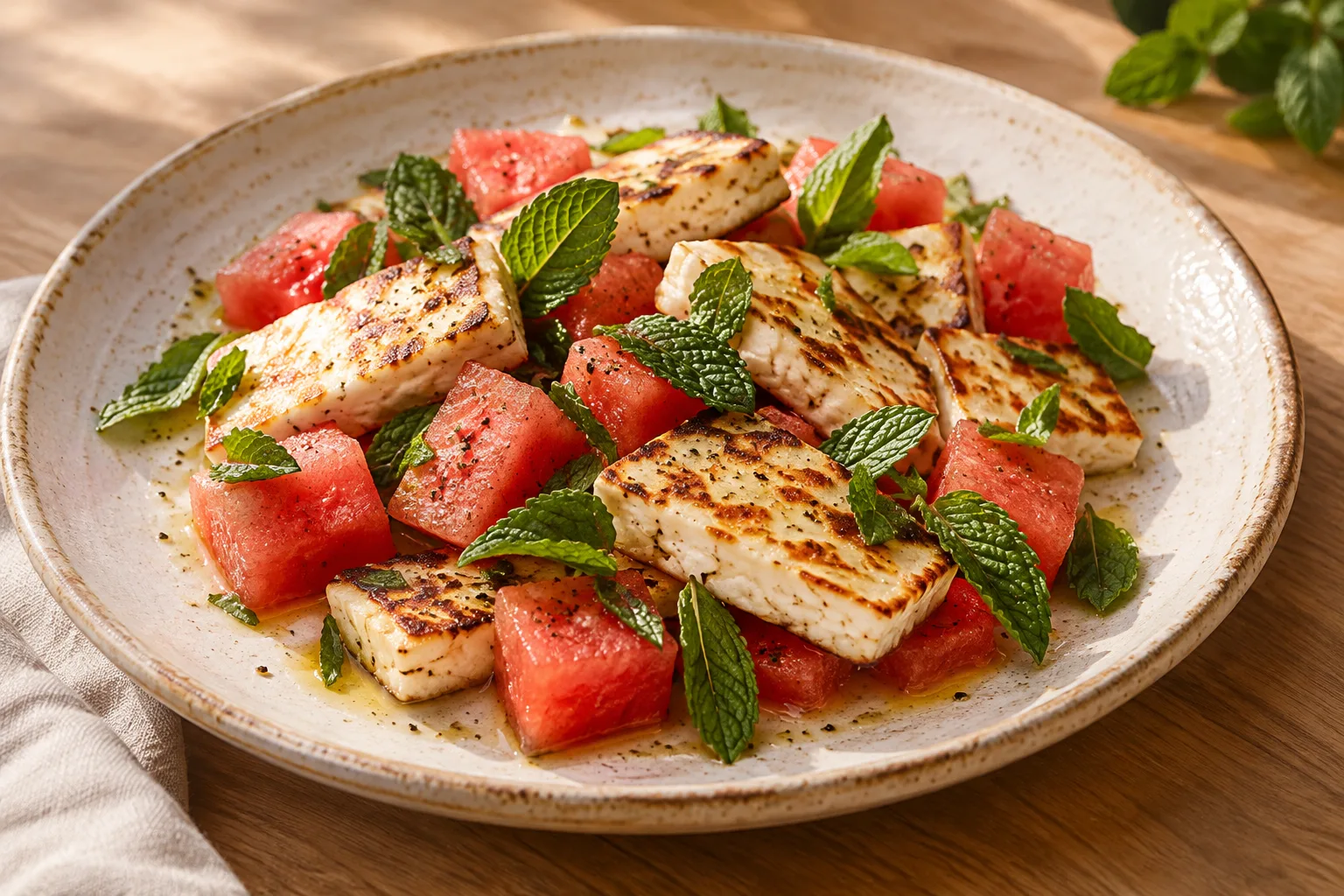
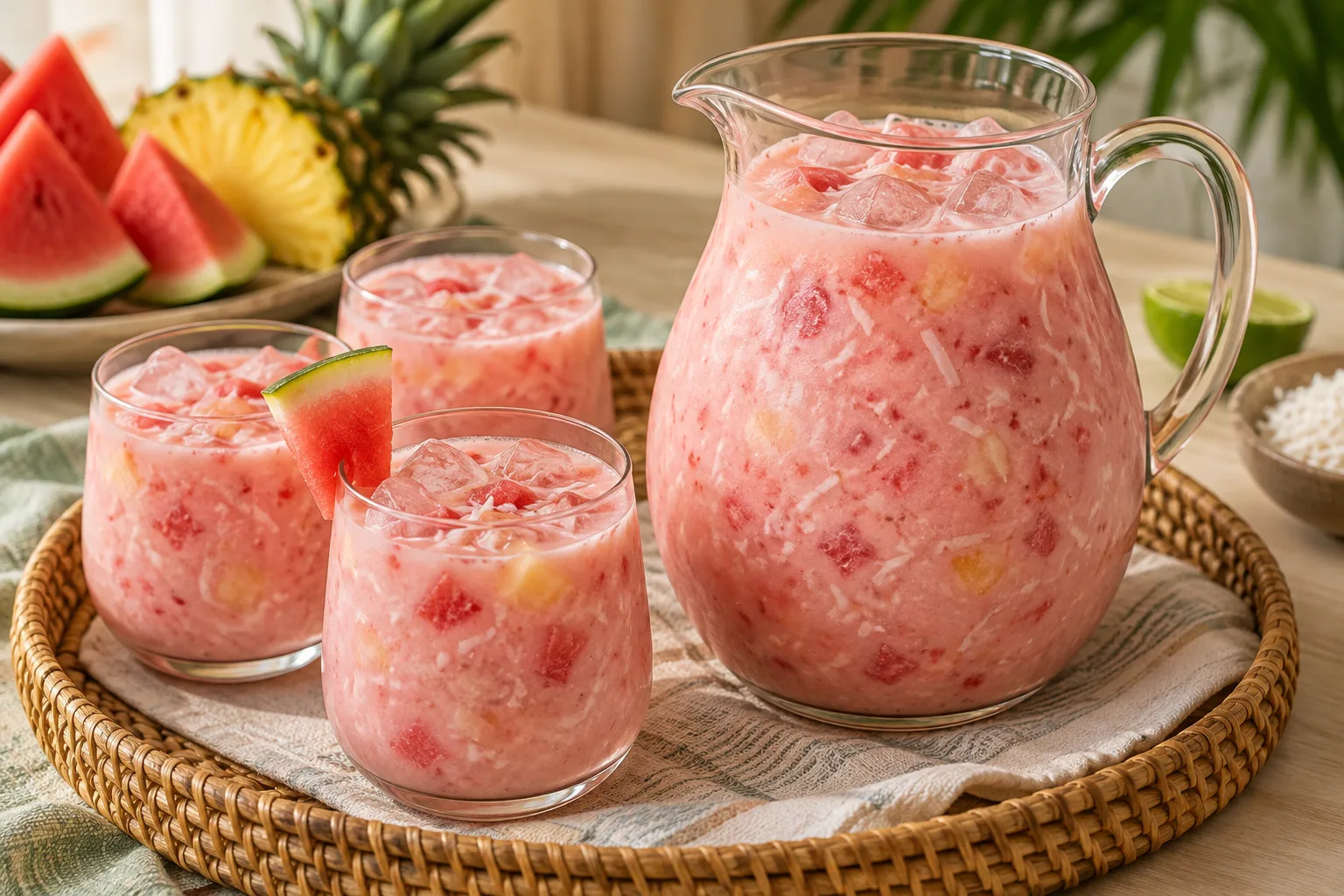
Before cutting a whole watermelon, wash your hands and rinse the rind under running water; scrub the surface with a clean produce brush because melons are firm produce. Dry it with a clean cloth or paper towel and cut it on a clean board, taking care not to drag dirt from the rind into the flesh with the knife. Serve slices or cut the flesh into cubes for salads, fruit skewers, and snacks. For a savory salad, pair it with fresh cheese or feta, tomato, cucumber, or herbs; add a little vinegar or chili if desired. Blend the flesh for a drink or cold soup, or freeze pieces for smoothies and frozen desserts. Refrigerate cut or packaged watermelon and keep it separate from raw meat and the utensils used for it.
Flavour and texture
The flesh is usually sweet and refreshing, with plenty of juice and a crisp texture when freshly cut. Its color can range from pink to red, and seeds may be present or barely noticeable, depending on the variety. Blending makes the flesh fluid; freezing makes it firm for chilled preparations. Ripeness and variety can affect sweetness and texture, so individual melons do not all taste exactly alike.
How to choose it
For a whole watermelon, look for a firm fruit without visible cracks or soft spots. If you buy a half or packaged cut watermelon, choose one that is refrigerated or displayed over ice. Avoid pieces with damaged areas or signs of spoilage. Differences in size, shape, flesh color, and seeds are common among varieties and do not, by themselves, mean the fruit is spoiled.
Storage
Refrigerate watermelon that is sold cut or packaged, and keep cut leftovers in a clean, covered, food-safe container. Keep the fruit separate from raw meat, poultry, and seafood, as well as from utensils that have touched them. Do not leave cut flesh exposed on an unclean surface. The available evidence does not establish one universal storage period for every melon; use the product’s condition and package directions as your guide.
Substitutions
In fruit salads or cold soups, cantaloupe or another melon can stand in for watermelon when you want juicy fruit. In a savory salad, cucumber can provide a mild, crisp texture, although it does not reproduce watermelon’s sweetness or juiciness. Adjust sweet or acidic ingredients in the dish to suit the substitute.
Common mistakes
Do not cut a watermelon without washing the rind first: a knife can carry dirt or microorganisms from the surface into the flesh. Do not use soap, detergent, or commercial produce washes; rinse the fruit under running water instead. Avoid leaving cut watermelon unrefrigerated or letting it touch utensils used for raw meat.
Safety and allergens
Wash your hands and rinse the whole watermelon under running water before cutting, even if you will not eat the rind. Scrub the surface with a clean produce brush and dry it with a clean cloth. Do not use soap or detergent. Refrigerate cut or packaged fruit and prevent cross-contamination from raw meat.
Culinary uses
- Fresh fruit and snack
- Ingredient in salads, cold soups, drinks, and frozen desserts
Recommended techniques
- Wash the whole melon, then cut it into slices or cubes
- Blend the flesh for drinks, cold soups, or smooth frozen desserts
- Freeze pieces for chilled snacks or blended preparations
Pairs well with
- Feta or fresh cheese
- Tomato
- Cucumber
- Mint
- Chili and vinegar
Frequently asked questions
Should I wash a watermelon before cutting it?
Yes. Rinse the whole melon under running water and scrub the rind with a clean produce brush. This helps reduce the chance that a knife will transfer dirt from the surface to the flesh.
How can I serve watermelon?
Serve it in slices or cubes, add it to salads, blend it into drinks or cold soups, or use frozen pieces in chilled preparations.
How should I store cut watermelon?
Refrigerate it in a clean, covered container. Keep it separate from raw meat and from utensils that have touched raw meat.
Ingredient allergens
Allergen listThere are no verified associations for these ingredients yet.
Estimated nutrition
- Fat
- 0.25 g
- Saturates
- 0 g
- Carbohydrate
- 7.45 g
- Sugars
- 6.27 g
- Fibre
- 0.4 g
- Protein
- 0.78 g
- Salt
- 0 g
Sources and review
Automatically researched, cross-checked and validated content. Sources consulted:
- Client Challenge doi.org/10.2307/jj.27939689.16
- Culinary - Cibola High School cibola.aps.edu/programs/career-and-technical-education/culinary
- Food Storage in Home | USU extension.usu.edu/preserve-the-harvest/research/food-storage-in-home
- USDA FoodData Central libguides.marist.edu/fdc
- Storing Food for Safety and Quality wpcdn.web.wsu.edu/extension/uploads/sites/45/2017/03/PNW0612-Storing-Food-for-Safety-and-Qua…
- Para la ciudadanía www.aesan.gob.es/para-la-ciudadania
- Selecting and Serving Produce Safely | FDA go.unl.edu/handlinggroceries
- I can bake with cantaloupe? | Live Well. Eat Well. | Illinois Extension | Illinois extension.illinois.edu/blogs/live-well-eat-well/2023-07-12-i-can-bake-cantaloupe
- GASTRONOMÍA. La sandía | Revista Viajeros www.revistaviajeros.es/viajes-con-sabor/turismo-gastronomico/gastronomia-la-sandia
- Sandía, el ingrediente comodín para platos dulces y salados | Ideal gourmet.ideal.es/actualidad/sandia-ingrediente-comodin-20200904171523-nt.html
- Sandía: todo lo que debes saber sobre esta fruta de verano - Blog Frutas Charito frutascharito.es/blog/sandia-todo-lo-que-debes-saber-sobre-esta-fruta-de-verano/
- Lo que debés saber sobre la sandía | Recetas Nestlé www.recetasnestle.com.ar/escuela-de-sabor/ingredientes/sandia