- Category
- Meat
- State
- Fresh
- Usual unit
- unit
What it is
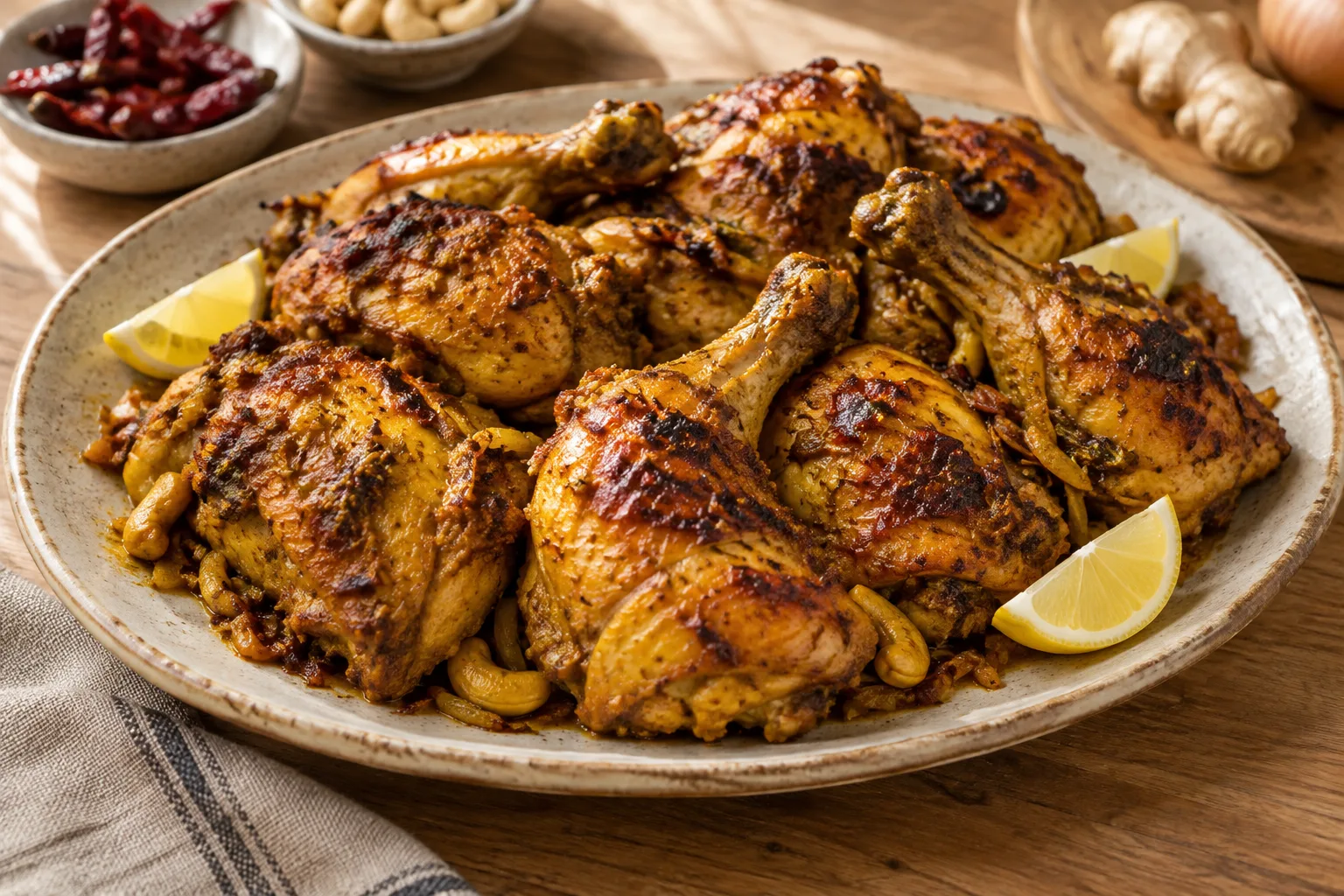
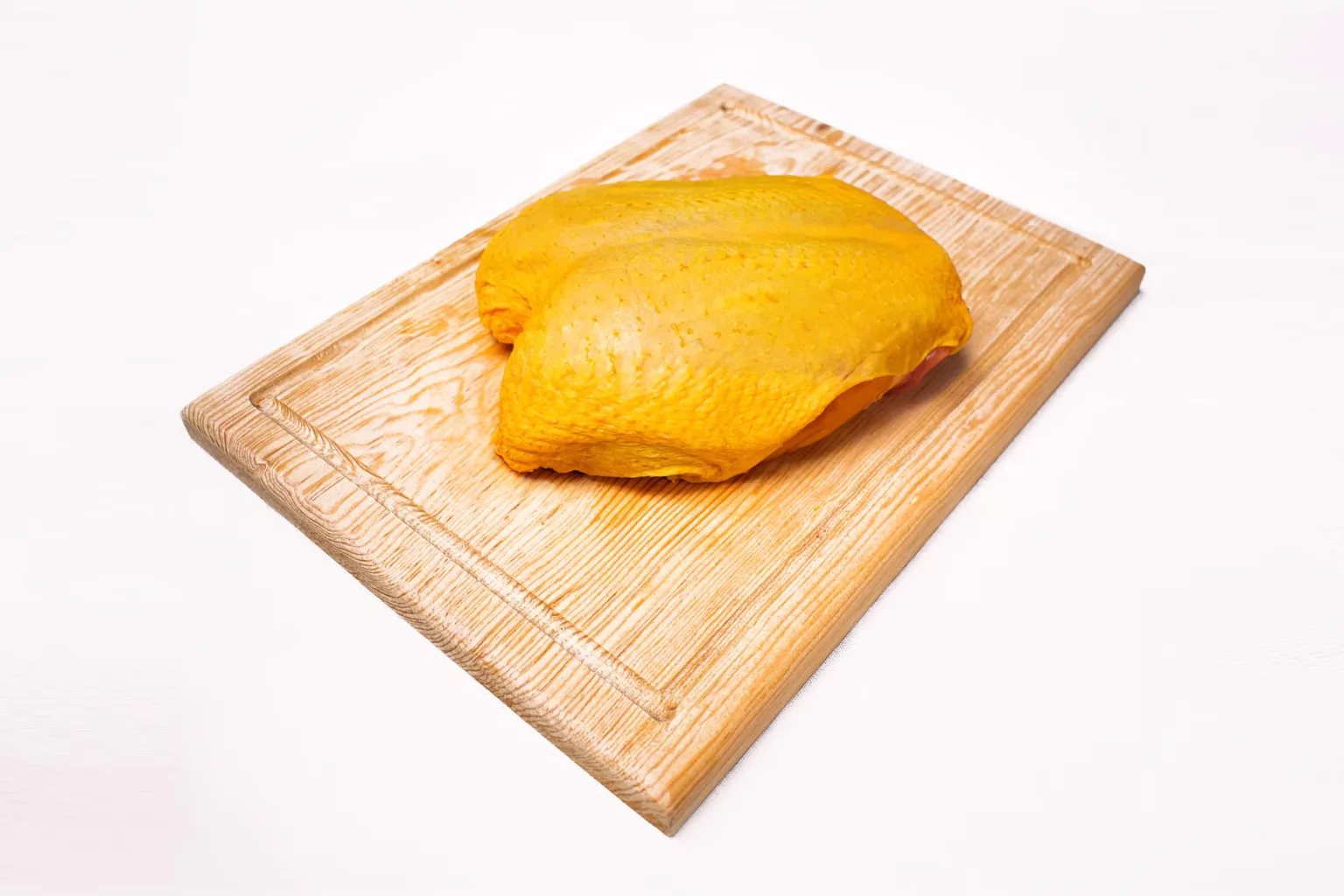
Cut-up whole chicken is a chicken divided into several pieces rather than sold whole or as a single cut. The assortment depends on the butchering and the product: it may include breast, thighs, drumsticks, wings and bone-in pieces, but not every pack contains the same parts. Pieces can be cooked as a main dish or used in soups and stews; cooked chicken can also be added to a salad. Since cuts differ in size, shape and bone content, adapt the preparation to the particular pieces in the package.
When to use it
Choose cut-up chicken when you want several portions in one dish or a mix of pieces for a meal. It is practical for roasting, stewing, or making soup and broth; cooked chicken can also be used in a pasta salad. Check the package contents: if the pieces differ in size, they may not be ready at the same time. For a recipe that calls for uniform portions or a particular cut, choosing specific pieces rather than a mixed selection is more straightforward.
How to use it
Check which pieces are in the package and adapt the method to their size and whether they have bones. Season and roast them, cook them on a grill, or fry them; for a stew, brown the pieces and continue cooking them with the other ingredients. Chicken pieces can also be used in soups and broths, and cooked chicken can be added to salads with pasta and vegetables. If pieces of different sizes are mixed together, check them individually rather than assuming they cook at the same rate. Cook chicken thoroughly before serving, and do not eat it raw.
Flavour and texture
Chicken has a mild flavor and suits a range of preparations, from roasting and frying to stews and soups. Its flavor and texture vary with the cut and cooking method; a mixed selection may contain pieces with different proportions of meat and bone. In salads, cooked chicken pairs with pasta, vegetables and herbs, while in soups and broths it can be combined with other ingredients.
How to choose it
Check which pieces are included and whether they are bone-in or boneless; these details affect how the chicken can be used in a recipe. If you need portions of similar size, look for a selection with more uniform cuts. For a dish that specifies breast, thigh or another particular piece, choose that cut rather than assuming all packages of cut-up chicken are alike.
Storage
Check the package label for storage directions that apply to that product and follow any stated time limit. No single storage period can be inferred from the cut alone: directions depend on the specific product and its packaging. If the package gives instructions for keeping or freezing the chicken, follow them and refer to the label before preparing it.
Substitutions
You can replace the assortment with other chicken cuts when the recipe allows, bearing in mind that shape and bone content may differ. A combination of breast and thigh portions can also work in dishes that allow different cuts. If the recipe depends on particular pieces, use the same type of cut where possible to preserve the intended presentation and balance.
Common mistakes
Do not assume that every piece in a pack is the same size or will cook at the same rate. Check which cuts are included and adapt the preparation instead of treating every piece as identical. Do not eat chicken raw; it must be cooked thoroughly before serving.
Safety and allergens
Do not eat raw chicken. Cook it thoroughly before serving; chicken meat may carry Salmonella.
Culinary uses
- Main protein for roasted or stewed dishes
- Chicken for soups, broths and salads
Recommended techniques
- Roasting
- Grilling
- Frying
- Stewing or braising
Pairs well with
- Pasta, salad vegetables and fresh herbs
- Soup vegetables and broth ingredients
Frequently asked questions
Which pieces may be included in cut-up chicken?
The assortment depends on how it was butchered. It may include breast, thighs, drumsticks, wings or other bone-in pieces; check the package contents and label.
Can I use cut-up chicken in a salad?
Yes. Cook the chicken thoroughly, cut it into pieces and add it to a salad; it pairs with pasta, vegetables and herbs.
Will every cut work for the same recipe?
Not necessarily. Shape, size and bone content vary; choose pieces that suit the dish and adapt the preparation.
Ingredient allergens
Allergen listThere are no verified associations for these ingredients yet.
Sources and review
Automatically researched, cross-checked and validated content. Sources consulted:
- Client Challenge doi.org/10.2307/jj.27939689.16
- 8 usos del pollo en la cocina que no conocías www.cashfresh.es/8-usos-del-pollo-en-la-cocina-que-no-conocias/
- Carne de pollo - Wikipedia, la enciclopedia libre es.wikipedia.org/wiki/Carne_de_pollo
- Todo lo que debes saber sobre la carne de pollo - Estudia Hostelería estudiahosteleria.com/blog/cocina/todo-lo-que-debes-saber-sobre-la-carne-de-pollo/
- El pollo en la gastronomía y su historia nutriguia.com/gastronomia/200505130001.html
- Pollo Asado con Sabor a Tradición: Técnicas, Cortes y Todo lo que Debes Saber - Mesón Galicia mesongaliciafuenlabrada.com/pollo-asado-con-sabor-a-tradicion-tecnicas-cortes-y-todo-lo-que-…
- Comité Científico aesan.gob.es/dam/jcr:a7c4e553-46f5-4def-9ede-b6d1e19b3948/comite_cientifico_42.pdf
- Ensalada de pasta y pollo | University of Maryland Extension extension.umd.edu/recipes-spanish/ensalada-de-pasta-y-pollo
- Desarrollo de planes HACCP para la Empresa ... bdigital.zamorano.edu/bitstreams/ec4b40f4-9b00-4cf5-af6b-ac892e9e4e42/download
- Security verification — Revista Española de Fisiología revistas.unav.edu/index.php/ref/article/download/49462/39354/145827
- Papel de la histamina en la alimentación openaccess.uoc.edu/server/api/core/bitstreams/4b662832-58e3-4077-87e7-d6257de393e2/content
- - YouTube www.youtube.com/watch?v=Qoh6tg1MNd4