Documentary synthesis prepared with AI assistance. It does not replace specialist review or certify kitchen testing. · Updated 31 October 2026
Two islands, between ocean and volcanic land
São Tomé and Príncipe is an island country in the Gulf of Guinea, off the western equatorial coast of Central Africa. Its two principal islands are separated by sea, and both the surrounding waters and the tropical land contribute to what is eaten. Fish and seafood are prominent, while meals also draw on bananas, cassava, maize, beans, taro, breadfruit and other local produce. These ingredients do not make a single fixed menu: dishes and their frequency differ between islands, and named preparations are associated with each.
The islands’ culinary landscape also reflects the history of cultivation and exchange. Sugar, coffee and cacao became important plantation crops; cacao remains closely associated with the country’s agricultural past and present. Yet the everyday food described in culinary accounts is not simply plantation produce. Fish, roots, cooked bananas and vegetables form the foundation of many meals, with imported foods also part of the national food supply. A useful way to understand the cuisine is through the relationships between sea, garden, market and household: local ingredients are combined in stews, served with substantial starches, or transformed into snacks and sweets. Portuguese and African influences are part of this history, but individual dishes should be understood through their documented ingredients and contexts rather than assigned a single origin.
Plantations, forced labour and culinary exchange
Portuguese navigators reached the islands in the fifteenth century, and Portuguese settlement followed. The islands were drawn into Atlantic trade, including the enslavement and forced movement of people from Africa. Sugar plantations became important in the early colonial economy; later, coffee and cacao plantations, known as roças, reshaped agriculture and land use. Accounts of this period also describe the continuation of coercive labour after slavery was formally abolished. São Tomé and Príncipe became independent in 1975. These histories matter to food because they shaped who cultivated the land, what crops were grown for export, and the communities and traditions that developed on the islands.
African and Portuguese influences are documented in the country’s cuisine, but they do not explain every dish in the same way. Local ingredients, island conditions and changing household circumstances also shaped preparations. The matata of clams with Port wine, for example, has a documented Portuguese connection through its wine, while fish stews and dishes built around local roots and leaves reflect the ingredients available in the islands. Cacao’s role likewise has more than one dimension: it is an export crop associated with plantation history and a food product that can be processed and tasted. Keeping these strands distinct helps avoid turning a complex history into a simple story of culinary blending.
Fish, roots, greens and crops
Fish is a defining source of protein, eaten fresh, dried, salted or smoked, and prepared in stews or grilled. Seafood includes shellfish and other marine foods; the named dish matata uses clams. Plant foods documented in the cuisine include cooked banana, cassava, breadfruit, taro or matabala, maize, beans, papaya and other tropical fruits. Leafy vegetables, eggplant and okra appear in stews, while palm oil is used in some preparations. Rice accompanies several dishes and can also be cooked as a sweet dish with coconut.
The pantry includes both foods grown locally and foods brought from elsewhere. National food-crop production does not meet all consumption needs, so imports form a significant part of the food supply. This distinction matters: the presence of cacao, coffee or tropical fruit in the agricultural landscape does not mean every household meal uses them. Cacao and coffee are especially important as crops with historical and economic significance, and coffee is also reported as a seasoning in some preparations. Cassava can be served as a root or processed into flour for pirão. Bananas may be boiled, fried or mashed. These transformations let a small group of staple ingredients take different roles—as the substantial base of a meal, a side dish, or a snack.
Smoky stews, rich sauces and gentle sweetness
Many savoury dishes bring fish or meat together with vegetables, leaves, oil and seasonings in a pot. In calulu, the combination can include smoked fish or meat, prawns, tomato, okra, eggplant, onion and local leaves or herbs. The dish is described as thick, but versions differ in their choice of protein and vegetables. Smoked or salted fish gives some preparations a concentrated savouriness; fresh fish offers a different starting point. Palm oil enriches sauces, while tomato, onion, garlic and chilli contribute aromatic, sweet or hot notes in some recipes.
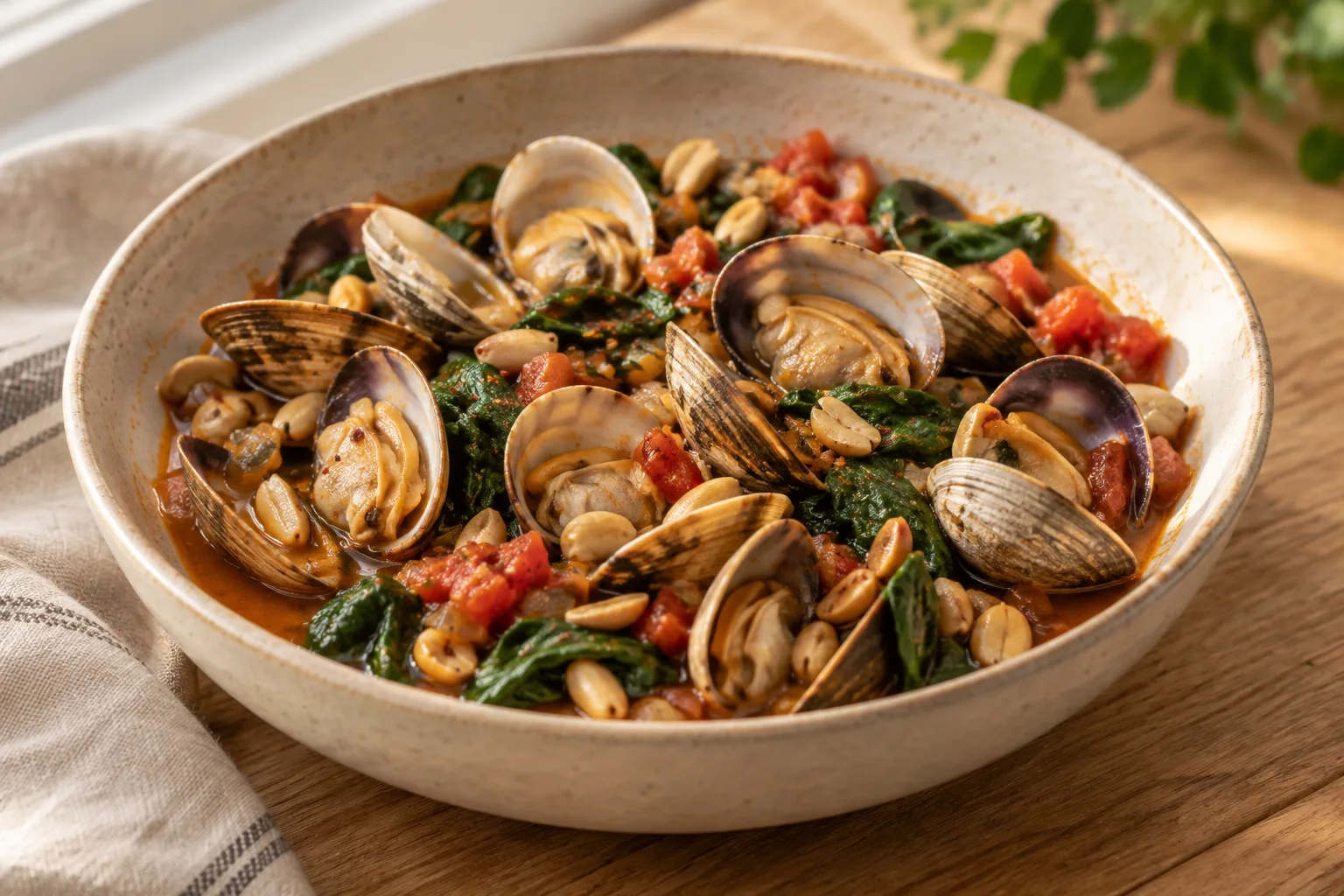
Molho no fogo is another smoky, vegetable-rich preparation: a documented version combines salted, smoked white fish with tomato, onion, eggplant, okra, pepper and palm oil. It is served with boiled banana and cassava. Other dishes broaden the flavour range. Matata pairs clams with Port wine and may include tomato, spinach and peanuts, giving a contrast between seafood, leafy vegetables and nuts. Sweet preparations include arroz da India, rice cooked with coconut milk and flavoured with lemon and cinnamon. These examples show a cuisine with several distinct registers rather than one signature seasoning: smoky and savoury stews, seafood with wine, starches with coconut, and fruit-based or cacao sweets.
Family meals and occasions for sharing
Calulu is especially well documented as a dish for sharing. It is eaten with family and served at religious festivals, weddings and funerals; accounts also describe portions being distributed near churches on some festival occasions. The dish is reported across the country, with a stronger presence in São Tomé and less frequent consumption on Príncipe. Its ingredients are not fixed: smoked fish, chicken, pork, beef and other proteins are documented, along with different leaves and herbs. This variety is part of the dish’s character, not a reason to claim that every family follows the same recipe.
Cooking knowledge also appears in the practical choices made around available ingredients and time. The country’s tourism material notes that cooking has become more practical for some households because of time pressures and limited financial resources. That observation should sit alongside, not replace, the continued presence of named traditional dishes. Cacao cultivation and processing connect food to another kind of shared knowledge: harvesting, fermenting and drying cacao beans are stages in the crop’s transformation. Cooking classes and plantation visits offer visitors ways to encounter these practices, but they are not substitutes for the household and community contexts in which meals are prepared and shared. The evidence supports particular occasions and dishes; it does not establish a single ritual calendar for the whole country.
Stewing, smoking and transforming staples
Slow or moderate simmering brings fish, vegetables and seasonings together in several documented dishes. In one preparation of molho no fogo, chopped vegetables and fish are cooked in a pot with water and palm oil. The named ingredients include salted, smoked fish, tomato, onion, eggplant and okra; the finished dish is served with boiled banana and cassava. Calulu is also cooked as a substantial stew, though its ingredients and methods vary. Smoked and salted fish are not interchangeable with fresh fish: they are distinct pantry forms that bring different flavours and require different handling.
Staples are transformed in several ways. Cassava flour is cooked into pirão, a thick accompaniment. Matabala is made into porridge or fritters, while banana is boiled, mashed or fried. Príncipe’s documented foods include bobofito, fried banana, and fried yam. Rice can be cooked with coconut milk for a sweet dish. Cacao processing involves harvesting the pods, fermenting the beans and drying them before further use. These methods—stewing, smoking, drying, boiling and frying—are linked to particular foods rather than being a single shared procedure. They explain how fish and crops become distinct dishes, from a thick family stew to a fried snack or a sweet rice preparation.
A substantial dish with its accompaniment
A meal may centre on a fish dish or stew, with a starchy accompaniment that makes it substantial. Calulu is served with mashed banana or breadfruit, rice, maize flour or cassava flour. Molho no fogo is commonly paired with boiled banana and cassava. Grilled fish is also documented with rice, breadfruit or cassava. These pairings bring together a savoury main preparation and a softer, filling starch; the accompaniment depends on the dish and the household rather than following one universal format.
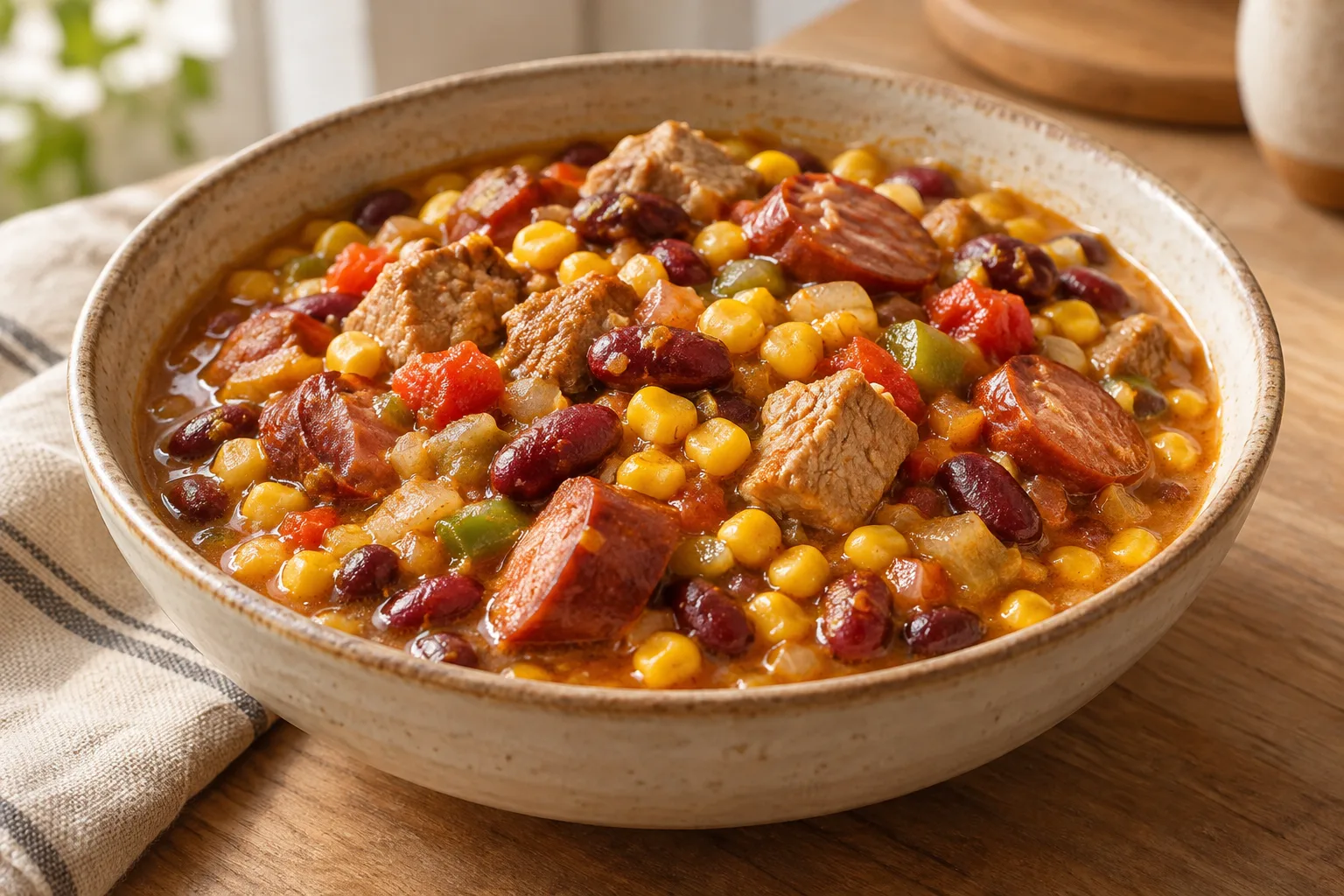
Other foods help show the range of meals and occasions. Cachupa is described as a preparation of maize and legumes, and a recipe in the KitchenPause collection carries that name. Matata, the clam preparation with Port wine, is also represented in the collection and can be served with rice. Breakfast may include reheated food from the previous evening, as well as sweet rice with maize and coconut. Street foods described in culinary accounts include grilled corn and banana snacks. These examples cover everyday meals, prepared dishes and foods sold for eating between meals; they do not imply that every meal follows the same sequence or that all dishes are ceremonial. The available recipe collection includes Cachupa and Matata; other dishes remain important cultural references whether or not they have a recipe entry there.
Names for dishes and ingredients
The names below identify specific preparations and ingredients documented in São Tomé and Príncipe. Spellings can vary across accounts, and a dish name does not guarantee one standard recipe. Ingredients and accompaniments change between versions, especially in stews such as calulu.
- Calulu (calúlú): A thick stew made with combinations of smoked fish or meat, prawns, vegetables, leaves and seasonings. It is associated with family meals and religious festivals, weddings and funerals.
- Molho no fogo: A cooked fish sauce or stew, documented with salted, smoked white fish, vegetables, okra, pepper and palm oil; often served with banana and cassava.
- Matabala: A root crop, also identified as taro in culinary descriptions; used in preparations such as porridge and fritters.
- Pirão: A thick accompaniment made from cassava flour.
- Arroz da India: A sweet rice preparation with coconut milk, lemon and cinnamon.
- Matata: A clam dish associated with Port wine; some documented versions also use tomato, spinach and peanuts.
- Bobofito: Fried banana named among the traditional foods of Príncipe.
One country, many cuisines
São Tomé Island
São Tomé’s documented dishes include calulu, molho no fogo, breadfruit with salted fish, cassava-flour pirão and preparations of matabala. Calulu has a strong presence in the island’s districts and is shared at family meals and religious festivals, weddings and funerals. These examples show several ways of combining fish, roots and vegetables, without implying that every community makes an identical version.
Príncipe Island
Foods listed for Príncipe include molho no fogo, azagoa, ufundi maquita, obobô, fried banana called bobofito and fried yam. Calulu is known across the country but is reported as less frequently eaten on Príncipe than on São Tomé. The documented names identify island-specific culinary references, while the available evidence does not establish one uniform Príncipe menu or detailed variation among local communities.
Cook