Africa · Northern Africa
Tunisia
Tunis, Nabeul and Sfax offer routes through vegetables, peppers, fish, almonds and culinary transmission, with links to Tunisian recipes.
Food and eating habits
How people eat in Tunisia
50 indicators exploring everyday meals, ingredients and food culture. Information is completed progressively from documented evidence.
48 of 50 indicators with documented information
Not all data are comparable: food supply, purchases and intake are different measures. Check the period, population and method for each finding. Qualitative descriptions do not establish percentages or amounts.
Timing and company
7/8
| Indicator | Findings and context |
|---|---|
| Meal times |
Most students reported keeping a regular meal schedule. Scope, method and limitations
|
| Meals per day |
8.3% were classified as breakfast skippers, eating breakfast between zero and four times a week. Scope, method and limitations
|
| Meal duration |
In the female university sample, evening chronotype was associated with longer meals. Scope, method and limitations
|
| Daily energy distribution | Insufficient data in the sources consulted |
| Weekdays and weekends |
On weekends, eating at one’s own or family home predominated. Scope, method and limitations
|
| Eating at home and away |
83·3% reported eating at university; 81·8% ate at their own or family home on weekends. Scope, method and limitations
|
| Cooking frequency |
In the reference week, each person reported cooking lunch at home on an average of 2.6 days and dinner on 2.7 days. Scope, method and limitations
|
| Eating together |
In the Nabeul family described, gatherings to eat with the extended family mainly took place at weekends or on special occasions. Scope, method and limitations
|
Pantry and recipes
2/2
| Indicator | Findings and context |
|---|---|
| Most consumed ingredients |
Survey 2015: recorded quantities were 49,2 kg of large bakery bread, 23,8 kg of baguette and 85,3 kg of fresh vegetables per person per year. Scope, method and limitations
|
| Ingredient prevalence in recipes |
Garlic, egg and olive oil appear in the sampled mechouia, ojja with merguez and lablabi recipes. Scope, method and limitations
|
Cereals and plant foods
6/6
| Indicator | Findings and context |
|---|---|
| Cereals and cereal products |
Survey 2015: white semolina 14,9 kg, dry white-semolina couscous 10,7 kg, industrial pasta 12,4 kg and rice grain 2,7 kg per person per year. Scope, method and limitations
|
| Bread |
Survey 2015: large bakery bread 49,2 kg, baguette 23,8 kg and other bakery breads, such as mbasses and brioche, 6,3 kg per person per year. Scope, method and limitations
|
| Pulses |
Survey 2015: dried chickpeas 1,7 kg, dried beans 0,8 kg and dried lentils 0,5 kg per person per year. Scope, method and limitations
|
| Vegetables |
Survey 2015: fresh peppers or chillies 13,9 kg, fresh tomatoes 13,1 kg and carrots with leaves 4,3 kg per person per year. Scope, method and limitations
|
| Fruit |
Survey 2015: watermelon 26,2 kg, melon 10,2 kg and table grapes 5,5 kg per person per year. Scope, method and limitations
|
| Potatoes, roots and tubers |
Survey 2015: recorded potato quantities were 19,9 kg per person per year. Scope, method and limitations
|
Protein foods
5/5
| Indicator | Findings and context |
|---|---|
| Meat |
Survey 2015: meat and poultry together 32,5 kg; plucked and eviscerated chicken without head or feet 16,8 kg; bone-in beef 3,6 kg per person per year. Scope, method and limitations
|
| Fish and seafood |
Survey 2015: fish overall 9,3 kg; ungutted sardine 1,8 kg; canned tuna 0,7 kg per person per year. Scope, method and limitations
|
| Eggs |
Survey 2015: an average of 186,9 eggs per person per year, expressed as units. Scope, method and limitations
|
| Milk and dairy products |
Survey 2015: sterilised semi-skimmed milk 47,4 kg, flavoured yoghurt 8,2 kg and cheese 1,4 kg per person per year. Scope, method and limitations
|
| Protein sources |
Survey 2015: estimated dietary-ration protein came from cereals 50,9%, pulses and condiments 4,1%, meat and poultry 15,3%, fish 3,2%, and milk, dairy products and eggs combined 15,5%. Scope, method and limitations
|
Fats, flavours and condiments
3/3
| Indicator | Findings and context |
|---|---|
| Cooking fats |
Survey 2015: olive oil 7,4 kg, subsidised seed oil 14,4 kg, other seed oils 4,0 kg and animal butter 0,4 kg per person per year. Scope, method and limitations
|
| Herbs and spices |
In the sample, pepper appears in mechouia and ojja; ojja includes paprika, turmeric and coriander, and lablabi includes cumin. Scope, method and limitations
|
| Sauces and condiments |
A traditional harissa preparation uses red-chilli purée, salt, garlic and coriander to season dishes and add heat. Scope, method and limitations
|
Meal composition
6/6
| Indicator | Findings and context |
|---|---|
| Breakfast composition |
The reference-menu breakfast combines a hot drink, bread with olive oil, halva or jam—or cereals for children—a dairy product, and fruit or juice. Scope, method and limitations
|
| Main meal composition |
The reference-menu lunch includes a starter such as salad, meat or fish with a starchy food and vegetables, fruit or yoghurt, drinks and bread. Scope, method and limitations
|
| Dinner composition |
The reference-menu dinner shares the lunch structure: starter, main dish with accompaniments, fruit or dairy, drinks and bread. Scope, method and limitations
|
| Appetisers and snacks |
The model’s afternoon snack includes juice and biscuits for children; adults have a hot drink with biscuits or a small sandwich. Scope, method and limitations
|
| Desserts and sweets |
The consulted makroud recipe uses semolina dough with a date-and-spice filling; the pastries are fried and dipped in syrup. Scope, method and limitations
|
| Portion sizes |
In the analysis of the 2009 HSHS cohort, one fruit-or-vegetable portion equals 80 g as a classification unit. Scope, method and limitations
|
Techniques and equipment
5/5
| Indicator | Findings and context |
|---|---|
| Cooking techniques |
The recipes consulted use the oven grill for mechouia salad and deep-frying in oil for makroud. Scope, method and limitations
|
| Vegetable preparation |
In the mechouia recipe, peppers and tomatoes are grilled under the oven grill and then peeled; the peppers are also deseeded and cut up. Scope, method and limitations
|
| Food preservation |
Traditional harissa preparation includes sun-drying red peppers and storing the paste in clay or glass containers. Scope, method and limitations
|
| Fermented foods |
Lben is made by spontaneous acidification of milk until coagulation, followed by churning to separate traditional butter. Scope, method and limitations
|
| Kitchen equipment |
In 2024, 77.6% of households had a cooker with oven, 95% a refrigerator and 8.1% a freezer. Scope, method and limitations
|
Drinks
3/3
| Indicator | Findings and context |
|---|---|
| Everyday drinks |
In 2022, 49% reported consuming soft drinks, energy drinks or sports drinks during the previous day or night; 68% reported sweet tea, coffee or cocoa; and 23% fruit juice or fruit drinks. Scope, method and limitations
|
| Coffee and tea preparation |
A Tunisian mint tea recipe boils tea with sugar, adds mint, lets it steep and strains the drink. Pine nuts are optional when serving. Scope, method and limitations
|
| Drinks with meals |
As a culinary example, malthouth bel bisbes, a barley dish with fennel leaves, coriander and vegetables, is accompanied by fresh mint tea. Scope, method and limitations
|
Nutrition and dietary patterns
2/3
| Indicator | Findings and context |
|---|---|
| Energy and nutrients |
The estimated daily ration per full meal participant provided 2381.0 kcal and 79 g of protein in the 2015–2016 survey. Scope, method and limitations
|
| Salt and sugars |
In Bizerte, salt intake estimated from 24-hour urine was 8.1 ± 2.7 g/day in January 2015, expressed as mean and standard deviation. Scope, method and limitations
|
| Dietary patterns | Insufficient data in the sources consulted |
Shopping, prices and waste
7/7
| Indicator | Findings and context |
|---|---|
| Food expenditure |
Food accounted for 30.1% of total household expenditure in the 2021 survey. Scope, method and limitations
|
| Cost of a common basket |
The same normative food basket for a Greater Tunis family cost 579 DT per month using study-collected prices and 608 DT using INS prices in the first half of 2019. Scope, method and limitations
|
| Cost of specific meals |
The small Pizza Margherita is listed at 12.000 TND per item on the consulted DaDa Café menu in Francville, Tunis. Scope, method and limitations
|
| Grocery shopping locations |
50.9% named small retailers as their main grocery shopping location and 36.7% supermarkets. Scope, method and limitations
|
| Shopping frequency |
50% bought groceries once a week and 31.3% two or three times a week. Scope, method and limitations
|
| Prepared food and delivery |
As an example of prepared-food offerings, DaDa Café’s menu in Tunis includes pizzas, burgers and pasta bolognese. Scope, method and limitations
|
| Household food waste |
29.3% cited overcooking as a reason for food waste and 18.0% storing food for too long. Scope, method and limitations
|
Seasons and celebrations
2/2
| Indicator | Findings and context |
|---|---|
| Seasonal produce |
In the traditional harissa production described for Tunisia, harvesting ripe red peppers starts in late summer and continues until October. Scope, method and limitations
|
| Celebration food |
Assida is prepared for Mouled in Makthar. In the Sahel, couscous for Ras el am, the Hijri New Year, is decorated with hard-boiled eggs. Their Gregorian dates move with the Islamic calendar. Scope, method and limitations
|
Explore its cuisinesRead as an article ↗
Tunisia: medinas, Cap Bon and kitchens of the sea
Documentary synthesis prepared with AI assistance. It does not replace specialist review or certify kitchen testing. · Updated 3 November 2026
Vegetables, grain and condiments
Tunisia's cuisines offer routes through gardens, ports and medinas by way of vegetable preparations, couscous, fish and dough. The current recipe collection includes slata mechouia, brik, bambalouni and fish couscous. Each family involves a different task: roasting, wrapping, frying or coordinating grain and its accompaniment.
Regional documentation also reveals differences in ingredients and serving practices. Harissa adds a dimension of pantry knowledge and transmission: its documented heritage includes making the condiment and its place in everyday life. This involves more than adjusting chilli heat; it invites attention to the work and relationships that sustain a culinary practice.
Three regional routes
Tunis: cooking in the city
The documentation on the capital mentions fish couscous, stuffed vegetables and stews combining sweet and savoury ingredients. It also presents flavoured creams and pastries. The medina provides a setting for trade, encounters and the transformation of ingredients. This repertoire helps explain a meal through its different components, without implying that they are all served together or that a household prepares the same menu every day.
Nabeul and Cap Bon: gardens and sea
The regional documentation describes Cap Bon as a territory of market gardens and citrus groves, with markets selling spices, fruit and vegetables, alongside fishing ports such as Kélibia. Peppers open a route towards sauces and condiments; fish reminds us that the pantry extends beyond crops. This combination shows how fresh and transformed ingredients participate in the same regional cuisine.
Sfax and Kerkennah: fish and almonds
The documented repertoire highlights fish preparations, stuffed squid and couscous with seafood. In Sfax, it describes a slowly cooked charmoula of onions, raisins and cinnamon served with fish. Almonds and pastries add another texture to the route. The word charmoula can refer to different compositions elsewhere: here it matters to retain the description of this version and avoid automatically replacing it with a familiar mixture from another country.
Harissa and everyday transmission
The heritage documentation describes knowledge that includes drying, cleaning, grinding and seasoning peppers, alongside family and neighbourhood ways of sharing the work. The preparation belongs to a living pantry and to social relationships. Its heritage explains the practice without defining a single recipe or guaranteeing the heat of any commercial product. When cooking, check the composition and the quantity specified in the recipe.
Choosing a technique in the collection
Slata mechouia provides an opportunity to work with roasted vegetables and observe changes in aroma and texture. Brik introduces a thin wrapper with a filling and a different cooking method. Comparing these preparations offers a concrete entry into the country without reducing it to couscous. If you then choose fish couscous, recognise the shared Maghrebi heritage of this family of preparations and consult the published Tunisian version.
A vocabulary for recognising functions
- Slata mechouia: a roasted vegetable preparation for exploring texture and seasoning.
- Brik: a piece of dough with a filling, involving different work from a vegetable served on its own.
- Bambalouni: a fried dough preparation in the Tunisian collection.
- Harissa: a condiment whose heritage includes the knowledge of making and passing it on, as well as the finished product.
Roasting, wrapping and cooking a grain
The vegetables in mechouia, brik and fish couscous illustrate three ways of constructing a meal. One involves transforming and combining vegetables; another contains a filling; the third coordinates grain and accompaniment. Seasoning can connect the components, but it does not replace the technique that determines their consistency and how they are served.
Shared names, different versions
The documentation on Sfax describes a charmoula of onions, raisins and cinnamon to accompany fish. This specific composition deserves to be retained alongside other Maghrebi preparations with the same name. The example shows why a familiar name does not guarantee identical ingredients. Cap Bon and the medina of Tunis add ingredients, producers and food spaces that broaden the regional reading.
A route for learning through contrasts
Begin with slata mechouia and devote another session to a brik or a bambalouni. Compare the work of roasting a vegetable with handling dough that needs shaping and even cooking. Fish couscous then offers a way to study grain, broth and pieces as a whole. Documentation on harissa and the regions adds pantry and transmission context without turning all these exercises into a single national recipe.
From the regions to the current recipe collection
The linked slata mechouia salad and egg-and-potato brik offer a starting point with roasted vegetables and filled dough. The recipes retain their national association. Sfax and Cap Bon provide specific editorial routes, but recipes do not acquire a regional attribution simply because they use fish, peppers or almonds.
Drinks
Everyday drinks. In 2022, 49% reported consuming soft drinks, energy drinks or sports drinks during the previous day or night; 68% reported sweet tea, coffee or cocoa; and 23% fruit juice or fruit drinks.
Civilian, non-institutionalized population of Tunisia aged 15 years and older. Percentage consuming each beverage group during the previous day or night; categories may overlap. Previous-day dietary questionnaire, national probability sample and face-to-face interviews in Arabic; 1,000 interviews. Partial coverage: it does not measure volume, usual intake, water or drinks with meals. Published field dates differ between August and September; the year 2022, shared by both sources, is retained.
Coffee and tea preparation. A Tunisian mint tea recipe boils tea with sugar, adds mint, lets it steep and strains the drink. Pine nuts are optional when serving.
Qualitative example of tea preparation and serving. Partial coverage: one recipe does not represent national habits. It establishes neither volume per cup nor coffee preparation or milk addition practices.
Drinks with meals. As a culinary example, malthouth bel bisbes, a barley dish with fennel leaves, coriander and vegetables, is accompanied by fresh mint tea.
Qualitative pairing of a specific dish and a drink. Partial cultural coverage: no percentage of people taking tea or other drinks with meals, frequency or volume is reported.
Timing and company
Meals per day. 8.3% were classified as breakfast skippers, eating breakfast between zero and four times a week.
1164 children aged three to nine in Greater Tunis; stratified kindergarten and primary-school sample in Tunis, Ariana, Manouba and Ben Arous. Fieldwork in April–May 2017; study published in 2024. Cross-sectional two-stage sample; parent or guardian interviews, twenty-four-hour recall and weekly diet history. Weighted proportion using the authors’ definition. Partial coverage of children’s breakfast in one region, not adults or the whole country. Category includes occasional breakfast, not complete absence; no total meal or snack count. Self-report and cross-sectional design.
Eating at home and away. 83·3% reported eating at university; 81·8% ate at their own or family home on weekends.
132 volunteer students at IHEC, University of Carthage; eligibility ages seventeen to thirty. Cross-sectional survey conducted in 2013 at one university institution in Greater Tunis. Self-reported questionnaire on eating habits and places, explained and checked by trained dietary nurses; voluntary participation. Partial coverage of habitual places reported by people, not the share of each breakfast, lunch or dinner. Categories do not form a single partition. Local historical volunteer sample without national representativeness.
Meal times. Most students reported keeping a regular meal schedule.
Cross-sectional survey conducted in 2013 at one university institution in Greater Tunis. Partial qualitative coverage of regularity, without local clock times or modal breakfast, lunch or dinner intervals. Not a national schedule or time-stamped diary measurement.
Weekdays and weekends. On weekends, eating at one’s own or family home predominated.
Cross-sectional survey conducted in 2013 at one university institution in Greater Tunis. Partial qualitative coverage of weekend location. Does not provide differences in clock time, duration or meal counts versus weekdays. Not generalisable to all households or the present.
Meal duration. In the female university sample, evening chronotype was associated with longer meals.
Original abstract published in March 2026; fieldwork dates not detailed. Partial qualitative coverage of differences by chronotype, without minutes per breakfast, lunch or dinner. The abstract supplies neither those durations nor observation dates; not representative of men, other ages or the current population.
Eating together. In the Nabeul family described, gatherings to eat with the extended family mainly took place at weekends or on special occasions.
Family scene and interview in a report updated on 12 September 2024; exact visit date unstated. Partial local cultural example, not a pattern for all Tunisian households. Does not measure the proportion of meals eaten alone or with others or establish a national frequency.
Cooking frequency. In the reference week, each person reported cooking lunch at home on an average of 2.6 days and dinner on 2.7 days.
Observation period: 2018–2019. Resident non-institutionalized civilian population of Tunisia aged 15 or older, including people who do not cook. 2018 wave; global fieldwork ran 6 April 2018–6 January 2019. The report does not give separate Tunisian dates. Weighted national probability survey; recall of the past seven days of personally cooking at home, mainly from ingredients. Lunch and dinner frequencies may overlap on the same day and must not be added as distinct days. Excludes breakfast and does not measure preparation minutes or meals eaten but cooked by others. Self-report; the report does not detail the Tunisian sample size here.
Pantry and recipes
Most consumed ingredients. Survey 2015: recorded quantities were 49,2 kg of large bakery bread, 23,8 kg of baguette and 85,3 kg of fresh vegetables per person per year.
Observation period: 2015–2016 (enquête 2015). Households in the national survey; its food module covered 4500 households. Fieldwork ran from May 2015 to May 2016. Selected products from the national column; household quantities per person per year. Published annual quantities combine household food weighing and expenditure records according to the product. The original one-decimal precision is retained. Partial coverage: these products do not constitute a complete food ranking. Household quantities are not individual intake. They are not attributed to 2021 or the present.
Ingredient prevalence in recipes. Garlic, egg and olive oil appear in the sampled mechouia, ojja with merguez and lablabi recipes.
Three recipes published on Cuisine Tunisienne, consulted on 1 November 2026. Manual convenience sample: mechouia, ojja with merguez and lablabi. Ingredient lists were read recipe by recipe; the repeated garlic entry in lablabi is treated as one ingredient. Partial qualitative coverage, without percentages or a national ranking. Selected savoury dishes from one recipe collection do not represent all Tunisian recipes or residents’ consumption.
Cereals and plant foods
Cereals and cereal products. Survey 2015: white semolina 14,9 kg, dry white-semolina couscous 10,7 kg, industrial pasta 12,4 kg and rice grain 2,7 kg per person per year.
Observation period: 2015–2016 (enquête 2015). Households in the national survey; its food module covered 4500 households. Fieldwork ran from May 2015 to May 2016. Selected products from the national column; household quantities per person per year. Published annual quantities combine household food weighing and expenditure records according to the product. The original one-decimal precision is retained. Partial historical coverage. Household quantities are not individual intake and do not describe current consumption. Couscous is explicitly labelled dry and rice as grain. No unspecified dry or cooked state is assigned to industrial pasta. Quantities are not converted to cooked portions or grain equivalents.
Bread. Survey 2015: large bakery bread 49,2 kg, baguette 23,8 kg and other bakery breads, such as mbasses and brioche, 6,3 kg per person per year.
Observation period: 2015–2016 (enquête 2015). Households in the national survey; its food module covered 4500 households. Fieldwork ran from May 2015 to May 2016. Selected products from the national column; household quantities per person per year. Published annual quantities combine household food weighing and expenditure records according to the product. The original one-decimal precision is retained. Partial historical coverage. Household quantities are not individual intake and do not describe current consumption. Bread categories are quantified without establishing composition or eating frequency. The other-bread category groups different products and is not split by recipe.
Pulses. Survey 2015: dried chickpeas 1,7 kg, dried beans 0,8 kg and dried lentils 0,5 kg per person per year.
Observation period: 2015–2016 (enquête 2015). Households in the national survey; its food module covered 4500 households. Fieldwork ran from May 2015 to May 2016. Selected products from the national column; household quantities per person per year. Published annual quantities combine household food weighing and expenditure records according to the product. The original one-decimal precision is retained. Partial historical coverage. Household quantities are not individual intake and do not describe current consumption. Quantities refer to dried pulses, with no conversion to cooked weight. These figures do not include green or canned pulses.
Vegetables. Survey 2015: fresh peppers or chillies 13,9 kg, fresh tomatoes 13,1 kg and carrots with leaves 4,3 kg per person per year.
Observation period: 2015–2016 (enquête 2015). Households in the national survey; its food module covered 4500 households. Fieldwork ran from May 2015 to May 2016. Selected products from the national column; household quantities per person per year. Published annual quantities combine household food weighing and expenditure records according to the product. The original one-decimal precision is retained. Partial historical coverage. Household quantities are not individual intake and do not describe current consumption. Selected products, without a complete ranking or weekly frequency. Carrots are labelled with leaves; they are not presented or converted as trimmed edible weight.
Fruit. Survey 2015: watermelon 26,2 kg, melon 10,2 kg and table grapes 5,5 kg per person per year.
Observation period: 2015–2016 (enquête 2015). Households in the national survey; its food module covered 4500 households. Fieldwork ran from May 2015 to May 2016. Selected products from the national column; household quantities per person per year. Published annual quantities combine household food weighing and expenditure records according to the product. The original one-decimal precision is retained. Partial historical coverage. Household quantities are not individual intake and do not describe current consumption. Selected fruits, without a complete ranking or eating frequency. No conversion to edible flesh or inference of serving sizes.
Potatoes, roots and tubers. Survey 2015: recorded potato quantities were 19,9 kg per person per year.
Observation period: 2015–2016 (enquête 2015). Households in the national survey; its food module covered 4500 households. Fieldwork ran from May 2015 to May 2016. Selected products from the national column; household quantities per person per year. Published annual quantities combine household food weighing and expenditure records according to the product. The original one-decimal precision is retained. Partial historical coverage. Household quantities are not individual intake and do not describe current consumption. Potato coverage only. It does not establish quantities or absence of cassava, sweet potato or other roots. Peeled or cooked weight is not specified here.
Protein foods
Meat. Survey 2015: meat and poultry together 32,5 kg; plucked and eviscerated chicken without head or feet 16,8 kg; bone-in beef 3,6 kg per person per year.
Observation period: 2015–2016 (enquête 2015). Households in the national survey; its food module covered 4500 households. Fieldwork ran from May 2015 to May 2016. National quantities per person per year, published under the survey label 2015. Published annual quantities combine household food weighing and expenditure records according to the product. The original one-decimal precision is retained. Partial historical coverage; these are household estimates, not direct measurements of individual intake. Chicken and beef retain the stated product forms, without conversion to boneless edible meat. Species coverage is incomplete.
Fish and seafood. Survey 2015: fish overall 9,3 kg; ungutted sardine 1,8 kg; canned tuna 0,7 kg per person per year.
Observation period: 2015–2016 (enquête 2015). Households in the national survey; its food module covered 4500 households. Fieldwork ran from May 2015 to May 2016. National quantities per person per year, published under the survey label 2015. Published annual quantities combine household food weighing and expenditure records according to the product. The original one-decimal precision is retained. Partial historical coverage; these are household estimates, not direct measurements of individual intake. Ungutted and canned forms are retained. No conversion to edible weight or calculation of fresh-versus-preserved percentages.
Eggs. Survey 2015: an average of 186,9 eggs per person per year, expressed as units.
Observation period: 2015–2016 (enquête 2015). Households in the national survey; its food module covered 4500 households. Fieldwork ran from May 2015 to May 2016. National quantities per person per year, published under the survey label 2015. Published annual quantities combine household food weighing and expenditure records according to the product. The original one-decimal precision is retained. Partial historical coverage; these are household estimates, not direct measurements of individual intake. The annual average does not indicate eating frequency or distribution between people. No conversion to kilograms.
Milk and dairy products. Survey 2015: sterilised semi-skimmed milk 47,4 kg, flavoured yoghurt 8,2 kg and cheese 1,4 kg per person per year.
Observation period: 2015–2016 (enquête 2015). Households in the national survey; its food module covered 4500 households. Fieldwork ran from May 2015 to May 2016. National quantities per person per year, published under the survey label 2015. Published annual quantities combine household food weighing and expenditure records according to the product. The original one-decimal precision is retained. Partial historical coverage; these are household estimates, not direct measurements of individual intake. Selected products, without summing categories or converting to litres, containers or fresh-milk equivalents. Not all dairy products are covered.
Protein sources. Survey 2015: estimated dietary-ration protein came from cereals 50,9%, pulses and condiments 4,1%, meat and poultry 15,3%, fish 3,2%, and milk, dairy products and eggs combined 15,5%.
Observation period: 2015–2016 (enquête 2015). Households in the national survey; its food module covered 4500 households. Fieldwork ran from May 2015 to May 2016. National quantities per person per year, published under the survey label 2015. Nutrients were estimated from weighed foods using a food-composition table after preparation for consumption or cooking. Cooking-related nutrient losses were not deducted. Partial group coverage: milk, dairy and eggs are combined, as are pulses and condiments. Their separate contributions are not established. These are household-ration estimates, without direct individual measurement or extrapolation to the present. The table value is retained; the report’s descriptive paragraph gives a different figure for the milk, dairy and egg group.
Fats, flavours and condiments
Cooking fats. Survey 2015: olive oil 7,4 kg, subsidised seed oil 14,4 kg, other seed oils 4,0 kg and animal butter 0,4 kg per person per year.
Observation period: 2015–2016 (enquête 2015). Households in the national survey; its food module covered 4500 households. Fieldwork ran from May 2015 to May 2016. National quantities per person per year, published under the survey label 2015. Published annual quantities combine household food weighing and expenditure records according to the product. The original one-decimal precision is retained. Partial historical household quantities, without cooking-use frequency. No conversion to litres or summation of rounded categories. Subsidy status describes the historical survey category.
Herbs and spices. In the sample, pepper appears in mechouia and ojja; ojja includes paprika, turmeric and coriander, and lablabi includes cumin.
Manual convenience sample of savoury dishes, defined by those recipes. Partial qualitative coverage, without prevalence percentages or national eating frequency. The small sample from one recipe collection does not represent all Tunisian herbs and spices.
Sauces and condiments. A traditional harissa preparation uses red-chilli purée, salt, garlic and coriander to season dishes and add heat.
Qualitative example of traditional harissa used as an ingredient or condiment. Partial cultural coverage of one condiment and preparation. It establishes no frequency, household percentages or amounts consumed and does not represent all variants or condiments. Observation dates are not specified in the passage.
Meal composition
Breakfast composition. The reference-menu breakfast combines a hot drink, bread with olive oil, halva or jam—or cereals for children—a dairy product, and fruit or juice.
Main meal composition. The reference-menu lunch includes a starter such as salad, meat or fish with a starchy food and vegetables, fruit or yoghurt, drinks and bread.
Appetisers and snacks. The model’s afternoon snack includes juice and biscuits for children; adults have a hot drink with biscuits or a small sandwich.
Reference menu agreed for a study of a dignified-living budget; local, normative coverage. Partial qualitative coverage of an agreed menu, not observed consumption or national frequencies. It cannot establish grams eaten or represent all Tunisian households.
Dinner composition. The reference-menu dinner shares the lunch structure: starter, main dish with accompaniments, fruit or dairy, drinks and bread.
Grand Tunis consensus groups considering a reference family of two adults and two children; meetings in 2018–2019. Reference menu agreed for a study of a dignified-living budget; local, normative coverage. A food model developed through group discussion and collective validation; meals in a national sample were not weighed. Partial qualitative coverage of an agreed menu, not observed consumption or national frequencies. It cannot establish grams eaten or represent all Tunisian households.
Desserts and sweets. The consulted makroud recipe uses semolina dough with a date-and-spice filling; the pastries are fried and dipped in syrup.
Example of a sweet, without assigning a specific eating occasion. Partial qualitative coverage of one recipe. It establishes neither frequency nor serving size and does not represent all Tunisian desserts.
Portion sizes. In the analysis of the 2009 HSHS cohort, one fruit-or-vegetable portion equals 80 g as a classification unit.
Adult men in Hammam Sousse included in HSHS; fieldwork between February and May 2009. Analytical reference unit for fruit and vegetables; not an observed mean serving. Methodological definition used to classify reported consumption; individual eaten portions were not directly weighed. Partial coverage of a reference unit in a local historical study. It does not establish usual Tunisian dish sizes or specify raw versus cooked form here; it is not individual advice.
Techniques and equipment
Cooking techniques. The recipes consulted use the oven grill for mechouia salad and deep-frying in oil for makroud.
Qualitative culinary examples. Partial coverage: recipe examples, without national percentages or frequency of use of each technique.
Vegetable preparation. In the mechouia recipe, peppers and tomatoes are grilled under the oven grill and then peeled; the peppers are also deseeded and cut up.
Published recipes for Tunisian dishes. Qualitative culinary examples. Reading the instructions of the cited recipes. Partial coverage: recipe examples, without national percentages or frequency of use of each technique.
Food preservation. Traditional harissa preparation includes sun-drying red peppers and storing the paste in clay or glass containers.
Qualitative culinary examples. Partial cultural coverage: no national frequency, verified shelf life or validated preservation protocol.
Fermented foods. Lben is made by spontaneous acidification of milk until coagulation, followed by churning to separate traditional butter.
Qualitative culinary examples. Partial regional coverage: it does not measure household consumption frequency of lben or provide safe preparation instructions.
Kitchen equipment. In 2024, 77.6% of households had a cooker with oven, 95% a refrigerator and 8.1% a freezer.
Households in Tunisia; national column. Availability of the specified appliances in the 2024 census. Census results, table of household equipment availability; published in September 2025. Partial coverage: a cooker with oven is not a standalone oven. The table does not report microwaves or pressure cookers; availability does not measure usage frequency.
Nutrition and dietary patterns
Energy and nutrients. The estimated daily ration per full meal participant provided 2381.0 kcal and 79 g of protein in the 2015–2016 survey.
Observation period: 2015–2016. Tunisian households included in the food survey component; the report’s full-meal-participant denominator. National mean energy and protein in the estimated ration; table labelled 2015, with fieldwork from May 2015 to May 2016. Conversion of recorded food quantities into nutrients using food composition tables; the calculation accounts for meal participation. Partial historical coverage: these are estimates of the household ration without deducting cooking nutrient losses, not individual measurements or recommended requirements. This table does not complete fat, carbohydrate or fibre values.
Salt and sugars. In Bizerte, salt intake estimated from 24-hour urine was 8.1 ± 2.7 g/day in January 2015, expressed as mean and standard deviation.
Observation period: 2015. Adults aged 25–64 in Bizerte; 194 complete urine samples from 420 selected participants. Regional estimate of salt, not sodium expressed in grams or sugar. Cross-sectional study with multistage random sampling; urinary sodium from one 24-hour collection converted to salt by the authors. Partial coverage: it does not represent all Tunisia or each person’s usual variation. Pregnancy, diabetes, hypertension, renal disease and prescribed diuretic use were excluded. It provides no total, added or free sugar intake.
Shopping, prices and waste
Food expenditure. Food accounted for 30.1% of total household expenditure in the 2021 survey.
Observation period: 2021–2022. Resident households in Tunisia. National food expenditure share of total spending; fieldwork from March 2021 to March 2022. National household budget, consumption and living standards survey; result published by the statistical institute. Partial coverage: no monthly food expenditure per person is provided here. Fieldwork coincided with the pandemic, which changed spending patterns.
Cost of a common basket. The same normative food basket for a Greater Tunis family cost 579 DT per month using study-collected prices and 608 DT using INS prices in the first half of 2019.
Observation period: 2019. Model family with two adults and two school-age children, Greater Tunis. Basket defined by the study’s menus, frequencies and portion weights; all meals prepared at home. Consensus groups defined the basket; identical quantities were priced using markets and shops in working-class neighborhoods and statistical prices for Greater Tunis. Partial normative coverage: not actual spending or current prices. It is not comparable with baskets containing different foods or quantities; the total excludes restaurants.
Cost of specific meals. The small Pizza Margherita is listed at 12.000 TND per item on the consulted DaDa Café menu in Francville, Tunis.
DaDa Café menu, Francville, Tunis. Advertised price of one pizza in the size labelled small, observed on the access date. Direct reading of the published commercial menu; accessed on 1 November 2026. Partial coverage: one establishment, with no defined weight, diameter or equivalence to a serving per person. No home-cooking comparison or delivery charge can be inferred.
Grocery shopping locations. 50.9% named small retailers as their main grocery shopping location and 36.7% supermarkets.
Voluntary sample of 317 people involved in kitchen activities in Tunisia. Percentage of respondents by main location; not monetary expenditure shares. Anonymous online survey in French from 27 April to 4 May 2020, during lockdown and Ramadan; values from the tables’ total column. Non-representative sample; not generalizable to all households or the rest of the year. Table values are used and differ slightly from the narrative text.
Shopping frequency. 50% bought groceries once a week and 31.3% two or three times a week.
Voluntary sample of 317 people involved in kitchen activities in Tunisia. Reported grocery shopping frequency; no average spend per visit. Anonymous online survey in French from 27 April to 4 May 2020, during lockdown and Ramadan; values from the tables’ total column. Non-representative sample; not generalizable to all households or the rest of the year. Table values are used and differ slightly from the narrative text.
Prepared food and delivery. As an example of prepared-food offerings, DaDa Café’s menu in Tunis includes pizzas, burgers and pasta bolognese.
Examples of dishes offered by one establishment. Partial coverage: commercial offerings, not observed consumption. It establishes no purchase frequency, average spend or delivery frequency.
Household food waste. 29.3% cited overcooking as a reason for food waste and 18.0% storing food for too long.
Voluntary sample of 317 people involved in kitchen activities in Tunisia. Reported reasons for household food waste during lockdown Ramadan; not waste weight. Anonymous online survey in French from 27 April to 4 May 2020, during lockdown and Ramadan; values from the tables’ total column. Non-representative sample; not generalizable to all households or the rest of the year. Table values are used and differ slightly from the narrative text. No annual kg-per-person measurement or quantified separation of edible and inedible parts.
Seasons and celebrations
Seasonal produce. In the traditional harissa production described for Tunisia, harvesting ripe red peppers starts in late summer and continues until October.
Partial harvest calendar for one product used in a traditional preparation. Partial cultural coverage: not a complete fruit and vegetable calendar or a calendar for all varieties and regions. It establishes neither year-round market availability nor a field observation year.
Celebration food. Assida is prepared for Mouled in Makthar. In the Sahel, couscous for Ras el am, the Hijri New Year, is decorated with hard-boiled eggs. Their Gregorian dates move with the Islamic calendar.
Associations between celebrations, dishes and ingredients; historical Mouled event pages show different Gregorian dates. Partial historical coverage: not all celebrations or national participation. No fixed Gregorian date is assigned or event date extrapolated to another edition; the ethnographic passage gives no fieldwork year.
Places and communities
One country, many cuisines
An initial selection of regions to explore. Culinary boundaries may differ from administrative divisions.
Sfax y Kerkennah
Túnez y su medina
Cook
Recipes connected with Tunisia
Each recipe documents one version. Geographic associations do not imply an exclusive origin.
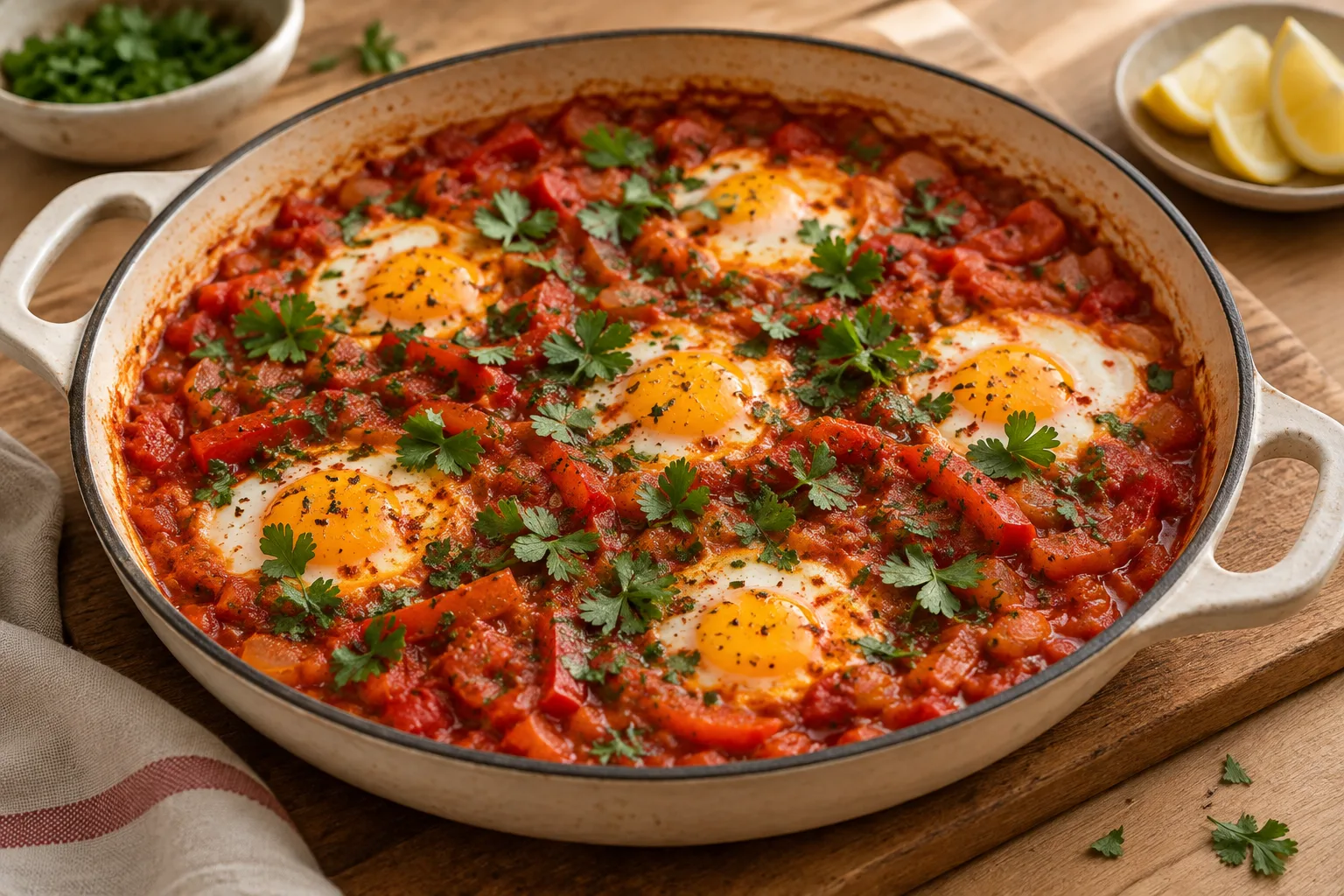
Tunisian chakchouka
Poached eggs in a tomato, pepper, and spice sauce, finished with harissa and fresh herbs. Serves 6; preparation times are estimates.
View recipe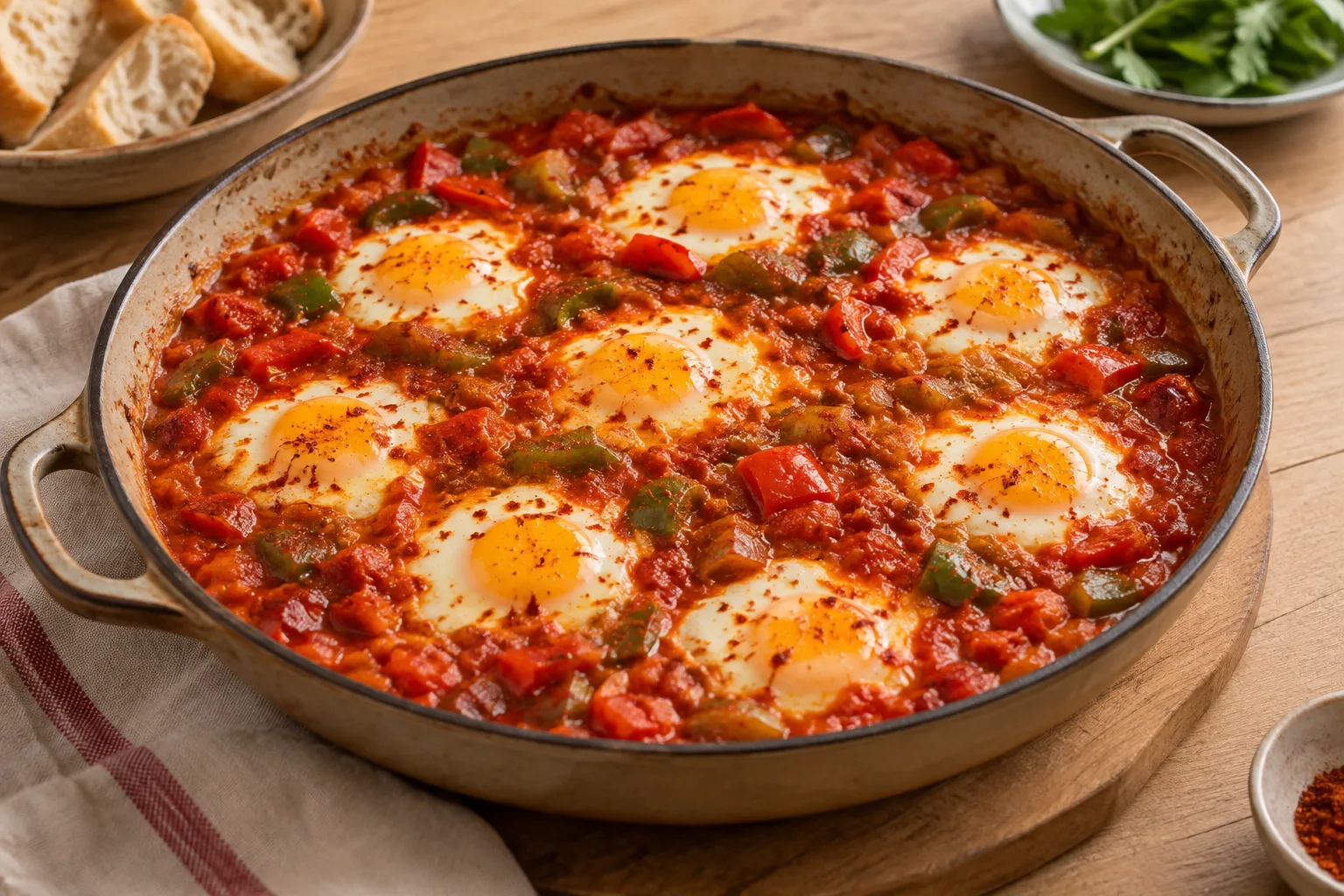
Tunisian Vegetarian Ojja
Eggs cooked in a Tunisian sauce of tomatoes, peppers, harissa, and spices. Serves 4; times are approximate.
View recipe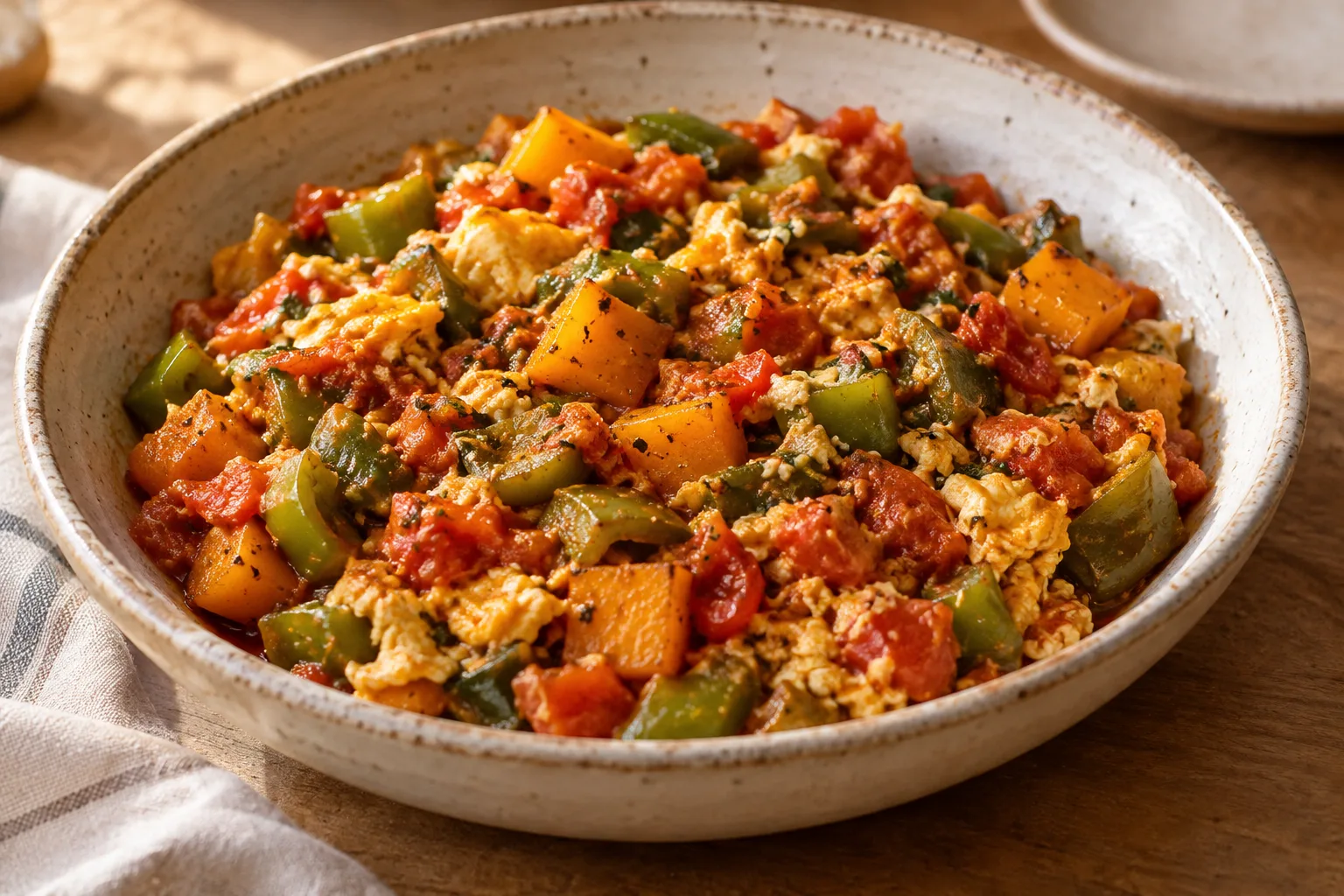
Tunisian Kafteji with Pumpkin
Golden, chopped vegetables bound with egg and seasoned with ground coriander and harissa. Serves 4; times are estimates.
View recipe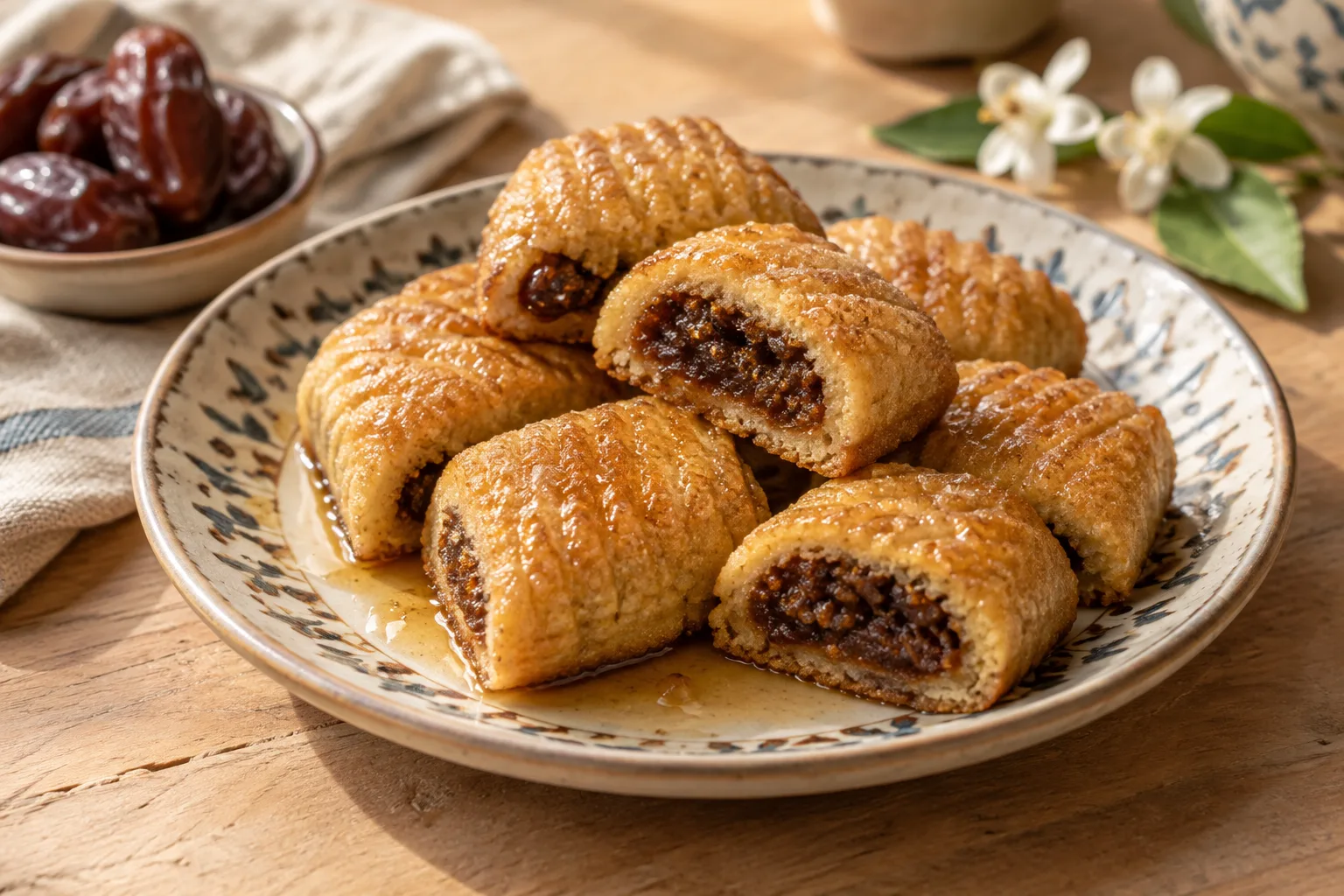
Tunisian baked makroudh filled with dates
Semolina pastries with a spiced date filling, baked and coated in a honey and orange-blossom-water syrup.
View recipe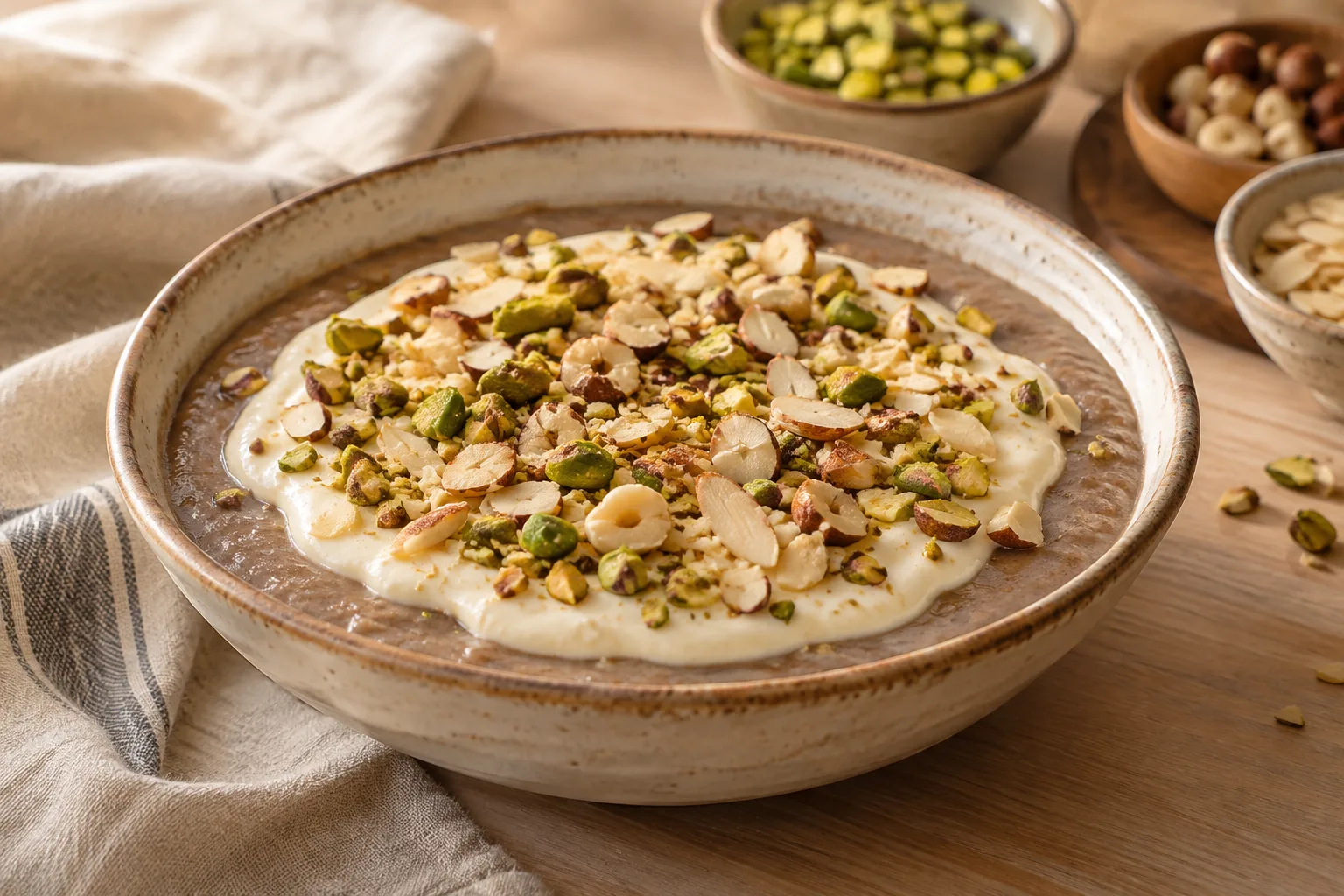
Tunisian Assida Zgougou
A Tunisian dessert of Aleppo pine seed cream, thickened with flour and topped with milk custard and nuts.
View recipe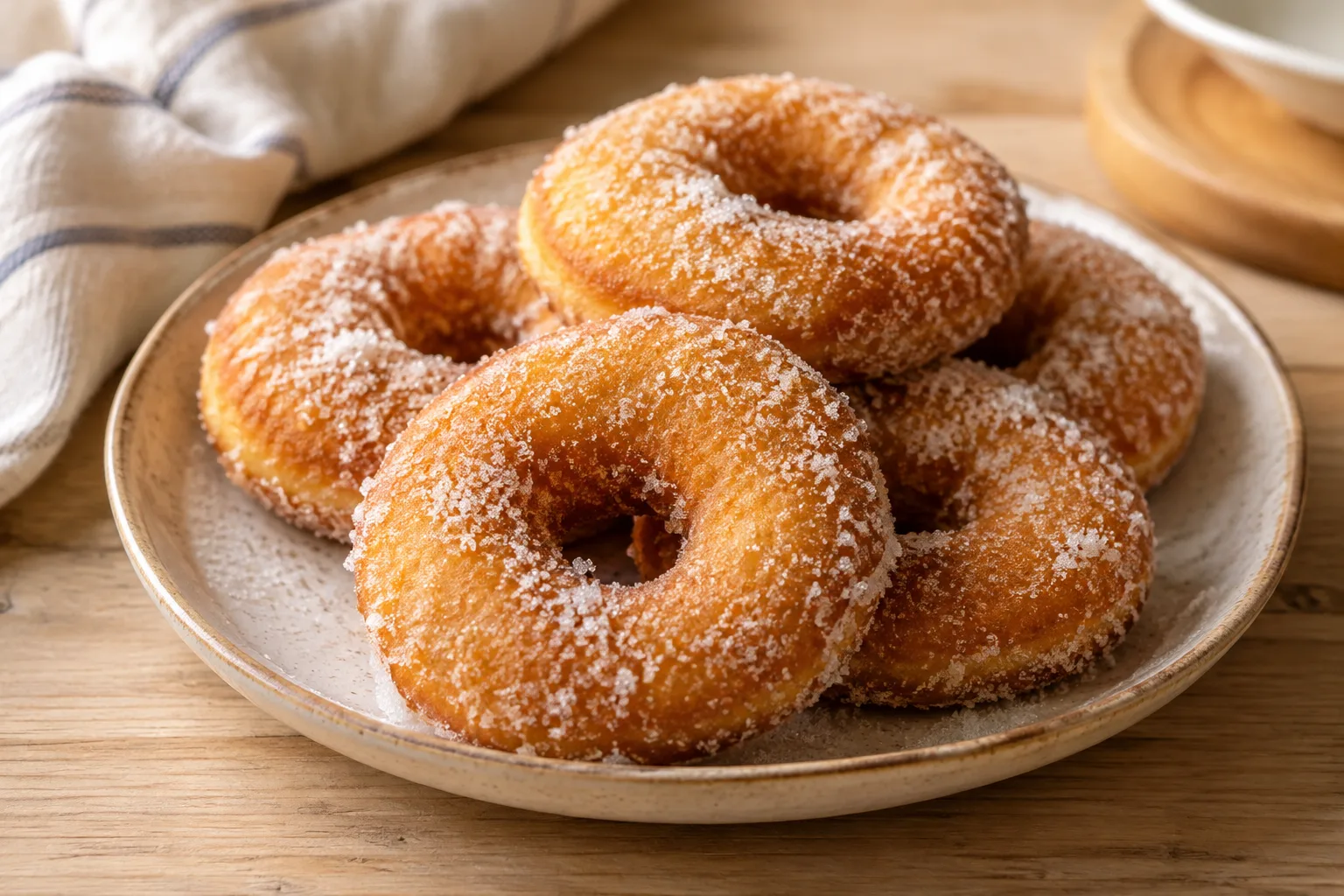
Tunisian Bambalouni
Tunisian doughnuts made from soft, risen dough, fried into rings and coated in sugar.
View recipe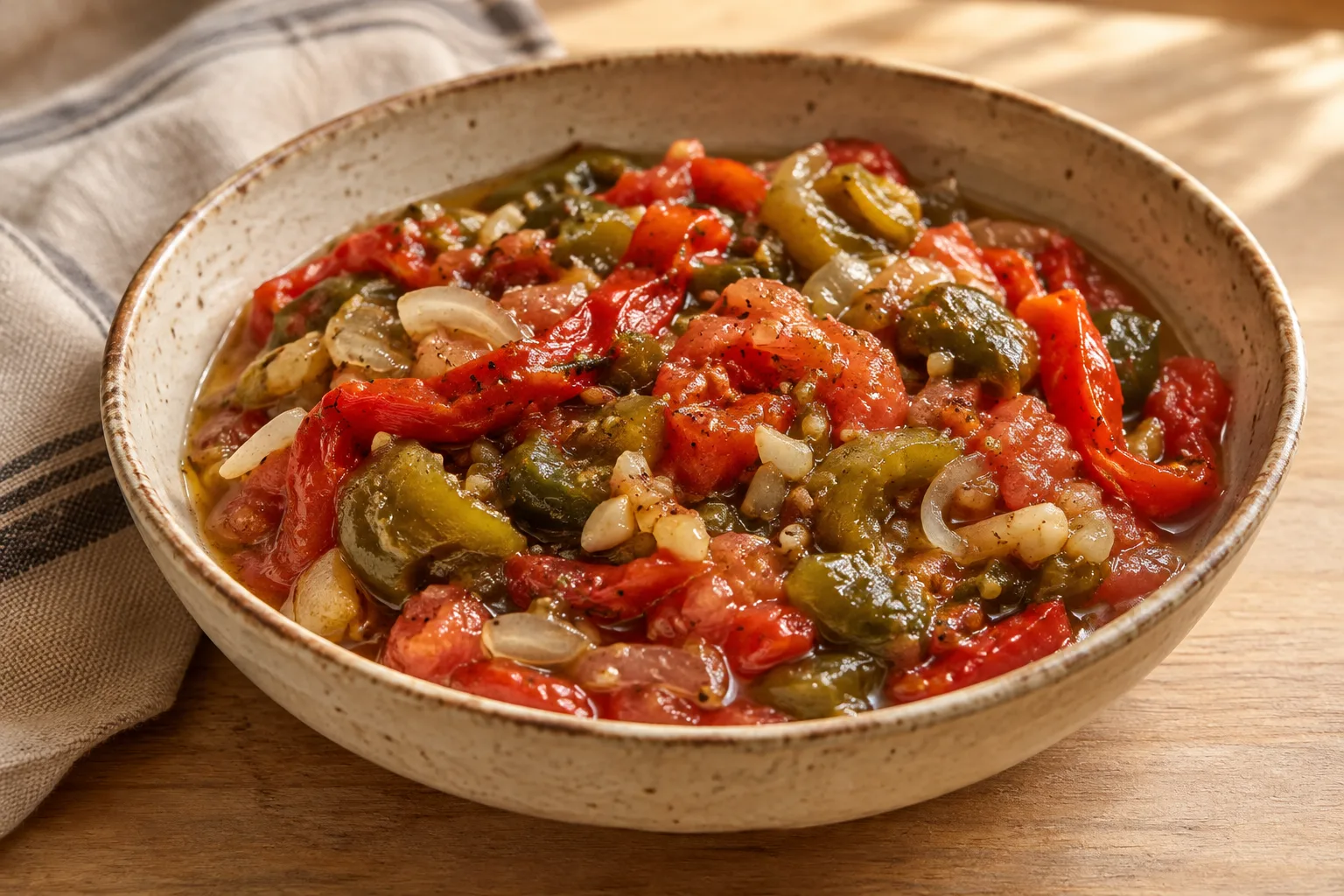
Tunisian Slata Mechouia
A Tunisian salad of flame-grilled peppers, tomatoes, onion, and garlic, peeled and chopped with olive oil and spices.
View recipe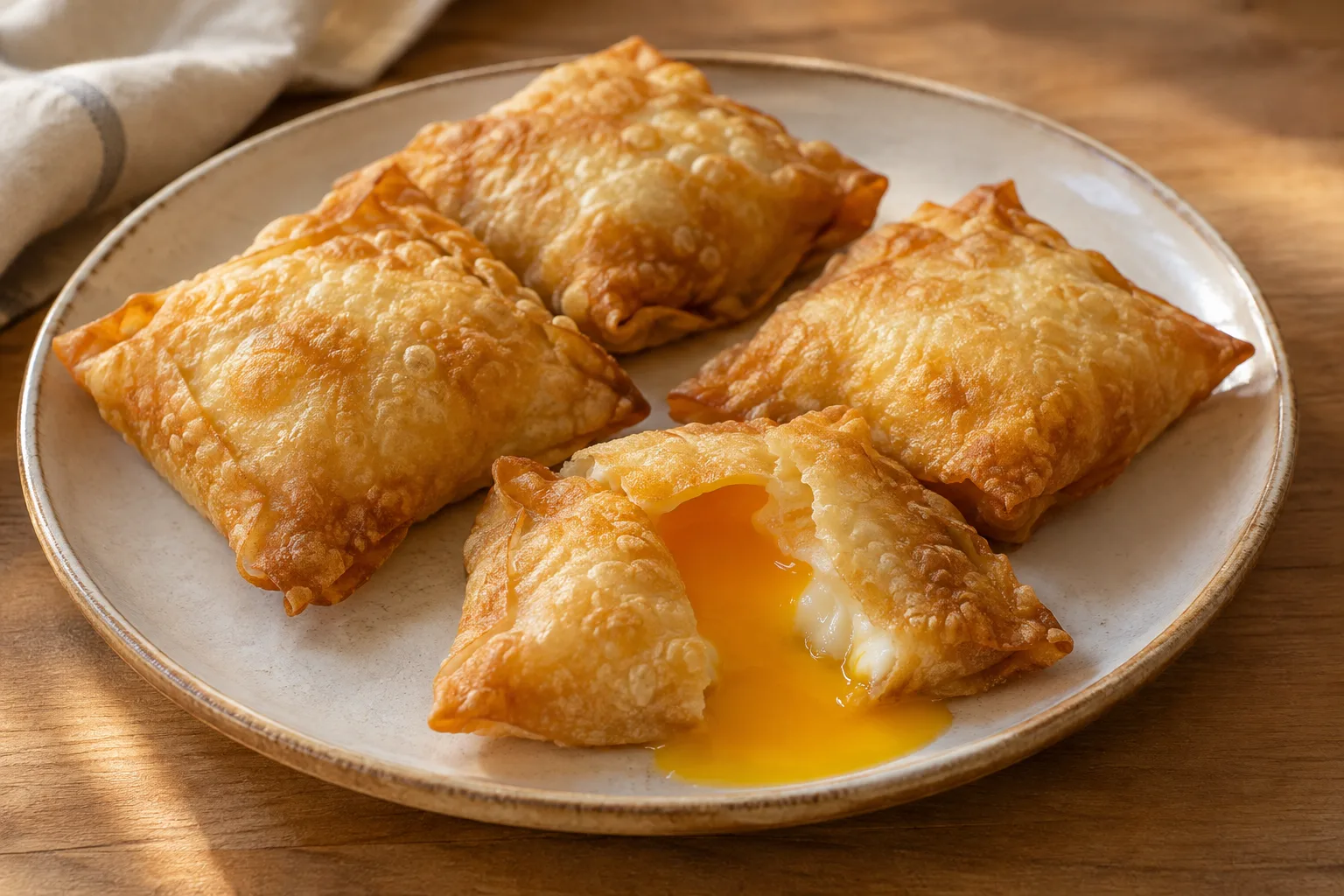
Tunisian Egg Brik
Four thin brik pastry sheets each wrap one egg and are fried until crisp, with a runny yolk.
View recipe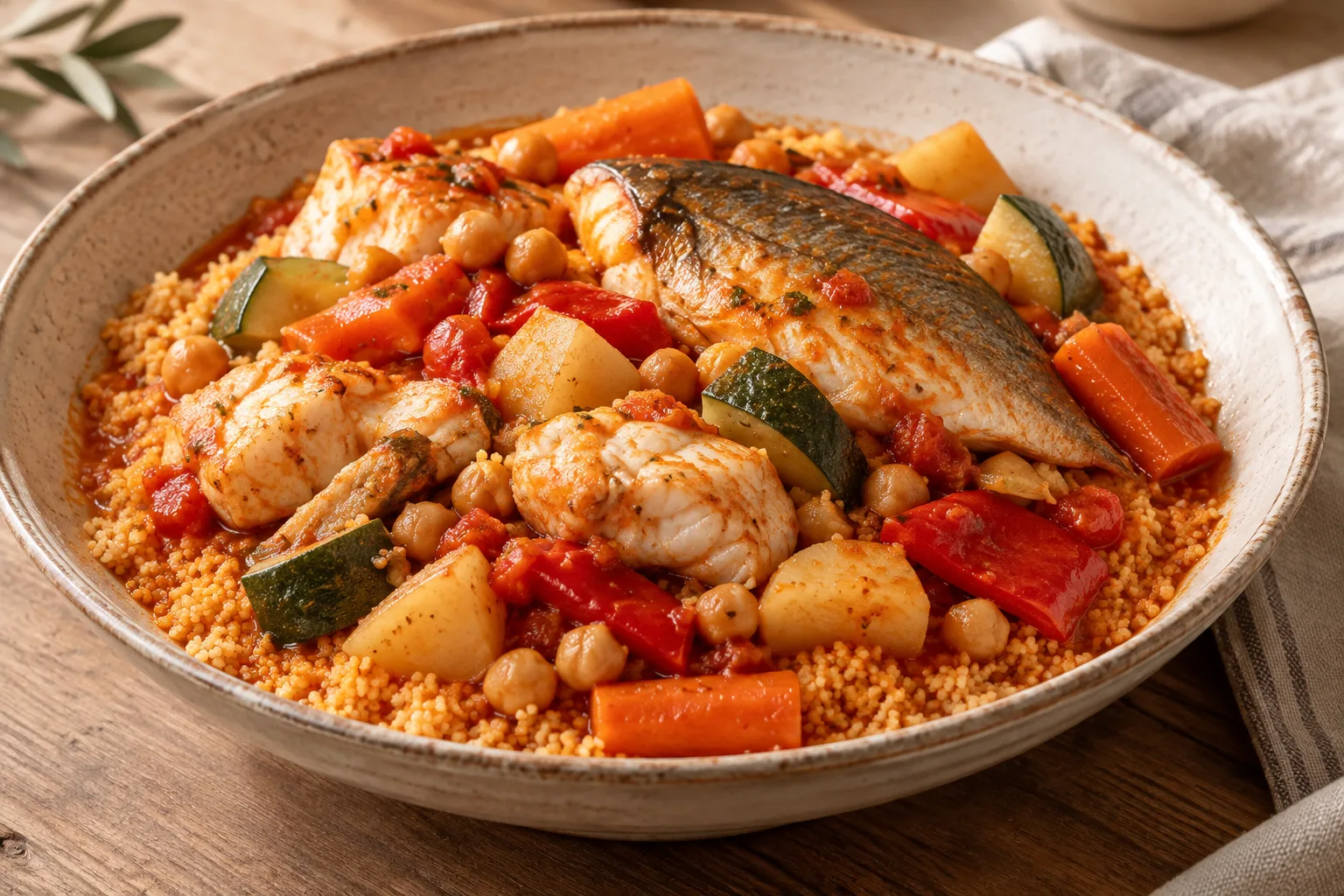
Tunisian Fish Couscous
Semolina couscous served with fish, chickpeas, and vegetables in a red tomato and harissa broth, a combination characteristic of Tunisian versions.
View recipe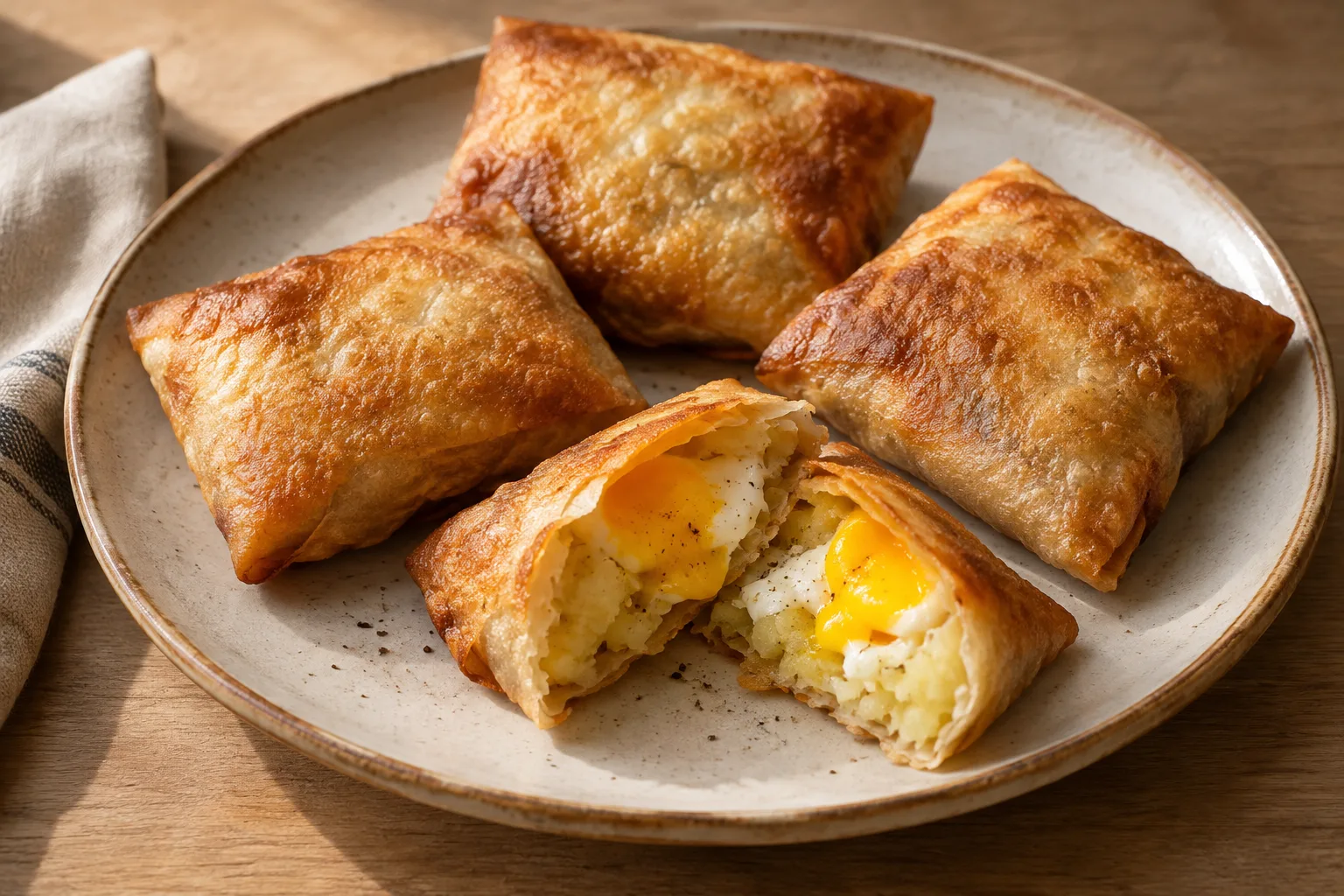
Tunisian egg and potato brik
Four Tunisian egg and potato briks: crisp brik pastry, egg, and a simple potato filling. Fry and serve freshly made.
View recipe
Sources consulted
Read the sources and each document’s scope. A heritage inscription concerns a particular practice, not all of a country’s cuisine.
- Tunisia — Diet Quality Questionnaire results, 2022 www.dietquality.org/countries/tun Global Diet Quality Project Consulted: November 1, 2026
- DQQ data collection details — Gallup World Poll 2021–2024, Tunisia row www.dietquality.org/DQQ%20data%20collection%20details%20GWP%202021-2024.pdf Gallup / Global Diet Quality Project Consulted: November 1, 2026
- Global Diet Quality Project — sampling population and survey method www.gainhealth.org/fr/node/3979 Global Alliance for Improved Nutrition (GAIN) Consulted: November 1, 2026
- Thé tunisien à la menthe — recette www.cuisinetunisienne.tn/the-tunisien-a-la-menthe/ Cuisine Tunisienne Consulted: November 1, 2026
- Tunisie — Voyage à travers la gastronomie africaine, spécialités locales www.discovertunisia.com/sites/default/files/gastronomie_tunisie.pdf Ministère du Tourisme tunisien Consulted: November 1, 2026
- Skipping breakfast is associated to inadequate nutrient intakes among Tunisian children: a cross-sectional study pmc.ncbi.nlm.nih.gov/articles/PMC11390555/ El Ati et al., Frontiers in Nutrition; original research Consulted: November 1, 2026
- Food consumption in Tunisian university students and its association with sociodemographic characteristics and lifestyle behaviours pmc.ncbi.nlm.nih.gov/articles/PMC11082808/ Delicado-Soria et al., Public Health Nutrition; original research Consulted: November 1, 2026
- Chronotype and its Association With Weight Status and Dietary Patterns Among Tunisian Female University Students pubmed.ncbi.nlm.nih.gov/41822561/ Jemai et al., American Journal of Lifestyle Medicine; original authors abstract Consulted: November 1, 2026
- Sharing traditions and a family meal in coastal Tunisia www.nationalgeographic.com/travel/article/breaking-bread-coastal-cuisine-tunisia Farida Zeynalova; National Geographic Traveller; original on-site reporting Consulted: November 1, 2026
- A Global Analysis of Cooking Around the World — 2018 wave www.gallup.com/file/analytics/513245/Gallup-Cookpad-Global%20Analysis%20Report-Year%201.pdf Gallup and Cookpad; original2018wave report2020 Consulted: November 1, 2026
- Enquête alimentaire 2015 — quantités nationales, feuille Alimentaire www.ins.tn/sites/default/files-ftp3/files/2021-03/Enq_Conso2015_alimentaire.xlsx Institut National de la Statistique, Tunisie Consulted: November 1, 2026
- Enquête nationale budget et consommation 2015 — tableaux alimentaires www.ins.tn/enquetes/enquete-nationale-sur-le-budget-la-consommation-et-le-niveau-de-vie-des-… Institut National de la Statistique, Tunisie Consulted: November 1, 2026
- Méthodologie de l’Enquête Alimentaire www.ins.tn/methode/methodologie-de-lenquete-alimentaire Institut National de la Statistique, Tunisie Consulted: November 1, 2026
- المسح الوطني حول الإنفاق والاستهلاك ومستوى عيش الأسر لسنة 2015 — محور التغذية www.ins.tn/sites/default/files/publication/pdf/consommation-2015%20V2.pdf Institut National de la Statistique, Tunisie Consulted: November 1, 2026
- Salade Mechouia www.cuisinetunisienne.tn/salade-mechouia/ Cuisine Tunisienne Consulted: November 1, 2026
- Ojja merguez www.cuisinetunisienne.tn/ojja-merguez/ Cuisine Tunisienne Consulted: November 1, 2026
- Lablabi www.cuisinetunisienne.tn/lablabi/ Cuisine Tunisienne Consulted: November 1, 2026
- La harissa — Inventaire national du patrimoine culturel immatériel, fiche 4/015 www.inp2020.tn/patrimoine_immateriel/015-4-fr.pdf Institut National du Patrimoine, Ministère des Affaires Culturelles, Tunisie Consulted: November 1, 2026
- Un budget de la dignité pour la Tunisie — modèle alimentaire des groupes de consensus collections.fes.de/publikationen/download/pdf/452461 Pierre Concialdi; IRES, International Alert et Friedrich-Ebert-Stiftung Consulted: November 1, 2026
- Makroud Tunisien — recette publiée www.cuisinetunisienne.tn/makroud-tunisien/ Cuisine Tunisienne Consulted: November 1, 2026
- HSHS Study 6 — définition analytique des portions de fruits et légumes, données 2009 www.ebi.ac.uk/europepmc/webservices/rest/PMC9837716/fullTextXML Khalil et al.; La Tunisie Médicale; author article archived by Europe PMC Consulted: November 1, 2026
- Microbiological quality assessment of milk and its fermented derivatives produced in the Sfax region, Tunisia www.scielo.org.za/pdf/sajas/v53n3/03.pdf Jarboui et al., South African Journal of Animal Science Consulted: November 1, 2026
- Recensement 2024 — Flash ménages, septembre 2025, tableau 10 www.ins.tn/sites/default/files-ftp3/files/2025-09/PROD-Menage-BULLETIN-FR.pdf Institut National de la Statistique, Tunisie Consulted: November 1, 2026
- Unbalanced intakes of sodium and potassium among Tunisian adults: A cross-sectional study www.ebi.ac.uk/europepmc/webservices/rest/PMC8020952/fullTextXML Doggui et al., Food Science & Nutrition, 2021 Consulted: November 1, 2026
- Résultats de l’enquête nationale sur le budget des ménages 2021 ins.tn/ar/publication/ntayj-almsh-alwtny-hwl-alanfaq-walasthlak-wmstwy-ysh-alasr-lsnt-2021 Institut National de la Statistique, Tunisie Consulted: November 1, 2026
- DaDa Café — Menu, Tunis Francville; observed 2026-11-01 dada-cafe.tn/menu/ DaDa Café, Tunis Francville Consulted: November 1, 2026
- COVID-19 lockdown impact on Tunisian consumer behaviors and awareness related to food consumption and wastage during celebrations: Case of study Ramadan month www.najfnr.com/home/article/download/210/128/1840 Ben Ismail, Jribi, Doggui and Debbabi, North African Journal of Food and Nutrition Research Consulted: November 1, 2026
- Symbolique de certains plats rituels de Makthar et de Kesra — Africa, série ATP 15 www.inp2020.tn/periodiques/atp/atp15.pdf Sonia M’Layah Hamzaoui; Institut National du Patrimoine, Tunisie, 2009 Consulted: November 1, 2026
- La fête du Mouled — programme historique 2016 www.discovertunisia.com/en/evenements/la-fete-du-mouled Office National du Tourisme Tunisien Consulted: November 1, 2026
- La fête du Mouled — programme historique 2025 www.discovertunisia.com/evenements/festivites-du-mouled-2025-dans-la-medina-de-tunis-et-kair… Office National du Tourisme Tunisien Consulted: November 1, 2026
- Vacances Tunis - Partir en voyage Tunis via votre guide touristique Discover Tunisia www.discovertunisia.com/decouvrir/autour-de-tunis Office National du Tourisme Tunisien Consulted: October 31, 2026
- Nabeul y Cap Bon discovertunisia.com/decouvrir/nabeul-et-le-cap-bon Office National du Tourisme Tunisien Consulted: October 20, 2026
- Sfax y Kerkennah www.discovertunisia.com/decouvrir/autour-de-sfax-et-kerkennah Office National du Tourisme Tunisien Consulted: October 20, 2026
- Harissa: conocimientos y prácticas sociales ich.unesco.org/fr/RL/la-harissa-savoirs-savoir-faire-et-pratiques-culinaires-et-sociales-017… UNESCO Consulted: October 20, 2026