- Category
- Pulses
- State
- Dry
- Usual unit
- g
What it is
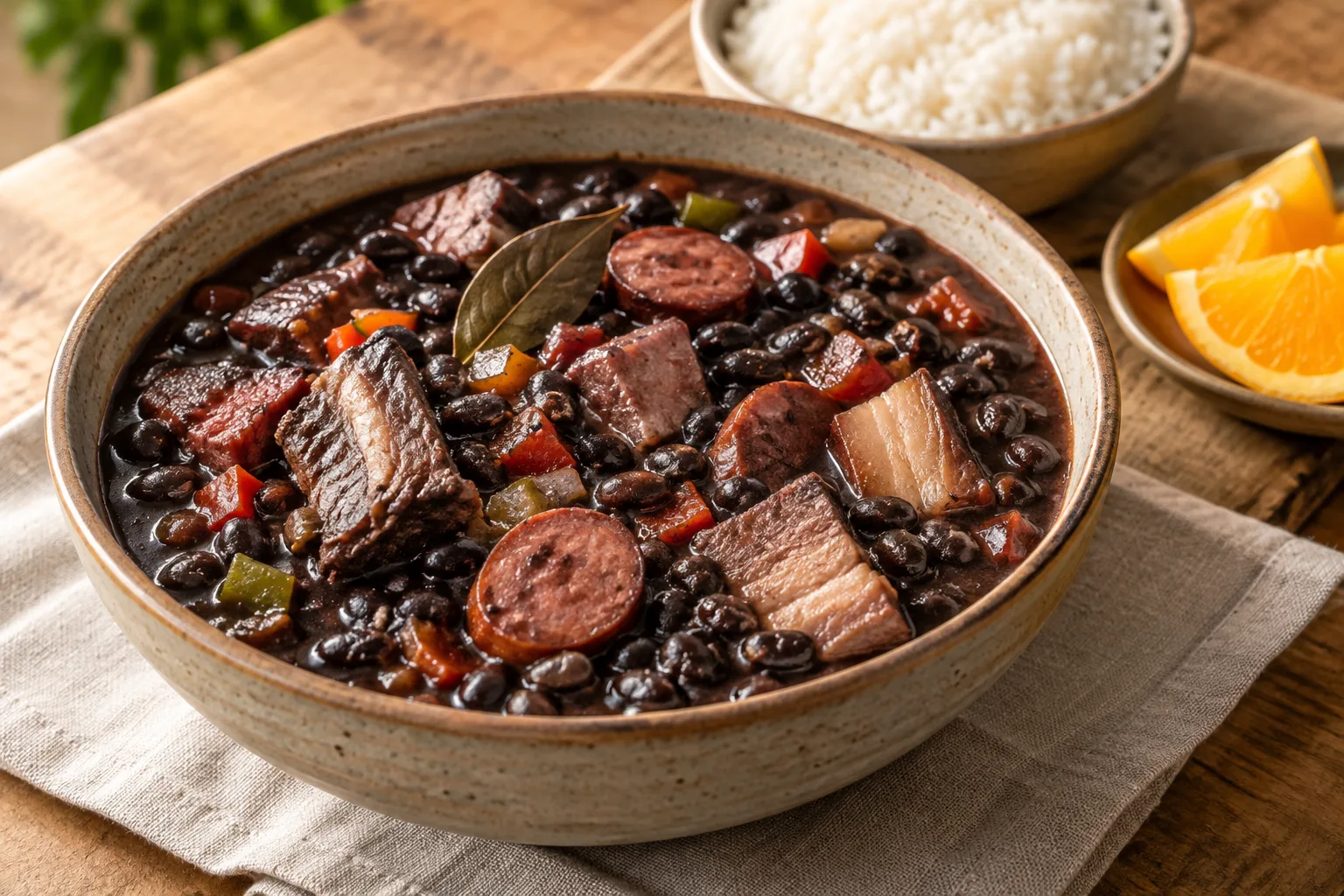
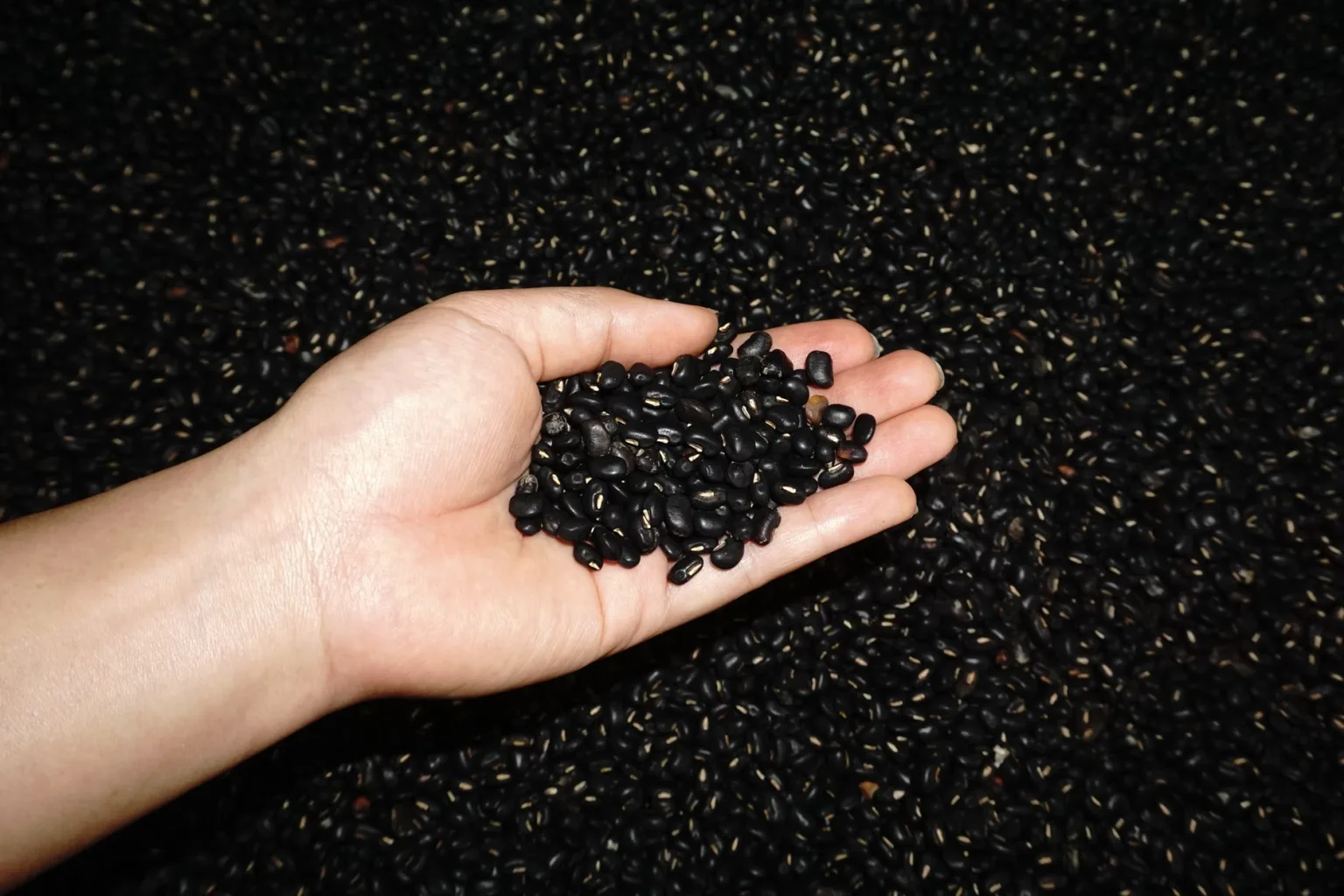
Black beans are the dried seeds of a black-seeded variety of common bean, Phaseolus vulgaris. Their dark skins and soft, creamy cooked texture make them useful both whole and mashed. The name can cover more than one black bean variety, so size, shape and appearance may vary. In the kitchen, they work as a main ingredient or side in soups, stews, rice dishes, fillings and salads. They are available dried and cooked in cans. This profile uses dried beans as its reference form; canned beans need less preparation and should be used according to the package directions.
When to use it
Choose black beans when you want a legume that can hold its shape in a stew or salad, or be mashed to thicken a soup, sauce or purée. Dried beans suit meals that allow time for cooking and give you control over how soft they become and how they are seasoned. Canned cooked beans are convenient for adding to dishes that are nearly ready; check the package directions and adjust the recipe’s salt and liquid. Black beans pair well with rice, vegetables, herbs and spices, and can be used as a filling for tacos or burritos.
How to use it
To cook dried black beans, sort and rinse them, removing any visible debris. Put them in a pot with plenty of water and simmer until tender. Cooking time varies with the beans and the method, so check their texture rather than relying on a fixed time. Onion, garlic, bay leaf or cumin can be added as aromatics. Stir the cooked beans whole into soups, stews, rice dishes or salads, or mash some and return it to the pot to thicken the liquid. You can also blend cooked beans into a purée or spread. If using canned cooked beans, follow the package directions and adjust the recipe’s liquid and salt as needed.
Flavour and texture
Their flavor is often described as earthy and full, with a mild quality that works well with assertive seasonings. When cooked, the beans can become tender and creamy while still holding their shape. Cook them further or mash them and they will thicken cooking liquid into a purée-like texture. The result varies with the product and cooking method.
How to choose it
Black beans are sold dried and cooked in cans. When buying dried beans, look for whole beans without visible debris; color and shape can vary among varieties. For canned or prepared beans, check the ingredient list, salt content and package directions, since the ingredients and packing liquid can differ between products.
Storage
Keep dried beans in a clean, sealed container in a cool, dry place, following the package directions. Once cooked, treat them as prepared food: cool promptly, cover and refrigerate, and use within the timeframe recommended locally for cooked foods. For an opened can, follow the label’s storage directions; do not assume that an opened product keeps in the same way as an unopened can.
Substitutions
Pinto or red beans can replace black beans in soups, stews and fillings, though they will change the dish’s color and flavor. Cooked canned black beans can also replace cooked dried beans; adjust the recipe’s liquid and salt and follow the package directions.
Common mistakes
Do not assume dried and canned cooked beans need the same preparation: they differ in cooking needs and may contribute different amounts of liquid and salt. Do not stop cooking just because an estimated time has passed; check that the beans are tender. Avoid adding so much water that a stew becomes thin if you want a thick result.
Safety and allergens
If using dried beans, cook them until tender and follow the package directions. For canned products, follow the label instructions and discard the container if it is damaged or shows unusual signs.
Culinary uses
- Base for soups and stews
- Side dish or filling for bowls, rice dishes, tacos and burritos
- Ingredient for purées, dips and refried beans
Recommended techniques
- Simmer dried beans in water until tender; check texture as they cook
- Mash some cooked beans to thicken a dish
- Blend cooked beans into a dip or purée
Pairs well with
- Rice and other grains
- Onion, garlic, cumin, oregano and bay leaf
- Tomato, peppers, cilantro, avocado and lime
Frequently asked questions
Are black beans sold dried and canned?
Yes. They are available dried and cooked in cans. This guide focuses on dried beans, while canned cooked beans can save cooking time.
Do I need to mash black beans to thicken a stew?
No. You can serve them whole, or mash some and stir them back into the stew for a thicker texture.
What can I use instead of black beans?
Pinto or red beans can work in many stews and fillings, although the finished dish will differ in flavor, color and texture.
Ingredient allergens
Allergen listThere are no verified associations for these ingredients yet.
Estimated nutrition
- Fat
- 0 g
- Saturates
- 0 g
- Carbohydrate
- 16.2 g
- Sugars
- 0 g
- Fibre
- 4.6 g
- Protein
- 6.15 g
- Salt
- 0.83 g
Sources and review
Automatically researched, cross-checked and validated content. Sources consulted:
- Publicaciones de Seguridad alimentaria www.aesan.gob.es/actualidad/publicaciones-seguridad-alimentaria
- - YouTube www.youtube.com/watch?v=d5INubdNX6s
- Frijoles negros: qué son, cómo cocinarlos y 8 recetas para sacarles todo el partido www.directoalpaladar.com/ingredientes-y-alimentos/frijoles-negros-que-como-cocinarlos-8-rece…
- Frijoles negros, las mejores y más deliciosas recetas gastroamantes.com/frijoles-negros/
- Frijoles negros fáciles | Recetas | Cook for Your Life www.cookforyourlife.org/es/recetas/frijoles-negros-basicos/
- Food Allergies | FDA www.fda.gov/food/nutrition-food-labeling-and-critical-foods/food-allergies
- Food allergens | EFSA www.efsa.europa.eu/en/safe2eat/food-allergens
- Allergen Labeling for Eggs as Ingredients of Pre-packaged Foods (Food-allergy) doi.org/10.14252/foodsafetyfscj.d-21-00028
- Frijol negro - Wikipedia, la enciclopedia libre es.wikipedia.org/wiki/?oldid=131096065&title=Frijol_negro
- Frijoles negros y frijoles colombianos: recetas y trucos mercadodesanenrique.es/frijoles-negros-y-colombianos/
- Guía para el control oficial del etiquetado y composición de ... www.juntadeandalucia.es/export/drupaljda/Gu%C3%ADa%20etiquetado%20y%20composici%C3%B3n%20CA%…
- Alerta por un chocolate negro de varias marcas distribuido en diez Comunidades autónomas www.larazon.es/sociedad/20221207/avpqsrwzkva2hmbvwowcbcmozq.html
- Frijoles negros: Preguntas frecuentes, datos nutricionales, & macros - Strongr Fastr www.strongrfastr.com/es/alimentos/frijoles-negros-16316
- Alérgenos en alimentos: alertas recientes | OCU www.ocu.org/alimentacion/seguridad-alimentaria/noticias/alertas-alergenos-recientes
- Frijoles Negros (Black Beans) Gluten-Free | Safe Plated — Allergen-Aware Recipes www.safeplated.com/recipes/frijoles-negros-black-beans-gluten-free-2d3b5245