- Category
- Pulses
- State
- Fresh
- Usual unit
- g
What it is
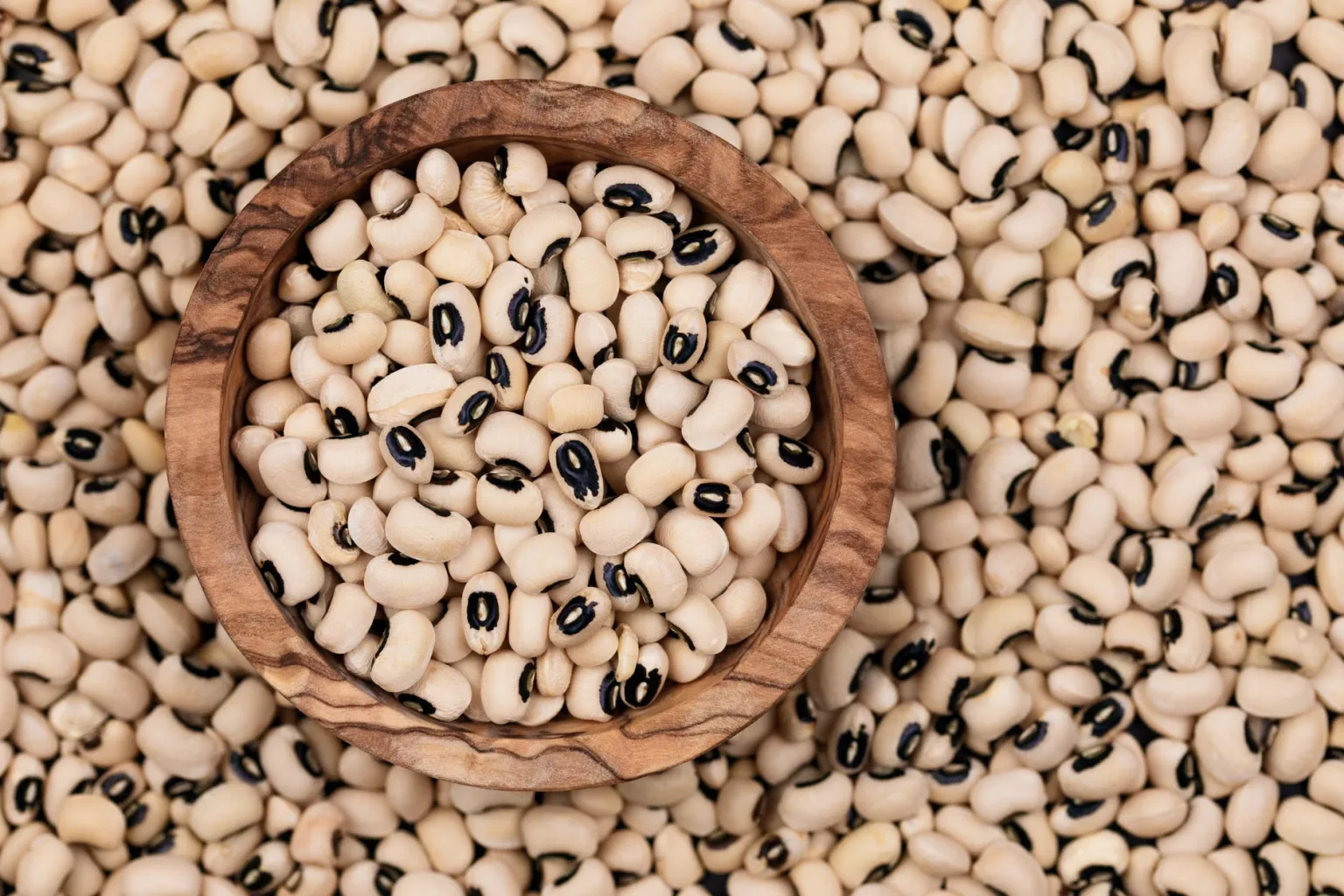
Black-eyed peas are edible seeds from a legume in the Vigna genus, botanically known as Vigna unguiculata. Their common name refers to the dark mark often visible against a pale seed, although varieties can differ in color and size. They may be used freshly shelled or dried, and canned versions are also available. The name does not mean that they are interchangeable with every type of black bean; those names can refer to different legumes. In cooking, black-eyed peas work in both hot dishes and salads. Their texture and preparation depend on the form you buy, so check the package and adapt the method rather than treating every form as the same ingredient.
When to use it
Use black-eyed peas when you want to add a legume to soup, stew, or a one-pot meal, or when you need a substantial base for a chilled salad. Their mild flavor works with vegetables, herbs, and tangy dressings without overwhelming other ingredients. For convenience, choose a cooked or canned form; for a from-scratch dish, remember that dried peas require preparation and cooking. Freshly shelled peas are another form, but should not automatically be handled like dried ones. Choose the form to suit the time available and the recipe, then adjust cooking until the peas reach the texture you want.
How to use it
Start by identifying the form: fresh, dried, and canned black-eyed peas need different handling. Dried peas can be simmered until tender and used in soups or stews. Canned peas can be drained and rinsed before adding to a salad, or stirred into a hot dish near the end to warm through. For a salad, combine them with tomato, cucumber, onion, or avocado and dress with oil and vinegar or lime juice. In cooked dishes, they pair with carrot, pepper, potato, ginger, and corn. Check tenderness before serving, and season in keeping with the other ingredients. Follow the package directions where available, especially for preparation and storage.
Flavour and texture
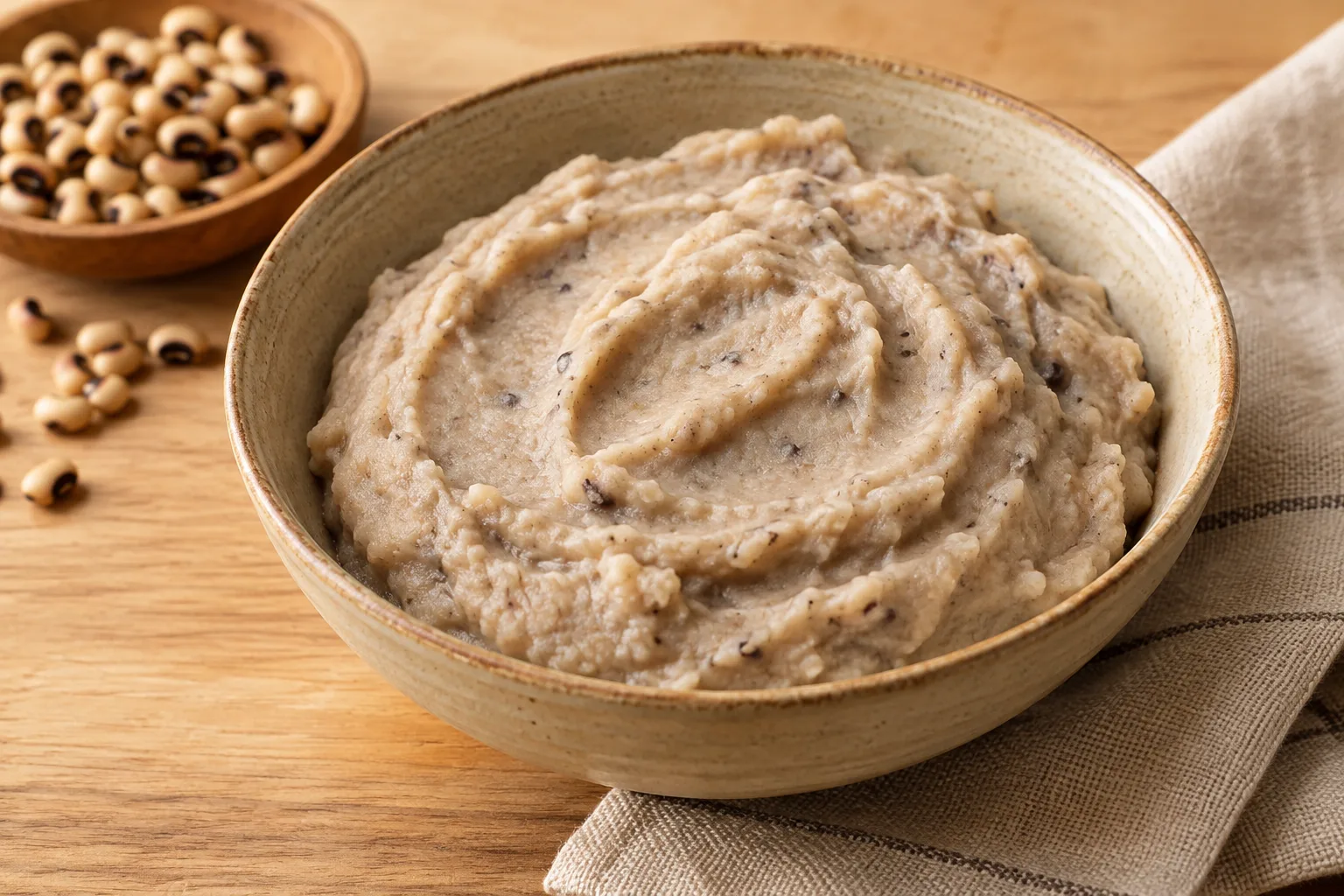
Black-eyed peas are described as mild in flavor and creamy when cooked. Their gentle taste lets them take on flavors from broth, spices, and dressings. The finished texture depends on the variety, form, and cooking: they may remain whole in a salad or become softer in a soup or stew. Seeds can vary in size and color between varieties, so their appearance is not identical in every product. Avoid assuming that a fresh, dried, or canned version will have exactly the same texture or require the same method.
How to choose it
Check whether the product is fresh, dried, or canned, since the form determines how much preparation it needs. For dried peas, look for a clean product with intact seeds; varieties may differ in size and color. For canned peas, read the label to confirm the product and whether it is already cooked. Choose a format that fits your recipe: canned peas can be added after draining, while dried peas need cooking before serving. If you need a particular texture or appearance, remember that varieties can differ.
Storage
Store the ingredient according to its form and the package directions. Keep dried peas in a closed container in a cool, dry place, protected from moisture. Once cooked, transfer leftovers to a covered container and refrigerate them promptly rather than leaving them at room temperature for an extended period. Move leftovers from an opened can into a suitable container and follow the manufacturer's directions. The available information does not establish one universal storage duration, so do not assume a single shelf life applies to every product.
Substitutions
Black beans can replace black-eyed peas in some salad recipes, although the color and texture will differ. When a recipe calls for cooked legumes, canned black-eyed peas can be a convenient alternative to cooking dried ones; drain and rinse them when appropriate. Another cowpea variety may work in a similar preparation, but adjust for differences in seed size and form. The best substitute depends on whether the recipe relies on appearance, texture, or cooking behavior.
Common mistakes
Do not treat fresh, dried, and canned black-eyed peas as though they need identical preparation. Dried peas should not be added to a salad as if already cooked, and canned peas should be drained and rinsed when the recipe calls for it. Do not assume every variety has the same size, color, or texture. Check that the peas are tender before serving, especially when cooking them from dried.
Safety and allergens
Keep cooked legumes refrigerated when they are not being served, and handle canned products according to the package directions. Cook dried peas before eating, and discard products with damaged packaging or clearly abnormal appearance.
Culinary uses
- Legume for soups, stews and one-pot dishes
- Ingredient for chilled salads and bean salads
- Soft-textured addition to vegetable dishes
Recommended techniques
- Simmer in water until tender
- Boil as part of a soup or stew
- Drain and rinse canned beans before mixing into a salad
Pairs well with
- Rice, corn and other grains
- Tomato, cucumber, onion and avocado
- Carrot, potato, pepper, ginger and leafy vegetables
- Olive oil with vinegar or lime juice
Frequently asked questions
Are black-eyed peas the same as black beans?
Not necessarily. Black-eyed peas usually have a pale seed with a dark mark, while black beans can be a different legume. A particular recipe may allow either, but their appearance and texture can differ.
Can canned black-eyed peas be used straight from the can?
Canned peas are generally already cooked. Drain and rinse them when the recipe calls for it, then add them to a salad or warm them in a cooked dish.
What dishes work well with black-eyed peas?
They are used in salads, soups, and stews. They pair well with vegetables and oil-and-vinegar or lime dressings, and can also be served with rice or corn.
Ingredient allergens
Allergen listThere are no verified associations for these ingredients yet.
Estimated nutrition
- Fat
- 0 g
- Saturates
- 0 g
- Carbohydrate
- 20 g
- Sugars
- 2.86 g
- Fibre
- 5.7 g
- Protein
- 2.86 g
- Salt
- 0.02 g
Sources and review
Automatically researched, cross-checked and validated content. Sources consulted:
- ¿Por qué la muerte es origen de miedos y tabúes? doi.org/10.64628/aao.fccyk3qj3
- Alubia carilla - Wikipedia, la enciclopedia libre es.wikipedia.org/wiki/Alubia_carilla
- Alubia Carilla: El Tesoro de Extremadura 🌾🥣 - Slow Shop granel www.slowshopgranel.es/alubia-carilla-el-tesoro-de-extremadura/
- Qué es un agujero negro estelar y por qué no es peligroso el localizado cerca de la Tierra doi.org/10.64628/aao.tkkhghtg5
- frijoles de ojo negro o frijoles negros Archives | Dinner Tonight dinnertonight.tamu.edu/ingredient/frijoles-de-ojo-negro-o-frijoles-negros/
- Gestión de patrones de consumo alimentario para prevenir y controlar enfermedades no transmisibles en la provincia de Buenos Aires | OpenAlex openalex.org/W4391983821
- Diccionario básico de aprendizaje. La planta de un diccionario temático monolingüe del nivel acceso (A1) de español como lengua extranjera | OpenAlex openalex.org/W2313423997
- - YouTube www.youtube.com/watch?v=c35WU83uIuM
- Phaseolus lunatus - Wikipedia, la enciclopedia libre es.wikipedia.org/wiki/Phaseolus_lunatus
- Potaje de alubias ojo negro con costillas | La Habitación Saludable www.google.com/goto?url=CAESigEB6zswFReZubDTmF-TrGsmz2vTSbSUpI0SIIblB6pJ9tJry62a_Wxl9Ouv09yE…