- Category
- Vegetables
- State
- Fresh
- Usual unit
- unit
What it is
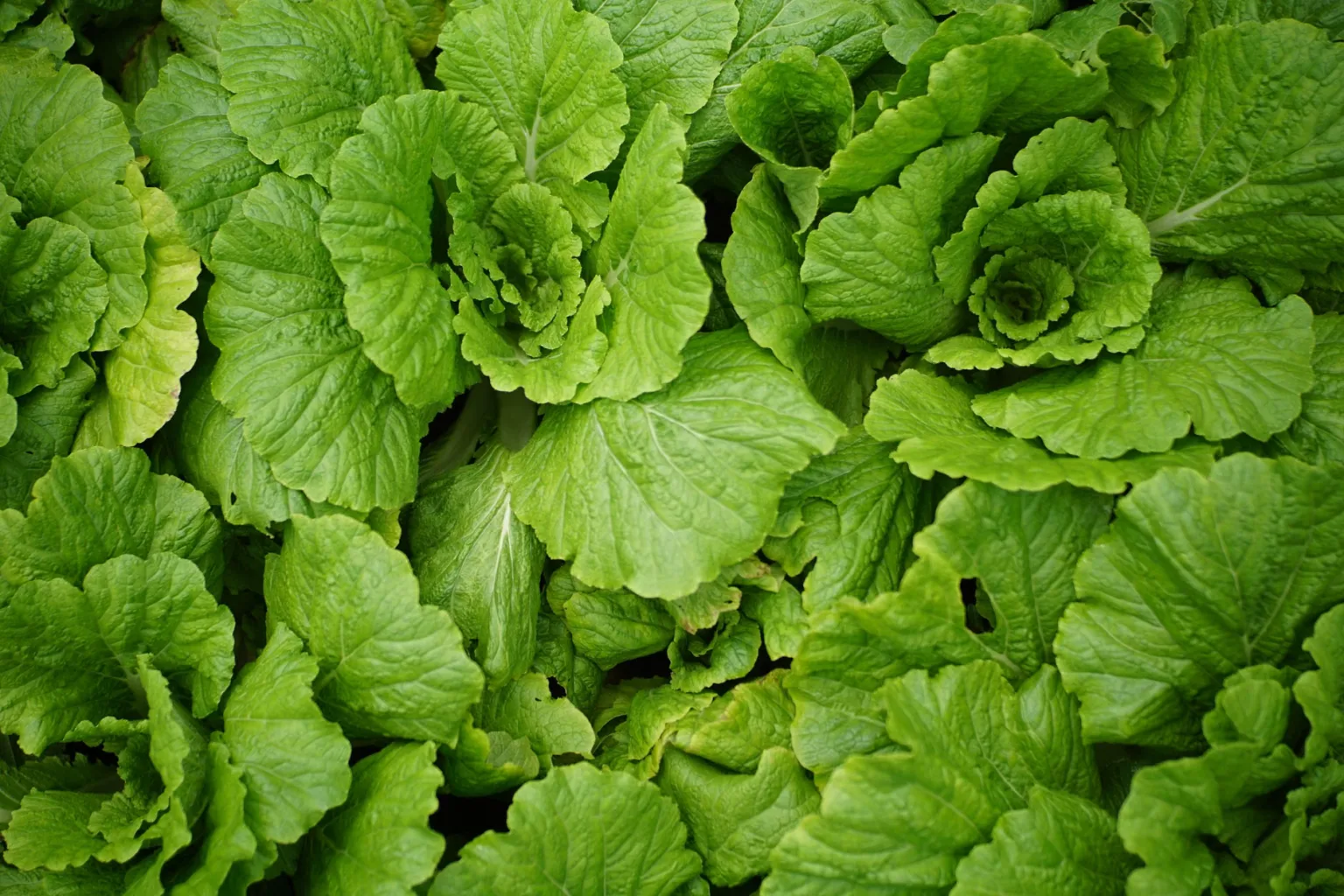
Chinese cabbage is a leafy member of the cabbage family, also called Chinese leaf or, in some contexts, napa cabbage. The elongated form known as pe-tsai has green leaves and pale, prominent stems or ribs. The name Chinese cabbage is also used broadly in some markets, so it is useful to distinguish pe-tsai from pak choi, a different form of Chinese cabbage. Both the leaves and stems are edible and can be cooked or pickled. In the kitchen, the parts can be handled separately: stems can be cut into strips, while leaves can be sliced more finely so that each part suits the dish.
When to use it
Use it when you want a leafy vegetable whose different parts can contribute different textures to a dish. Sliced stems work well in stir-fries, while the leaves can be added finely cut or cooked separately. Chinese cabbage can also be boiled, braised, served as an accompaniment to pork, fish or crustaceans, or prepared as a pickle. If a recipe calls for Chinese cabbage and you see names such as pe-tsai or pak choi, check the shape of the vegetable: pak choi is not exactly the same form.
How to use it
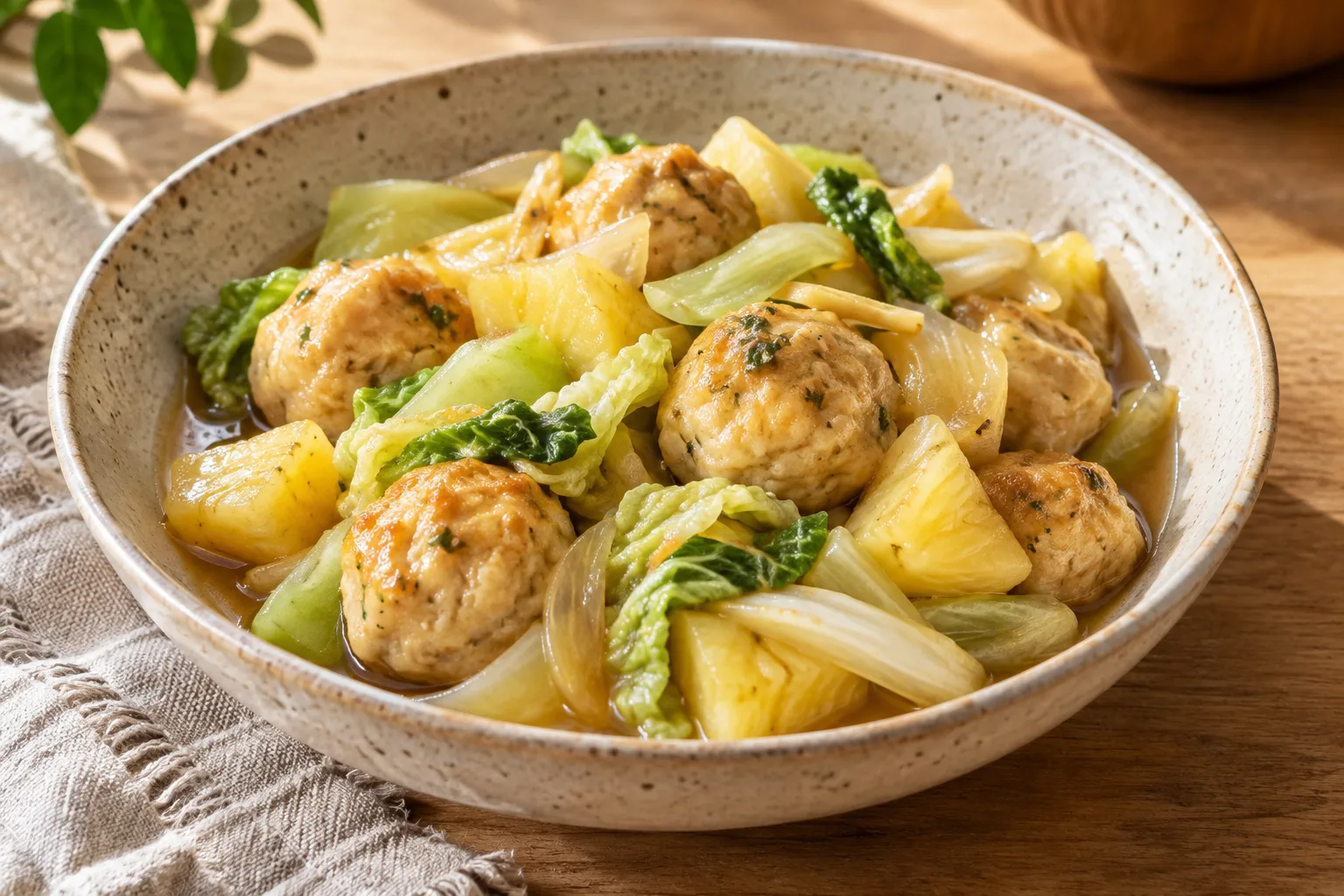
Remove any leaves you do not want to use, separate the remaining leaves, and wash them individually with clean water. Cut the stems into strips, especially for stir-frying, and cut the leaves into thin strips or larger pieces to suit the dish. Chinese cabbage can be cooked in a pan or wok, boiled, braised, or pickled. For a stir-fry, add the cut parts in a way that suits the texture you want; you can also cook leaves and stems separately. Serve it as a vegetable or side dish, for example with pork, fish, crustaceans, soy sauce, or sesame seeds.
Flavour and texture
Chinese cabbage combines tender leaves with thicker, firmer stems and ribs. This contrast adds texture without requiring a different vegetable. The stems are crisper when raw, while the leaves soften more quickly during cooking than the thicker parts. Its mild, vegetal flavor allows it to accompany stronger-tasting ingredients and seasonings without overwhelming them.
How to choose it
Choose a head with leaves and stems that look in good condition, without wilted or damaged sections. The elongated pe-tsai form typically has green leaves and pale ribs. Because the name Chinese cabbage may refer to different produce in shops, check whether you need pe-tsai or pak choi: they are not identical, and their shapes have different proportions of leaf and stem.
Storage
There is no single storage duration established here that applies to every head. Keep the cabbage unprepared until you are ready to use it and follow any package directions or local food-safety recommendations. Once cut, use it without unnecessary delay, and do not assume a fixed storage period if none is given for the product.
Substitutions
Swiss chard can be a partial alternative when a recipe can accommodate leafy greens with prominent stems, though it will not reproduce Chinese cabbage exactly. Pak choi can also work in some Asian-style dishes, but it is a different form of Chinese cabbage and should not be mistaken for pe-tsai. Adjust the cut and cooking to suit the substitute.
Common mistakes
Do not assume the leaves and stems have the same thickness or need identical preparation: stems can be sliced into strips and leaves cut more finely. Another common mistake is treating pe-tsai and pak choi as the same vegetable. Separate the leaves for washing, and avoid prolonged cooking if you want to retain some firmness in the thicker parts.
Safety and allergens
Separate the leaves and wash them with clean water before cutting or cooking. Discard damaged sections and follow the product's storage directions; no universal storage duration is specified here.
Culinary uses
- Leafy vegetable for cooked dishes
- Ingredient for pickling and kimchi-style preparations
- Vegetable or accompaniment in stir-fries
Recommended techniques
- Separate and wash the leaves
- Slice the stems and leaves for stir-frying
- Cook by boiling or braising
- Cut finely for quick cooking
Pairs well with
- Pork
- Fish
- Crustaceans
- Soy sauce and sesame seeds
Frequently asked questions
Which parts of Chinese cabbage can I eat?
Both the leaves and stems are edible. You can cut them separately to suit the dish.
Is Chinese cabbage the same as pak choi?
Not necessarily. Chinese cabbage is a broad name; pe-tsai and pak choi are different forms, so check which one a recipe calls for.
How should I prepare Chinese cabbage for a stir-fry?
Separate and wash the leaves, slice the stems into strips, and cut the leaves to your preference. Cook the parts together or separately.
Ingredient allergens
Allergen listThere are no verified associations for these ingredients yet.
Estimated nutrition
- Fat
- 0.16 g
- Saturates
- 0.02 g
- Carbohydrate
- 1.78 g
- Sugars
- 0.83 g
- Fibre
- 1 g
- Protein
- 1.56 g
- Salt
- 0.68 g
Sources and review
Automatically researched, cross-checked and validated content. Sources consulted:
- Client Challenge doi.org/10.2307/jj.27939689.16
- The Essential Glossary of Cooking Terms for the Culinary Arts - Escoffier www.escoffier.edu/blog/culinary-arts/the-essential-glossary-of-cooking-terms-for-the-culinar…
- The Complete Chinese Dinner | Institute of Culinary Education www.ice.edu/blog/complete-chinese-dinner
- Location www.coloradomesa.edu/library/special-collections/documents/cookbook-donation_aid-for-sca-web…
- Pampered Chef Official Site | Pampered Chef US Site i-links.illinois.edu/?ref=mrgAAHkVkCZNPUgHios9pTOvY__VogiyAQAAAFuWKxe_X1Lk1vmn0LdKU1AArADKgy…
- 10 Essential Cooking Tips to Improve Kitchen Skills northbridge.edu/en/publications/5-lessons-from-culinary-arts-that-can-be-used-daily-as-a-hom…
- Food and Beverage Management - eCornell ecornell.cornell.edu/certificates/hospitality-and-foodservice-management/food-and-beverage-m…
- Para la ciudadanía www.aesan.gob.es/para-la-ciudadania
- Tofu - Food Source Information www.chhs.colostate.edu/fsi/food-articles/complex-food/tofu/
- Chapter 12: Culturally Centered Approaches to Culinary Medicine – Culinary Medicine opentextbooks.library.arizona.edu/culinarymedicine/chapter/chapter-12-culture/
- 8. FUNDAMENTACIÓN CIENTÍFICO TÉCNICA repositorio.utc.edu.ec/server/api/core/bitstreams/26c1c005-6ae6-418c-986f-63aa49009251/conte…
- 2019-2020 Undergraduate and Graduate Academic ... catalog.ciachef.edu/sites/default/files/2019-2020-Undergraduate-and-Graduate-Catalog.pdf
- Brassica rapa pekinensis - Wikipedia, la enciclopedia libre es.wikipedia.org/wiki/?oldid=132586953&title=Brassica_rapa_pekinensis
- Col china ⋆ Larousse Cocina laroussecocina.mx/palabra/col-china/
- Col china para Niños ninos.kiddle.co/Col_china
- Diferencia entre revisiones de «Col china» - EcuRed www.ecured.cu/index.php?diff=prev&oldid=3345854&title=Col_china