- Category
- Pulses
- State
- Other
- Usual unit
- g
What it is
Cooked black beans are seeds of a legume in the Phaseolus vulgaris group that have already been cooked until tender. They are available in prepared forms or can be cooked at home, and a product may retain some cooking liquid. The beans are generally creamy inside, with skins that help them hold their shape, though texture varies with the cooking method and product. Their flavor is earthy, mild, and slightly sweet, so they take assertive seasonings well without losing their character. Use them whole, mashed, or blended in everyday dishes such as soups, stews, salads, fillings, and rice-based meals.
When to use it
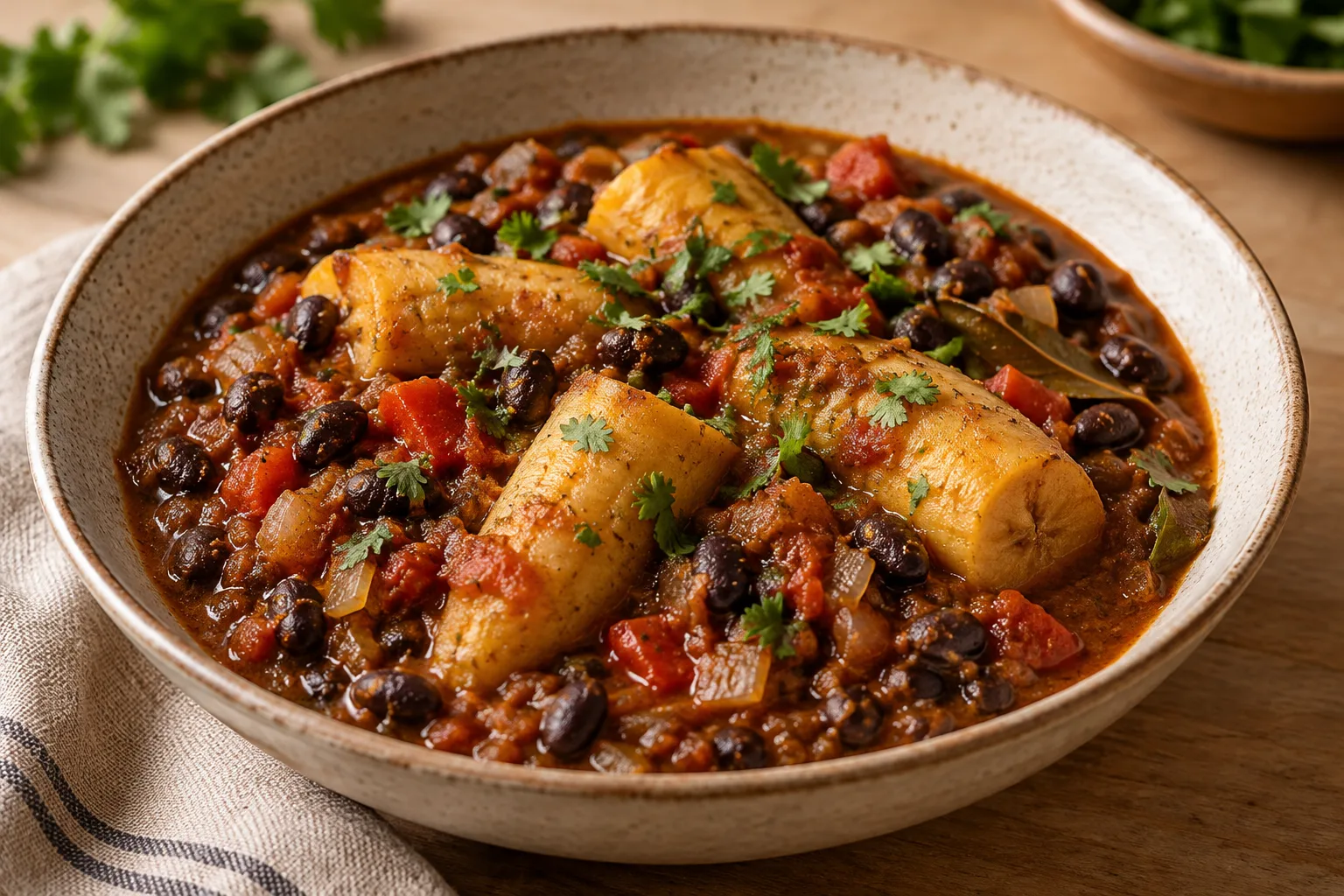
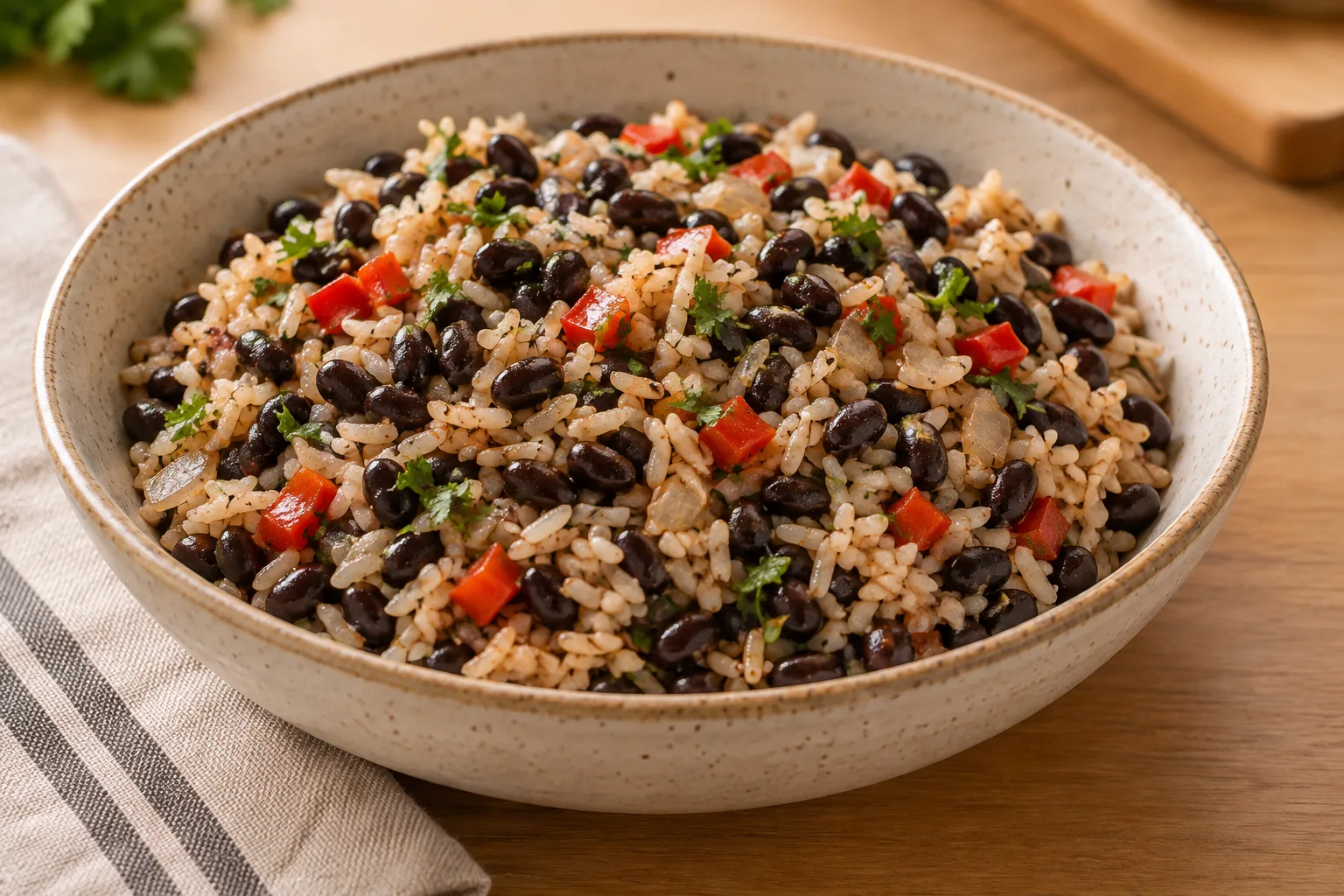
Use cooked black beans when you want to add a ready-cooked legume without starting with dried beans. Whole beans add substance to salads, rice dishes, tacos, and burritos; in soups and stews they take on the flavors of the broth and aromatics. For a thicker consistency, mash some of the beans and stir them back in. Their flavor works with tomato, onion, garlic, chile, and spices, making them suitable for both simple meals and more heavily seasoned dishes.
How to use it
Drain the beans if a recipe needs a relatively dry mixture; reserve the liquid if you want to add it to a soup or stew. Add the beans whole to salads, rice, tacos, or burritos, and fold them in gently to help keep their shape. For a purée or creamy base, mash them with a fork or blend them, then adjust the consistency with cooking liquid, stock, or water. You can also add them to a pot with tomato, onion, garlic, and spices and warm them so they take on the seasoning. When adding them to an already-cooked dish, give them enough time to heat through without stirring so vigorously that they break apart.
Flavour and texture
Cooked black beans have an earthy, substantial, slightly sweet flavor that is sometimes described as meaty. Their skins usually help the beans hold their outline while the centers become tender and creamy. The precise result depends on how they were cooked and how much liquid they retain. Mashing creates a thick, even texture; leaving them whole adds contrast and substance to salads, soups, and fillings.
How to choose it
Choose cooked beans in a form that suits the recipe: whole beans for salads and fillings, or beans that are easy to mash for purées and creamy soups. If buying a packaged product, check its label for ingredients and directions, and choose an intact package. Products can vary in texture and in the amount of liquid they contain, so consider whether you will drain them or use them with their cooking liquid.
Storage
Store an unopened packaged product according to its label. After opening, or when using beans cooked at home, keep them in a clean container and follow local food-safety guidance for prepared foods. Avoid leaving prepared food unattended for extended periods, and follow any specific storage directions supplied by the manufacturer. The accompanying liquid can be kept with the beans if you want a moist base for soups or stews.
Substitutions
Cooked pinto, kidney, or white beans can replace black beans in many soups, stews, salads, and fillings. The dish will still have a legume base, but its color and flavor will change, as may the firmness of the skins. In a blended preparation, visual differences matter less; in salads or other dishes where the beans remain whole and visible, the change is more noticeable.
Common mistakes
Do not automatically add all the liquid: it can make a salad or filling too wet, although it can be useful in soup. Avoid vigorous stirring when you want the beans to stay whole. For a creamy texture, mash only some of the beans rather than blending the entire dish. Taste before adding more salt or seasoning, as packaged beans and cooking liquid can vary.
Safety and allergens
Treat cooked beans as a prepared food and follow package directions or local food-safety guidance. For packaged beans, follow the manufacturer’s storage instructions.
Culinary uses
- Protein-rich legume ingredient
- Base for soups, stews, purées, and spreads
- Filling for tacos, burritos, and other wraps
Recommended techniques
- Mash or blend
- Fold into salads and grain dishes
- Simmer in soups and stews
- Warm gently with aromatics
Pairs well with
- Rice and other grains
- Tomato, onion, and garlic
- Epazote and warm spices such as cumin
- Cilantro, chile, and lime
Frequently asked questions
Should cooked black beans be drained?
It depends on the dish. Drain them for salads, fillings, or preparations that should stay relatively dry. For soups and stews, you can add some of the liquid if it suits the flavor and consistency you want.
How can I thicken a stew with black beans?
Mash or blend some of the beans, then stir them back into the stew. This thickens the dish while leaving some whole beans for texture.
What ingredients pair well with cooked black beans?
They work well with rice, tomato, onion, garlic, chile, and spices such as cumin. They can also be served in salads, soups, tacos, and burritos.
Ingredient allergens
Allergen listThere are no verified associations for these ingredients yet.
Estimated nutrition
- Fat
- 0.54 g
- Saturates
- 0.14 g
- Carbohydrate
- 23.7 g
- Sugars
- 0.32 g
- Fibre
- 8.7 g
- Protein
- 8.86 g
- Salt
- 0 g
Sources and review
Automatically researched, cross-checked and validated content. Sources consulted:
- Los alimentos como medicina: la dieta antiinflamatoria | Children's Hospital of Philadelphia www.chop.edu/health-resources/food-medicine-anti-inflammatory-diet/es
- Nutrition After Your Transplant - Health Online healthonline.washington.edu/sites/default/files/record_pdfs/Nutrition-After-Your-Transplant-…
- La diabetes y la alimentación: Cómo planificar y cocinar comidas sabrosas y saludables | CAES Field Report fieldreport.caes.uga.edu/publications/C1364-08-SP/la-diabetes-y-la-alimentacion/
- Healthy Eating Plan for Weight Management med.uc.edu/docs/default-source/mobility-study/healthy-eating-and-physical-activity-plan-(spa…
- Sopa de Frijoles Negros 2000 (Black Bean Soup) - lacocina.utsa.edu/sopa-de-frijoles-negros-black-bean-soup-2000-2/
- Frijoles negros: qué son, cómo cocinarlos y 8 recetas para sacarles todo el partido www.directoalpaladar.com/ingredientes-y-alimentos/frijoles-negros-que-como-cocinarlos-8-rece…
- Frijol negro - Wikipedia, la enciclopedia libre es.wikipedia.org/wiki/Frijol_negro
- Frijoles negros | Cook for Your Life www.cookforyourlife.org/es/nuestro-blog-de-cocina/frijoles-negros/
- Frijoles negros, un tesoro del descubrimiento | Gastronosfera www.gastronosfera.com/tendencias/frijoles-negros-un-tesoro-del-descubrimiento
- Frijoles negros, las mejores y más deliciosas recetas gastroamantes.com/frijoles-negros/
- Frijol negro y sus beneficios | Graneria Moreneta graneriamoreneta.com/frijoles-negros-los-conoces-te-contamos-por-que-deberias/