- Category
- Pulses
- State
- Other
- Usual unit
- g
What it is
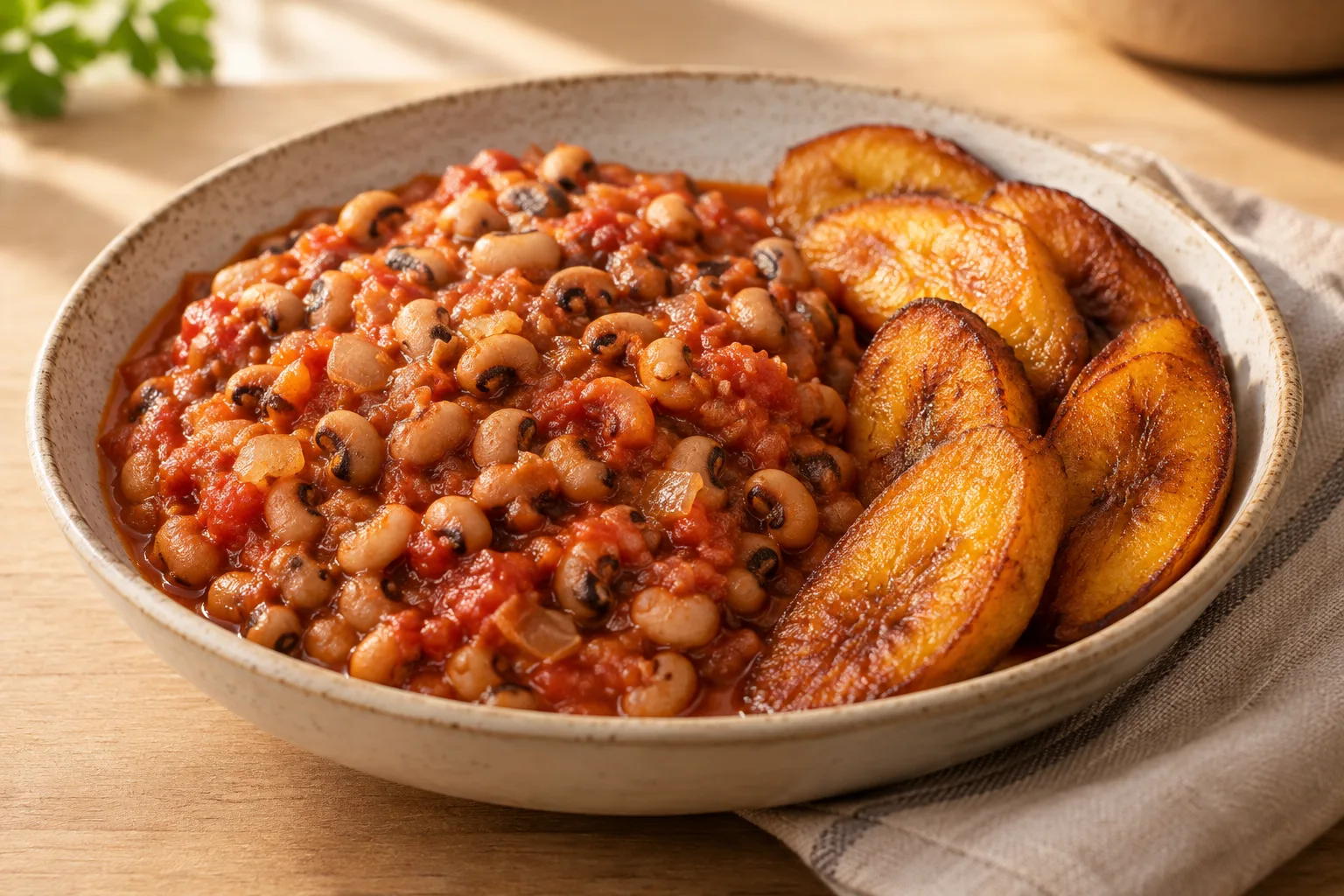
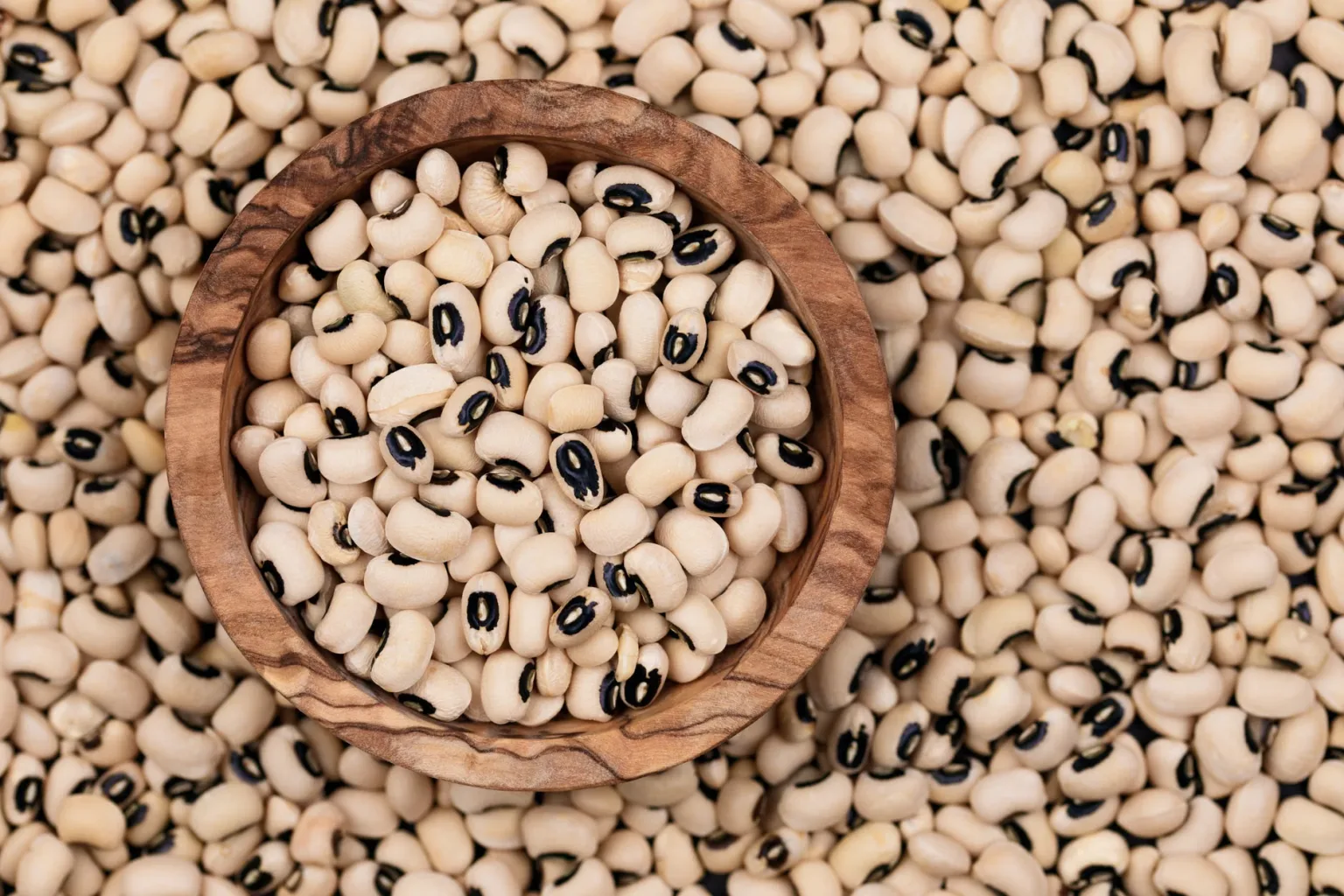
Black-eyed peas, also called black-eyed beans, are a legume that can be bought cooked or prepared from dried peas. In this profile, “cooked” means ready to eat or add to a recipe, not a fresh, uncooked product. They can be drained and rinsed, particularly when canned, or added with liquid to soups and stews. Their practical role is to provide a legume base for simple meals: a salad with vegetables and dressing, a side dish, or a seasoned hot preparation. If you cook them from dried, an extension guide says black-eyed peas do not need to be soaked first, although soaking may be used for other kinds of beans.
When to use it
Use cooked black-eyed peas when you want to add a ready-cooked legume without starting a recipe with dried peas. For a salad, combine them with cucumber, bell pepper and onion, then add a dressing of vinegar, lime, mustard and spices. They also work as a side or in hot dishes seasoned with garlic and onion. If starting with dried peas, note that soaking is not required for black-eyed peas, according to the available extension guidance. For a dish where you want the peas to keep their shape, fold them in gently rather than stirring vigorously; for soups and stews, combine them with the cooking liquid and seasonings.
How to use it
If using canned black-eyed peas, drain and rinse them before adding them, as in an extension salad recipe that uses drained and rinsed canned peas. For a salad, combine them with cucumber, bell pepper and onion; add cilantro or parsley if desired, and dress with vinegar, lime juice, mustard, oil and spices. You can also add them to soups, stews or side dishes; a Southern-style pea recipe seasons them with water, garlic and onion powder, pepper and other ingredients. If cooking from dried, pick out damaged peas or foreign matter, rinse them and cook until tender; this variety does not require soaking. Refrigerate leftovers promptly in shallow containers.
Flavour and texture
The available evidence does not describe a precise, inherent flavor profile for cooked black-eyed peas. In the documented preparations, seasonings include garlic, onion, pepper, cumin, vinegar and lime, so the dressing or seasoning can shape the finished dish. Aim for a tender texture that still holds its shape, and avoid mashing the peas if you want a salad with whole beans. In soup or stew, the liquid and other ingredients provide much of the dish’s character.
How to choose it
Canned black-eyed peas are a convenient option when you want a ready-to-use ingredient; some recipes use canned peas labeled low in sodium, drained and rinsed. You can also start with dried peas and cook them. When sorting dried peas before preparation, discard any that are discolored or shriveled, remove foreign matter and rinse the peas well. For a ready-cooked packaged product, check the package and follow its storage instructions; the available evidence does not give specific brand or package-selection criteria.
Storage
Put cooked peas you will not serve into shallow containers and refrigerate them promptly. The extension guidance consulted says cooked beans can be refrigerated and used within three to four days; it also says they can be frozen for later. Refrigerate salad leftovers within two hours of preparation. For opened canned peas, follow the package directions for storing the remainder, since the available sources do not specify a time limit for that situation.
Substitutions
If cooked black-eyed peas are unavailable, cooked black beans or pinto beans are practical alternatives in salads, soups and stews. Adjust the dressing and liquid to suit the dish, and do not expect exactly the same flavor or appearance. For a salad, drain and rinse canned substitute beans before mixing them with the vegetables.
Common mistakes
Do not confuse dried peas with cooked peas: dried peas need to be cooked before use. If you use canned peas for a salad, do not skip draining and rinsing when the recipe calls for it. Stir gently if you want the peas to remain whole. Do not leave leftovers at room temperature for an extended period: refrigerate them promptly, and refrigerate salad leftovers within two hours.
Safety and allergens
Wash your hands before food preparation, and rinse or scrub fresh vegetables under running water before cutting them. Refrigerate salad leftovers within two hours; place cooked peas in shallow containers and refrigerate promptly. Extension guidance gives three to four days as the refrigerated-use period for cooked beans. If starting with dried peas, cook them until tender before eating; soaking does not replace cooking.
Culinary uses
- Ensaladas y platos fríos
- Sopas, guisos y acompañamientos
Recommended techniques
- Escurrir y enjuagar, especialmente si son de conserva
- Mezclar en ensaladas o incorporar a sopas y guisos
- Congelar en porciones para uso posterior
Pairs well with
- Pepino, pimiento, cebolla y cilantro o perejil
- Vinagre, lima, mostaza, comino y pimienta
- Ajo, cebolla y pimienta negra
Frequently asked questions
Do dried black-eyed peas need soaking?
No. The available extension guidance says black-eyed peas do not need to be soaked before cooking. Rinse them and cook until tender.
Should canned black-eyed peas be rinsed?
For salads and other dishes where drained peas are wanted, drain and rinse them before adding. Some recipes specifically use them this way.
How long do cooked black-eyed peas keep in the refrigerator?
The extension guidance consulted gives three to four days for refrigerated cooked beans. Refrigerate them promptly in shallow containers.
Can cooked black-eyed peas be frozen?
Yes. The guidance consulted says cooked beans can be frozen for later use.
Ingredient allergens
Allergen listThere are no verified associations for these ingredients yet.
Estimated nutrition
- Fat
- 0 g
- Saturates
- 0 g
- Carbohydrate
- 20 g
- Sugars
- 2.86 g
- Fibre
- 5.7 g
- Protein
- 2.86 g
- Salt
- 0.02 g
Sources and review
Automatically researched, cross-checked and validated content. Sources consulted:
- ¿Por qué la muerte es origen de miedos y tabúes? doi.org/10.64628/aao.fccyk3qj3
- RECETAS extension.usu.edu/employee/files/recipes.pdf
- How to Cook Dry Beans from Scratch | UNL Food | Nebraska food.unl.edu/article/how-cook-dry-beans-scratch/
- Sevin 16oz Concentrate Label v20 ucanr.edu/media/278902
- ¿Qué son los frijoles? Descubre tipos y variedades-Blog goya.es/blog/que-son-los-frijoles-descubre-sus-tipos-y-variedades
- Frijoles carita al estilo sureño – Recetas del USDA para hogares de cuidado infantil – Child Nutrition Recipe Box theicn.org/cnrb-es/recetas-del-usda-para-hogares-de-cuidado-infantil-6-porciones/acompanamie…
- Afroféminasfrijoles carita afrofeminas.com/tag/frijoles-carita/
- Frijol - Wikipedia, la enciclopedia libre es.wikipedia.org/wiki/Frijol
- Living Whole Recetas myllu.llu.edu/livingwhole/recetas/
- Cocina Fácil de la Despensa a la Mesa Enlaces de Nutrición - Número # 2 extension.psu.edu/cocina-facil-de-la-despensa-a-la-mesa-enlaces-de-nutricion-numero-2/
- Ensalada de Frijoles de Ojo Negro | Servicio de Extensión de OSU extension.oregonstate.edu/es/node/242466
- Plomo www.publichealth.columbia.edu/file/7874/download?token=UEkOMq65
- Crosstown Foodout | University of Cincinnati www.uc.edu/campus-life/bearcats-pantry/support/crosstown.html
- - YouTube www.youtube.com/watch?v=clKsGMVsqp0
- Frijol carita: 197 calorías en 1 taza (170 g) · Información nutricional www.eatbetter.app/es/alimento/frijol-carita