- Category
- Herbs and spices
- State
- Fresh
- Usual unit
- g
What it is
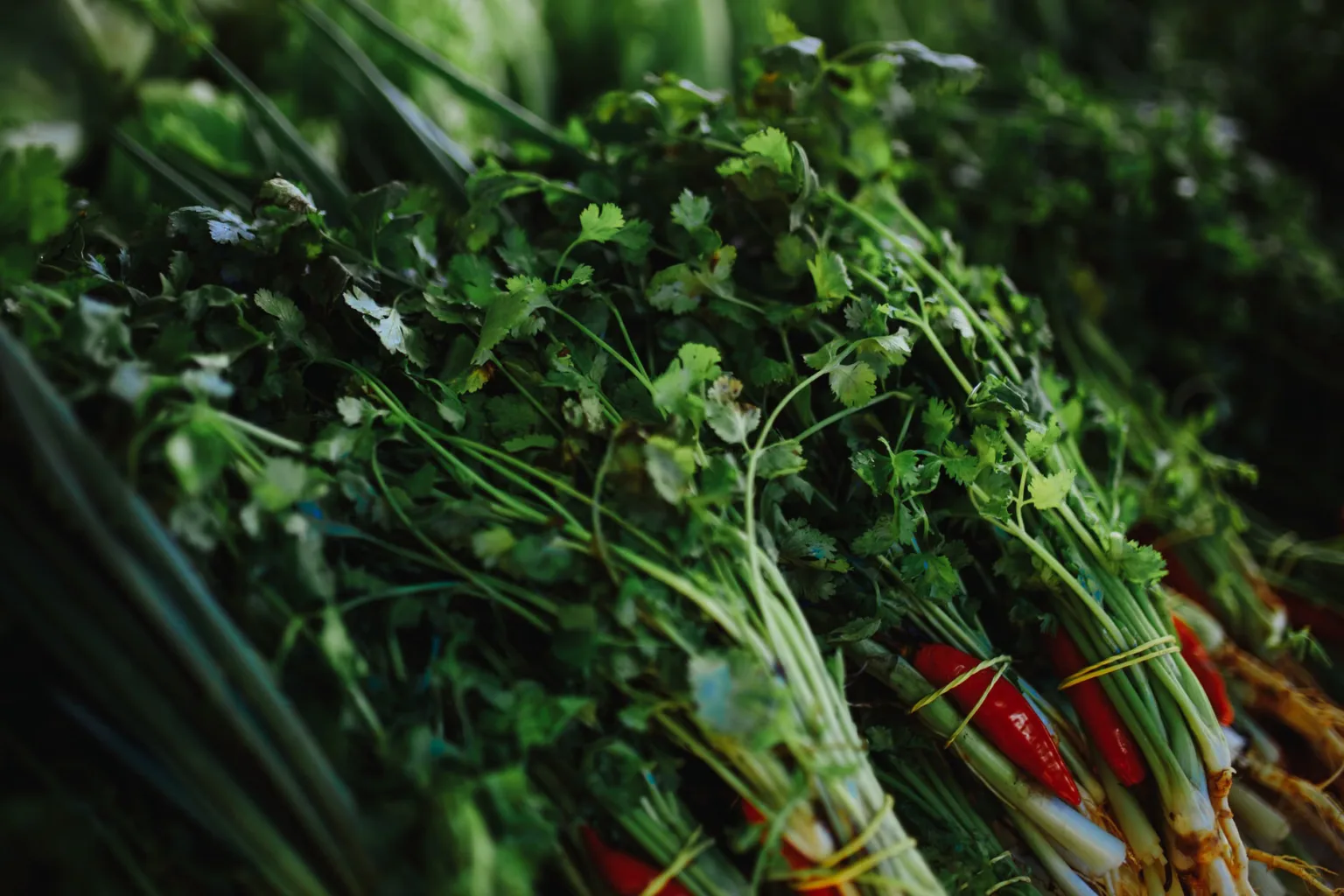
Parsley and cilantro are fresh culinary herbs sold as leaves and tender stems. They may look similar at first, but they are different plants and do not taste the same. Parsley is available in flat-leaf and curly forms; fresh cilantro usually has a more pronounced citrus-like, green flavor. Both can be chopped, used whole or added as a garnish, and worked into sauces, salads, soups and cooked dishes. Here, “cilantro” means the fresh leaves, not the dried seeds also known as coriander. The seeds have a different flavor and culinary role. Parsley and cilantro belong to the Apiaceae family and are commonly sold in bunches or packaged fresh.
When to use it
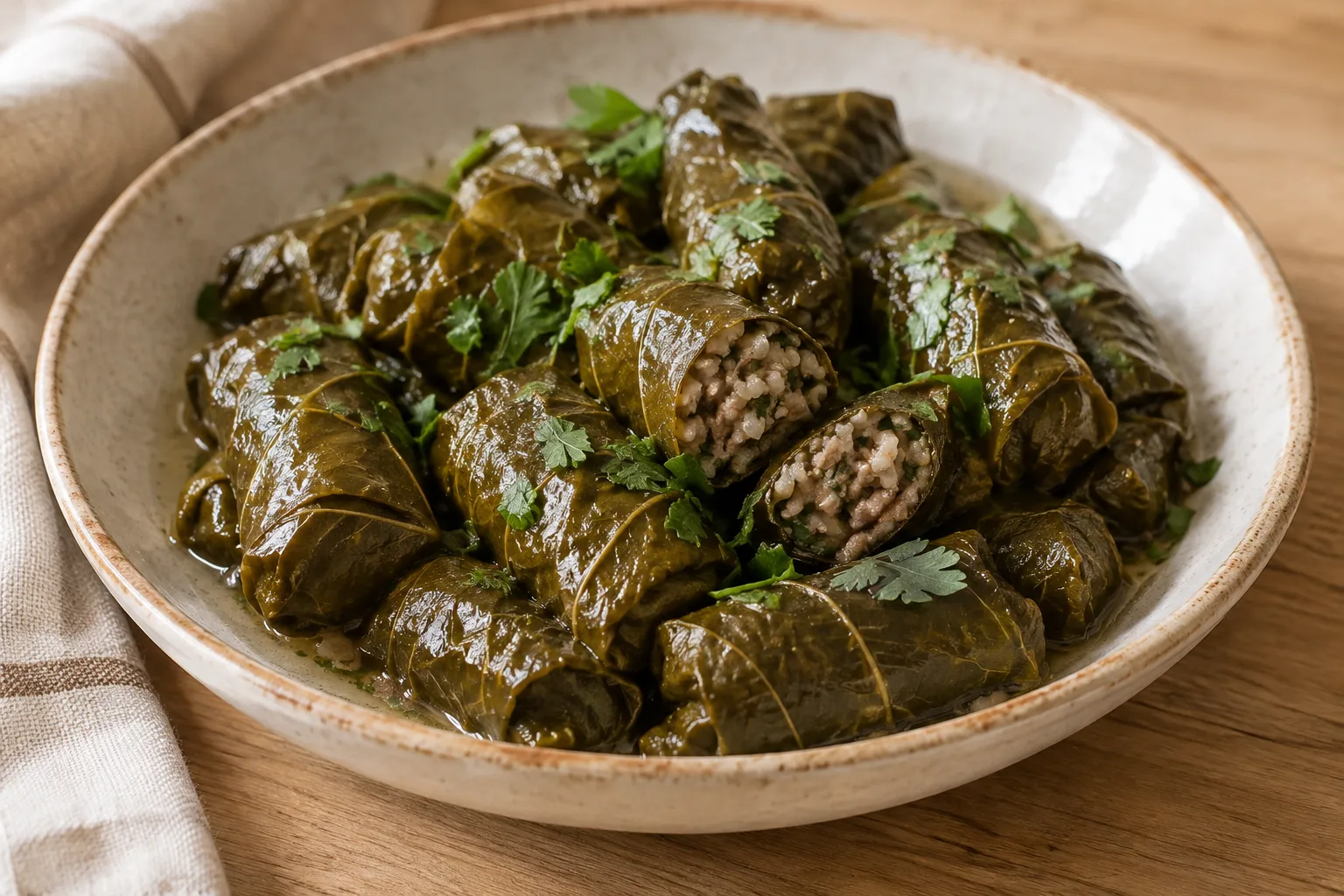
Use these herbs when you want to add fresh, green flavor, bring color to a dish or balance stronger flavors. Parsley works in a wide range of sauces, vinaigrettes, potato dishes, soups and preparations with fish or meat. Cilantro suits fresh sauces, soups, tomato dishes, chili-seasoned food and fish or seafood recipes. Add either herb near the end of cooking or just before serving when you want its aroma to remain prominent. They can also be mixed into salads or used as a garnish. Choose according to the flavor you want: cilantro has a distinctive citrus-like note, while parsley is generally more restrained.
How to use it
Remove leaves and tender stems that are damaged or dirty. Rinse the herbs in cold water and gently dry them to remove moisture; separate leaves from tougher stems if the recipe calls for it. Chop with a sharp knife shortly before use so they are easy to fold into sauces, salads, vinaigrettes, fillings and garnishes. Mix chopped parsley or cilantro with oil and lemon juice for a simple dressing, add them to a salad, or scatter them over potatoes, eggs, fish or meat just before serving. In soups and stews, add them toward the end for a fresher impression. Start with a small amount, especially with cilantro, whose flavor can be quite distinctive.
Flavour and texture
Parsley has a fresh, herbaceous, green flavor that can suggest damp earth; curly parsley also has a different texture from flat-leaf parsley. Fresh cilantro has a more pronounced citrus-like, green character. Its tender leaves are delicate and wilt during prolonged cooking, so they are often best chopped or added near the end. People can respond very differently to cilantro's flavor, so adjust the quantity to suit your preference.
How to choose it
Choose bunches with brightly colored leaves and no limp sections, brown spots or yellowing. Fresh herbs should look firm rather than drooping, and a noticeable aroma can also help indicate freshness. Check leaves and stems for dirt or damage, then choose parsley or cilantro according to the flavor you want in the dish. Since their flavor profiles differ, appearance alone is not a good reason to treat them as interchangeable.
Storage
To store parsley or cilantro, wrap the cut stems in a damp paper towel and place the bunch in a plastic bag in the refrigerator. They can keep this way for up to a week, though their appearance and aroma may change over time; inspect them before use and remove deteriorated parts. Wash them when you are ready to prepare them and dry them well before chopping. Storing the leaves wet may affect their quality.
Substitutions
Parsley and cilantro can sometimes substitute for one another when a green herb is needed to finish a dish, but they are not flavor equivalents. Parsley is a milder option if you want less of cilantro's characteristic citrus-like note. Cilantro gives a more pronounced flavor when used in place of parsley. Adjust the amount and taste as you go; the change is especially noticeable in fresh sauces or recipes where the herb is a main feature.
Common mistakes
Do not confuse fresh cilantro leaves with dried coriander seeds: they have different flavors and culinary uses. Avoid prolonged cooking if you want to preserve a fresh herbal impression, and taste before adding more cilantro if its flavor might dominate the dish. Do not treat a deteriorated bunch as fresh; remove damaged leaves and inspect the herbs before using them.
Safety and allergens
Remove dirty or damaged leaves and rinse the herbs in cold water before preparation. Use clean hands, utensils and surfaces, and dry the herbs carefully. Discard deteriorated parts; if you are unsure about the condition of the bunch, do not use it.
Culinary uses
- Fresh seasoning
- Finishing garnish
- Herb for sauces and salads
Recommended techniques
- Chop leaves and tender stems shortly before use
- Stir into hot dishes near the end of cooking
- Mix chopped herbs with oil and lemon juice
Pairs well with
- Tomato, citrus and garlic
- Potatoes, eggs and salads
- Fish, seafood and cooked meats
- Avocado, chili and beans
Frequently asked questions
Do fresh cilantro leaves and coriander seeds taste the same?
No. This profile covers fresh cilantro leaves. The seeds, also called coriander, have a different flavor and culinary use.
When should I add parsley or cilantro to a hot dish?
Add them near the end of cooking or just before serving when you want their fresh, aromatic character to stand out.
How should I store fresh parsley and cilantro?
Wrap the cut stems in a damp paper towel and keep them in a plastic bag in the refrigerator; they can keep for up to a week.
Ingredient allergens
Allergen listThere are no verified associations for these ingredients yet.
Sources and review
Automatically researched, cross-checked and validated content. Sources consulted:
- Client Challenge doi.org/10.2307/jj.27939689.16
- Qué es el perejil, la más popular de las hierbas mediterráneas: sus propiedades y las mejores recetas en las que usarlo www.directoalpaladar.com/ingredientes-y-alimentos/que-perejil-popular-hierbas-mediterraneas-…
- 10 hierbas aromáticas para cocinar | Wikicocina wikicocina.com/gastronomia/ingredientes-productos/10-hierbas-aromaticas-cocinar
- Vamos a Conservar Alimentos: El secado de las plantas medicinales y aromáticas extension.psu.edu/vamos-a-conservar-alimentos-el-secado-de-las-plantas-medicinales-y-aromati…
- Paisajes Comestibles-Sostenibles | Integrated Pest Management | College of Agriculture, Health and Natural Resources | University of Connecticut ipm.cahnr.uconn.edu/paisajes-comestibles-sostenibles/
- Fresh Herbs | UNL Food | Nebraska food.unl.edu/article/fresh-herbs/
- How to grow cilantro for leaves — or coriander seeds | Servicio de Extensión de OSU extension.oregonstate.edu/es/news/how-grow-cilantro-leaves-or-coriander-seeds
- Manual para Navegar el Puget Sound Food Hub rvs.umn.edu/Uploads/EducationalMaterials/1f979530-6ec7-44f8-a32d-cb79314abfc3.pdf
- Cilantro: propiedades, orígen y usos en la cocina - Oriental Market www.orientalmarket.es/cilantro/?srsltid=AYCX9vI76csYtiF5ojiwnvUcOviLC-wAAvUns_EiIvXj9o9La7j_…
- 5 hierbas aromáticas que no pueden faltar en tu cocina | Grupo Lucas www.grupolucas.com/news/5-hierbas-aromaticas-que-no-pueden-faltar-en-tu-cocina/
- Frutas y Hortalizas: Hierbas Aromáticas o Culinarias: Perejil, Cilantro, Comino, Hinojo tomatoide.blogspot.com/2019/03/hierbas-aromaticas-o-culinarias-perejil.html
- Tipos de hierbas: nombres y usos en la cocina – yolikitchen yolikitchen.cl/blogs/cocina-practica/tipos-de-hierbas?srsltid=AYCX9vKVNd6VueY2Mx1r3KsW0HabaN…