- Category
- Dairy and eggs
- State
- Fresh
- Usual unit
- g
What it is
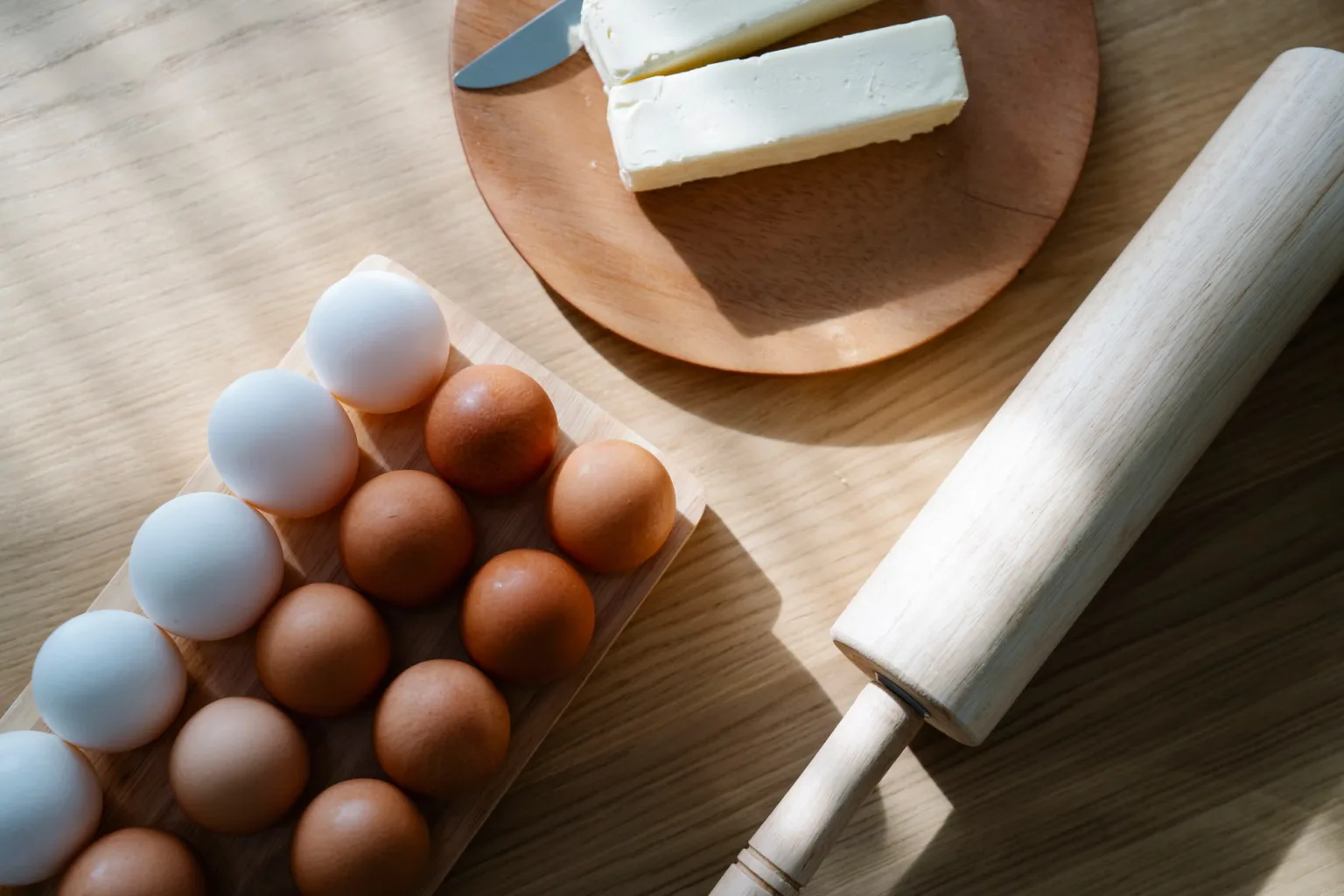
Butter is a dairy product made from milk fat. It is produced by churning cream, separating a fat-rich portion from a liquid phase, and is described as an emulsion of fat and water. The name “light butter” alone does not identify the exact formulation of the product you have, so check its ingredient list and package directions. Butter is commonly used as a spread, for cooking, to enrich sauces, and in baking. Whether a particular version is suitable for each use depends on the information on its package and on what the recipe requires.
When to use it
You can consider this butter for spreading on bread or toast and for cooking when the package indicates that the product is suitable. In sauces or sautés, pay attention to the directions and to how it blends when heated; do not assume that every version behaves in the same way. In baking, fat can affect the consistency of doughs and baked goods, so check that the product suits the recipe. If a recipe calls for conventional butter, do not automatically make the swap: consult the package and consider the result you want.
How to use it
Read the package before using the product and follow its directions. To serve it as a spread, use it on bread or toast as desired. In a hot preparation, add it according to the recipe method and observe how it melts and blends rather than assuming that all versions behave alike. For a sauce, add it at the indicated stage and check that the finished consistency is suitable. For doughs, cookies, tarts, and other baked goods, use it only if the recipe or package indicates that it is appropriate. Do not assume that it can replace conventional butter in the same amount and produce an identical result.
Flavour and texture
Butter generally contributes a characteristic dairy flavor and a smooth, rich texture. Its consistency can vary: some butter is firmer and harder to spread than other butter. The word “light” alone does not describe the flavor or texture of a particular product, so check the package and assess its consistency before using it in a recipe where these qualities matter.
How to choose it
Choose an intact package and check the full product name, ingredient list, and use and storage directions. Do not infer the formulation or cooking behavior from the word “light” alone. If you plan to use it in a particular recipe, check that the package indicates it is suitable for that use and consider whether the recipe depends on butter’s consistency.
Storage
Follow the storage directions on the package, since they may vary between products and should not be replaced with a general rule. Keep the butter in its package or well sealed to protect it from odors from other foods. If the label says to refrigerate it, keep it refrigerated and follow any directions for storage after opening.
Substitutions
Conventional butter may be an alternative if a recipe calls for butter, but it cannot be guaranteed to give exactly the same result as a light version. Another cooking fat is an option only when the recipe allows it. Check the product directions and do not assume that a one-for-one substitution will work, especially in doughs and baked goods.
Common mistakes
A common mistake is assuming that “light” defines a specific formulation or guarantees that the product works just like conventional butter. Do not ignore the package directions or automatically substitute it in baking: the consistency of the fat can affect the result. Check that the product is suitable for the recipe you plan to make.
Safety and allergens
Butter is made from milk fat. If you need to avoid milk, check the ingredient list and allergen information for the product. Follow the package directions for storage and use.
Culinary uses
- spread
- cooking fat
- baking ingredient
- sauce ingredient
Recommended techniques
- spread
- melt
- sauté
- incorporate into batters and doughs
Pairs well with
- bread and toast
- vegetables
- pastry and baked goods
- sauces
Frequently asked questions
Does the word “light” tell me the product’s formulation?
No. Check the ingredient list and package information to identify the particular product and its directions.
Can I use it in baking just like conventional butter?
Do not assume so. Check that the recipe or package indicates it is suitable, since consistency can affect the result.
How should I store it?
Follow the storage directions printed on the package, including after opening.
Ingredient allergens
Allergen listThere are no verified associations for these ingredients yet.
Estimated nutrition
- Fat
- 55.1 g
- Saturates
- 34.3 g
- Carbohydrate
- 0 g
- Sugars
- 0 g
- Fibre
- 0 g
- Protein
- 3.3 g
- Salt
- 0.09 g
Sources and review
Automatically researched, cross-checked and validated content. Sources consulted:
- Client Challenge doi.org/10.2307/jj.27939689.16
- Mantequilla - Wikipedia, la enciclopedia libre es.wikipedia.org/wiki/Mantequilla
- La importancia de la mantequilla en la cocina friolisa.es/es/blog/la-importancia-de-la-mantequilla-en-la-cocina.html
- Nutrition After Your Transplant - Health Online healthonline.washington.edu/sites/default/files/record_pdfs/Nutrition-After-Your-Transplant-…
- Mantequilla, nunca una grasa fue tan útil www.directoalpaladar.com/ingredientes-y-alimentos/mantequilla-nunca-una-grasa-fue-tan-util
- Vamos a Conservar Alimentos: Proceso Rápido para preparar Pepinillos en Vinagre extension.psu.edu/vamos-a-conservar-alimentos-proceso-rapido-para-preparar-pepinillos-en-vin…
- Para la ciudadanía www.aesan.gob.es/para-la-ciudadania
- By RICHARD A. BROWN II WILLIAM W. DRESSLER ... - UA ir.ua.edu/bitstreams/01ed2284-c972-46dc-acc1-ea26f220c6a6/download
- La mantequilla, alimento de gran consumo y versatilidad – PULEVA www.lechepuleva.es/blog/mantequilla/
- Food allergen labelling and information requirements technical guidance - GOV.UK www.gov.uk/government/publications/food-allergen-labelling-and-information-requirements-tech…